
Dead Not Dead
Could Schrödinger’s Cat Exist in Real Life?
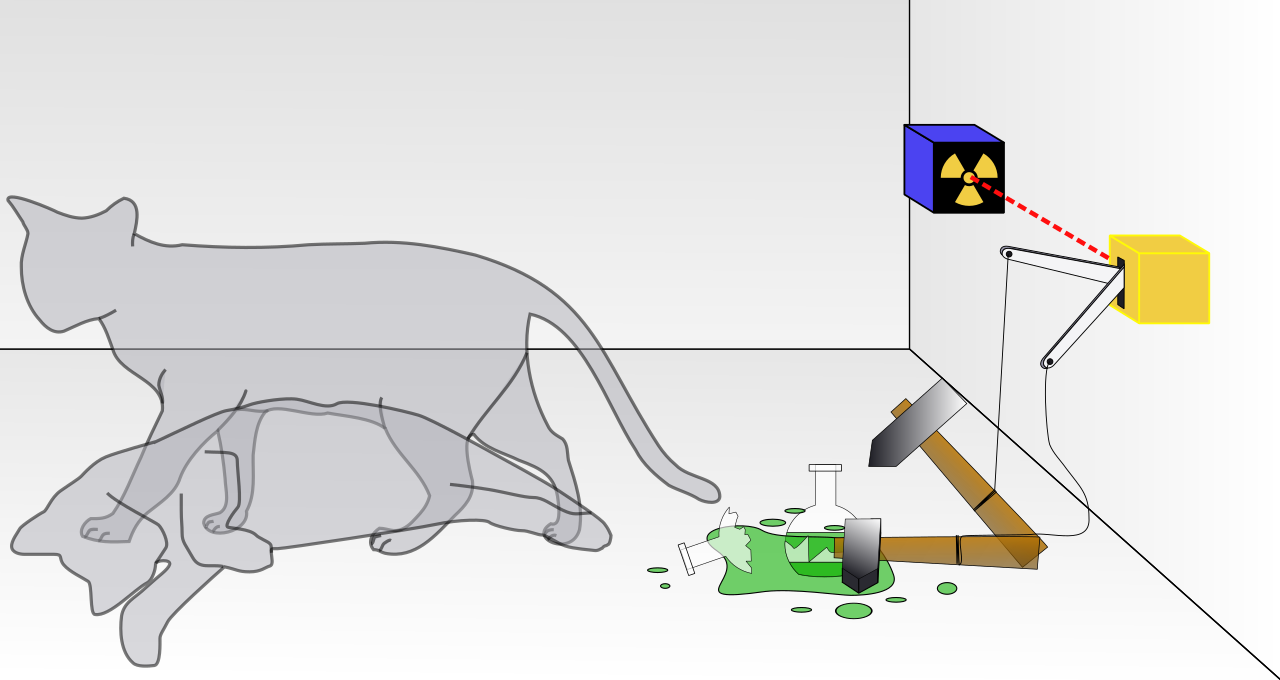
Have you ever been in more than one place at the same time? If you’re much bigger than an atom, the answer will be no.
But atoms and particles are governed by the rules of quantum mechanics, in which several different possible situations can coexist at once.
Quantum systems are ruled by what’s called a “wave function”: a mathematical object that describes the probabilities of these different possible situations.
And these different possibilities can coexist in the wave function as what is called a “superposition” of different states. For example, a particle existing in several different places at once is what we call “spatial superposition”.
It’s only when a measurement is carried out that the wave function “collapses” and the system ends up in one definite state.
Generally, quantum mechanics applies to the tiny world of atoms and particles. The jury is still out on what it means for large-scale objects.
In our research, published today in Optica, we propose an experiment that may resolve this thorny question once and for all.
Sarcophagi Conspiracy
Is a Conspiracy Theory Behind the Mass Vandalism of Art in Berlin?
By Helen Holmes

When people vandalize art in museums, they usually do it either for deeply personal or backwards reasons, or it was an accident. Neither of these options seem to sufficiently explain a bizarre instance of vandalism in Berlin that took place earlier this month, but which was only just now revealed to the press. According to the German media, over 70 artworks in the Pergamon Museum, the Alte Nationalgalerie and the Neues Museum on Berlin’s museum island were smeared with a mysterious oily substance on October 3. Among the items damaged are Egyptian sarcophagi, 19th-century paintings and stone statues scattered throughout the three museums.
At the present moment, there are reportedly no concrete leads on who might have committed the crime, and no definitive evidence left behind pointing authorities to a particular motive. “This is a variety of objects that do not have any immediate connection in terms of context,” Carsten Pfohl, the head of Berlin Police’s Art Crime Unit, told NPR news. “We have no self-incriminating letter or anything like that, so we have to assume for now that the motive is completely unclear.” However, upon breaking the news, members of the German media were quick to connect the oily vandalism to certain conspiracy theorists who might have influenced the crime in some way.
Jet-pack Man
Another ‘man in jet pack’ seen above LAX as China Airlines crew ‘spots mysterious flier at 6,000ft’ and FAA alerts cops
by Neal Baker / Fionnuala O’Leary
ANOTHER apparent sighting of a man in a jet pack flying above Los Angeles International Airport was made on Wednesday – with a China Airlines crew reporting seeing the mystery flier at 6,000ft.
The Federal Aviation Administration has alerted law enforcement and is investigating the report, which is the second such sighting in weeks.
An FAA spokesman told The Sun: “A China Airlines crew reported seeing what appeared to be someone in a jet pack at an approximate altitude of 6,000 feet, about seven miles northwest of Los Angeles International Airport around 1:45 pm [on] Wednesday.
“The FAA alerted local law enforcement and will look into the report.”
United States of A-holes
The new documentary “Assholes: A Theory” examines the assholing of America, a nation ruled by the biggest asshole of them all: Donald J. Trump.
by Nick Schager
As U.S. Marshal Raylan Givens (Timothy Olyphant) famously opined on Justified, “You run into an asshole in the morning, you ran into an asshole. You run into assholes all day, you’re the asshole.” Yet in a 2020 America on the precipice of a monumental presidential election, it seems that assholes are not only everywhere you turn—in newspapers, on cable TV, at political rallies and protests, and all over social media—but that they, and their behavior, has been normalized. It’s this “rising tide of assholery” that’s the focus of director John Walker’s Assholes: A Theory, which adapts philosophy professor Aaron James’ 2012 non-fiction book into a documentary aimed at both precisely defining the term “asshole,” and investigating how those who fit that bill have increasingly come to dominate key spheres of modern public life.
Donald Trump isn’t seen or mentioned once by name in Assholes: A Theory. Nonetheless, his specter looms large over Walker’s film (in theaters Oct. 30, and on VOD Nov. 6), whether during conversations about corrupt Italian Prime Minister Silvio Berlusconi—the forerunner of the media-manipulating populist-criminal-strongman trend that’s recently swept through Western nations—or passages discussing Facebook, Twitter and Google’s prioritization of profit over their responsibility to safeguard democracy from hate speech and disinformation. Without once bringing him up, Walker makes clear that Trump is the embodiment of this problem, given that his election to the highest office—and subsequent flouting of rules and standards of common decency—has made it appear acceptable, and in fact rewarding, to act in the worst possible manner as a means of achieving one’s selfish ends. He is, the film silently contends, the apex of American assholery.
Go Schmidt!
Former Google CEO Calls Social Networks ‘Amplifiers for Idiots’
by Gerrit De Vynck

(Bloomberg) — Former Google Chief Executive Officer Eric Schmidt said the “excesses” of social media are likely to result in greater regulation of internet platforms in the coming years.
Schmidt, who left the board of Google’s parent Alphabet Inc. in 2019 but is still one of its largest shareholders, said the antitrust lawsuit the U.S. government filed against the company on Tuesday was misplaced, but that more regulation may be in order for social networks in general.
“The context of social networks serving as amplifiers for idiots and crazy people is not what we intended,” Schmidt said at a virtual conference hosted by the Wall Street Journal on Wednesday. “Unless the industry gets its act together in a really clever way, there will be regulation.”
Does The Dog Die
A Website Called “Does The Dog Die” Is For Anyone Who Hates Sad Dog Movies
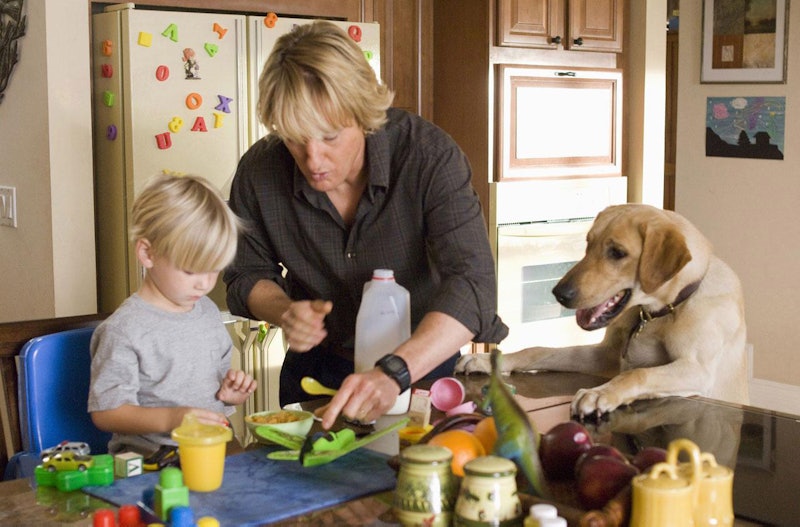
Any death in a movie, book, or TV show is upsetting and can be very disturbing. The Lion King? My sobs are unstoppable. I don’t even watch Game of Thrones — don’t @ me — but I know all about the Red Wedding and felt how emotionally distraught you all were. So, in case you want to avoid surprise human and animal deaths that would warrant approximately five tissue boxes, and who has the space in their purse for that, there’s a website for that. This website lets you know if the dog dies at the end of the movie, and honestly thank you.
Alfa’s @ Sotheby’s
Sotheby’s Two Evening Sales Bag a Muted $283.9 Million, Fueled by the Scene-Stealing Inclusion of Three Futuristic Alfa Romeos

Before the sales even began, a shocking announcement turned the entire evening into an extended anti-climax. At the last minute, the Baltimore Museum of Art pulled works it had consigned by Clyfford Still and Brice Marden after donors threatened to withhold millions of dollars in horror and more than a dozen institutional bigwigs signed letters decrying the sell-off.
It was a shocking about-face from BMA director Christopher Bedford, a singular figure in the ranks of American museums who is steadfastly committed to the idea that deaccessioning old works from a homogeneous collection is the most efficient way to fill its holdings with new work by young artists of color. In an interview with the Baltimore Sun this week, Bedford accused anyone against his brash approach of making an “investment in a system of operating institutions that is very deeply centered in white power and white privilege.”
Weeks after Christie’s made a splash by selling a T. Rex for $31.8 million in its postwar and contemporary art sale, Sotheby’s embraced the stunt of slotting non-art objects into its auction. The big lot of this portion of the night was not an artwork (or a dinosaur), but a trio of automobiles: three futuristic unique Alfa Romeos, which sold as a group for a hammer price of $13.25 million, short of the $14 million low estimate. With fees, the price was $15.5 million, and it was purchased for a client by Barney Ruprecht, the RM Sotheby’s senior specialist. (His father, Bill Ruprecht, was CEO of the auction house until 2014.)
Asteroid Grab
Watch Live: A NASA Spacecraft Is About to Land on an Asteroid And Grab a Sample
by ELIZABETH CANTWELL
Imagine parallel parking a 15-passenger van into just two to three parking spaces surrounded by two-story boulders. On October 20, a University of Arizona-led NASA mission 16 years in the making will attempt the astronomical equivalent more than 200 million miles (320 million kilometres) away.
A NASA mission called OSIRIS-REx will soon attempt to touch the surface of an asteroid and collect loose rubble.
Brilliant Legal Hack
from the New Hampshire Union Leader
Woman accused of impersonating prosecutor, dropping criminal charges against herself

A Littleton woman allegedly impersonated a Hillsborough County prosecutor when she filed bogus documents with court officials declaring that the drug possession and stalking case against her had been dropped, according to recently released indictments.
Lisa Landon, 33, of Railroad Street, Littleton, faces one charge of false personation and six charges of falsifying physical evidence, according to Hillsborough County grand jury indictments handed up earlier this month.
The indictments allege that Landon submitted the fake documents in three different court cases last November and December. In several instances, she used the New Hampshire court system’s electronic system to file documents.
The Amazing Randi Gone
James Randi Dies: ‘The Amazing Randi’ Performer And Paranormal Skeptic Was 92
By Bruce Haring
James Randi, a magician whose many TV appearances led him to a second career as a respected paranormal investigator, has died at 92. The James Randi Foundation confirmed his death in a tweet on Tuesday, saying he died of “age-related causes.”
Born Randall James Zwinge in 1928, he entered show business as a teenager, touring with a carnival and working nightclubs in his native Toronto, Canada. Initially billed as The Great Randall: Telepath, he parlayed that name into a mind-reading act and a knack for predicting the future.
Unlike many magicians and performers, Randi was not averse to letting fans know that he was a trickster, relying on subterfuge and sleight of hand to pull off his tricks. As his career grew, adding escape artist to his bag of stunts, he grew increasingly worried about the people who refused to embrace the fact that it was all an act.
Elysium Realism
The Elysium effect: The coming backlash to the billionaire ‘NewSpace’ revolution
In the 2013 science fiction film “Elysium” starring Matt Damon, Earth’s wealthiest 0.01% move to the ultimate gated community, a luxurious orbiting space colony, leaving a poverty-stricken humanity to fend for themselves on a ravaged planet.
Interestingly, it is indeed some of today’s 0.1% who are leading the way into space to build communities beyond Earth. However, quite the opposite of the movie, their goals are of the highest order, from democratizing access to space by lowering costs, to creating new products and ideas, to helping save the planet and opening space to future generations.
As in any good social movement, there is a need for bad guys, and these guys are easy icons of evil to many. And there may be no easier target they could present than a shiny private rocketship or space station — even if it is for a good cause.
Though they have many flaws, including the accumulation of lots of money, these space pioneers are actually trying to do something good for humanity and the planet. And while they may not be the cuddliest of people, just look at their other projects and goals: Musk builds electric cars and solar power systems, Bezos wants to move polluting heavy industry off planet – even as Amazon pushes towards zero emissions, and Branson is a long time champion of social and environmental causes.
Yet these visionaries, who author Christian Davenport called “The Space Barons” are often portrayed as rich boys with fancy toys.
Things will get worse when the next wave of terribly branded “space tourists” begin to fly. Bezos’ Blue Origin and Branson’s Virgin Galactic will charge over $200,000 for excursions to the edge of space, while newcomer Axiom Space Systems and SpaceX will offer flights to and beyond the International Space Station for a few tens of millions, and even loop the Moon for a just few hundred million more.
Cannonball Renaissance
The Incredible Story of the Great Cannonball Boom
When the country shut down and the highways thinned out, a stealthy group of amateur car obsessives glimpsed an opportunity to revive the fabled cannonball run—the highly daring, absurdly illegal cross-country endurance race. And in the record-breaking frenzy that followed, they became legends of the unlikeliest pastime of the pandemic age.
BY ALEX W. PALMER
PHOTOGRAPHY BY PELLE CASS

Fred Ashmore was just outside Needles, California, in the parched low desert where the jagged southern point of Nevada meets the Arizona-California border, when he felt it wash over him. A kind of confusion melting into panic. He was exhausted, which he knew was making everything worse. It was about 1 a.m., and he’d been at the wheel for almost 24 hours now, rocketing west at speeds well over 100 miles per hour. For lucky stretches, when the road opened up and Ashmore punched the throttle, he could get his silver Ford Mustang GT up to 159 mph—the car’s top speed, he’d discovered. Now, ahead of him in the inky-black night, he could see the flash of brake lights, a river of travelers funneling into a slow-moving line.
Before long, Ashmore was inching along the desert highway, feeling crucial minutes tick by and craning to see what was ahead. That’s when he noticed trunks popping open and a new fear took hold. Officials from the California Department of Food and Agriculture were searching vehicles entering the state. He watched a car in front of him stop and then get looked over from top to bottom. If they do that to my car, Ashmore thought, I’m probably not getting it back.
On the outside, his Mustang looked pretty much like any other car on the road. Inside was another story. Splayed across Ashmore’s dashboard was an array of devices, including a CB radio, a mounted tablet operating Waze and Google Maps, and an iPhone running a timer. Stuck to the inside of the windshield was a radar detector; on the front grille and back bumper were the sensors for a laser jammer. Even more conspicuously, strapped beside and behind Ashmore, where the front and rear passenger seats should have been, huge fuel tanks sloshed with gasoline. A series of hoses connected them—along with another enormous tank, this one in the trunk—to the car’s main fuel tank. An officer inspecting Ashmore’s rig could have been forgiven for concluding that he was driving a giant gasoline bomb.
When Eddie Loved Dave
An unlikely Pasadena love story: The high-school bromance of Eddie Van Halen and David Lee Roth
By GREG RENOFF

Early in the summer of 1973, singer David Lee Roth and guitarist Eddie Van Halen performed together for the first time. Playing in front of an audience of buzzed students from John Muir, Blair and Pasadena high schools in an east Pasadena backyard, this embryonic version of Van Halen, then called Mammoth, blasted out songs by Black Sabbath, Grand Funk Railroad and Cream, rattling windows and shattering eardrums while party attendees chugged keg beer.
Last week, Eddie Van Halen died from cancer, at age 65, and tributes to his transformational musical contributions poured in from around the world. But long before anyone outside of the San Gabriel Valley had heard of the band, this pairing of two aspiring musicians who had little in common save their long hair drew together a generation of hard-rock-loving SoCal teens.
Cow Hugging
Cow-hugging is the new animal therapy trend we all need
By Catherine Park

Therapy animals are not a new concept, but in a world where mental health is being tested by an ongoing pandemic, people are searching for comfort it what might seem like unusual places.
A practice that originated in the rural town of Reuver in the Netherlands, “koe knuffelen,” which means “cow hugging” in Dutch, is gaining global popularity, according to a BBC report.
It’s not just the act of hugging a cow that helps relieve stress and lower anxiety, but making contact with any furry critter could help improve one’s mental health.
Cows are the optimal cuddling buddy, and it’s not just because they’re adorable.
A 2007 study in the journal Applied Animal Behaviour Science states that cows “show cues of deep relaxation, stretching out and allowing their ears to fall back when massaged in particular areas of their neck and upper back.”
“Cow cuddling is believed to promote positivity and reduce stress by boosting oxytocin in humans, the hormone released in social bonding. The calming effects of curling up with a pet or emotional support animal, it seems, are accentuated when cuddling with larger mammals,” according to the BBC.
The need for companionship during a socially-distanced time is steadily increasing.
Marbles
Torlonia Collection of ancient marbles displayed in Rome

ROME (AP) — One of the most important private collections of ancient Greek and Roman marble sculptures is going on display in Rome as part of the Eternal City’s 150th anniversary celebrations.
The 90 works from the Torlonia Collection were opening Monday in the newly refurbished Villa Caffarelli, one of the Capitoline Museum’s exhibition spaces overlooking the ancient Roman Forum. Organizers said there were plans to offer to lend the works to other museums, but said the coronavirus pandemic had put those plans on hold for now.
The 620-piece Torlonia Collection is considered one of the greatest private collections of classical art, featuring marble busts, reliefs, sarcophagi and statues. It was begun by one of Rome’s 19th century patricians, Prince Alessandro Torlonia, and was created in part from archaeological excavations of the Torlonia family’s various estates in Rome.
21st Century Saint
Teen one step from becoming first millennial saint

A British-born Italian teenager who dedicated his short life to spreading the faith online and helping the poor will be beatified by the Catholic Church Saturday.
That leaves him just one miracle away from becoming the world’s first millennial saint.
Internet and computer-mad youngster Carlo Acutis, who died of leukaemia in 2006 aged 15, was placed on the path to sainthood after the Vatican ruled he had miraculously saved another boy’s life.
The Vatican claims he interceded from heaven in 2013 to cure a Brazilian boy suffering from a rare pancreatic disease.
He will be beatified in Assisi, the home of his idol Saint Francis, who dedicated his life to the poor. Some 3,000 people are expected to follow the ceremony on giant screens set up in five squares in the central Italian city.
Robot Beetle Cool
Robot Beetle Faces A Real Beetle In This Jaw Dropping Fight Between Nature And Machine
Written By Gladwin Menezes
In a video that surfaced recently, a robot beetle can be seen going up against a real beetle. The fight between the two has caused netizens to react in awe and amusement. The insect wrestled the machine while being filmed and the results were spectacularly astonishing.
The video begins with the mechanical beetle fidgeting and poking the real beetle. Unaware of what is happening, the real beetle tries its level best to reason out with the situation he is in. The shiny black beetle is the live beetle whereas the dark black beetle is the mechanical one. Upon first glance, one can easily notice that the mechanical or robotic beetle is much larger and seems way too stronger in terms of size and might. The real beetle, on the other hand, seems of a regular size and not as intimidating as the robot beetle.
How To Bait A Whale
Sex, drugs and rare pooches: How casino hosts lure in big gamblers

You’d think it would be simple to drop millions of dollars at a casino.
But extracting that kind of dough tends to require a delicate dance between casino, player and host: the person charged with luring gamblers to bet big and lose big. It can involve private jets, exotic hotel suites, bottles of Cristal, Cuban cigars and pretty much anything the gambler wants. It’s a perfect environment for squeezing out the massive losses that keep casino chandeliers burning.
糟糕!
Stolen Mao Zedong scroll ‘worth millions’ found cut in half

A stolen calligraphy scroll said to be worth millions has been found in Hong Kong, after it was cut in half.
Thieves had stolen the scroll by Chinese communist leader Mao Zedong from an art collector’s home in a burglary last month.
They then sold it at a fraction of its value. It was apparently cut up as the 2.8m-long (9ft) scroll was deemed too long to display, said Hong Kong police.
The original owner says the artwork’s value has been “definitely affected”.
The scroll contains stanzas of poetry handwritten by the founder of the People’s Republic of China. Its owner has claimed it is estimated to be worth around $300m (£230m), though it is not known how the valuation was obtained.
The scroll was stolen in a massive heist on 10 September, when three men broke into the home of Fu Chunxiao, a well-known collector of stamps and revolutionary art.
They also made off with antique stamps, copper coins and other pieces of calligraphy by Mao. The total haul was worth HK$5bn ($645m; £500m) according to Mr Fu, who was reportedly in mainland China when the burglary took place.
Dreams w/Latte
Island of Nowhere
The Island That Humans Can’t Conquer
A faraway island in Alaska has had its share of visitors, but none can remain for long on its shores.
Text by Sarah Gilman / Photos by Nathaniel Wilder

St. Matthew Island is said to be the most remote place in Alaska. Marooned in the Bering Sea halfway to Siberia, it is well over 300 kilometers and a 24-hour ship ride from the nearest human settlements. It looks fittingly forbidding, the way it emerges from its drape of fog like the dark spread of a wing. Curved, treeless mountains crowd its sliver of land, plunging in sudden cliffs where they meet the surf. To St. Matthew’s north lies the smaller, more precipitous island of Hall. A castle of stone called Pinnacle stands guard off St. Matthew’s southern flank. To set foot on this scatter of land surrounded by endless ocean is to feel yourself swallowed by the nowhere at the center of a drowned compass rose.
My head swims a little as I peer into a shallow pit on St. Matthew’s northwestern tip. It’s late July in 2019, and the air buzzes with the chitters of the island’s endemic singing voles. Wildflowers and cotton grass constellate the tundra that has grown over the depression at my feet, but around 400 years ago, it was a house, dug partway into the earth to keep out the elements. It’s the oldest human sign on the island, the only prehistoric house ever found here. A lichen-crusted whale jawbone points downhill toward the sea, the rose’s due-north needle.
Compared with more sheltered bays and beaches on the island’s eastern side, it would have been a relatively harsh place to settle. Storms regularly slam this coast with the full force of the open ocean. As many as 300 polar bears used to summer here, before Russians and Americans hunted them out in the late 1800s. Evidence suggests that the pit house’s occupants likely didn’t use it for more than a season, according to Dennis Griffin, an archaeologist who’s worked on the archipelago since 2002. Excavations of the site have turned up enough to suggest that people of the Thule culture—precursors to the Inuit and Yup’ik who now inhabit Alaska’s northwestern coasts—built it. But Griffin has found no sign of a hearth, and only a thin layer of artifacts.
Eddie Van Halen Gone
They’re Getting Closer
‘It’s Been A Long Time Since We’ve Seen Something Like This’; Meteor That Lit Up Pittsburgh Skies Was Seen In 15 States
The meteor that flew over the Pittsburgh area on Wednesday morning has now been reported as having been seen over 700 times.
By: KDKA-TV News Staff

PITTSBURGH (KDKA) — When the skies above Pittsburgh lit up early Wednesday morning, social media was abuzz trying to figure out what it was or what had just happened.
At 6:24 a.m., the skies lit up with what appeared to be a fireball flying through the atmosphere.
KDKA spoke with Jay Reynolds, a Research Astronomer at Cleveland State University, who is now in his sixteenth year there, says that it was a meteor.
BDSM Going Viral
A Dominatrix on Why BDSM Business Is Booming During Trump and COVID
Mistress Iris writes about the reasons why people are turning to dominant/submissive roleplay during these chaotic times.

Oscar Wilde famously said, “Everything in the world is about sex except sex. Sex is about power.” It’s a wonderfully worded quote but a bit mistaken about sex, power, and the rest. In Wilde’s Victorian England, power was obvious and everywhere; sex was repressed. The world we live in today is far more suffused in sex, but a bit less comfortable with the omnipresence of power (which is why addressing privilege and oppression is commonly met with such reactionary vitriol and/or tear gas).
“But why are you talking about politics, professional dominatrix?” you might ask. Some people want to cordon off the sexual world, and pretend that it doesn’t interact with the broader world we all live in, but in my work as a pro-domme I’ve often gotten to see the intricate ways that peoples’ sexual fantasies reflect and respond to the stressors and freedoms they experience in their outside life. When Donald Trump won the 2016 election, I saw a surge in female, racial, and religious minorities who contacted me; people who, because of external events, were required to be unyielding and resolute in their day-to-day struggles, seeking heavy play that helped them break down within the context of a safe and trusting environment. I’ve seen a similar response during COVID-19, and wanted to deconstruct it a bit.
Because I’m Stressed
Bart/Easton-Ellis: COVID Could Bring Back Film
from MovieMaker
Peter Bart Predicts 1960s-Style ‘Reinvention’ of Movies
By Tim Molloy

Peter Bart, who helped oversee films including Rosemary’s Baby and The Godfather, says he believes cinema is ready for a “reinvention” like the one of the late 1960s that spawned the brilliant films of the following decade.
Bart, who helped his friend Robert Evans lead Paramount in a bold new direction after audiences dwindled in the mid-1960s, says on the latest Bret Easton Ellis Podcast that the movie business is in a similarly dark place now to the one it was in then.
“Due to the pandemic and other factors, the movie business has simply lost its audience… because of the virus, but also the movies were beginning to lose interest. And I think now, as then, there will be a reinvention situation,” said Bart, 88.
“The difference, of course, and this is an importance difference, is the mid-60s were characterized by certain amazing developments,” Bart said. “Society was beginning to change, and the movies had to come along and somehow change in a way that showed understanding of that societal change.”
Sign O’ the New Times
Prince Collaborators Reflect on 1987 Opus ‘Sign O’ the Times’
“[Ideas] just flowed out of him like he was a conduit to the universe,” says Revolution keyboardist Matt Fink
by Ron Hart

By the mid-80s, Prince was a global superstar thanks to the worldwide success of 1984’s Purple Rain.
So when he started work on his follow-up — eventually released on March 31, 1987 as the double-LP Sign O’ the Times — it came amidst a creative tsunami that saw two more classic albums with his longtime band the Revolution (1985’s Around The World in A Day and the following year’s Parade), the 1986 film Under The Cherry Moon and three ultimately shelved titles (Dream Factory, Camille and Crystal Ball).
For those who worked closest to him during this period, including Revolution keyboard wizard Matt Fink (aka Dr. Fink), longtime engineer Susan Rogers and bassist Levi Seacer, Jr., it was astounding to see such a voluminous output from Prince during this time.
“His creative mind is just so wild,” Fink tells SPIN. “Like he was always thinking of stuff. He was always thinking and conjuring up ideas. It just flowed out of him like he was a conduit to the universe. He was a muse of the universe.”
“I had a lot of personal time with him,” Seacer explains. “And when I was with him by himself, it was really like sitting with one of your regular buddies. And it was so interesting being around somebody whose fountain was just overflowing with creativity, and then you go back into the real world and everybody’s fountains are cut off. So what he was good at was trying to encourage you to open that fountain and say, ‘Hey, you got a lot in there; why don’t you just let it out so you can put more in?’ I didn’t realize I could actually do all of that. And when you do that, you can really find out who you are, and then that faucet don’t stop flowing.”
Dreams On-demand
Real-life Inception as scientists figure out how to plant ideas in dreams
Researchers at MIT have been testing a fascinating new technique called targeted dream incubation, which allows them to insert certain topics into someone else’s dreams
It may sound like the plot of Inception, but scientists have figured out how to plant ideas into other people’s dreams.
Researchers at MIT Media Lab’s Fluid Interfaces have been testing a new technique called targeted dream incubation (TDI), which allows them to insert certain topics into someone’s dreams.
Past studies have shown that when sleepers enter a rare dream state known as lucid dreaming, they gain awareness that they’re dreaming and can thus have some control over what happens in their mind.
TDI achieves a similar result by targeting people during hypnagogia, a semi-lucid dream state that occurs as someone is falling asleep.
Harry Evans Gone
Harold Evans Dies at 92, Pioneering Editor Who Stood up to Rupert Murdoch, Ran US News, Random House, NY Daily News

Harry Evans has been on my mind for a month. Isn’t it weird when that happens? I felt like something was wrong. This was the first year I hadn’t seen Harry since I met him in 1985. Several times I looked up his number intending to call him and didn’t. And now it’s too late. Harry has left us at age 92, dead from congestive heart failure.
I call him Harry but he’s Harold Evans, former editor of the Times of London who stood up to Rupert Murdoch, was fired and wrote a great book about the experience called “Good Times, Bad Times.” His second wife, almost 30 years his junior, was Tina Brown, the young hot shot editor of Tatler magazine in London. They moved to New York in 1982. Tina took over the just-revived and failing Vanity Fair. Harry took several jobs with Mort Zuckerman, owner of US News, then the Daily News, and Atlantic Monthly Press books, a venerable publishing company. They became the hottest media couple in the world.
AMP is where I met Harry. He hired me to be publicity director. In a short time he’d shaken up the place, contracted for a number of non fiction books by name writers. The biggest project was “Je Suis Le Cahier,” the first ever publication of Picasso’s notebooks which would accompany a huge exhibition at the Pace Gallery. The day I met Harry he was 58 years old and was like a little spitfire. Wiry and tiny, he was constantly in motion. He was unlike everyone I’d encountered in the book business, which was staid and lazy.
“What should we do with Picasso?” he asked me. I said, well, Picasso’s daughter, Paloma, is famous for making perfume and jewelry. Maybe she could help us and do some publicity? You’re right! he cried. He ran into his office, pulling me, and called Tina at Vanity Fair to get Paloma’s phone number. Within seconds we had this woman on the phone, made a lunch date at the very snazzy Four Seasons. My head was spinning. What just happened? Everything was about to change, fast.
Covid Era Begats Drone Era
From Sci-Fi To Everyday Business: Welcome To The Age Of The Robot

While drones and robots may have once evoked a sense of fantasy and science fiction, these devices may be starting to prove their potential as major contributors to business and everyday life. And today, the widespread effort to limit human contact due to the Covid-19 pandemic could perhaps accelerate those trends, as robots are deployed for a variety of public safety uses—from assisting doctors and delivering supplies to sterilizing public spaces.
Delivery drones and small robotic delivery trucks could play an increasingly important role as the e-commerce industry grows. In fact, industry analyst Technavio forecasts a growth in the autonomous delivery robot market of almost $17 billion between 2020 and 2024. And with steady online sales during the Covid-19 pandemic, robot and drone deliveries could offer a safer alternative to human couriers while also potentially reducing costs.
In the early days of the pandemic, for example, robots were drafted in China to conduct contactless grocery drops. Plans are also underway to combine walking robots and self-driving cars in order to conduct the final step of delivering packages from cars to customers’ doorsteps.