
The Electro-Plasmic Hydrocephalic Genre-Fiction Generator

Watch Out For That Girl Scout

“Millas’s surgery did not go well. His penis became gangrenous.”
Dude, Where’s My Schlong?
A Coral Gables man loses his penis and fights back in court
By Gus Garcia-Roberts
Medical malpractice litigation tends to put a price on human body parts. Got your spleen punctured during a messy surgery? Here’s a few thousand for your pain and suffering. Lost a big toe? That’s six-figure territory. A recklessly amputated arm might net you a million bucks.
 We may soon find out what a penis is worth.
Behold the plight of 62-year-old Coral Gables resident Enrique Millas. All the poor guy ever wanted to do was have sex with his wife of 25 years, Gloria. But he couldn’t. So he went to local penis guru Paul E. Perito, a urologist who touts himself as a national leader in penile implant surgery. And here our story swerves into Saw-caliber horror territory.
Even when everything goes right, Perito’s surgery is not for the faint of heart. The penile implant is a bendable silicone rod that looks something like an orchestra conductor’s baton. After the operation, which involves stitches, “swelling,” and “bruising,” according to the doctor’s website, patients “should keep their penis against the abdomen for three days with the supplied scrotal support.” The patient will never be flaccid again — even at Thanksgiving dinner: “The implant leaves the penis in the erect state at all times, and the patient positions the penis for his comfort or activity.”
Anybody else having flashbacks to eighth-grade history class?
Millas’s surgery did not go well. His penis became gangrenous, and after thwarted surgeries to save it, Perito removed the battered organ.
Yeah Yeah Yeah Go Tell It To The Glass-pack
Hog days of summer
Forget ‘Born to Be Wild.’ All those overaged ‘Easy Rider’ types need to put the mufflers back on their bikes.
By John Johnson Jr.
Summer is ending, and not a moment too soon.
In my seaside Long Beach neighborhood, the warm months used to be a time when residents threw open windows to let in the sound of surf and the fragrance of suntan lotion from the roller-bladers on the bike path. But open windows are no longer an option.

Summer has become the season of the cacophonous roar, a time when phalanxes of motorcycles head for the beach cities, piloted by black-helmeted, big-bellied men who think “Easy Rider” was about them. During the week, they may be accountants or car dealers. On the weekend, they are Captain America and Billy, setting out on their own private spiritual — and noisy — journeys.
Visit any coastal community or travel mountain roads on a summer weekend and you will see them: desktop rebels rumbling along in vast, growling herds. Not satisfied with the feel of the wind on their faces, these guys aren’t happy unless heads are turning and ears are bleeding. In my building, neighbors have to stop talking with guests when one roars by.
As I researched this topic, I discovered I was not alone in my outrage. Indignation abounds on the Internet — along with alarming information. One website reported that 45% of motorcycles have been illegally modified to make them louder. The California Air Resources Board puts the number even higher, at about 85%, while a biking industry group says it’s closer to 40%. Whatever, it’s a huge number of people who have deliberately made their bikes more annoying.
US Poetry Goes Abroad
US poetry greats to reach Arabic audience
New Arabic anthology from Abu Dhabi-based project, Kalima, to include poems from 15 US poets, including Anne Sexton, Charles Bukowski and Sylvia Plath
by Alison Flood

Sylvia Plath is one of 15 US poets due to appear in a new Arabic anthology.
The cream of modern American poetry, from Sylvia Plath to Charles Simic, is to be translated into Arabic as part of a project to widen the Arabic world’s access to foreign literature.
Fifteen American poets, also including Charles Bukowski, Robert Bly, Anne Sexton, Ted Kooser and Langston Hughes, have been selected by the Abu Dhabi-based project, Kalima – “word” in Arabic – to be included in a new Arabic anthology. “There is a real shortage of American poetry translated into Arabic, which is why we decided to do this,” said a spokesperson for the project.
Over 1000 poems are being translated for the anthology, including Bukowski’s “Love is a Dog from Hell”, Dorianne Laux’s “In a Room with a Rag in My Hand”, Simic’s “Return to a Place Lit by a Glass of Milk” and Hughes’s “I, Too, Sing America”. “I am the darker brother,” writes Hughes. “They send me to eat in the kitchen / When company comes, / But I laugh, / And eat well, / And grow strong.”
The Infuriating Françoise Nielly

Françoise Nielly’s massive, colorful portraits are delicious to look at. Even more wonderful – and particularly infuriating to those of us who have timidly dabbled in painting – is to watch her create them. In a beautiful video posted on her site, she, in her confident, strong hand, wields her painting knife shaped like a miniature garden trowel, and makes painting look easy like cake frosting. She paints her vivid, passionate canvases — some as large as 78 x 25 inches (195 x 62 centimeters) — from black-and-white photos, further proof of her unfailing ability to interpret light, shadow, hue and tone by applying brilliant colors and daring strokes.
Bad Seed Reads
Nick Cave Shaves! Rock Snob Reads Raunchy Passage From New Novel
By Joe Pompeo
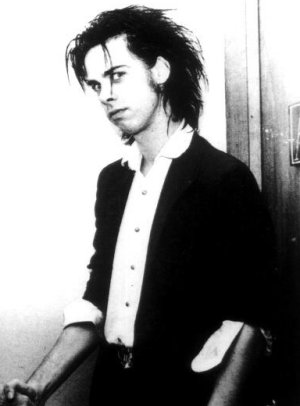 If there is one man in the rock-snob canon who can rattle off a series of filthy expletives without sounding anything less than utterly eloquent and polite, it is Nick Cave.
On the evening of Monday, Sept. 14, the 51-year-old Mr. Cave, best known for his role as the sinister singer-songwriter of Nick Cave and the Bad Seeds, was sitting crossed-legged on a small stage on the fourth floor of the Union Square Barnes & Noble, doing an interview with the journalist Katherine Lanpher—former sidekick to Al Franken on Air America Radio. He had come to read from his new novel, The Death of Bunny Munro ($25, Faber and Faber), which tells the dark and deranged tale of an insatiably horny traveling cosmetics salesman in the south of England who, following his wife’s suicide, takes his 9-year-old son out on the road.
The Hideout On The Block
Chicago Mobster Al Capone’s Wis. Hideout For Sale
Auction Set For Chicago Mobster Al Capone’s Sprawling Wis. Hideout, Stone House, Guard Towers
(AP) The buyer of a scenic property in northern Wisconsin will get more than just its bar and restaurant: They’ll have a former hideout of Chicago mobster Al Capone.
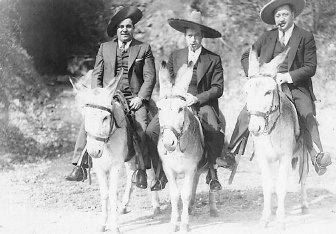 The 407-acre wooded site, complete with guard towers and a stone house with 18-inch-thick walls, will soon go on the auction block at a starting bid of $2.6 million.
The bank that foreclosed on the land near Couderay, about 140 miles northeast of Minneapolis, said Capone owned it in the late 1920s and early 1930s during Prohibition. Local legend claims that shipments of bootlegged alcohol were flown in on planes that landed on the property’s 37-acre lake, then loaded onto trucks bound for Chicago.
“He spent a lot of time there,” Chippewa Valley Bank Vice President Joe Kinnear said. “Whether it was for getting whiskey out of Canada or whoever knows. It is an incredible property.”
The property was more recently used as a tourist attraction. It includes Capone’s two-story stone home with a massive fireplace, two guard towers _ reportedly manned with machine guns whenever Capone visited _ a caretakers residence and other outbuildings.
Kinnear said the bar on the property was built from what was originally Capone’s eight-stall garage and still includes some portholes built to shoot through.
“It’s pretty neat,” he said.
What Daisy Lowe’s Mum Made Her Read
My secret life Daisy Lowe, model, 20
Interview by Charlotte Philby
My parents were … My mother was incredibly creative and absolutely mental. She nurtured me to do what I wanted to do when I wanted to do it.

The house I grew up in … There were loads, we moved around all the time. Our houses were always well designed with amazing antiques, white floorboards, big drapes and 1920s erotic paintings.
When I was a child I wanted to be … a lawyer. That didn’t quite work out. I left school just after my GCSEs, but I got good results so I proved to myself that I could do it.
The first time I got drunk … I had just turned 14, and was at a birthday party of a girl in the year above me. Her dad had put on a free bar and I spent most of the night kissing my best friend. It was ridiculous.
If I could change one thing about myself …I would make the tube that runs from my kidney to my bladder a normal shape, so that I didn’t have to have an operation soon.
You wouldn’t know it but I’m very good at … cleaning. It’s my de-stress if I’m in a bad mood.
You may not know it but I’m no good at …being patient.
Last night I dreamt … my best friend was given a new suit and I had an infestation of spiders living in my body. It was really scary.
What I see when I look in the mirror … Lots and lots of freckles.
My favourite item of clothing is … a pair of black Chanel boots, which I bought on eBay a few years ago and haven’t taken off since.
I wish I’d never worn … orange corduroy flares, which I wore as a child.
It’s not fashionable but I like … sports bras – they’re just so comfortable.
I drive/ride … I have a Nissan Figaro, which I love – but I can’t drive yet. So I walk everywhere with my dog Monty. He’s a Maltese and he’s awesome.
My home is … a big loft in New York with lots of 1970s furniture, which I share with my boyfriend Will. A lot of my friends have painted murals on the wall. It smells of my cooking and is usually rammed with people.
My favourite building … is Gaudi’s Batllo House in Barcelona. It’s a piece of art.
My favourite work of art is … ‘Gaia’ by Alex Grey. You can just get lost in it.
A book that changed me … There were two: ‘Prozac Nation’ by Elizabeth Wurtzel and ‘A Million Little Pieces’ by James Frey. My mum made me read them in order to help me understand addiction.
Banned Books Week

Banned Books Week:
Celebrating the Freedom to Read!
Banned Books Week is the only national celebration of the freedom to read. It was launched in 1982 in response to a sudden surge in the number of challenges to books in schools, bookstores and libraries. More than a thousand books have been challenged since 1982. The challenges have occurred in every state and in hundreds of communities. Click here to see a map of book bans and challenges in the US from 2007 to 2009. People challenge books that they say are too sexual or too violent. They object to profanity and slang, and protest against offensive portrayals of racial or religious groups–or positive portrayals of homosexuals. Their targets range from books that explore the latest problems to classic and beloved works of American literature.
Happy Rosh Hashanah

To All The Duffers I’ve Loved Before
Golfer accused of tossing 3,000 balls into Joshua Tree park
Joshua Tree National Park, in the California desert not far from Palm Springs, is known for its strange trees and bare rocks. But not golf.
That’s why the discovery of nearly 3,000 golf balls on the alien landscape caused the National Park Service to cry something other than “Fore!”, the Los Angeles Times tells us.
Seems the bevy of balls, tossed from a passing car, was just one golf lover’s tribute to dead duffers.
But the park service is calling Douglas Jones, a 57-year-old golf course worker, a litterer.
Park spokesman Joe Zarki explains:
“Sometime around 2007 our rangers began discovering large quantities of golf balls in some turnout areas of the park. We were wondering what was going on here. There were also some tennis balls involved.“He said he did it because he wanted to honor all the golfers who had died.”
Haiku Finder

JAMES FREY Tonight in Cologne – 8pm
 Hamburg:
HARBOURFRONT LITERATURE FESTIVAL
Date: Monday, 14 September, 9 pm
Tickets: € 12,-
Location: uebel & gefaehrlich, Feldstr. 66
Link: click for website
Stuttgart:
LiTERATURHAUS
Date: Tuesday, 15 September, 8 pm
Location: Stuttgarter Literaturhaus,
Breitscheidstr. 4
Tickets: € 8,-/6,-/4,-
Link: click for website
Cologne:
LiTERATURHAUS
Date: Wednesday, 16 September, 8 pm
Location: Koelner Literaturhaus, Schoenhauser Str. 8
Tickets: € 7,-/5,-/4,-
Link: click for website
Bad Brains Flip Flops

One week left to enter our Bad Brains Flip Flop contest!
| Last week we told you about our Bad Brains flip flop giveaway… Just a reminder that our contest ends next Tuesday. Made especially for the Fuji Rock Festival by our friends in Japan, these are not available in stores… so this is your only chance to get ’em!
Enter to win a pair of Bad Brains Flip Flops here. Bad Brains on Tour: HR Solo Dates |

We Don’t Need No Janko-cation
Beyond Sad – But At Least He’s Now At Peace

Mister ArtSee @ Half Gallery
Artist Elliott Arkin’s Highly-Anticipated Mobile Art Laboratory at Half Gallery

New York, NY – The Art-Z group, founded by artist Elliott Arkin, announced today the exhibition of a scale-model Mister ArtSee, a vintage ice-cream truck completely transformed into a wondrous mobile arts laboratory that can travel city streets and will host a wide array of engaging projects including installations, sound-pieces, performances, presentations, visual art and videos. The exhibition debuts on September 10th at Half Gallery during the New York Fall art preview and runs through September 17th.
A first-of-its-kind experimental platform in both form and content, Mister ArtSee was conceived by Elliott Arkin, and designed by Atelier DNA, a New York City architecture and technology studio headed by architect Dario Nunez-Ameni. A work of art as well as a space for art, Mister ArtSee has been developed to maximize versatility, accessibility and expandability as a self-sufficient, multipurpose art-mobile, whose possibilities are limited only by the imagination of its participants.
“Like a Swiss-army knife, Mister ArtSee will be equipped with numerous extensions—a platform stage, video projectors, a podium—with the ability to fold out and open up to facilitate such projects,” said artist Elliott Arkin. “The design seeks to achieve maximum versatility and world class artistry to fulfill our mission of bringing
In addition to Half Gallery founders James Frey, Bill Powers and Andy Spade, who represent Arkin, Mister ArtSee’s Board of Advisors include: the prominent Dutch art collectors Ben and Coco Van Meerondonk; Museum Magazine’s creator Larry Warsh; New York Cares founder Noah Gotbaum; architect Dario Nunez-Ameni and artists Marc Lafia, Kiki Seror and Renee Cox. The group has received several grants including $50,000 from the Annenberg Foundation, as well as a The Brooklyn Arts Council re-grant from the New York State Council on the Arts
Jim Carroll Gone

Larry Gelbart Gone
‘M-A-S-H,”Tootsie’ writer Larry Gelbart dies
By BOB THOMAS
LOS ANGELES (AP) – Larry Gelbart, the award-winning writer whose sly, sardonic wit helped create such hits as Broadway’s “A Funny Thing Happened on the Way to the Forum,” the films “Tootsie” and “Oh, God!” and television’s “M-A-S-H,” is dead.
 Gelbart died at his Beverly Hills home Friday morning after a long battle with cancer, said Creative Artists Agency, which represented him. He was 81.
His wife of 53 years, Pat Gelbart, told The Associated Press Friday that after being married for so long, “we finished each other’s sentences.” She declined to specify the type of cancer he had.
Gelbart, who won a Tony for “A Funny Thing Happened on the Way to the Forum,” an Emmy for “M-A-S-H” and was nominated for two Oscars, is most likely best remembered for the long-running TV show about Army doctors during the Korean War.
Carl Reiner, his longtime friend and colleague, called Gelbart “the Jonathan Swift of our day.”
A Golden Lion for Lebanon
Frey in “The Wilde Years”
SVA Presents “The Wilde Years”
11 Sep 2009
 School of Visual Arts (SVA) presents “The Wilde Years: Four Decades of Shaping Visual Culture,” an exhibition that celebrates designers, art directors and other creative professionals who have graduated from the BFA Advertising and Graphic Design Department at SVA.
Designed by Kevin O’Callaghan, chair of 3D Design at SVA, the multi-media exhibition space of “The Wilde Years” will place familiar advertisements, book covers, CD packaging and posters within everyday settings. A comfortable reading nook will highlight book jacket design and feature covers for James Frey’s A Million Little Pieces, Hilary Rodham Clinton’s Living History and Junot Diaz’s The Brief Wondrous Life of Oscar Wao, among other best sellers. Subway advertisements, including theatrical posters for Broadway hits like Rent, Chicago and John Leguizamo’s Freak, will be on view within a mock subway platform. A life-size bus shelter will include advertising campaigns for Anheuser-Busch, Pepsi and Showtime, while a mini-screening room will project television commercials and music videos.
Buster Balloon @ HALF GALLERY
Your Dress is Frey’d
Yesterday I went to see Buster Balloon at the Half Gallery. The display was mildly entertaining from the perspective of a 23-year-old but wildly fascinating to the three year old in a stroller next to me.

Among the creations were a miniature Elvis, an ice-cream cone, water faucet, gorilla, and a monkey smoking a cigarette (my favorite). Now I know why Jeff Koons proclaimed Buster, “The top balloon twister in the world.”
Yeah, Jeff Koons would say that wouldn’t he.
James Frey, half-author and a third of the partnership that comprises the gallery, was moping around outside.
Help Fight Spinal Muscular Atrophy @ Yankee Stadium Tonight
|
||||||||


Army Archerd Gone
R.I.P. Army Archerd
 Longtime Variety columnist Army Archerd died this afternoon at Ronald Reagan UCLA Medical Center of a rare form of cancer. He was posting on his online column as recently as July 27th. But he was best known for his “Just for Variety” column in the print edition of Daily Variety from 1953 to 2005. And, long before Ryan Seacrest even held a microphone, Army was a fixture on the Red Carpet at the Academy Awards as the interviewer of record. Conventional wisdom had it that an Oscar campaign wouldn’t be successful without multiple mentions in Archerd’s column. Among his countless news exclusives was the tragic 1985 news that Rock Hudson had the AIDS virus. This, like everything showbiz, Army handled without sensation. Though Hudson’s publicist Dale Olson had tried to cover up Rock’s illness, Archerd learned of Hudson’s hospitalization in Paris and “wrote one of the most carefully written pieces I have ever seen,” Olson recalled to Variety when Army retired his print column. “That’s one of the secrets of Army’s success. He would do a story, even if it was a difficult personal story, and not write it like gossip. The message was there, but it was gentle. His column will really be missed. There is no way to replace Army Archerd.” I, too, thought Archerd one of the last true gentleman journalists working in Hollywood, and one of the most accurate. He was always sweet and supportive towards me. My condolences go out to his wife of many years, Selma.
Press-shy celebrities from Marlon Brando to Johnny Carson always sought out Archerd. According to a 2005 tribute to the journalist written when he retired as a print columnist, when Carson was about to celebrate his 25th anniversary on NBC in 1987, he told his publicist: “I’m not doing any interviews, because if I do one, I’ll have to do them all. But if Army calls, I’ll speak to him.”
Disco At The Bowl

Saatchi On Saatchi
Charles Saatchi: secret life of a collector laid bare
With the publication of a new book, the publicity shy art collector Charles Saatchi answers questions about art, pornography and sleeping pills.
Published: 5:29PM BST 07 Sep 2009

Charles Saatchi and Nigella Lawson: ‘Without the BBC Britain would have become a very barren place’
Do artists deserve to get as rich as Damien Hirst, who I read is worth £100 million?
Only if you think of art as entertainment, in which case his pay scale sits alongside Tiger Woods, Harrison Ford, Roger Federer, Johnny Depp, Madonna and the other superstars.
Do you have colours you dislike, that you find put you off a painting?
Not really. But paintings with skulls or children’s dolls put me off. Celebrity faces are only OK if your name is Warhol. Scribbled words are only OK if your name is Twombly. Harlequins are only OK if your name is Picasso.
You are meant to be tyrannical about installing the art in your exhibitions, and don’t let artists interfere. Why?
There are very few people who know how to install art. David Sylvester was a master and we talked of little else except how inept most artists are at showing their work to best advantage. Sadly, nearly all professional curators are caught short in this deptartment.
I may not be much good at most things, but if I didn’t have the pleasure of planning and installing shows, and doing it better than anyone else, I would have stopped buying art many years ago.
Apologies if that sounds a shade immodest, but there it is.
Get Your Babas Runnin’
September 8 2009
.jpg)
Learning to ride a bike is one of the most valuable skills a child can learn, helping them master the art of balance, a skill crucial to so many other physical activities and sports. UK based Kiddimoto has created a range of cute-looking wooden bikes which are designed to teach young children precisely that – balance. The slimline, lightweight birch plywood bikes are easy steer and manoeuvre and feature proper rubber tyres, providing a smooth ride for little bottoms by gliding across outdoor surfaces.
.jpg)
“I’ve only ever read two books in my life, and one of them was Jerry’s [the other was James Frey’s A Million Little Pieces].”
Gunslinger back to give it his best shot
On the eve of his comeback to racing, Kieren Fallon has his sights set on Ryan Moore’s champion jockey crown
David Walsh, Chief Sports Writer
“I ain’t like that no more, I ain’t the same, Ned. Just cause we’re going on this killin’, that don’t mean I’m gonna go back to being the way I was. Ned, you remember that drover I shot through the mouth, and his teeth came out the back of his head, I think about him now and again. He didn’t do anything to deserve to get shot, at least nothin’ I could remember when I sobered up” — William Munny (Clint Eastwood) speaking to Ned Logan (Morgan Freeman) in Unforgiven
 A friend persistently asks why I bother with Kieren Fallon. Here is the answer; as clear as the summer light on this Tuesday evening at his apartment in Newmarket. We had played golf earlier in the afternoon and, only half-interested, he’d won 3&2. “Come back for something to eat,” he said, “Geraldine is cooking dinner.” He called his sister to warn her but it was too late; Geraldine had been expecting just him. “It’ll be all right,” he said. “Just divide what you have in two, there’ll be plenty.”
Dinner is wonderfully Irish: bacon, cabbage, a delicious white sauce and the flouriest potatoes. You mention the potatoes, and Geraldine lists the five best varieties, all by their names.
In the hallway, on the living room walls, everywhere there are photographic testimonials to his genius. Fallon on Russian Rhythm, Kris Kin, Ouija Board, Fallon on any number of Henry Cecil fillies, Fallon in the silks of Coolmore, on Hurricane Run, George Washington, Dylan Thomas.
“Have you read Jerry Bailey’s book?” he asks. It’s the autobiography of the great American rider. “I’ve only ever read two books in my life, and one of them was Jerry’s [the other was James Frey’s A Million Little Pieces]. I loved Jerry’s book, his story. He had problems, he sorted them out, he came back and enjoyed the best part of his career. Look at Garrett Gomez now, the best jockey riding in America today, and look what he’s come through.”
Graffiti In The Main

When it starts inspiring the motifs that adorn designer handbags, graffiti’s entrée into the world of mainstream culture is no longer in doubt. It is in this spirit that the expansive exhibition “Born in the Streets — Graffiti,” which runs until Nov. 29 at the Fondation Cartier in Paris, is being held. At the same time, curator Thomas Delamarre says that he isn’t about to “hang some canvases on the wall and say, ‘That’s graffiti.’ Graffiti exists because it was born in the street.”
The show recounts the art form’s inexorable spread, from the New York City tenements of the 1970s to the streets of São Paolo in 2009. Pioneers like PHASE 2 and Seen, who by the 1980s were transforming New York subway cars into traveling canvases, here reproduce their works in full scale. Pieces by Jean-Michel Basquiat and Keith Haring from the same period reveal graffiti’s impact on fine art. Rare films and headlines describe the deaths (spray-painting on busy subway lines is hazardous) and municipal cleanup efforts that ended graffiti’s golden age, at least in New York, by 1989.