
Greatest Stroller Ever Recalled For Amputating Children’s Fingers
One Million Maclaren Strollers Recalled — What’s up?
November 09, 2009 12:02 PM

Name of product: Maclaren Strollers
Units: About one million
Distributor: Maclaren USA, Inc., of South Norwalk, Conn.
Hazard: The stroller’s hinge mechanism poses a fingertip amputation and laceration hazard to the child when the consumer is unfolding/opening the stroller.
Incidents/Injuries: The firm has received 15 reports of children placing their finger in the stroller’s hinge mechanism, resulting in 12 reports of fingertip amputations in the United States.
Description: This recall involves all Maclaren single and double umbrella strollers. The word “Maclaren” is printed on the stroller. The affected models included Volo, Triumph, Quest Sport, Quest Mod, Techno XT, TechnoXLR, Twin Triumph, Twin Techno and Easy Traveller.
Sick-ass Amazing With A Blanket On Top – Jeff Beck and Imogen Heap
Kindle & The Great Age of Infrastructure
from John Gerzema’s THE BRAND BUBBLE
The Great Age of Infrastructure
by JOHN GERZEMA on AUGUST 19, 2009
 I had an interesting discussion with James Frey, author of ‘A Million Little Pieces’ and ‘Bright Shiny Morning’ the other day. He was showing me all the books he was reading on his Kindle. I think if Jeff Bezos would have been at this barbeque, he would have signed up James to do his ads. But the interesting point James raised was that the value isn’t the device, but the pipe. Kindle isn’t really beautiful, or incredibly versatile. But because Amazon has built the means to virtually access books, magazines and other literature anytime, anywhere, our reading behavior is being transformed.
Like iPod’s value is in iTunes, and iPhone in its applications, infrastructure is once again, king. Just as Tom Friedman pointed out that cheap fiber optics after the 2000 recession enabled global commerce, the investments of the early part of this decade by Amazon, Apple, Cisco and others are now bearing fruit as this recession begins to abate. And this is creating value for a whole host of new partners. Consider my conversations last week with Andrew Rashbass, CEO of the Economist, they have found a burgeoning Kindle audience, which supplements their existing print readership.
Mano’s Low Pass
When White Folk Skank
Heroes Freakin’ Rule

La Danse
La Danse: The Paris Opera Ballet (2009)

Photograph from Zipporah Films
A scene from “La Danse: The Paris Opera Ballet,” a documentary filmed at the Palais Garnier.
Creating Dialogue From Body Language
By A. O. SCOTT
In “La Danse: The Paris Opera Ballet,” his 36th documentary in more than 40 years, Frederick Wiseman takes his camera into the stately and elegant Palais Garnier in Paris, observing rehearsals, staff meetings and, finally, performances of seven dances, including classics like “The Nutcracker” and spiky new work by younger choreographers. To say that the film, sumptuous in its length and graceful in its rhythm, is a feast for ballet lovers is to state the obvious and also to sell Mr. Wiseman’s achievement a bit short. Yes, this is one of the finest dance films ever made, but there’s more to it than that.
Stealing from American Indians
from Art Market Monitor nee The Wall Street Journal
Stealing from American Indians
by Marion Maneker
In art, they say that talent borrows and genius steals. Either way, American Indian artisans are getting pushed out of their own market, according to the Wall Street Journal. The numbers of imported knockoffs of American Indian designs are simply staggering and heartbreaking, since much of the imported work is intentionally passed off as the real thing:

The authentic Indian-made earrings are on the right.
The Indian Arts and Crafts Association, a trade group, estimates that nationally, as much as 75% of the roughly $1 billion of jewelry, pottery, rugs and other merchandise sold every year as authentic is not.
In the jewelry business, as many as 90% of pieces held out as examples of Native American craftsmanship are fake, according to the New Mexico attorney general’s consumer-protection division, which is trying to police the trade along with federal authorities.
But it is extremely hard to tell the genuine goods from the faux artifacts, artists and experts say.
Why Music Videos Can Still Be Fun To Watch
Homem de Aranha
Brazil crime wars: Spiderman’s story of drugs and Jesus in Rio’s slums
How evangelical preachers are trying to stem the tide of killings in the Olympic city
by Tom Phillips in Rio de Janeiro

“If you add them all up I control 15 communities,” boasted Spiderman as his shiny 4×4 hurtled through the narrow backstreets of western Rio de Janeiro. Behind the wheel was Juarez Mendes da Silva, 28, one of the Brazilian capital’s most wanted drug lords, better known by the nickname Spiderman. The words “Jesus” and “Christ” were tattooed on to his forearms in black. In the boot his pet dog, Bloodsucker, shared space with an M-16 assault rifle.
With the dashboard’s electronic clock marking 2am, the car careered through the Complexo da Coréia, one of the city’s largest and most notorious slums, home to around 60,000 Brazilians and the HQ of one of the city’s three main drug factions, the Pure Third Command.
What would happen if we ran into the police? “They would open fire,” Spiderman replied bluntly, his mouth half full with fluorescent pink candy. Welcome to the inner-sanctums of a murky underworld of murder, violence and solitude that is rarely seen by outsiders. Spiderman was conducting a guided tour of the sprawling slum where he was born, and where he was now in charge of the area’s lucrative drug trade and the leader of 200-strong private militia of heavily-armed young men.
“The lives we lead – we know they aren’t right,” he stuttered, pulling up outside a local sweet shop so he could stock-up on candy.
Bikies crow, “It’s going to be a better option for us if he’s in jail.”
from the Sydney Morning Herald
Bikies have Coles in their sights
EAMONN DUFF AND STEVE BARRETT, November 1, 2009
AN OUTLAW motorcycle gang has threatened jail-yard violence against the alleged mastermind of Australia’s largest art fraud – if he is ever sent to prison.

The gang said 10 of its members were allegedly ripped off for a total of $1 million by former Sydney art dealer Ron Coles.
Fraud detectives have been investigating Mr Coles after receiving more than 150 complaints from art collectors and investors from whom he allegedly disappeared with more than $30 million in paintings and cash.
After Mr Coles’s hiding spot – on the Central Coast where he drives taxis to make ends meet – was revealed, a senior member of one of the state’s largest outlaw clubs threatened his safety.
The club member said it was waiting for police to charge Mr Coles before it took action.
”It’s going to be a better option for us if he’s in jail,” the member said. ”It doesn’t matter where he gets sent, we can get to him once that happens. It’ll be easier to work with him inside there.”
“It’s an exciting time in the art world – no one really owns the 21st Century.”
Pirate Cat Gone. The FCC is comprised of a bunch of assholes.
Where Were You When They Shut Down Pirate Cat Radio?
Chances are, when you’ve tired of your 19th straight listen to Black Eyed Pea’s latest jam, or can no longer stand the banal, pre-fabricated opinions that litter the FM airwaves, you have stumbled across a true San Francisco gem — 87.9 fm, Pirate Cat Radio. Chances are if you have tried to find it again this last month, you’ve heard only static.

That is because the FCC recently put an end to Pirate Cat’s 13-year reign of terrestrial broadcasting, and fined PCR founder Monkey $10,000. The FCC sites a breach in section 301 of the US Communications Act of 1934, which forbids any person from transmitting signals by radio from within the United States without a license.
Pirate Cat has always been aware of this breach, but argue that they are legally allowed to do so. They cite the US Code Federal Regulations Title 47 Section 73.3542, which authorizes broadcasting without a license in times of national emergency, or continued involvement in a war.
The FCC’s order has volunteers and listeners livid. In a statement posted on Pirate Cat’s website, Monkey argues that since the FCC was first established to provide fair, efficient, and equitable distribution of radio service to serve the public interest, shutting down a radio station which does just that is preposterous and hypocritical.
The statement continues:
[ click to continue reading PCR statement at SFAppeal.com ]
[ click to visit Pirate Cat Radio – no federal a-holes allowed ]
The Wave
Black and WTF
Pinball Lives
Pinball Hall of Fame: The Williams Collection
BY STU HORVATH
DAILY NEWS STAFF WRITER
Friday, October 9th 2009, 1:43 PM

The glory days of the arcades may be over, but pinball lives on in “Pinball Hall of Fame: The Williams Collection.”
It is hard to believe that in the era of first person frag-fests that a collection of classic pinball games can be so compelling, but developer FarSight Studios delivers something special with this anthology. With a combination of smooth controls, a loving attention to detail and a healthy dose of nostalgia, the budget title more than justifies its $40 price.
Pinball enthusiasts will drool over the extremely realistic rendering of such classic machines as Black Knight and Medieval Madness. There’s a good chance that the playfield and backglass art never looked this good in real life.
Porecore Twitchtronica
The 5000 Fingers of Dr. T
The view: The 5,000 Fingers of Dr T and other great lost children’s films
Why put up with tat the likes of Daddy Day Care or Beverly Hills Chihuahua when there’s a treasure trove of genuinely brilliant kids’ films out there?

Beware the child catchers … The 5,000 Fingers of Dr T. Photograph: Ronald Grant Archive
Let’s not be ungrateful here – for film-lovers with kids, these are heady times indeed. I’m not sure even the fond reception Fantastic Mr Fox received quite did justice to its handmade pleasures (the wolf salute alone makes me want to hug Wes Anderson and not let go). And then, of course, there’s Up, the movie that’s repeated WALL-E‘s trick of emerging as possibly the year’s finest film while being made (at least ostensibly) for an audience still doing its shoes up with Velcro. Whichever way you look at it, in the context of the careless tat parents usually have to dodge or suffer through, the autumn of 2009 has been a vintage season.
But the snag is that at some point in the future, these two gleaming moments will recede, and life for the young cinephile will return to normal. And normal is a bleak business for children’s movies in Britain, a wearying parade of the slapdash and tossed-off. Which is why it’s doubly frustrating when some of the most genuinely brilliant kids’ films ever made aren’t even available, much less as accessible and celebrated as they should be. It’s a sorry situation that brings me muttering darkly to the subject of The 5,000 Fingers of Dr T.
Progenitor of “Popular Culture” Professor Ray B. Browne Gone
RAY B. BROWNE, 1922-2009
BGSU professor began popular culture center
BOWLING GREEN – Ray B. Browne, 87, who created an academic discipline and a national movement by studying the stuff of everyday life – whether comic books, fast food, pop tunes, or situation comedies – died Thursday in his home of congestive heart failure.
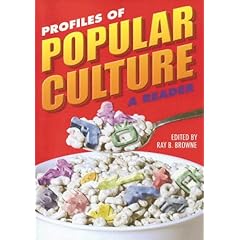 “He’s the father of popular culture studies,” said Gary Hoppenstand, a professor of American studies at Michigan State University, and a popular culture graduate student at Bowling Green State University and protege of Mr. Browne’s.
“He’s done more to affect studies in the humanities than any other individual the last 30 or 40 years.”
Mr. Browne began the Center for the Study of Popular Culture in 1968 at BGSU. The Popular Culture Library followed.
In 1973, despite detractors, he began a distinct department of popular culture. His history of the popular culture movement’s early struggle is called Against Academia.
“Ray opened the windows of the academy, just opened them up,” said Michael Marsden, one of the department’s first faculty members, now dean and academic vice president of St. Norbert College, De Pere, Wis. “We have the people’s culture being studied, and we’re learning how complex and wonderful and significant it is.”
The BGSU department was the first of its kind.
You’re Breaking My Ribs With Those Thighs, Lady
SVA’s Wilde Years
Where the Wilde Things Are
.jpg)
(Photos: Laura Yeffeth)
As Richard Wilde, chairman of the BFA Advertising and Graphic Design Department at New York’s School of Visual Arts, celebrates his fortieth year at the College, SVA is recognizing him with a dazzling exhibition of iconic works by more than 100 alumni from throughout his tenure. Designed by Kevin O’Callaghan, “The Wilde Years: Four Decades of Shaping Visual Culture” features a This is Your Life-style slate of design stars—including Rodrigo Corral ,Drew Hodges (SpotCo), James Victore , Julia Hoffman (MoMA), Archie Ferguson (HarperCollins), Molly Sheahan (BBDO), and Scott Wadler (MTV Networks)—and their greatest hits, from Pepsi ad campaigns and CD packaging for Eminem to theatrical posters and the irresistible book jacket for James Frey ‘s A Million Little Pieces. The exhibition runs through Saturday, November 7, at the Visual Arts Gallery in New York City
James Rosenquist Memoir
Rosenquist Writ Large, by Himself
“True Colors: The Real Life of the Art World,” Anthony Haden-Guest wrote that the painter James Rosenquist possessed, most of the time, a “preternaturally healthy glow, like a hand-colored photograph.” You could say something similar about Mr. Rosenquist’s new memoir, which is an unexpected treat — it’s a ruddy and humble book, lighted from within by the author’s plainspoken, blue-collar charm.
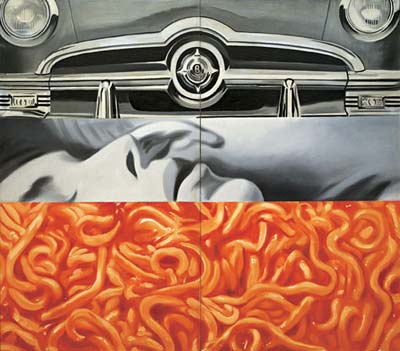
Mr. Rosenquist came of age as a Pop artist in Manhattan during the 1960s, alongside Andy Warhol and Roy Lichtenstein. He knew everyone, and seemed to be everywhere. He shared a studio building by the Lower Manhattan waterfront with Ellsworth Kelly and Agnes Martin; Jasper Johns and Robert Rauschenberg painted nearby. He drank in the Cedar Tavern with Willem de Kooning and LeRoi Jones.
Mr. Rosenquist describes strange nights in Hollywood accompanying the actor Dennis Hopper, who “prowled through the unlocked houses of aspiring actors and actresses.” Mr. Rosenquist gave a party for Abbie Hoffman’s future girlfriend during which people danced indoors between lighted road flares. The Warhol star Ultra Violet cavorted topless on Mr. Rosenquist’s front lawn in East Hampton one Sunday morning just as church was letting out. He was not all work and no play.
“I became a slut in New York looking for sluts.”
Book Review from Shelf-Awareness
Steve McQueen, King of Cool: Tales of a Lurid Life by Darwin Porter (Blood Moon Productions, $26.95, 9781936003051/1936003058, December 25, 2009)
 Darwin Porter approaches Steve McQueen through his cinematic image: “A man’s man and a woman’s dream” to his admirers or a star saddled with a face that “looked like a Botticelli angel who had been crossed with a chimp” to those less enchanted with his Bad Boy appeal. Exhibiting a tabloid reporter’s enthusiasm for dirt, Porter investigates how McQueen developed the unique persona that captivated audiences in such movies as The Magnificent Seven and Bullitt.
McQueen’s early years were a nightmare of abandonment, neglect, abuse and exploitation. His mother was an alcoholic; purportedly one of his “step-fathers” put him on the street as a child prostitute; he spent time in reform school and ran away to kick around brothels as a towel-boy. All that was a nasty prelude to a direction-changing three-year stint with the Marines (he enlisted at 17) and acting classes in Greenwich Village.
If McQueen was secure in anything, Porter assures us, it was his physical appeal and sexual allure. Notorious for having the morals of an alley cat (according to many sources), he admitted to one of his girlfriends that he would do anything with anybody–men, women, acting coaches, co-stars, competitors, idols–if it landed him a part. He told Rod Steiger, “I became a slut in New York looking for sluts.” There are no complaints on record.
Yesterday, oh my larynx seemed so far away…
“The awful screams of the crew of the ‘Ellie May’.”
Bulwer-Lytton Fiction Contest
2009 Results
Folks say that if you listen real close at the height of the full moon, when the wind is blowin‘ off Nantucket Sound from the nor’ east and the dogs are howlin‘ for no earthly reason, you can hear the awful screams of the crew of the “Ellie May,” a sturdy whaler Captained by John McTavish; for it was on just such a night when the rum was flowin‘ and, Davey Jones be damned, big John brought his men on deck for the first of several screaming contests.
David McKenzie
Federal Way, WA
The winner of 2009 Bulwer-Lytton Fiction Contest is David McKenzie, a 55-year-old Quality Systems consultant and writer from . A contest recidivist, he has formerly won the Western and Children’s Literature categories. David McKenzie is the 27th grand prize winner of the contest that began at San Jose State University in 1982.
An international literary parody contest, the competition honors the memory (if not the reputation) of Victorian novelist Edward George Earl Bulwer-Lytton (1803-1873). The goal of the contest is childishly simple: entrants are challenged to submit bad opening sentences to imaginary novels. Although best known for “The Last Days of Pompeii” (1834), which has been made into a movie three times, originating the expression “the pen is mightier than the sword,” and phrases like “the great unwashed” and “the almighty dollar,” Bulwer-Lytton opened his novel Paul Clifford (1830) with the immortal words that the “Peanuts” beagle Snoopy plagiarized for years, “It was a dark and stormy night.”
Most entries are submitted electronically through the Contest’s Web site: http://www.bulwer-lytton.com/
Host A Jewish Book Author
|
Host a Jewish Book Author Need a Jewish book author for your event? Look here! Welcome to Host-a-Jewish-Book-Author.com, an independent site created by literary agent Anna Olswanger, where you can contact Jewish book authors by name, location, or genre. Host-a-Jewish-Book-Author.com lists only authors who have agreed to participate, with authors themselves providing their contact information, book titles, lecture topics, and areas of travel. Host a Jewish book author today!
|
 |
Spy On Your Dog
It comes in peace.

Your friends at Skynet bring you the Rovio! Rovio is a robotic webcam with microphone and speaker for 2-way audio. This wi-fi connected bad little bot will stream video and audio to your favorite web-enabled browser anywhere in the world! Use your PC, your MAC, your iPhone, even your PS3 to control Rovio.In this way meatbags will have the illusion of control over the machine. Drive the bot around the house, take pictures of the family and e-mail them to friends. All this can be done from thousands of miles away.
Throwdown At The Bee
A Literary Night Out: Spelling Bee Humiliation and Partying With PEN
By Steven Kurutz
The Council of Literary Magazines and Presses [CLMP] was holding its annual spelling bee at the Diane von Furstenberg Studio. Since 1967, the CLMP has offered assistance to literary publications, ranging from the well-known (N+1; Virginia Quarterly) to the obscure (Les Figues Press).  To simultaneously raise money and humiliate writers, each year the organization holds a charity auction and spelling bee. Last year’s winner was Harper publisher Jonathan Burnham, who edged out Sara Nelson, former editor of Publishers Weekly and current books editor for “O: The Oprah Magazine.”
Nelson was determined to avenge the defeat, but said her desire hadn’t translated to hours spent reading the dictionary. “I studied one year and got knocked out in the first or second round,” she said. “Now I don’t study.” Other spellers included novelists James Frey and Francine Prose, Vogue editor Sally Singer, Village Voice mainstay Michael Musto, former New York Times reporter Alex Kuczynski and New Yorker staffers Nancy Franklin and Ben Greenman. The event was emceed by literary agent Ira Silverberg, and judged by Oxford English Dictionary editor-at-large Jesse Sheidlower, who took visible delight in tripping up accomplished writers with deceptively simple-to-spell words like sacrilegious (which knocked several contestants out).
Britain’s Most Violent Prisoner Goes To The Matte
Looking at an Inmate, Seeing an Artist

In the British press he is often called the country’s most violent prisoner and — thanks to his knack for setting off riots and engineering hostage situations — its most expensive inmate.
But in “Bronson,” a stylized film biography by the Danish director Nicolas Winding Refn, this tabloid legend is above all a kind of performance artist, a savage showman for whom, Mr. Refn said, “violence is the brush and life is the canvas.”
This may seem like an overly romantic way to portray the life of a man who has been held in solitary confinement for a total of some three decades. But when Mr. Refn, 39, identifies Bronson’s aggression as a perverse means of creative expression, he is, in a sense, speaking from experience.
“I used to think art had to be a destructive medium,” Mr. Refn said over lunch in Manhattan recently. “When I began making films I was 24. It was like punk rock. Everything had to be destroyed.”
Angels Of Anarchy
Still crazy after all these years
The first major international exhibition of surrealist art by women in more than 60 years opens in Manchester. It was worth the wait

Above: Dora Maar, Sans Titre, 1934, photomontage–a woman famous as Picasso’s muse, but not as an artist in her own right
Angels of Anarchy: Women Artists and Surrealism26th September to 10th January 2010, Manchester Art Gallery
Women are often the subjects of surrealist art: dismembered, deliquescent, with doors in their stomachs, breasts for eyes and so forth. More elusive, however, are women as proponents of surrealist art. Lee Miller and Frida Kahlo are the star names; general surveys of the movement also tend to include a few individual works by women–Meret Oppenheim’s Object (a teacup, saucer and spoon covered in fur, 1936), Leonora Carrington’s shock-haired Self-Portrait (1938) with rocking horse and Eileen Agar’s sculpture of a scarf-shrouded head, Angel of Anarchy (1936-40). But, as a new exhibition in Manchester shows, there are many more heroines of surrealism who have been sidelined from the canon.
The alpha males of surrealism are among the best-known names in 20th-century art: André Breton, Salvador Dalí, Marcel Duchamp, Max Ernst, Man Ray, Joan Miró. So why haven’t we heard of Emmy Bridgewater, whose influence on the British movement was—according to the French critic Michel Remy—as powerful as Dalí’s in France? Search for her name in the British Library and there is only one return, a flimsy exhibition catalogue. And why haven’t we heard of the devoted lesbian stepsisters of Jersey, Claude Cahun and Marcel Moore? They fought the Nazi occupation of the island with a campaign of subversive propaganda, some of it in rhyme. Yet instead of getting the Hollywood biopic they clearly deserve, they tend to be discussed only in journals of gender studies.