
Pot Saves The Toothless
How Forks Gave Us Overbites and Pots Saved the Toothless
Historical changes in the ways we cook and eat have dramatically altered public health.

Bee Wilson is the author of Consider the Fork, which documents the evolution of cooking and eating technology. In the book, Wilson describes many unintended consequences of new methods of or materials for cooking and eating. Here she talks about some of the health ramifications of such changes.
you write in the “Pots and Pans” chapter how until the 18th century most families had one big pot, a cauldron, that had a sort of palimpsest porridge in it — they just kept adding new things to cook along with whatever was left over from the day before. So a lot of what people ate was soft. Were there dental changes once other ways of cooking became readily available?
The big dental change that was seen with pots happened with the initial adoption of pottery for cooking around 10, 000 years ago. Until the cooking pot was invented, no one who had lost all their teeth would survive into adulthood. There are no traces of edentulous — toothless — skeletons in any population without pottery. Pots made it possible for the first time to cook nourishing stew-like meals that required no chewing but could, rather, be drunk. So having teeth was no longer necessary for survival. This is another clear example of how utensils have acted as a kind of robotic extension of the human body.
Go KIM Go MEGA
Kim Dotcom: the internet cult hero spoiling for a fight with US authorities
German-born former hacker says his eyes have been opened to US tactics after his Megaupload site was shut down last year
by Toby Manhire in Auckland

[VIDEO: Kim on Mega, Hollywood, the internet and copyright enforcement]
In massive, swaggering capital letters, “Mega” stretches across the grassy slope in front of Dotcom Mansion. A huddle of electricians and carpenters are removing the wooden stencils and wiring in the fluorescent tubes. They are up to G. All around the vast grounds of Kim Dotcom‘s luxury home just north of Auckland, New Zealand, gardeners and technicians are busy, like Oompa-Loompas at the Chocolate Factory, setting up for the big night, overlooked by life-size inflatable giraffes and hippos.
Uranus Is Built On A Funny Tilt
Thanks Interplanet Janet & Schoolhouse Rock for 40 years of Informative Fun
Lit Graffit’
Literary Graffiti From All Over the World

Bedding a [robot] nurse [will be?] the number one fantasy among men.
Robots Will Soon Fulfill All Your Sexy Nurse Fantasies
By Jessica Roy
 Ah, the medical professional fantasy: pretty mundane fodder for a generation reared on porn, but still immensely popular. Bedding a nurse is the number one fantasy among men, in case you haven’t been to a Halloween party in the past 25 years.
Now, some futurists are predicting that robots will have a dual function in our impending utopian society: not only will they care for us when we’re sick, but they’ll also satisfy our sexual fantasies in the process.
Transhumanity.net predicts that medical robots will eventually come equipped with a program that allows them to use sex as a perk to help them stand out in the crowded marketplace. Why hire a doctor robot when you can hire a doctor robot with BOOBS?
Imagine this, dudes. Your doctor who attends to your rectal health is a curvy she’bot who straps you face down with your legs spread for a prostrate exam and colonoscopy. After freshening the air with lime spray from her nipples, she divinely massages you, before gliding her slippery 18-inch techno-tongue into your anus.
The nurse would eventually bring the patient to orgasm–mostly for medical reasons, of course!
“I’ve got a whole shelf full of ‘fuck you’ over there.”
Skulduggery, Claim and Counterclaim – Foosball
The Murky History of Foosball
How did the tabletop game get from parlor halls in 19th-century Europe to the basements of American homes?
By Derek Workman

A group of young Parisians playing foosball at a cafe in 1958. (Rue des Archives / The Granger Collection, New York)
In the best tradition of skulduggery, claim and counterclaim, foosball (or table football), that simple game of bouncing little wooden soccer players back and forth on springy metal bars across something that looks like a mini pool table, has the roots of its conception mired in confusion.
Some say that in a sort of spontaneous combustion of ideas, the game erupted in various parts of Europe simultaneously sometime during the 1880s or ’90s as a parlor game. Others say that it was the brainchild of Lucien Rosengart, a dabbler in the inventive and engineering arts who had various patents, including ones for railway parts, bicycle parts, the seat belt and a rocket that allowed artillery shells to be exploded while airborne. Rosengart claimed to have come up with the game toward the end of the 1930s to keep his grandchildren entertained during the winter. Eventually his children’s pastime appeared in cafés throughout France, where the miniature players wore red, white and blue to remind everyone that this was the result of the inventiveness of the superior French mind.
There again, though, Alexandre de Finesterre has many followers, who claim that he came up with the idea , being bored in a hospital in the Basque region of Spain with injuries sustained from a bombing raid during the Spanish Civil War.
“‘War crimes’ are defined by the winners. I’m a winner. So I can make my own definition.”
“Do you like Barack Obama?” I asked Richard Marx.
Right Here Waiting
After frequenting a local haunt where nobody knows his name, a Chicago writer makes new friends, rips on Richard Marx online, and then suddenly lands a real live celebrity musician at their door.

“Wow,” I told my sister. “Richard Marx is blowing up my inbox.”
I called my editor.
“I’ve been getting emails from some guy who says he’s Richard Marx,” I said. “I think it’s an impostor. The only thing that makes me think it might really be Richard Marx is that it’s from an AOL account.”
The next day, my editor told me he’d traced the emails to a MySpace account with the same tag.
Except the emails hadn’t been coming from a guy with a MySpace account. They were actually from Richard Marx. How do I know? Because I received this tweet from Richard Marx’s verified Twitter account[.]
“Richard Marx is totally calling me out on Twitter,” I told my editor.
“Just ignore it,” he said. “It’ll blow over.”
“I’m not going to ignore it. I’m not going to look wimpier than the guy who wrote ‘Right Here Waiting.’ He says he’ll meet me anywhere in the city.”
So I emailed Richard Marx, inviting him to meet me at seven the next evening at the Lighthouse. Then I went down to the bar to prepare the boys for Richard Marx’s arrival. I wanted a posse behind me when he walked in the door. Vinko and Paddy, our token Irishman, were sitting at the end of the bar, next to the beer cooler. We looked up Richard Marx on Billy the bartender’s laptop and starting slagging him.
“You should send him an email and tell him you’ll be right here waiting for him,” Paddy suggested.
I got to the Lighthouse an hour early. By 6:45, I had half a dozen guys behind me: Vinko, Paddy, Billy, Aquaman, Brian, and Mike. Nobody wanted to miss Richard Marx. By 7:15, Billy had left the bar, convinced Richard Marx wasn’t going to show.
Then someone spotted a black Jaguar rolling down Chase Ave. I looked out the window. Billy was walking back up the street, alongside Richard Marx. I had steeled myself for this confrontation by drinking an entire pint of light beer. Richard Marx didn’t get two steps past the door before a guy at the bar stuck out his hand and said, “Hey Richard, good to see you.” I waved to let Richard Marx know I was the guy who had called him shameless.
Zorb Of Death
This is awful…
Collapsed Genius
Secret Memo Regarding Nirvana’s ‘In Utero’ Reissue Leaked

By the Collapse Board editors
The following document was obtained by Collapse Board from an unnamed source. It is currently being distributed to all major music publications and websites. Despite the threat of lawsuit, we have decided to publish this document verbatim. The author of the document is unknown.
(starts)
This memo is being sent out to prepare everyone for the major musical event of 2013. I am speaking, of course, about the 20th anniversary reissue of In Utero by Nirvana…. To understand why this is the case we must look once more to The Beatles. The sheer amount of Beatles literature (and its continued market success) should tell us all one very important fact: people not only like to read the same story over and over again, they demand it. Our job is to retell the story, to reinforce the legends, to emphasise the inflexibility of the narrative. So, given these facts I’ve prepared some bulletin points that focus on what each review should highlight:
1. Give some brief background details. This is called SETTING THE SCENE. The Nirvana/Kurt Cobain legend must reinforce again and again the idea of the reluctant star, the uncomfortable voice of a generation. I recommend the use of the term “thrust into the limelight”. It functions beautifully for our purposes…..
Kurt Cobain: Reluctant star. Pressure. Compromise. Depression. Heroin. Death. It’s that simple. Don’t feel like you are selling yourself short by sticking to these guidelines. Instead know that you are performing a public service. You are providing comfort and certitude in a world of confusion. You are giving people something to believe in. You are helping to make the art of Kurt Cobain immortal. Expect more high profile media events along the lines of the Nirvana/McCartney collaboration before long and, with any luck, we can anticipate a lucrative last quarter in 2013. One last thing: is 2014 too early for a 15th anniversary of the first White Stripes album, or should we wait for the 20th anniversary? I look forward to your feedback. Let’s make the myths.
Reverse Fireworks
Sol Yurick Gone
Sol Yurick obituary
American novelist best known for The Warriors, a tale of gangs and street violence in New York
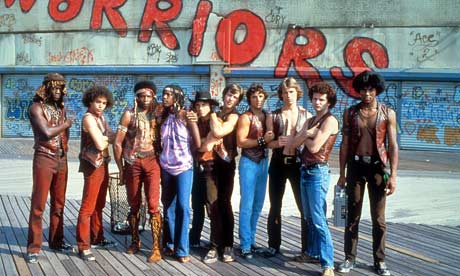
The American novelist Sol Yurick, who has died aged 87, was too radical, too extreme and too violent for the respectable literary establishment of New York, yet no writer more fully embodied the city’s anguished spirit in the 1960s. His novels The Warriors (1965), Fertig (1966) and The Bag (1968) constitute a trilogy of vibrant energy, biting satire and high, though irreverent, artistic seriousness.
The Warriors, a tale of gangs and street violence, was rejected by 27 publishers before it finally appeared. With its carefully crafted parallels with Xenophon’s Anabasis, it was more literary than Hubert Selby Jr‘s Last Exit to Brooklyn (1964), but shared its gritty feel for the city’s underclass. In 1979 it was made into a stylish film by Walter Hill. Vincent Canby in the New York Times considered the film “a mish-mash of romantic cliches, moods and visual effects”.
Yurick, who thought it trashy and sentimentalised, agreed. After the New York premiere, his daughter, Susanna, said: “It’s all right, daddy, the kids will love it.” And they did. The Warriors became a cult classic, later embraced by hip-hop acts including the Wu-Tang Clan, spoofed in a Nike commercial and adapted as a PlayStation 2 game.
Hill’s movie drew upon comic-book characterisation but Yurick, who came out of the proletarian belly of New York, knew better. His parents, Sam and Flo, immigrants from eastern Europe, were communists and trade-union activists. Marx and Lenin, strikes and demonstrations, were regular topics of dinner-table conversation. His earliest political memory was, at the age of 14, the anguish he felt at the Stalin-Hitler pact.
Tweets From Rofihe

Goddess Mother Of The Dead
Dead bodies abound on Mount Everest

It is estimated that over 200 people have died in their attempt to reach the summit of Mount Everest. The causes of their death vary as widely as the weather at Mount Everest’s peak. At the summit, winds can reach hurricane strength literally blowing the climber off the mountain. Oxygen levels leave the climbers gasping for breath and their oxygen deprived brains leave them unable to make rational decisions. Some climbers stop for a brief rest only to slowly drift into sleep, never to wake up. All dangers aside, ask any climber who has beaten the mountain and reached the 29,000 foot summit and they will tell you the most memorable, and disturbing, part of their climb were the many perfectly preserved bodies that they passed on their way to the top.
[In the photo above,] the body of David Sharp still sits in a cave at the top of Mount Everest. David attempted the climb in 2005 and near the top, stopped in this cave to rest. His body eventually froze in place rendering him unable to move. Over 30 climbers passed by him as he sat freezing to death. Some heard faint moans and realized he was still alive. They stopped and spoke with him. He was able to identify himself but was unable to move. Brave climbers moved him into the Sun in an attempt to thaw him but eventually, realizing David would be unable to move, were forced to leave him to die. His body still sits in the cave and is used as a guide point for other climbers nearing the summit.
[ click to read the entire creepy tale at ALTEREDDIMENSIONS.net ]
The American Freshman Survey
How college students think they are more special than EVER: Study reveals rocketing sense of entitlement on U.S. campuses

Books aside, if you asked a college freshman today who the Greatest Generation is, they might respond by pointing in a mirror.
Young people’s unprecedented level of self-infatuation was revealed in a new analysis of the American Freshman Survey, which has been asking students to rate themselves compared to their peers since 1966.
Roughly 9 million young people have taken the survey over the last 47 years.
Pyschologist Jean Twenge and her colleagues compiled the data and found that over the last four decades there’s been a dramatic rise in the number of students who describe themselves as being ‘above average’ in the areas of academic ability, drive to achieve, mathematical ability, and self-confidence.
But in appraising the traits that are considered less invidualistic – co-operativeness, understanding others, and spirituality – the numbers either stayed at slightly decreased over the same period.
Researchers also found a disconnect between the student’s opinions of themselves and actual ability.
Dim Sum For Dummies
The Essential Guide To Dim Sum

In the beginning, dim sum was a verb that merely meant “to eat a little something.” Cantonese dim sum culture began in tearooms in the latter half of the nineteenth century in the city of Guangzou, possibly because of the recent ban of opium dens. It spread and gained popularity—especially in nearby Hong Kong.
The sort of dim sum restaurant we’re familiar with today in the West originated in Hong Kong in the mid-1950s. These Hong Kong parlors had areas for banquets and even mah-jongg games, and carts pushed by “aunties” (a’sam).
Know exactly how to order thanks to this breakdown of 24 dishes, including photos and Chinese pronunciation….
The Importance of The Microchipped Pooch
American Kennel Club Says Dognapping Cases Are Up By Almost 70 Percent
Experts: Most Important Step To Keeping Pets Safe Is Microchipping

NEW YORK (CBSNewYork) — Dogs are being stolen out of cars, yards, off sidewalks and even out of shelters at an alarming rate, according to the American Kennel Club.
“It only takes a minute for a theft to occur,” American Kennel Club spokeswoman Lisa Peterson told CBS 2′s Dave Carlin on Friday.
Making any pet owner think twice is surveillance video from last week that showed “Marley” the Cavalier King Charles Spaniel being menaced by a stranger, who picked up the frightened dog and walked off with him, leaving 7-year-old Mia Bendrat heartbroken the day before Christmas.
“You knew that was somebody’s dog and it was Christmas Eve. I mean really?” Bendrat said.
Marley was sold to a woman in Greenwich Village, who thought the situation was fishy.
Marley was checked for a microchip and Mia and her best friend were reunited.
Rise of The Real Undead
Better Than Human: Why Robots Will — And Must — Take Our Jobs
- BY KEVIN KELLY

Photo: Peter Yang
Imagine that 7 out of 10 working Americans got fired tomorrow. What would they all do?
It’s hard to believe you’d have an economy at all if you gave pink slips to more than half the labor force. But that—in slow motion—is what the industrial revolution did to the workforce of the early 19th century. Two hundred years ago, 70 percent of American workers lived on the farm. Today automation has eliminated all but 1 percent of their jobs, replacing them (and their work animals) with machines. But the displaced workers did not sit idle. Instead, automation created hundreds of millions of jobs in entirely new fields. Those who once farmed were now manning the legions of factories that churned out farm equipment, cars, and other industrial products. Since then, wave upon wave of new occupations have arrived—appliance repairman, offset printer, food chemist, photographer, web designer—each building on previous automation. Today, the vast majority of us are doing jobs that no farmer from the 1800s could have imagined.
HAPPY NEW YEAR!
🙂
’13
Yea! We Made It!
2012
“We enjoy mixing up cocktails and an hors d’oeuvre or two, putting a little mood music on the phonograph and inviting in a female acquaintance for a quiet discussion on Picasso, Nietzsche, jazz, sex…”
Playboy goes west

Hugh Hefner at the Playboy Key Club in 1960 surrounded by bunnies. His magazine has been described as both misogynist and feminist
There is nothing like Playboy and there never will be again. When Hef founded it in 1953, men’s magazines contained grainy black and white pictures of semi-naked strippers and articles in which men conquered wild animals and bad guys. Sex was shameful. The word smut comes to mind. But Hef, who had grown up on the west side of Chicago in the 1920s and 30s, pursued a different vision. Having graduated from the University of Illinois and worked at magazines, including Esquire (then still in Chicago), he imagined a lifestyle monthly which would attract urban men with a mix of nice clothes, nice cars, culture, and colour photographs of the girl next door, naked.
Luck sided with Hef. In a famous coup, having read that the rights to some nude colour photographs of Marilyn Monroe—then already a movie star—were owned by a calendar company in Chicago, he convinced the owner to sell him the images. He ran the photos, which show Marilyn writhing on red velvet, in the first issue, December 1953. It sold 54,000 copies. In that issue, Hef defined Playboy, sincerely, with what now reads like a send-up of a Rat Pack mission statement: “We like our apartment. We enjoy mixing up cocktails and an hors d’oeuvre or two, putting a little mood music on the phonograph and inviting in a female acquaintance for a quiet discussion on Picasso, Nietzsche, jazz, sex…”
Playboy emerged in the right place at the right time. In America, conspicuous consumption and personal fulfilment were replacing older, more ascetic ideals and by 1959 the magazine was selling a million copies an issue. In the early 1970s it sold around 7 million copies each month. By that time, Playboy had become a global brand under attack on several different fronts. It has been variously described as misogynist, feminist, kitschy, and irrelevant. Above all, however, it is a magazine that presents The Good Life, including sex, as a man’s natural territory.
To read through Playboy today is to go back in time. Many of the magazine’s trademark features first appeared in the 1960s and have changed less than you might imagine. There are pages of photographs of Hef and his friends partying. The Playboy Advisor, a column first started in 1960, steers readers on how to dress, date, and consume. The Playboy Forum, begun in 1963 to raise issues of importance to the magazine, these days publishes short provocative essays and confessional pieces. The legendary Playboy interview, which in the old days gave thousands of words to heads of state and literary figures—Gabriel García Márquez, Jean-Paul Sartre, Jimmy Carter, Camille Paglia—is also intact (although shorter). New York Times columnist and Princeton professor Paul Krugman did one in the April issue.
Two of the hoariest features are the Party Jokes page, a page of witticisms and gags that seems to have been dredged up from before the sexual revolution, and the full-page cartoons. Here is a typical one: a woman is reclining on an analyst’s couch holding a vibrator. “Do you mind, it helps open me up,” she asks as the Freudian figure looks on. Asked about these pages, editors told me that readers liked them.
Soundtrack to James Frey, Salman Rushdie and The Bible (God love Booktrack and Peter Thiel, too!)
Booktrack Raises $2 Million From Peter Thiel, Park Road, And Others To Add Soundtracks To E-books

New Zealand-based startup Booktrack launched last year to provide e-book readers with something that they’ve been missing: soundtracks to go along with what they’re reading. To push that idea forward, the startup has raised $2 million in Series B funding from Peter Thiel’s Valar Ventures, Park Road Post Production, Weta Digital GM Tom Greally, Sparkbox Ventures, New Zealand Venture Investment Fund, EFU Investments Ltd., Stephen Tindall’s K One W One, and others.
The idea behind Booktrack is to make e-books more engaging by providing background music and sounds that go along with what you’re reading. According to founder Paul Cameron, it’s like providing the soundtrack to complement the text. Readers who try it out seem to like it — about 27 percent of customers who download a free sample purchase the book, and about 40 percent of those downloaded end up being read cover-to-cover.
So far, the startup has published soundtracks for books from the likes of James Frey and Salman Rushdie, and recently also released a soundtracked version of The Bible. But the key to its success will also depend on its ability to work with major publishing houses, which it’s already starting to do. It’s had books from Random House and HarperCollins, among others.
Who Doesn’t Want To Be Johnny Depp?
Johnny Depp names private beach after girlfriend Amber Heard
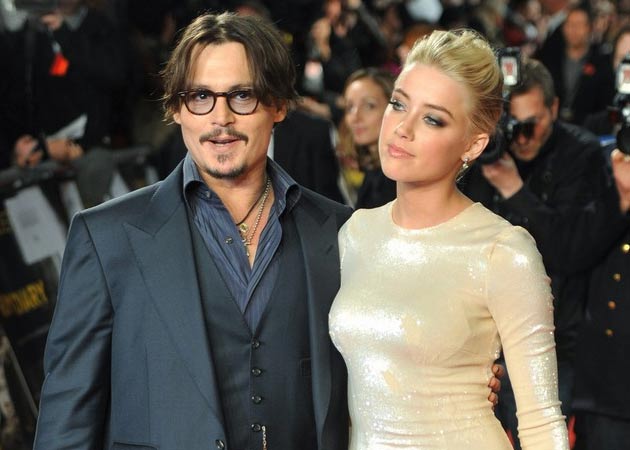
Johnny Depp has reportedly named a beach on his private island after Amber Heard.
The Pirates of the Caribbean star chose a section of Little Hall’s Pond in the Bahamas to be named in honour of his new girlfriend – who he has dated since splitting from Vanessa Paradis after 14 years in June – as a Christmas present.
A source told The Sun newspaper: “Johnny knows about romance after having been with a French woman all those years. He is now spending time with Amber in the Bahamas and presented her with her own beach as a Christmas gift.”
Johnny, 49, is said to have named the beach Amber’s Cove after noticing it looked like her hip when viewed on a map.
They’re coming. And nothing can stop them.
‘Brighter than a full moon’: The biggest star of 2013… could be Ison – the comet of the century

At the moment it is a faint object, visible only in sophisticated telescopes as a point of light moving slowly against the background stars. It doesn’t seem much – a frozen chunk of rock and ice – one of many moving in the depths of space. But this one is being tracked with eager anticipation by astronomers from around the world, and in a year everyone could know its name.
Comet Ison could draw millions out into the dark to witness what could be the brightest comet seen in many generations – brighter even than the full Moon.
By late November it will be visible to the unaided eye just after dark in the same direction as the setting Sun. Its tail could stretch like a searchlight into the sky above the horizon. Then it will swing rapidly around the Sun, passing within two million miles of it, far closer than any planet ever does, to emerge visible in the evening sky heading northward towards the pole star. It could be an “unaided eye” object for months. When it is close in its approach to the Sun it could become intensely brilliant but at that stage it would be difficult and dangerous to see without special instrumentation as it would be only a degree from the sun.
Remarkably Ison might not be the only spectacular comet visible next year. Another comet, called 2014 L4 (PanSTARRS), was discovered last year and in March and April it could also be a magnificent object in the evening sky. 2013 could be the year of the great comets.
Mike Scaccia Gone
Mike Scaccia, guitarist for Ministry and Rigor Mortis, collapses on stage, dies of sudden heart attack
BY ETHAN SACKS / NEW YORK DAILY NEWS

Mike Scaccia, the guitarist for metal acts like Ministry, Rigor Mortis and the Revolting Cocks, reportedly died of a sudden heart attack caused by heart disease.
Forty-seven-year-old Mike Scaccia suffered an apparent seizure on stage during a performance at the Rail Club in Fort Worth, Texas, and was rushed to a local hospital where he was pronounced dead, Blabbermouth.net reported.
Born in Babylon, New York, Scaccia helped form thrash pioneers Rigor Mortis in 1983, but moved on to join the better-known Ministry six years later. Though he officially left that band in 1996, his blistering licks can be heard on Ministry’s latest album, “Relapse.”
Scaccia, who reformed Rigor Mortis in 2003, also played for the Revolting Cocks.
Ministry lead singer Al Jourgensen posted a tribute to his longtime bandmate on the group’s Facebook page Sunday.
“Mikey was not only the best guitar player in the history of music, but he was a close, close, close part of our family, and I just lost a huge chunk of my heart today.”
A Kind of Anti-Christmas Song That Became The Christmas Song

In his sleigh, on his way….

Oscar Madison (& the last of the 12 Angry Men) Gone
‘Odd Couple’ actor Klugman dies at 90
By Steve Almasy, CNN
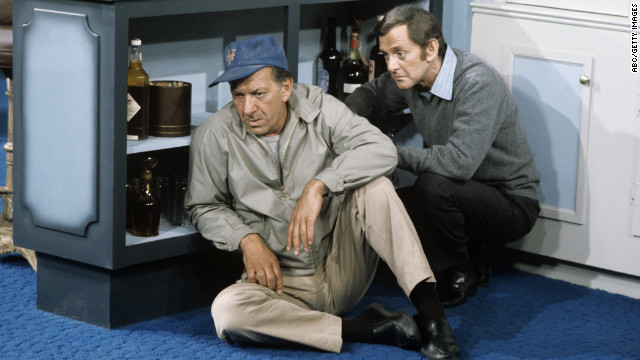
(CNN) — Jack Klugman, best known as messy sports writer Oscar Madison in TV’s “The Odd Couple,” died Monday at his California home, his son Adam said. He was 90.
His lawyer, Larry Larson, said he died at his house in Northridge, just north of Los Angeles, with his wife by his side.
Veteran actor William Shatner tweeted: “Condolences go out to the family of Jack Klugman. An extraordinary and talented man. He will be missed.”
Klugman’s stage, film and television acting career spanned more than five decades.
Has music been diluted from a soul-nourishing art form, at once both deeply intimate and social, to little more than background noise?
Gifting music takes a new tune, digitally
By Heather Somerville / San Jose Mercury News

A screenshot of an Amazon music gift card
Got a music lover on your holiday gift list? Still not sure what to get?
It’s a lot harder these days.
CDs that were once wrapped and placed under the Christmas tree have given way to digital music libraries and iTunes gift cards. But it’s awfully hard to wrap an MP3 file with a nice bow, and you can’t labor lovingly over unpackaging a playlist as you would a CD.
In this post-CD world, giving music for the holidays is undergoing a transformation that has some music aficionados worried. They say music has been diluted from a soul-nourishing art form, at once both deeply intimate and social, to little more than background noise.
People are still buying and giving music this holiday season, but like nearly all types of shopping, more of it is happening online. Digital music stores such as iTunes, cloud music players and streaming services such as Spotify and Rhapsody make CD players look like antiques. More music lovers are requesting a Spotify subscription or a gift card to Amazon’s digital music store.