
Rome Is Evil
How Ancient Rome Killed Democracy
by Bridey Heing
 Public Domain
It didn’t take all that much to tip a great civilization into the shackles of empire.
But in his latest book, Richard Alston wants us all to think a little more critically about our beloved Rome.
Alston is a Professor of Roman History at the University of London’s Royal Holloway, and the inspiration for Rome’s Revolution: Death of the Republic and Birth of the Empire came from his own dissatisfaction with the existing body of work on Roman politics. He saw how the idealized vision of Roman culture that these works present influenced the way his students thought about Rome. “Somehow,” Alston writes in the preface, “it was all too nice … but the Roman accounts of their revolution are anything but nice. They were shocked and shocking.”
Lettuce is Evil
Lettuce is ‘three times worse than bacon’ for emissions and vegetarian diets could be bad for environment
Common vegetables ‘require more resources per calorie’ than many people realise, according to a team of scientists at the prestigious Carnegie Mellon University
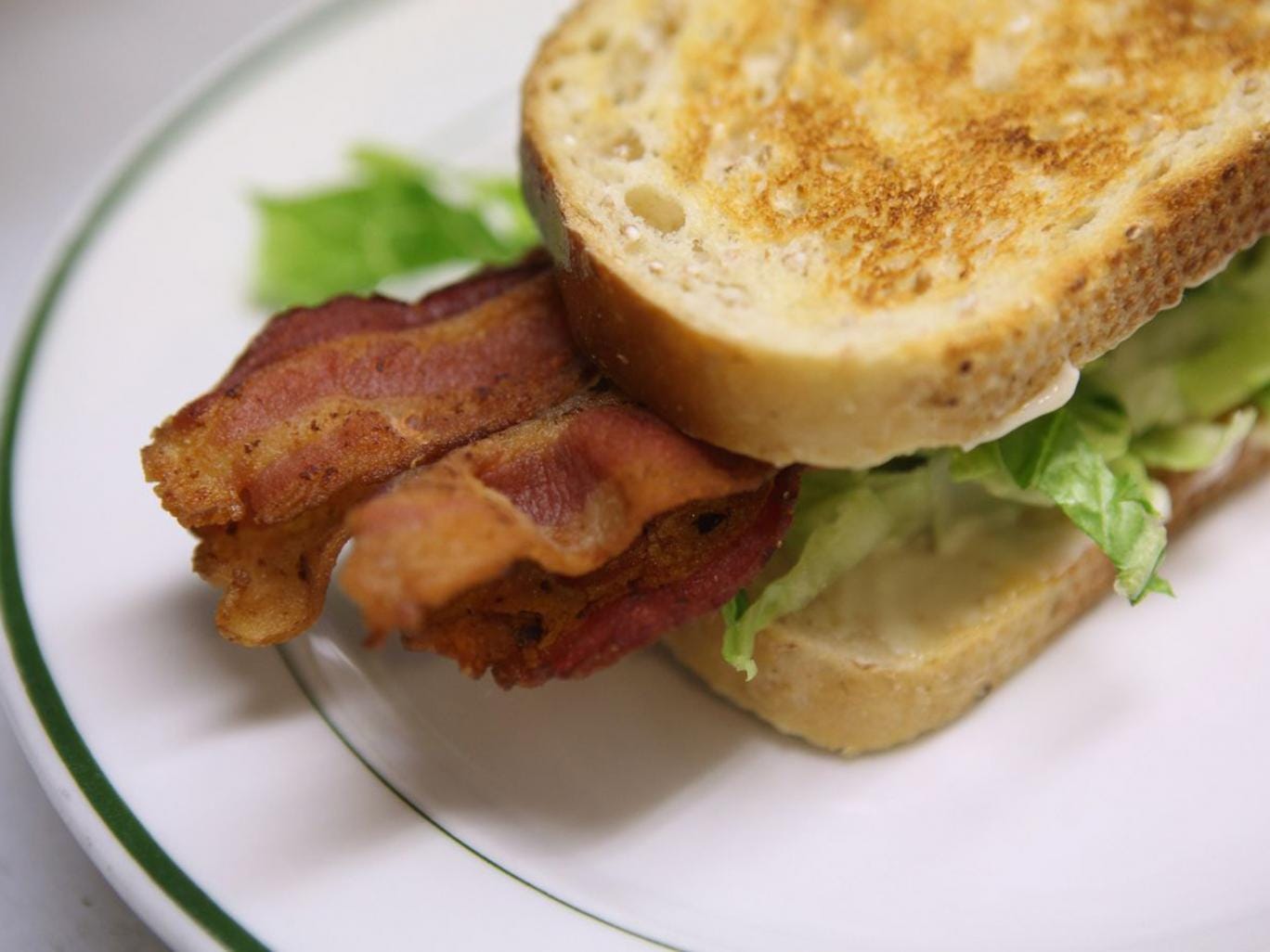
Eating a healthier diet rich in fruit and vegetables could actually be more harmful to the environment than consuming some meat, a US study has claimed.
Lettuce is “over three times worse in greenhouse gas emissions than eating bacon”, according to researchers from the Carnegie Mellon University who analysed the impact per calorie of different foods in terms of energy cost, water use and emissions.
Published in the Environment Systems and Decisions journal, the study goes against the grain of recent calls for humans to quit eating meat to curb climate change.
Researchers did not argue against the idea people should be eating less meat, or the fact that livestock contributes to an enormous proportion of global emissions – up to 51 per cent according to some studies.
But they found that eating only the recommended “healthier” foods prescribed in recent advice from the US Department of Agriculture increased a person’s impact on the environment across all three factors – even when overall calorie intake was reduced.
[ click to continue reading at The Independent ]
CRISPR Is Evil
Can CRISPR Avoid the Monsanto Problem?
 Because it makes manipulating genes so much easier, CRISPR offers researchers the ability to rapidly accelerate studies of many types of illness, including cancers, autism, and AIDS. CREDITPHOTOGRAPH BY MAX WHITTAKER/THE WASHINGTON POST/GETTY
It is distressing, but a fact, that the more rapidly any technology is adopted by scientists the more likely it is to leave people confused, anxious, and suspicious. This week, I wrote an article for the magazine about just such a revolutionary technique, called CRISPR, that permits scientists to edit the DNA of plants and animals with an ease and a precision that even a decade ago seemed inconceivable.
CRISPR research has already begun to transform molecular biology. There have been bold new claims about its promise and powers nearly every day. Yet, for the past fifty years, at least since Watson and Crick demonstrated that DNA contained the blueprints required to build everything alive, modern science has been caught in a hype trap. After all, if we possess such exquisitely detailed instructions, shouldn’t they be able to help us fix the broken genes that cause so many of our diseases?
The assumption has long been that the answer is yes. And for decades, we have been told (by the medical establishment, by pharmaceutical companies, and, sadly, by the press) that our knowledge of genetics will soon help us solve nearly every malady, whether it affects humans, other animals, or plants.
It turns out, however, that genetics and magic are two different things. Deciphering the blueprints in the three billion pairs of chemical letters which make up the human genome has been even more complex than anyone had imagined. And even though the advances have been real, and often dramatic, it doesn’t always seem that way. This has led many people to discount, and even fear, our most promising technologies. Somehow, we take lessons more readily from movies like “Jurassic Park” and “Gattaca” than from the very real, though largely incremental, advances in medical treatments.
Yeah, right – you’re not going to sucker me into turning myself into some kinda monkey-man.
FLOAT HOPES: The Strange New Science of Floating
STORY BY MANDY OAKLANDER
They started late one night, the tremors that shook Michael Harding’s whole body when he lay down to sleep. “A bit weird,” thought Harding, then a 23-year-old Australian soldier stationed in Afghanistan. Just days before, he’d been in an hours-long siege in which his second-in-command was shot and killed.
Harding soon started shaking so much that he had to ask a friend to light his cigarettes. He couldn’t drink water from a bottle without pouring it down his shirt, and in the mess hall, his twitches got so spastic that he’d sometimes flip his tray.
He was medically discharged from the army in 2012 with severe PTSD and left with a new personality: withdrawn and unemotional. His sleep suffered, too. He had nightmares and night sweats.
To handle his worsening symptoms, Harding tried two kinds of talk therapy, four kinds of medication, and large nightly doses of scotch and Coke. When each of those failed, he turned to yoga, juicing, meditation and medicinal pot. That helped a little, but Harding’s anxiety and muscle spasms still hadn’t abated.
Around that time, his wife did what any desperate person would: she started poking around in online forums for something else that may help with his PTSD. She found glowing testimonials for floating, the practice of lying belly-up in a tank filled with warm water so salty you float.
STAR WARS: Episodes I-VI
Tail-Sitter Drone
US military developing radical ‘tail-sitter’ drone that lands anywhere
 PHOTO: US Navy and US federal government/ Mail Online
The design for a flying-wing tail sitter drone which lands on its tail, has been revealed by the Northrop Grumman Corporation in the United States.
The drone, which the company says does not require a runway to land, has the ability to land anywhere on its tail.
The design is part of Northrop’s proposal for the Defence Advanced Research Projects Agency’s (DARPA) Tern programme.
According to FlightGlobal, DARPA plans to ink a contract in January to build and fly a full-scale prototype from a barge or decommissioned navy ship, says Chris Hernandez, senior vice-president of research, technology and advanced design for Northrop.
Northrop’s tail sitter design includes a set of large counter-rotating propellers covering almost two-thirds of a roughly 9.14m (30ft)-diameter wingspan and it carries weapons and sensors as stores underneath the wing, reveals Hernandez.
I Had No Idea That Kim Kardashian Ate Her Placenta
I ate my placenta like Kim Kardashian, and you should too: Brooklyn mom

Eating your placenta sounds like something only Kim Kardashian would do – but Prospect Heights mother Jennifer Mayer, 32, has been encapsulating the afterbirths of hundreds of New York mothers to treat postpartum depression and boost energy for the past five years. Here’s her personal experience eating the fruit of her labor, in her own words.
My first baby was born a year ago, and I prepared my own placenta the day after his birth.
It doesn’t taste like anything in capsule form. I slice it, dehydrate it and fill it into a capsule about the size of a vitamin, and place the pills in a blue glass bottle. If anything, it might smell a little metallic. You know, like blood.
So far the science on eating placenta is mostly anecdotal; women sharing their personal experiences of it helping with their baby blues. My clients say it increases their energy. Taking a capsule gives them a boost equal to a cup of coffee or a green juice — which, if you have a newborn, is pretty awesome. And there are studies from the turn of the century that show dehydrated placenta did increase milk supply in breastfeeding moms.
But I do have friends who get a little grossed out about it. I have one friend in particular who asks me, “Jen, any time you have to talk about eating placenta, can you just say ‘polenta?’”
In The Valley Of The Gold Metal Bikini
Return of the fans: New ‘Star Wars’ film sparking tourism in Arizona city
PHOENIX — While the world may be ramping up for the newest chapter in the “Star Wars” saga, one Arizona city is enjoying a jump in tourism thanks to its part in the series’ origins.
“Within the last six months or so, I’ve gotten a substantial uptick in the number of folks looking for photos and so forth,” Ann Walker with the Yuma Convention and Visitors Bureau said.
Part of “Return of the Jedi,” the third film in the saga, was filmed in the sand dunes in the desert west of Yuma. As the excitement for “The Force Awakens” builds, some fans are heading to the city where the nearby battle on Jabba the Hutt’s barge was filmed back in 1983.
Go Alex!
Alex Morgan Gets Real About Her Goals: I Want to ‘Become the Best Player in the World’
BY
 Alex Morgan in SELF magazine / JACOB SUTTON
At 26, soccer superstar Alex Morgan has already scored so many of her lifelong goals – she made the U.S. women’s national team, won an Olympic gold medal, and won the World Cup. But the striker, who’s easily one of the fastest players on her team, shows no signs of slowing down.
“I’ll play for as long as my body can last at this level,” Morgan says in her cover story for the January/February issue of SELF magazine. “My goal is to become the best player in the world.”
So far, she seems to be on the right track. At 22, Morgan became the youngest member of Team USA. Since then she has landed 52 goals in 91 international games. At the 2012 Olympics, she scored the game-winning goal in the last 45 seconds of the semi-final. And last July, she helped lead her team to a stunning victory against Japan in the World Cup final.
Now she’s got her eye on a different prize – empowering young female readers and athletes through her new book series The Kicks.
“I want young girls to dream about being professional soccer players instead of just watching the boys go out and play,” she says. “It’s about seeing girls be confident in what they want to pursue.”
Go Amblin!
Steven Spielberg and DreamWorks Studios in Deal to Form New Company

LOS ANGELES — Steven Spielberg said on Wednesday that he and his DreamWorks Studios would join Participant Media, Reliance Entertainment and Entertainment One to form an entertainment company called Amblin Partners to produce movies, television shows and digital content.
At the same time, Universal Pictures said it would distribute films from the new company, beginning with “The Girl on the Train,” to be directed by Tate Taylor with Emily Blunt in a lead role, in October 2016.
The new venture, which will be based on the Universal lot, appears poised to absorb and redirect the creative output of DreamWorks Studios, which has distributed its films under a deal with the Walt Disney Company since 2009. That distribution arrangement was set to expire next August.
Amblin Partners also will become an exclusive vehicle for Mr. Spielberg’s Amblin Entertainment, including a television division that is already making 13 episodes of the series “American Gothic” to air on CBS next summer. Further, the new company will produce many, though not all, of the films, television shows and other projects developed by Participant Media, an issues-oriented media company owned by the entrepreneur Jeff Skoll.
Warhol’s Montauk for $50million
Andy Warhol’s Hamptons Estate Sells for a Record $50 Million
J.Crew CEO Mickey Drexler owned the Montauk property, which housed famous figures like the Rolling Stones
By CANDACE TAYLOR
 Andy Warhol bought the estate in the 1970s.PHOTO: GAMMA-RAPHO/GETTY IMAGES
The former Andy Warhol estate in Montauk—a collection of white-shingled cottages overlooking the ocean—has sold for $50 million, believed to be a record for the former fishing village.
The buyer of the roughly 5.7-acre oceanfront compound, called “Eothen,” was Adam Lindemann, founder of the gallery Venus Over Manhattan. The property had been listed together with a 24-acre horse farm for $85 million, but Mr. Lindemann wasn’t interested in the horse farm, and it is still available, said Paul Brennan of Douglas Elliman Real Estate, who listed the property with Sotheby’s International Realty. The seller was J.Crew CEO Millard “Mickey” Drexler, who bought the property for $27.5 million in 2007, according to public records.
F†ck yeah, you fargin’ iceholes!
People who are really good at swearing have an important advantage

Those who are liberal in their use of swear words are not the lazy and uneducated individuals they are often made out to be, a new study claims.
In fact, a well-stocked vocabulary of swear words is actually a healthy indicator of other verbal abilities.
Writing in the Language Sciences journal, US-based psychologists Kristin Jay and Timothy Jay, dismiss the long-held belief that swearing is a sign of inarticulateness.
Working with the “poverty of vocabulary” concept (the assumption that people swear because they lack the intellectual capacity to find another way to express themselves) their experiment aimed to find out whether those more fluent in the art of swearing are less fluent in other forms of vocabulary.
The Da Vinci Dupe
Is there a SECOND Mona Lisa? Experts examine claims a version of the da Vinci masterpiece is held in a private Russian collection
By ISABEL HUNTER FOR MAILONLINE
 Technology: Optical and forensic tools are being used to peel back the truth behind one the world’s most famous paintings
Art experts are examining a painting held in a private collection in St Petersburg they believe might be a second version of Leonardo da Vinci’s Mona Lisa.
And leading Mona Lisa scholars say the similarities in colours, which are being examined using infra-red technology, hold the key to determining if the Russian painting is in fact another da Vinci.
‘There are many indicators pointing to the Tuscan artistic genius,’ research coordinator Silvano Vinceti told ANSA.
‘But of course it’s only a hypothesis.’
There are numerous theories that da Vinci painted more than one version and there are conflicting dates about when the painting was commissioned and finished.
Joplin’s Porsche
Janis Joplin’s Porsche 356 sells for record $1.76 million at New York auction
 SOTHEBY’S
Pulling in $1.76 million at the “Driven by Disruption” sale, the Porsche thoroughly surpassed predictions but was dwarfed by a 1972 Lamborghini Miura which sold for $2.42 million.
At the RM Sotheby’s “Driven By Disruption” auction in Manhattan, a 1964 Porsche 356 C 1600 SC Cabriolet that was owned and customized by Janis Joplin sold for $1.76 million. As previously reported, the coupe was estimated to sell for roughly $500,000 but with seven bidders competing far surpassed those expectations.
The staggering sale price sets a benchmark as the highest price ever paid for a Porsche 356 at public auction. Pearl, as Joplin was often called, bought the German auto at a used car lot in 1968.
BOWIE Blackstar
Cult Easton Ellis
Bret Easton Ellis on Living in the Cult of Likability
By
 BRET EASTON ELLIS by Jeff Burton
This is an article from Turning Points, a magazine that explores what critical moments from this year might mean for the year ahead.
Turning Point: Uber becomes one of the world’s most valuable start-ups.
On a recent episode of the television series “South Park,” the character Cartman and other townspeople who are enthralled with Yelp, the app that lets customers rate and review restaurants, remind maître d’s and waiters that they will be posting reviews of their meals. These “Yelpers” threaten to give the eateries only one star out of five if they don’t please them and do exactly as they say. The restaurants feel that they have no choice but to comply with the Yelpers, who take advantage of their power by asking for free dishes and making suggestions on improving the lighting. The restaurant employees tolerate all this with increasing frustration and anger — at one point Yelp reviewers are even compared to the Islamic State group — before both parties finally arrive at a truce. Yet unknown to the Yelpers, the restaurants decide to get their revenge by contaminating the Yelpers’ plates with every bodily fluid imaginable.
The point of the episode is that today everyone thinks that they’re a professional critic (“Everyone relies on my Yelp reviews!”), even if they have no idea what they’re talking about. But it’s also a bleak commentary on what has become known as the “reputation economy.” In depicting the restaurants’ getting their revenge on the Yelpers, the episode touches on the fact that services today are also rating us, which raises a question: How will we deal with the way we present ourselves online and in social media, and how do individuals brand themselves in what is a widening corporate culture?
The idea that everybody thinks they’re specialists with voices that deserve to be heard has actually made everyone’s voice less meaningful. All we’re doing is setting ourselves up to be sold to — to be branded, targeted and data-mined. But this is the logical endgame of the democratization of culture and the dreaded cult of inclusivity, which insists that all of us must exist under the same umbrella of corporate regulation — a mandate that dictates how we should express ourselves and behave.
Most people of a certain age probably noticed this when they joined their first corporation, Facebook, which has its own rules regarding expressions of opinion and sexuality. Facebook encouraged users to “like” things, and because it was a platform where many people branded themselves on the social Web for the first time, the impulse was to follow the Facebook dictum and present an idealized portrait of their lives — a nicer, friendlier, duller self. And it was this burgeoning of the likability cult and the dreaded notion of “relatability” that ultimately reduced everyone to a kind of neutered clockwork orange, enslaved to the corporate status quo. To be accepted we have to follow an upbeat morality code where everything must be liked and everybody’s voice respected, and any person who has a negative opinion — a dislike — will be shut out of the conversation. Anyone who resists such groupthink is ruthlessly shamed. Absurd doses of invective are hurled at the supposed troll to the point that the original “offense” often seems negligible by comparison.
AMERICAN GOTHIC Catches Ketch & Chitin
Justin Chatwin and Megan Ketch join American Gothic Cast
by Sarah Fox

CBS confirmed today that Justin Chatwin and Megan Ketch have both signed onto the cast of AMERICAN GOTHIC, a new one-hour murder mystery series from Steven Spielberg’s Amblin Television and CBS Television Studios. The new series is set to hit the network in summer 2016.
Currently, Chatwin is shooting the feature film “CHIPs.” Prior to that, he completed the independent films “The Scent of Rain & Lightning” and the comedy “Unleashed.” Chatwin’s television credits include roles in “Shameless” and “Orphan Black,” as well as guest appearances on numerous series, including “Weeds” and “Lost.”
Ketch is best known to television audiences for her recurring roles in the series “Under the Dome,” THE GOOD WIFE and BLUE BLOODS, on the Network, and “Jane the Virgin.” In 2014, she appeared in the feature film “The Big Wedding.”
AMERICAN GOTHIC is produced by CBS Television Studios in association with Amblin Television. Corinne Brinkerhoff (THE GOOD WIFE, “Jane the Virgin”), Justin Falvey and Darryl Frank (“The Americans,” “Under the Dome,” “Extant”), James Frey and Todd Cohen serve as executive producers. The series will be distributed domestically by CBS Television Distribution and worldwide by CBS Studios International.
The Last Defender
Last-ever Land Rover Defender rolls of the production line in the U.K.
BY BRIAN LEON
 The Defender is credited as the first true SUV, starting all the way back in 1948 with the Series I Land Rover.
America may have the Wrangler, but the rest of the world knows the Land Rover Defender as the original SUV.
After 67 years since the introduction of the 1948 Land Rover Series I, one of the world’s most iconic vehicles is finally closing the curtains. With the Defender 2,000,000, Land Rover is saying goodbye to what many credit as the world’s first true SUV, and one of their most ubiquitous vehicles in the U.K.
Driven and owned by everyone from 007 and Steve McQueen to Her Majesty Queen Elizabeth II and Sir Winston Churchill, almost every influential British figure of the last half century and more have experience with the iconic ‘ute. The final Defender, hand-built with help from brand ambassadors like Bear Grylls and members of the British Red Cross, will be auctioned off by Bonhams, and all proceeds will go to Land Rover’s charitable partners like the Red Cross and Born Free Foundation.
Man’s Earliest Architecture Plans
Prehistoric rock carvings ‘were humanity’s earliest architectural plans’
Researchers say 14,000-year-old carvings by ‘Paleolithic Picasso’ depict a campsite built by early hunter-gatherers
by Cahal Milmo | Chief Reporter | @cahalmilmo
 A reconstruction of the Moli del Salt campsite built by hunter-gatherers
On a Spanish river bank 14,000 years ago, someone carved seven semi-circular shapes on a rock. Whether the artist realised the significance of the work is unknown – but, according to archaeologists, the resulting doodle could well be humanity’s first architectural drawing.
Researchers have put forward evidence that the granite slab discovered on a prehistoric site near Barcelona carries a depiction of a campsite built by early hunter-gatherers as they roamed the Iberian peninsula in search of prey.
If the picture is of semi-circular huts, it is likely to have been the work of a Paleolithic rule-breaker who shook up the artistic orthodoxy of the day in much the same way as that other, much later Spanish iconoclast, Pablo Picasso.
Lexi & The Sig Alph’s
Frat Brothers Brighten Hospital Room For Brave Little Girl
Twelve-year-old Lexi Brown has cancer, and she recently spent some time at the Mattel Children’s Hospital UCLA in California. Her hospital room faced one of the massive frat houses on UCLA’s fraternity row. To pass the time and have a little fun, Lexi and her mom put a sign in the window asking for a pizza delivery, not thinking it would lead to something so incredible.
The members of the Sigma Alpha Epsilon house heard about the sign, so they walked across the street. Not only did they bring pizza, but they also brought a bouquet of roses, and a guitar. Here was a bunch of 20-something frat guys, taking time out of their day to play music for a sick little girl. Lexi’s mom, Lisa, was touched to tears.
The surprises didn’t end there. Lexi struck up a friendship with the SAE fraternity. The guys arranged for all sorts of exciting visits for Lexi, from the UCLA football team to women’s tennis players. But Lexi’s newfound popularity didn’t stop the frat brothers from continuing to show up at her hospital bed — to play cards, to bring her a stuffed animal, or to simply sit and talk.
But one night came the clincher. Lexi and her parents peeked out the hospital window and made a stunning discovery.
Wait until you see what the SAE brothers did to their fraternity house directly across the street…
Dorothy Must Die NYT #3 Woo-hoo!

Rodgers & Rodgers Hail Mary
To the Moon, Alexi!
Russia Is Planning To Build A Permanent Manned Base On The Moon
by Rob Waugh
 Getty
Getty
Russia’s space agency is planning to build a manned moon base – launching modules into space on six separate rockets.
Russia plans to launch a lunar probe in 2024 which will scout possible locations – before landing a man on the moon in 2030.
Construction of the Luna 25 lander has already begun, the official state news agency Tass has reported.
Once the components are in place, assembly of the moon base will continue over ten years.
Moscow has previously said that it envisages the base being permanent.
Last year, deputy premier Dmitry Rogozin said: ‘We are coming to the moon forever.’
Trujillo On Jaco
Robert Trujillo on Punk-Jazz Bassist Jaco Pastorius
It was six years ago that Metallica bassist Robert Trujillo began the long journey that has finally come to fruition with the recent release of JACO, his acclaimed documentary on the life and times of the hugely influential electric bass guitarist Jaco Pastorius, who redefined his instrument in the 1970s with the premier fusion band Weather Report. Along the way Trujillo, who has been a member of Metallica since 2003, navigated countless roadblocks while investing his own money into this project which was clearly a labor of love for him. “Jaco was my hero growing up,” he explained. “Hearing him for the first time was like hearing Eddie Van Halen doing ‘Eruption’ for the first time: You thought, ‘What instrument is that?’ I loved jazz fusion and branched out from there. But Jaco had an edge that far exceeded his jazz persona. He was funk, he was rock, he was soul. And his whole attitude was punk.”
Fittingly, Pastorius titled one of his ‘70s opuses “Punk Jazz” (from Weather Report’s 1978 album, Mr. Gone). But it was more than just the mind-blowing sound of Jaco’s ground-breaking approach to the bass that appealed to a young Trujillo and his crew of self-described ‘skateboard rats’ who caught Weather Report in concert at the Santa Monica Civic Center in 1979. As he explains, “Here was Jaco on stage with his shirt off, long hair, a headband. So in many ways he was just like me and my wild surfing and skateboarding friends from Venice Beach. He was punk! And to see this guy performing live, sliding around with the baby powder sprinkled on stage, sliding into his bass on stage like he was sliding into home plate in a baseball game, leaping off his Acoustic 360 amp. I had just never seen that kind of energy and passion before, and that stuck with me.”
Bloody Gutsy Oscar
‘The Revenant’ and ‘The Hateful Eight’: How Much Blood and Guts Will Oscar Voters Endure?
by Stephen Galloway
 Courtesy of Twentieth Century Fox
Leonardo DiCaprio’s epic (featuring a brutal, gory assault by a bear) and Quentin Tarantino’s latest are set to test audience’s appetites for filmmaking as violent as it is visionary.
A frontiersman is impaled through the head by an arrow. A bear rips the flesh off Leonardo DiCaprio’s back. And then DiCaprio dives off a cliff on a horse, eviscerates the dead beast and scoops out the guts so that he can take shelter in its carcass.
Think these scenes from Alejandro G. Inarritu’s The Revenant (about a 19th century frontiersman who endures appalling conditions as he tracks down the fellow who has betrayed him) might be a bit much for the faint of heart? The Fox and Regency film isn’t alone in stretching voters’ appetite for gore. In Quentin Tarantino’s The Hateful Eight, a bullet blasts a man’s head to pieces, while a woman (Jennifer Jason Leigh) gets slapped around so much that it isn’t quite clear if all her teeth remain.
These two major movies will attempt to out-do each other in the brutality stakes this awards season — and just how willing Oscar voters are to tolerate their extremes may go a long way toward determining whether they emerge as frontrunners in this year’s extraordinarily heated competition.
“Decorated with two eyes, which are surrounded by cloud-and-thunder patterns”
Mysterious Ancient Board Game Discovered in 2,300-Year-Old Tomb in China
 A group of archaeologists in China have unearthed pieces from a mysterious ancient board game that was last played around 1,500 years ago.
A 14-face die made of animal tooth, 21 rectangular game pieces with numbers painted on them, and a broken tile from a board game were found in a 2,300-year-old tomb in Qingzhou City, according to Live Science.
Other recent archaeological discoveries include a cave full of game pieces that has been dubbed North America’s first casino, and an ancient tablet that has been compared to an iPad.
When reconstructed, the tile turned out to be “decorated with two eyes, which are surrounded by cloud-and-thunder patterns,” a report published in the journal Chinese Cultural Relics claimed. The die comprises the numbers 1 through 6, each appearing twice on 12 of the faces in a form of ancient Chinese writing known as “seal script.” Two of the faces were left blank.
Five extra-galactic unidentified radio signals…
Did scientists just pick up the first intelligent radio waves from a distant ALIEN planet?
By JON AUSTIN
 CSIRO / The Parkes Observatory in Australia picked up the signals
The “fast radio bursts” included one “double signal” never heard before and have left astronomers buzzing with excitement over the possibility of it being a message with alien origins.
Only 11 of the unidentified transient radio pulses have been recorded before around the world.
And it is the curious new double blast – which was accompanied by four “singles” – which has baffled astronomers analysing data from the Parkes radio telescope in New South Wales, Australia.
Emily Petroff from Swinburne University, in Melbourne, one of the team who discovered the signals, believes the origin could be more remarkable than anything recorded before.
She tweeted: “We have no idea what’s going on, but we know it’s definitely something cool.”
All-female Fight Club in Berlin
Inside the all-FEMALE fight club: The secret Berlin group where women go topless to take part in no-holds-barred bouts that leave them bruised and bleeding
 The women often fight topless, like male fighters would usually, with one combatant showing off bruises and marks from being raked by her opponents’ fingers
There are no rules in the all-female fight club, just grit and determination as women of all sizes and shapes pit themselves against each other in the ring.
Photographer Katarzyna Mazur has captured the East Berlin-based club in a series of no-holds barred portraits of the women, often battered and bruised, taking each other on in fighting gear or topless.
The private club has no official guidelines and does not have one particular fighting style and shows women – who are practising their sport unpaid, for the sheer challenge of combat – throwing off the preconceived notions about their gender to compete as equals.
The club was started in 2010 by female fighters Anna Konda and Red Devil, from Russia, as a place for women to come and fight.
Anna was very slim when she was younger, but is now much ‘bigger’ she told Vice UK but she said she could not keep her trim figure forever.
She said about her wrestling: ‘I don’t enjoy the pain of others. I enjoy my own power and having control.
‘I guess sometimes this can amount to the same thing for my prey.
Tripcoding Goes Mainstream
Silicon Valley professionals are taking LSD at work to increase productivity
An increasing number of twenty-somethings are reportedly ‘micro-dosing’ on psychedelic drugs – and they say it’s making them better workers
By Adam Boult
 LSD has been described as ‘a healthy alternative to Adderall’ Photo: Alamy
It seems unlikely, but that’s apparently what some Silicon Valley professionals have been doing – and reporting great results.
According to Rolling Stone, a growing number of people are experimenting with “microdoses” of psychedelics to help them work.
A microdose of LSD is around 10-15 micrograms, approximately a tenth of a “normal” dose.
At that dosage, Rolling Stone describes the drug’s effects as “subperceptual”: ” ‘Enough, says Rick Doblin, founder and executive director of the Multidisciplinary Association for Psychedelic Studies, ‘to feel a little bit of energy lift, a little bit of insight, but not so much that you are tripping.’”
Anon Takes Point
Anonymous Hackers Fight ISIS but Reactions Are Mixed
By
 Reuters
People from various hacking collectives have tried for several months to block social media accounts that spread propaganda and attempt to recruit fighters for the Islamic State, but those campaigns gained a new energy on Twitter after the Paris attacks.
Hashtags like #OpParis and #OpISIS have allowed the public to see the inner workings of those efforts, which seem to get results. The best-known group involved, the shadowy collective Anonymous, has claimed to have helped take down as many as 20,000 Twitter accounts since the attacks.
On Twitter and on the website Pastebin, Anonymous has issued a rallying cry.
The group also has an extensive how-to list for anyone interested in taking ISIS offline. Those tactics include posting the names of thousands of questionable accounts and deploying a tool that searches certain keywords on social media and uses a bot to report inappropriate behavior to Twitter.