
Life in a Hellish Place
What Is the Earliest Evidence for Life on Earth?
by Ross Pomeroy

For the first 600 million years of Earth’s 4.54 billion-year history, our planet was a hellish place. The rampant volcanism and frequent collisions that wracked our world rendered the surface unforgiving and purportedly inhospitable to life. While water was probably present, the oceans of the time may instead have been rolling seas of magma. The name for this period, the Hadean, is borrowed from Hades, the Greek god of the underworld. The moniker’s meaning is obvious: early Earth was a place of death.
Yet it was on this comparatively cursed landscape that –against all odds — life might have emerged. The controversial clue to this incredible notion was made public last fall. Scientists from UCLA showed off apparently biogenic carbon that was locked away inside a near impenetrable crystal for 4.1 billion years.
The oldest rocks on Earth don’t even date back that far, but peculiar minerals called zircons do. The oldest-known zircons, discovered in the Jack Hills of Western Australia, originally crystalized 4.4 billion years ago! It was within one of these zircons that geochemist Elizabeth Bell and her team discovered the carbon they think was produced by life. Life that old, whatever it was, would not have bones, or even a clearly-defined shape, so a true fossil find will probably never be unearthed. Instead, whatever carbon-based life existed back in the Hadean would simply leave traces of itself in the form of carbon itself. Bell’s co-author, Mark Harrison, referred to the stuff as “the gooey remains of biotic life.”
Gigantic Pain In The Ass Pisses On Polanski
20 Most Awkward Movie Sets
Oh the glamour…
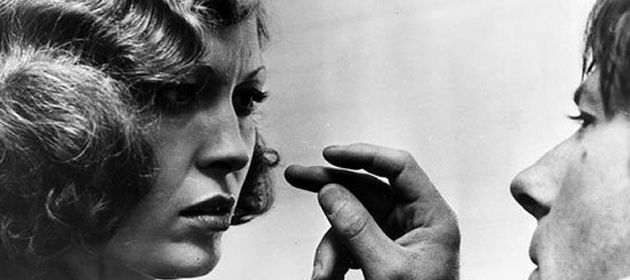
Faye Dunaway vs. Roman Polanski
The Movie Set: Polanski’s 1974 masterpiece Chinatown , in which Faye Dunaway gave great smoulder opposite Jack Nicholson’s busted-nose investigator.
The Awkward: It started with Dunaway attempting to understand the motivations of her character. When she asked her director for, uh, direction, he reportedly merely yelled: “Say the fucking words. Your salary is your motivation!”
Worse still, when one of the actress’ stray hairs threatened to ruin a shot, Polanski plucked the offending strand from Dunaway’s head without even considering calling in make-up.
Dunaway got her own back when, after her director refused to let her take a loo break, she threw a coffee cup full of urine in his face. Polanski’s later description of his lead actress as “a gigantic pain in the ass” seems fitting.
Life Re-written
Scientists find 3.7 billion-year-old fossil, oldest yet
by Seth Borenstein
 In this photo provided by Laure Gauthiez, taken in July 2012, a field team examine rocks in Greenland.
Scientists have found what they think is the oldest fossil on Earth, a remnant of life from 3.7 billion years ago when Earth’s skies were orange and its oceans green.
In a newly melted part of Greenland, Australian scientists found the leftover structure from a community of microbes that lived on an ancient seafloor, according to a study in Wednesday’s journal Nature .
The discovery shows life may have formed quicker and easier than once thought, about half a billion years after Earth formed . And that may also give hope for life forming elsewhere, such as Mars, said study co-author Martin VanKranendonk of the University of New South Wales and director of the Australian Center for Astrobiology.
“It gives us an idea how our planet evolved and how life gained a foothold,” VanKranendonk said.
Scientists had thought it would take at least half a billion years for life to form after the molten Earth started to cool a bit, but this shows it could have happened quicker, he said. That’s because the newly found fossil is far too complex to have developed soon after the planet’s first life forms, he said.
The Perfect Beekend
The ‘Beekman Boys’ are back to entice you with farm life

“Beekman Boys” Josh Kilmer-Purcell & Brent Ridge (“The Fabulous Beekman Boys” on Cooking Channel), who are regulars on eVine, are hosting a special on the digital network called “The Perfect Beekend” (Sunday at 8 a.m.)
“Beekend” follows the guys — and staffers from their magazine, an offshoot of their lifestyle brand Beekman 1802 — as they immerse themselves for a weekend at Josh and Brent’s farm in upstate Sharon Springs, NY.
Kilmer-Purcell and Ridge also won CBS’ “The Amazing Race” in 2012. Here are a few other factoids about them:
The Coolest Thing About Being a Billionaire – You Can Create Big Explosions!
Russo Bros. Invade China
Russo Brothers in Talks With Huayi Brothers for Partnership
by Dave McNary
 DAVID FISHER/REX/SHUTTERSTOCK
Joe and Anthony Russo, the directors of “Captain America: Civil War,” are in talks for an untitled production partnership with China-based Huayi Brothers Media Corp.
The new company would be a production and financing company to develop high-concept material that focuses on storytelling and strong characters. Huayi Brothers will contribute $250 million for operation, overhead, production development and intellectual property acquisition for mainstream global English-language franchise tentpole films to be distributed worldwide plus $100 million in production funding as well.
Huayi Brothers will have distribution rights in Greater China and South East Asia along with the right to exploit theme park construction, development and operation based on projects from the partnership.
“Captain America: Civil War” grossed $1.15 billion worldwide this year with $407 million domestically and $190 million in China as the top two territories.
The Russo Brothers are also producers on STX Entertainment’s “17 Bridges,” Fox’s “Sex Castle,” Fox 2000’s “Space Runner” and MGM’s remake of “The Thomas Crown Affair.” They are also producing a TV series based on “The Warriors” as a Paramount Television Production in association with Getaway Productions.
Willy Wonka, The Waco Kid, Dr. Fronkenshteen Gone
The Mad, Dark Genius of Gene Wilder
The late Wilder was a brilliantly funny actor who infused his comedy with intriguingly sinister notes.
If you were a kid at any point in the last 40 or so years, and you liked funny movies, you almost certainly knew Gene Wilder’s face—that amused oval, capable of both warmth and a wry, half-insane menace. Wilder, who died on August 29 at the age of 83, could cast such a gaze—withering, peculiar, surreally funny—that it became the subject of a wildly popular Internet meme in recent years. A muse and collaborator of Mel Brooks’s, Wilder, and that face of his, were emblematic of the cerebral, absurdist spoof’s heyday.
The first time I saw Wilder was almost certainly in Willy Wonka & the Chocolate Factory, Mel Stuart’s swirling, scary adaptation of Roald Dahl’s beloved novel. Dahl was famously unhappy with the film,, and it wasn’t a huge success in its initial run—but it found an audience later, delighting (and frightening) generations of children. It became an odd, half-loved, half-reviled classic of its era. Wilder, as the saturnine and mercurial Wonka, is at the center of that oddness, entrancing and dangerous in equal measure. That look of his, and his sing-song speech loaded with secrets and hidden meanings and innuendos, burns into your brain. At least, it burned into mine.
When I next encountered Wilder, probably just a few years later, in a pair of Brooks films, Blazing Saddles and Young Frankenstein, there was that same surprising, alluring darkness. These are fun, silly movies, but Wilder finds fascinating chords of melancholy and madness to play in both of them. In Blazing Saddles he’s a washed-up, sad-eyed former hotshot gunslinger, a drunk with a wistful death wish who talks with the dreamy fatalism of a Byronic poet. It’s beguiling, and kinda depressing. And yet Wilder locates the humor in the humanity, giving an arresting performance that, in less complicated hands, could have been simply goofy.
The same is true of his Frederick Frankenstein in Young Frankenstein, a madcap black-and-white riot. Wilder seems unloosed in the movie, wild-haired and tinged with unwieldy vainglory—but you also laugh with him, share his petty frustrations with his family legacy, his furtive asides laden with skepticism and suspicion. He’s strange, but not quite alienatingly so, inviting the audience in to play around in his weird world. Well, it’s Brooks’s world, too—but Wilder did some kind of transmogrification in his best performances. He could guide a movie’s wavelength toward his own, but not at the expense of the larger story.
HELEN RAE @ EXHIBITION A

Enormity Underneath
Real Underground Kingdom That Has Existed for Millions of Years Went Unnoticed, Until Recently…
28 Stunning Photos Of The World’s Largest Cave
By Kid Krunk
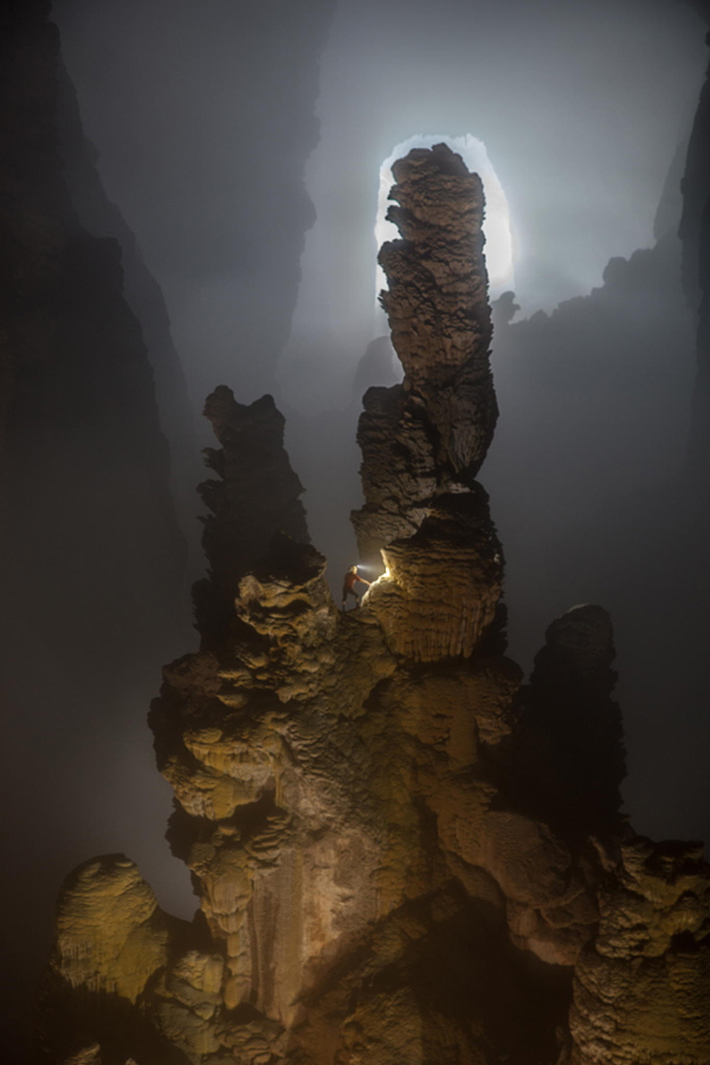
In 1991, Ho Khanh, a local farmer was out gathering wood in the dense jungle of Vietnam’s Phong Nha-Ke Bang National Park, when he stumbled upon an enormous cave entrance. The roar of a rushing stream and the whistling sound of wind in the cave can be heard through the entrance located in a limestone cliff.
According to Khanh, it “felt like something from the underworld.” He soon forgot the cave’s location until he met British spelunkers exploring the area, some 20 years later. He began looking for the cave entrance again, which he found in 2008. The following year, he led an international team of scientists from the British Cave Research Association, led by Howard and Deb Limbert, in exploring what is now known as Son Doong Cave, the largest cave in the world.
Below are 28 stunning photos that capture the cave’s surreal, massive beauty. Enjoy!
Duct-tape Sucks
The Eternal Orgasm
This Ancient Egyptian Sex Technique May Be the Secret to Eternal Life
by Drunvalo

“The ancient egyptians believed that orgasm is more than just something that feels good and allows procreation…”
They believed that an orgasm is sacred!
And that if the energy of an orgasm would be harnessed in the right way, it would become a source of infinite pranic energy and thus lead to eternal life.
In this article we will explore the incredible benefits of an orgasm according to the ancient Egyptians and their ways of harnessing its rejuvenating power.
THE KICKS Premieres Today on Amazon PRIME!
The Kicks starts streaming in August
The soccer-themed live-action series, based on books written by U.S. Olympic gold medalist Alex Morgan, will make its Amazon debut on Aug. 26.

Brand-new Amazon original kids live-actioner The Kicks is set to launch Aug. 26 on Prime Video in the U.S., U.K., Germany and Austria. The show is based on a book series by U.S. Olympic gold medalist and current U.S. Women’s National Team soccer player Alex Morgan.
Aimed at kids ages six to 11 years, the series follows young female soccer star Devin Burke (Sixx Orange), who, after moving to California with her family in the middle of the school year, must cope with turning around her struggling new team.
The series’ pilot episode is available to stream from today and nine additional episodes will debut exclusively for Prime members via the Amazon Video app for TVs, and internet-connected devices including Fire TV, mobile devices and online on Aug. 26.
Full Fathom Five novelist James Frey (I Am Number Four), Todd Cohen (Lumen), David Babcock (Twisted) and Andrew Orenstein (Malcolm in the Middle) are the series’ executive producers.
The Kicks is co-executive produced by Nastaran Dibai (According to Jim) and written by Orenstein, David Steinberg (Space Racers), Taylor Cox (King Julien Stand Up) and Jacquie Walters (Building Wild).
Forgotten Madonna
66 long-lost polaroids of madonna in ’83 show a mega star on the verge
Photographer Richard Corman looks back on meeting and shooting the charismatic East Village club kid as she was poised for stratospheric stardom.
by Rory Satran

In June 1983, Madonna was an ambitious 24-year-old getting some heat on the club charts. When photographer Richard Corman met the young singer, she served him bubblegum and espresso on a silver tray at her beyond-bohemian walkup on East Fourth Street between A and B. It was, as he puts it, “literally right before she stepped out and ran into the stratosphere.” The month after they took some casual casting Polaroids, she released her debut album, Madonna, which produced three top-ten hits (“Holiday”, “Lucky Star”, “Borderline”). One year later, she was writhing around a wedding cake in her career-making MTV VMA performance of ‘Like A Virgin.’ But when Corman took these gorgeous, stripped-down SX-70 Polaroids, she was still DJ Jellybean Benitez’s girlfriend, the good dancer from Funhouse and Danceteria, and a hustler who paid the rent by waitressing and posing nude for art students. As she wrote of that time, “I felt like a warrior plunging my way through the crowds to survive.”
Richard Corman was well-connected in the early 80s. He had assisted Avedon, and his mother Cis was a casting director who worked on films like Raging Bull and The Deer Hunter. When Corman photographed Madonna, he was also taking pictures of Keith Haring in Soho and Jean-Michel Basquiat at his Great Jones Street studio. But nothing prepared him for the young woman who looked to him like she “was going to rule the world.” After 30 years of languishing in a warehouse, the 66 polaroids will finally get their due this fall as a book and an exhibition. Corman shares the story with i-D.
Forgotten Muscle
The 10 Muscle Cars Everyone Forgets About
Don’t let these less-than-iconic muscle monsters die of neglect.
 HEMMINGS.COM
Rock ‘n’ Roll has Elvis Presley, Chuck Berry and the Rolling Stones—the most-loved icons of the genre. In the realm of the muscle car, running parallel to those stars are the Pontiac GTO, Plymouth Hemi Cuda, Dodge Charger, Chevy Chevelle and Buick GSX, the most celebrated and culturally significant of their kind. With long coupe bodies, big-block V-8s and enough vinyl to side a suburban McManse, the classic quintet of muscle cars have enough mid-century swagger to rival even The King.But what about the proverbial Big Mama Thorntons, Bo Diddleys and The Seeds? The cars pushing just as much power and style that have been forgotten over the years, living in the shadow of the fifty-foot letters, G-T-O? During Big Muscle’s prime years, 1964 through the gas crisis of the early Seventies, Detroit churned out super-powerful cars at a reckless rate; today, only a few are held aloft. To rectify such amnesia, we’ve lined up the 10 muscle cars forgotten by the masses—not out of hipster-y, in-the-know superiority, but because we love the muscle car too much to let its middle-children die from neglect.
That’s not just metaphor—for every cherry red Chevelle shined to a blinding finish is a 427-equipped Chevy Kingswood rotting in a barn. Please, go find ‘em.
Boston Rocks
Boston’s Debut Album Isn’t a Guilty Pleasure—It’s One of the Best Records Ever
by Tim Sommer
I have long detested the phrase “guilty pleasure,” especially when it is applied to music, art, films, books, TV shows, and other cultural ephemera. It presumes that the user has to feel bad for liking something; it assumes that a person believes their friends will think less of them if they admit they listen to something.
Listen: It’s O.K. to like BTO’s Greatest more than Amnesiac. You don’t need to make excuses to me, or anyone else. History has taught us that the only thing any music fan should feel guilty about is not outgrowing Elvis Costello by the time you finished your junior year at SUNY New Paltz.
Boston isn’t a guilty pleasure. It’s one of my 50 favorite albums.
Boston’s debut album, which turns 40 this month, is an absolute treasure of melody and architecture. It has the immediacy of pop, but also the deliberate intricacy of prog rock; it has California pop’s attention to zealous sweet harmony, yet it also has some of the heaviest and most memorable guitar riffs on the planet. Until the day Fu Manchu and the Moody Blues get together to re-record Days of Future Passed, it is sui generis.
Like the debut albums by the Ramones, the Velvet Underground and Neu!, it’s difficult to know where the hell Boston came from; it is so staggeringly unique, but also deeply rousing, resonant, aurally sensuous and pleasing.
And do not let its extraordinary commercial success (or our desire to confine it to the trash bin of ‘70s nostalgia, alongside Jimmy Carter, Chevy Chase and Mark Spitz) distract from its innovation or originality. Boston is a spy, a vastly unique spy in the house of memory, virtually as original and as individual as any of those more “credible” acts I just mentioned.
How do you describe Boston’s stunning, heavy/light planetarium bubblegum, this mix of garage rock memes and pure FM Valentine? I mean, it’s like freaking Paul Revere & the Raiders recording Dark Side of the Moon.
The Pyramid Of Balls
Over the past 15 years my dad collected 1,785 bowling balls and built a giant Bowling Ball Pyramid

Plane Suspicious!
PLANE SUSPICIOUS Area 51 mystery as huge unmarked passenger planes are spotted flying from Las Vegas airport to the top secret military base sparking conspiracy theories
BY DANNY COLLINS
 The mysterious jets are lined up beside a private terminal at the McCarran International Airport near Las Vegas
Extra terrestrial theorists believe the top-secret military base – hidden away in the Nevada desert – contains the remains of an alien aircraft that crashed in the 1950s.
The area was bought up by the US military in 1955 and its existence was only acknowledged for the first time in 2005.
It is believed to be the testing site for top-secret cutting-edge military technology.
The jets are run by the United States Air Force and even have their own mysterious call sign – Janet Airlines.
Nobody who flies on the planes is allowed to reveal where they are going or what their job is.
Operating from a private terminal at the Vegas airport, they only fly to and from Area 51.
St. Vincent Tears Up The Star-spangled Banner
Gagosian and Shaq In The Hamptons
Larry Gagosian and Shaq to Produce Film About the Struggles of a Black Basketball Team in the Hamptons
The basketball-centric film deals with issues of race in the Hamptons.
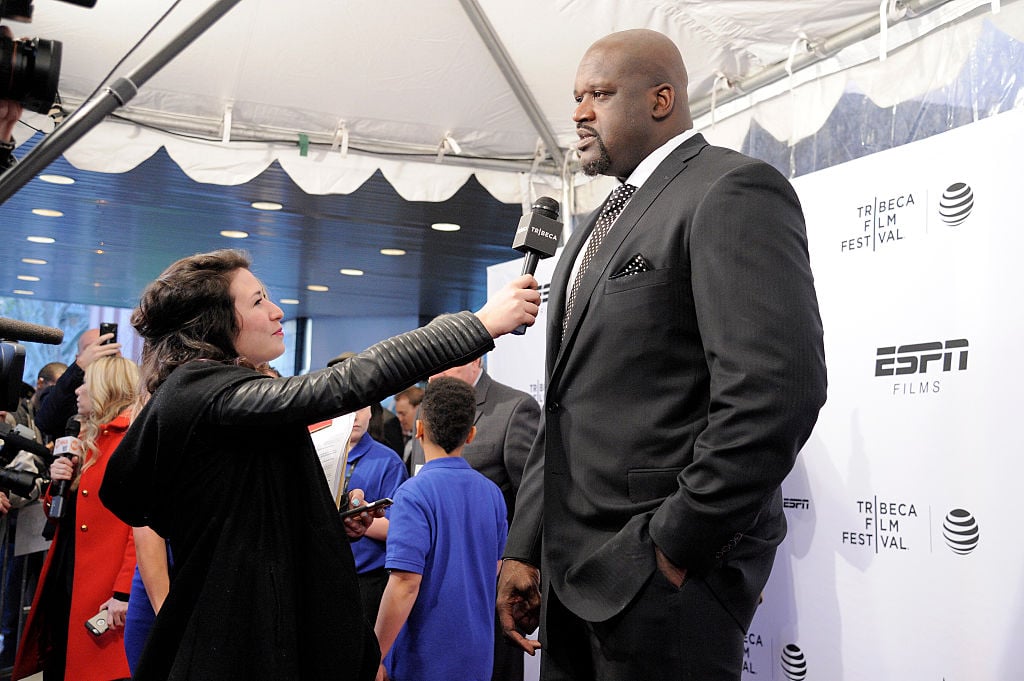 Shaquille O’Neal is being interviewed at “30 For 30: This Magic Moment” premiere in New York City. Courtesy of Matthew Eisman/Getty Images for Tribeca Film Festival.
At first glance, it might seem like a strange pairing: Mega-gallerist Larry Gagosian signs on to produce a documentary about a local basketball team—with legendary NBA Lakers center Shaquille O’Neal?
It’s not as random as a collaboration as you might think, however. The film, Killer Bees, follows the Bridgehampton School basketball team in their quest to defend their 2015 state championship title.
According to the official synopsis, the documentary goes beyond the court and “explores how Bridgehampton’s African American community came to exist in the heart of the Hamptons and its struggle to survive.”
The true story stands in stark contrast to the public perception of Long Island’s East End as a summer playground for the rich and powerful, where artists and collectors gather to party and escape the stifling city heat. Given that inherent tension, support of the film by members of the art world seems natural.
Catchin’ the COK With Spielberg And The Boys
Robot Sushi
This robot can make sushi in a matter of seconds
As robots get more advanced, they will likely take over many jobs in the future — including those of sushi chefs.
For a sneak peak at this impending automation, look no further than a new creation from robotics manufacturer Kawasaki. The robot can make sushi in under a minute.
First spotted by Gizmodo, the video shows a miraculous bot that assembles nigiri, the traditional type of sushi in which a piece of raw fish sits on a little ball of rice.
One robotic arm — on the right in the video below — clinches the sides of the pressed bundles of rice and moves completed nigiri pieces to a wooden block. The arm on the left picks up tubes of wasabi and squeezes a little bit onto the rice. It also picks up a small vacuum, which it then uses to lift up the fish and place it on the rice.
LA Timelapse
R2-D2 Gone
‘Star Wars’ Kenny Baker Dies: R2-D2 Actor Was 81
by Greg Evans

Kenny Baker, the 3-foot, 8-inch actor who played beloved robot R2-D2 in six Star Wars films beginning with the 1977 original, has died at his home in Preston, England following a lengthy illness. He was 81.
The British Baker had roles in Time Bandits and The Elephant Man, TV’s The Goodies, among others, but it’s his work inside Star Wars‘ beeping, whirring little white, silver and blue robot that brought him worldwide and lasting fame. (Coincidentally, TCM aired Time Bandits Saturday afternoon as part of the channel’s 24-hour tribute to actor Ralph Richardson).
“He did extremely well in his life,” Shield said. “He was very ill for the last few years so we had been expecting it. He had been looked after by one of his nephews who found him on Saturday morning.”
Baker played R2-D2 in Star Wars, The Empire Strikes Back, Return of the Jediand the three prequels that kicked off in 1999.
Shield said her uncle was told as a child that he “probably wouldn’t survive through puberty, being a little person in those times, they didn’t have a very good life expectancy.”
Awesome.
It Came From NYC
‘It Came From NYC’ Remembers When White Zombie Ruled Noise Rock (Not Hot Topic)
By Ron Hart
 White Zombie. (Photo: Jay Brown)
For many who grew up in the New York City area during the Koch and Dinkins eras, the local underground was always a din of rust, rage and creativity informed by the squalor of its surroundings. Sunday afternoons at CBGB and Saturday nights on the Bowery were a far saltier way to spend your weekend, proving to be more like an exercise in survival than a casual opportunity to catch a show on a free day.
Fifteen or more years on, it’s hard to imagine such cultural inhabitation existing on the sanitized streets of this rapidly gentrified metropolis, a place where Vampire Weekend and Animal Collective would’ve been held at knifepoint in a dark alley near the Williamsburg Bridge and jacked for their vintage Hush Puppies.
In spite of the grit, or arguably because of it, this period marked one of the city’s most fruitful times in underground music, a time when some of the most savage and innovative acts in metal, punk and hardcore converged on the stages of such fabled venues as The Pyramid Club, L’Amour and ABC No Rio. Pussy Galore. Cop Shoot Cop. Swans. Unsane. Live Skull. Sonic Youth. White Zombie.
Wait, what?
That’s right, kids. Before they became the Beavis-approved, platinum-certified, Grammy-nominated alt-metal juggernaut of the 1990s, White Zombie first existed as a noise band assembled by a quartet of students from New York’s Parsons School of Design in search of a way to conjure the elements of Butthole Surfers, Black Flag, The Doors, The Birthday Party and X into one cacophonous brew. When those passions were cross-referenced with the interests of frontman Rob Straker (now Zombie), particularly his love for both The Misfits and Italian horror films, the band’s image stuck out from the masses of torn denim like a fluorescent green thumb.
Cate Blanchett’s Melting Face
Perseid Outburst Tonight
Perseid Meteor Shower This Week May Develop Outburst – August 11th and 12th

This Thursday and Friday, there will be one of the best annual meteor showers you and your family can watch – the Perseids. And some experts are even predicting that there might be a meteor “outburst” this year – where the number of shooting stars increases beyond the usual rates.
This is a complicated year for watching the Perseid meteor shower, because the evening sky has a roughly half-lit-up moon in it, making it more difficult to catch the faint “shooting stars.” So if you can wait until the Moon sets (between midnight and 1 am), you should have better viewing in the pre-dawn darkness. That’s great advice for people on vacation or camping trips (and for insomniacs,) but probably not useful for those who have to get up for work! (If you are watching before midnight, one suggestion is to get into a moon shadow – a place where something blocks your view of the Moon and it’s easier to scan the sky.)
The best night is the evening of Thursday, Aug. 11 and morning of Friday, Aug. 12th, although there could be significantly more meteors in the sky on the night before and the night after, too. Meteors or “shooting stars” (which have nothing to do with stars) are pieces of cosmic dust and dirt hitting the Earth’s atmosphere at high speed and making a flash of light as they burn up. These flashes could happen anywhere in the sky, so it’s best to view the shower from a dark, wide-open place. See the list at the end for viewing suggestions.
American Antwoord

The Future Of The Bucket List
People could soon be able to have virtual sex with their biggest idols, claims expert
Dreams of a night with your favourite celebrity could soon become a reality
BY JOSHUA HAIGH
 Fancy sharing a night with Bieber?
Fans could soon be getting closer to their idols than ever before.
New technology has meant that ultrasound waves can create the sensation of feeling rain, wind or even holding an object.
We’ve all been desperate to meet some of the worlds most famous celebrities – but what if it was possible to take it further than that?
BBC filmmaker Ted Harrison has claimed that it could just be a few short years before developments mean that they can create the feeling of human touch.
He explained: “It could well be possible to book a life-size, lifelike virtual Elvis for a birthday party in the same way that today an Elvis lookalike can be hired.
“If technology could simulate contact, what ethical and moral issues would this raise?”
Troll Troll Everywhere
Summer’s civil war: How did pop culture get so negative?
By Brian Truitt
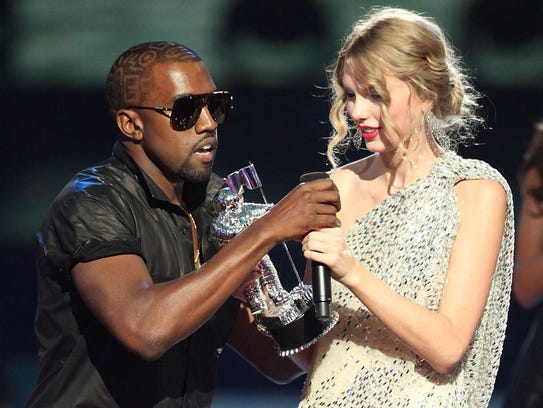 Kanye West jumped onstage after Taylor Swift won for best female video at the 2009 MTV Video Music Awards. (Photo: Christopher Polk, Getty Images)
The biggest civil war of summer was supposed to be Captain America and Iron Man facing off in a superhero popcorn movie. But in the past few months, battle lines have been drawn all over pop culture, with tempers flaring, cooler heads not prevailing and hate spewing everywhere, mostly on the Internet.
There was DC vs. Marvel as fanboys and fangirls hotly debated comic-book franchises. Old-school Ghostbusters fans vs. the new reboot’s female stars. Kanye West and Kim Kardashian vs. Taylor Swift in a he said/she said war involving lyrics and Snapchat videos. Those who were excited to see Suicide Squad vs. the critics who reviled it, with RottenTomatoes.com becoming ground zero for trench warfare.
And then there’s the presidential race, where two weeks of conventions featured political parties calling each other out and cable news coverage showcased surrogates of Donald Trump and Hillary Clinton sniping at one another 24/7.
“What I see right now is the whole world seems to be going to hell in a handbasket, and that’s creating a lot of tension and anger,” says Devin Faraci, editor in chief of film site Birth.Movies.Death. “That stuff leaks out into every possible direction. We’re in that weird position where everything sort of seems terrible and so as a result, people become negative and combative.”
It’s not as much people hating things as it is feverishly defending what they like, figures Mike Ryan, senior entertainment writer for Uproxx.com. “And if something or someone gets in the way of what they’re defending, watch out.”