
God Love The Mustang
Council Bluffs woman driving over 140 mph arrested moments after receiving ticket for going 92
NORTH PLATTE, Neb. — A driver from Council Bluffs was stopped twice for speeding near North Platte on Saturday — the second time for driving over 140 mph.
The 2018 Ford Mustang first was stopped a mile west of North Platte on Interstate 80. Lincoln County sheriff’s deputies had been alerted about 1 a.m. to watch for the car heading west between Brady and Maxwell, which are east of North Platte.
Deputies stopped the car, which was driving 92 mph in a 75 mph zone. The driver, a 31-year-old Council Bluffs woman, was issued a ticket for speeding and allowed to leave.
But as the car pulled away, the Sheriff’s Office said, it accelerated rapidly. The deputies’ radar eventually clocked the car’s speed at 142 mph.
Everything We Think We Know Is Wrong
14,000-Year-Old Piece Of Bread Rewrites The History Of Baking And Farming
by LINA ZELDOVICH

When an archaeologist working on an excavation site in Jordan first swept up the tiny black particles scattered around an ancient fireplace, she had no idea they were going to change the history of food and agriculture.
Amaia Arranz-Otaegui is an archaeobotanist from the University of Copenhagen. She was collecting dinner leftovers of the Natufians, a hunter-gatherer tribe that lived in the area more than 14,000 years ago during the Epipaleolithic time — a period between the Paleolithic and Neolithic eras.
Natufians were hunters, which one could clearly tell from the bones of gazelles, sheep and hares that littered the cooking pit. But it turns out the Natufians were bakers, too –at a time well before scientists thought it was possible.
James Frey to CAA – A MILLION LITTLE PIECES to Festivals
CAA Signs James Frey As Sam & Aaron Taylor-Johnson Ready ‘A Million Little Pieces’ Film For Fall Festivals
 REX/Shutterstock
EXCLUSIVE: CAA just signed best-selling author James Frey. This comes as Brad Weston’s Makeready and The Picture Company prepare to launch A Million Little Pieces, the screen version of the semi-autobiographical and controversial addiction novel that was adapted into a feature by Aaron Taylor-Johnson and Sam Taylor-Johnson, the latter of whom directed her husband in the lead role. The film, which also stars Billy Bob Thornton, Giovanni Ribisi and Odessa Young (Assassination Nation), will be launched as an acquisition title in the fall festivals.
[ click to continue reading at Deadline ]
Go Ask Alice
“Go Ask Alice” (1973) offers an anti-drug message with a side of rock ‘n’ roll
Now streaming on YouTube is a 1973 movie based on the once- alleged true story of a young drug addict named Alice. The movie is based on the book of the same name that was published in 1971. While the book’s origin was once steeped in controversy, it is mostly forgotten now.
“Go Ask Alice” the movie is significant to fans of rock music and history by the way it contextualizes rock music of the late 1960s and attempts to show the means by which even a girl from a good family can fall into the trap of drugs and their attendant misadventures.
“Go Ask Alice” 45 years later
Watching the film version of the book is as close to watching a time capsule as some people will get. There is a bit of editorializing as the opening credits appear and what sounds like a cover version of Jefferson Airplane’s “White Rabbit” plays. Viewers are shown “examples” of kids of the time period. Kids with glasses, boys with long hair; moody-looking girls with very long hair; there were even two black students. The song “White Rabbit” contains the line from which the title “Go Ask Alice” derives. The fashions and the moods clue viewers in on what life was probably like 50 years ago. The movie is interesting on that basis alone.
“Go Ask Alice” and controversy
Years before James Frey and the “Million Little Pieces” scandal, there was “Go Ask Alice” and the theories about who wrote the book. The author is listed as “Anonymous.” The book was purported to be the real journal of a 15-year-old girl who was the Alice of the title.
Once thought to be nonfiction, “Go Ask Alice” is categorized as fiction now. The controversy about the book’s authorship has done nothing to negatively impact the book’s popularity. However, the American Library Association challenges the book’s suitability for young audiences because of its language and depictions of sex and drug use.
DvF Disses Viagra
Diane von Furstenberg thinks Viagra is ‘the worst thing’ for women

Diane von Furstenberg takes real issue with Viagra.
The fashion designer said in a new interview with The Times that Viagra, the drug that helps erectile dysfunction, has harmed women.
“The worst thing that has happened to women in the last 15 years is Viagra,” DVF said. “For men, it used to be all about getting it up. ‘Did I?’ ‘Can I?’ There was a certain fairness. A woman couldn’t have a child after 40, right? Though even that doesn’t exist anymore.
“But the man could have a child until 65, but sexually after a while … Now, with Viagra … they just feel … I think Viagra is the worst thing.”
Burning Man Is Shit
from The San Francisco Chronicle
Poop is beginning to be a big problem at Burning Man, authorities say
At Burning Man, an annual celebration of experimental art and counterculture in the dusty Nevada desert, experts are contending with the difficult — but necessary — question of human waste.
In a recent report, the Bureau of Land Management described the proliferation of attendees who have apparently forgotten — or cannot make it to — the festival’s restrooms. This is especially a problem in the deep playa, an area far away from the center of the festival and from portable toilets, the Reno Gazette Journal first reported.
The government’s proposal? Poop bags and pee bottles, either to be brought by participants or for staff members to hand out.
Yellowstone To Blow?
Yellowstone Volcano latest: 100-FOOT fissure sparks URGENT park closure
A 100-foot fissure has opened up in the Grand Teton National Park – not far from the potentially catastrophic Yellowstone volcano.
By SEAN MARTIN
The giant crack in the Wyoming–based national park has prompted officials to shut down areas from tourists in case of landslides.
WoodTV.com, a US-news site affiliated with NBC, reported: “A 100-foot long fissure has prompted the closing of part of Grand Teton National Park.”
The Grand Teton National Park said in a statement: “The Hidden Falls and Inspiration Point areas are currently closed due to elevated potential for rockfall.
“The area was closed to protect human safety on July 10 after expanding cracks in a rock buttress were detected.
“It is unknown how long the closure will be in effect. Geologists are monitoring the buttress for movement and have initiated a risk assessment for the area.”
It is currently unclear how the crack opened but it is likely due to normal seismic activity in the national park area.
Despite being around 100 kilometres from the Yellowstone National Park, Grand Teton does sit over the Yellowstone supervolcano.
If it was seismic activity beneath Grand Teton which caused the fissure, it could be a sign that Yellowstone is reawakening.
Giant Jeff Goldblum
Finally, the World Has a Giant, Shirtless Jeff Goldblum Statue
Behold, one of the greatest artistic achievements of our time.

Photo via NowTV / Fever PR
Jeff Goldblum is iconic in everything he touches, but there is no role quite so canon as his turn as Dr. Ian Malcolm in Jurassic Park, and no scene that captures his essence quite as well as that brief, beautiful moment where he’s sweaty as all hell and shirtless for some reason.
It’s been 25 years since that cinematic touchstone graced this world, and to commemorate it, London’s NOW TV has constructed one of the greatest artistic achievements of our time: A 25-foot statue of a half-naked Jeff Goldblum.
It was an audacious move on the artist’s part to even try to recreate such an impeccable expression of the human form, but the risk paid off. No detail was spared: The stubble is perfectly rendered, so subtle you’d miss it if you didn’t take a closer look. His hand hangs loose from the wrist in that quintessentially Goldblum-ian attitude of effortlessness, of ease with the self. And those eyes: They gleam with a confluence of fear and knowledge—a mirror image of the look Goldblum flashed the camera just after Dr. Malcolm nearly lost his life to a T. Rex.
Seventy Years of Hells Angels
Hells Angels at 70: Rebels With a Cause
The infamous motorcycle gang now does brisk business selling branded merchandise and politicking.
 Motorcycles are parked on the street outside the Hells Angels motorcycle club headquarters in New York. (AP Photo/Tom Hays, File)
In the early hours of December 11, 2016, while cruising New York City’s East Village neighborhood, 25-year-old David Martinez and his friends encountered a problem. Driving down E. 3rd Street, the group suddenly found themselves stuck behind a livery cab. Noticing an orange parking cone obstructing their way around the cab, Martinez hopped out of the passenger side door of his black Mercedes-Benz in order to move the cone and squeeze by the livery cab.
Unfortunately for Martinez and his companions, that cone had been deliberately placed there by the notorious Hells Angels Motorcycle Club, who have long called that stretch of 3rd Street between First and Second avenues home. The club’s illegal practice of saving spaces for motorcycles in front of their East Village clubhouse was common knowledge for those in the local know, but one with potentially deadly consequences for the uninitiated.
A melee ensued over the cone, as Martinez and his friends clashed with a handful of Hells Angels members. It was then that Anthony Iovenitti – a security guard and reported “prospect” with the club – pulled a firearm and shot Martinez in the stomach.
Amascammers
Amazon’s Curious Case of the $2,630.52 Used Paperback

SAN FRANCISCO — Many booksellers on Amazon strive to sell their wares as cheaply as possible. That, after all, is usually how you make a sale in a competitive marketplace.
Other merchants favor a counterintuitive approach: Mark the price up to the moon.
“Zowie,” the romance author Deborah Macgillivray wrote on Twitter last month after she discovered copies of her 2009 novel, “One Snowy Knight,” being offered for four figures. One was going for “$2,630.52 & FREE Shipping,” she noted. Since other copies of the paperback were being sold elsewhere on Amazon for as little as 99 cents, she was perplexed.
“How many really sell at that price? Are they just hoping to snooker some poor soul?” Ms. Macgillivray wrote in an email. She noted that her blog had gotten an explosion in traffic from Russia. “Maybe Russian hackers do this in their spare time, making money on the side,” she said.
Lost Kubrick Script Found
Lost Stanley Kubrick screenplay, Burning Secret, is found 60 years on
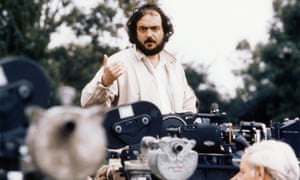 The legendary American director Stanley Kubrick on the set of Barry Lyndon in 1975. Photograph: Corbis via Getty Images
His first world war classic, Paths of Glory, is one of cinema’s most powerful anti-war movies, widely acclaimed as a masterpiece, as was his Roman epic, Spartacus, both of which starred Kirk Douglas. Now a “lost” screenplay by director Stanley Kubrick has been discovered – and it is so close to completion that it could be developed by film-makers.
Entitled Burning Secret, the script is an adaptation of the 1913 novella by the Viennese writer Stefan Zweig. In Kubrick’s adaptation of the story of adultery and passion set in a spa resort, a suave and predatory man befriends a 10-year-old boy, using him to seduce the child’s married mother.
He wrote it in 1956 with the novelist Calder Willingham, with whom he went on to collaborate on Paths of Glory the following year.
KISS Bag
Resale Royalties
Should Artists Get Royalties if Their Work Is Resold? Europe Says Yes, US Says No
 Frank Stella’s Delaware Crossing (estimated at $8 to 12 million) and Picasso’s Femme assise sur une chaise(estimated at $25 to 35 million) from the collection of A. Alfred Taubman being sold at Sotheby’s in 2015. Tristan Fewings/Getty Images for Sotheby’s
Artist resale royalties in the United States, like Old Marley in the Dickens story, are as dead as a door-nail. On Friday, July 6, an appellate court in California ruled that the state’s 1977 Resale Royalties Act, which grants artists an unwaivable right to five percent of the proceeds on any resale of their artwork under specified circumstances, is incompatible with federal Copyright law and deserved to be struck down.
California was the only state to adopt such a law in the U.S. But all have somehow been thwarted. A similar effort in New York State did not get as far as a vote, and federal legislation—the A.R.T. [American Royalties Too] Act—introduced in 2014 into the House of Representatives by Democratic Congressman Jerrold Nadler, and in the Senate by Tammy Baldwin (D-WI) and Ed Markey (D-MA) also has not advanced. “It isn’t a matter that artist resale royalties are incompatible with the U.S. constitution,” said Boston-based art lawyer Nicholas O’Donnell. “It’s just incompatible politically, as there really isn’t any interest in this concept on the part of any party.” Again, dead as a door-nail.
Let’s run an obituary.
Mont Blanc Tunnel Cool
JULY 16, 1965: MONT BLANC TUNNEL OPENS
by Keith Barry

1965: After 19 years of planning and construction, the Mont Blanc Tunnel officially opens. The new tunnel stretches 7 miles, linking the French town of Chamonix and the Italian town of Courmayeur. Buried 1.5 miles under the Alps’ highest peak, it becomes the world’s deepest road tunnel beneath rock and gains infamy after a deadly 1999 fire.
Until the opening of the tunnel, road traffic in the Alps between France and Italy wended its way over hairpin turns and sharp grades, with mountain passes closed the majority of the year because of snow. Italian construction teams began drilling a tunnel into Mont Blanc (or Monte Bianco on their side) to build a year-round route in 1946. The next year, France and Italy signed an agreement to build the tunnel together.
Construction, however, did not begin in earnest until May 30, 1959, with the help of an 82-ton tunnel-boring machine. Tunneling began at 4,091 feet on the French side and at 4,530 feet on the Italian side.
It took 783 tons of explosives to complete the drilling. The French and Italian teams met Aug. 4, 1962, with a discrepancy of only 5.12 inches between the two sides.
Life on Enceladus
Right Stuff for Life Found on Small Saturn Moon
Data from a dead spacecraft suggest that this world may be the best place besides Earth for life as we know it.
BY
On Saturn’s small moon Enceladus, perpetual fountains of alien seawater launch all sorts of curious stuff into space: water, salt, silica, and even simple carbon-containing compounds fly into the void—many of which are ingredients for life as we know it.
Now, scientists working with data from a dead spacecraft have discovered something even more potentially intriguing: heavy organic compounds containing hundreds of atoms arranged in rings and chains. These are the most complex organic molecules uncovered so far at Enceladus, and—sorry, Europa—they may make the moon the most promising place in our solar system to search for life beyond Earth.
“What we know today is telling us that Enceladus is an outstanding target to go look for life, and there may be microbes living in that ocean today,” says Cornell University’s Jonathan Lunine.
California Missions
A history of California’s missions
Spanish explorer Juan Rodríguez Cabrillo sails into San Pedro Bay and claims the California coast for the king of Spain.
Spanish Catholic missionaries from the Jesuit order begin colonizing Baja California, beginning with Loreto. Sixteen more missions will follow in the next 70 years.
About 300,000 Indians live in Alta California, organized into about 80 autonomous groups, sustaining themselves mostly through hunting, gathering and fishing.
Spain expels the Jesuits from Baja California and gives control to another Catholic order, the Franciscans.
Spanish soldiers and Franciscan friars, led by 55-year-old Father Junípero Serra, found the first Alta California mission in San Diego. Spain’s king is eager to strengthen his hold on the region before Russian fur-traders can move south from Alaska. Once baptized, Indian converts (known as “neophytes”) are typically forced to remain and are taught farming, weaving, carpentry and leather-working.
As the missionaries advance up the coast, European diseases spread among Indians, killing thousands. A native group attacks the Mission San Diego, killing Father Luís Jayme.
Serra dies at age 70 in Carmel, having established nine missions. Father Fermín Lasuén takes over the chain. Friars and soldiers expand the network of farms and ranches, using Indian converts as captive laborers.
Racy KATERINA Billboard Rejected by Javitz Center
from The San Francisco Chronicle
Publishers embrace, and ponder, audiobooks’ rise

NEW YORK (AP) — As the audiobook market continues to boom, publishers find themselves both grateful and concerned.
The industry gathered over the past week for BookExpo and the fan-based BookCon, which ended Sunday at the Jacob Javits center in Manhattan. The consensus, as it has been for the past few years, is of a stable overall market: physical books rising, e-book sales soft and audio, led by downloaded works, expanding by double digits.
…Conventiongoers lined up to meet Sally Field, Tony Kushner and Charlaine Harris, among others. They also stood (and sat) patiently for the once-notorious James Frey, whose “Katerina” will be publushed this fall by Gallery Books, a Simon & Schuster imprint.
A decade ago, Frey’s addiction memoir “A Million Little Pieces” was revealed as being extensively fabricated and the author himself was chewed out on television by Oprah Winfrey, but not before her initial endorsement had helped the book sell millions. But Winfrey and Frey later reconciled, Frey now openly writes fiction and Gallery is openly promoting his old work, whether billing “Katerina” as “Written in the same percussive, propulsive, dazzling, breathtaking style as ‘A Million Little Pieces'” or highlighting the memoir in a billboard ad for his new novel.
“‘A Million Little Pieces’ is a beloved and brilliant book, regardless of the controversy, so we did not think twice about using it in our advertising,” Gallery spokeswoman Jennifer Robinson said.
But one change was made for the convention.
“The Javits Center did reject our first design for the billboard as it showed a bit too much flesh,” Robinson said. “We had to make a little less of ‘Katerina’ visible.”
Won’t You Be My Neighbor
“Won’t You Be My Neighbor?” and Mister Rogers Insist Humanity Can Be Better Than This
If your cold, cold heart doesn’t melt at some point during Won’t You Be My Neighbor?, the documentary about Fred “Mister” Rogers, well, I don’t know what to do for you. Watching this movie is like freebasing sincerity — a scarce resource in our current entertainment hellscape. It’ll give you warm fuzzies for days.
Won’t You Be My Neighbor? takes us back to an honest-to-God simpler time, when the idea of a minister with an “abiding interest in children,” as one newscaster describes Rogers in the doc, didn’t immediately raise eyebrows. Early in the film, the late Rogers — whose legendary children’s show, Mister Rogers’ Neighborhood, aired for more than thirty years starting in 1968 — expresses his desire to help children make sense of the world “through the mass media.” He made this comment back when television was still a fairly newfangled technology, and when a few well-intentioned folks like Mister Rogers thought to use “mass media” to spread wholesome education rather than dogged consumerism.
Through archival footage of Rogers both on and off the set of his iconic show, as well as interviews with his family, friends, and former crew members, Won’t You Be My Neighbor? draws a flattering yet complex portrait of its subject, who died of cancer in 2003. What is most remarkable is Rogers’s grasp, even in the medium’s nascent years, of how television can shape young minds. “What we see and hear on the screen is part of who we become,” he insisted. Rogers understood, earlier than most, that television — that oh-so-intimate medium that catches us at home, unguarded, the screen perhaps just inches away from our faces — profoundly alters the way we see one another and ourselves. “Television,” young Rogers argued, “has the chance of building a real community out of an entire country.”
The Water Wars
from the LA Times via Bristol Herald Courier
One of LA’s oldest community gardens thrived for decades. Then the water wars began
For more than 40 years, Italian, Mexican, Croatian, Filipino, Indonesian and Laotian gardeners have built productive mini-farms on the parcels. Jason Neubert / Los Angeles Times
LOS ANGELES — The old Italian men pass their mornings near the top of the hill, tending thick grape vines and rows of fava beans, smoking crumbling Toscano cigars, staying out of the house. If you try to call Francesco “Frank” Mitrano at home, his wife will brusquely tell you that he’s at “the farm.”
The farm is a patch of soil by the 110 Freeway, where he harvests enough tomatoes from his crop to make spaghetti sauce for his family’s weekly Sunday dinner. “Twenty-one people,” he exclaims.
A half-century ago, Filipino seafarers re-created a piece of the old country on this weedy hillside in San Pedro.
Italian fishermen quickly joined them, as did others with horticultural skills honed all over the world — Mexico, Laos, India, Japan, Indonesia, Croatia, Hawaii, Louisiana, Arizona and Lawndale.
More than 250 parcels are connected by a maze of trails and pipes and hoses. Avocado trees soar as high as 60 feet. Giant banana leaves, ratoons of sugar cane and bright orange guavas — set amid a jumble of sheds, trellises, fences and retaining walls — give the hill the look of a rural village carved from jungle.
The community garden — thought to be the oldest in Los Angeles — grew quietly and off the grid, with unlimited water and little oversight.
But now, in a time of drought, it faces an existential crisis after the city drastically cut its water supply.
Though the heavy rains helped last year, the plots they have nurtured for decades are getting thirstier every day.
Mitrano, 83, barrel-chested with a burl of a nose and a sail rigger’s forearms, sneered at the hose that dribbled at his feet.
“No hay presion,” said Mitrano, using Spanish, the lingua franca of the garden. There is no water pressure.
Andrew Solomon On Suicide
Preventable Tragedies
 Anthony Bourdain was almost inconceivably high-functioning; the gap between public triumph and private despair is treacherous. Photograph by Mike Coppola / Getty
The pattern of highly accomplished and successful people committing suicide is transfixing. It assures the rest of us that a life of accolades is not all that it’s cracked up to be and that achieving more will not make us happier. At the same time, it reveals the fact that no one is safe from suicide, that whatever defenses we think we have are likely to be inadequate. Kate Spade’s handbags were playful and fun. Her quirky look was unmistakable and bespoke exuberance. Anthony Bourdain was almost inconceivably high-functioning, and won so many awards that he seemed ready to give an award to his favorite award. High-profile suicides such as these cause copycat suicides; there was a nearly ten-per-cent spike in suicides following Robin Williams’s death. There is always an upswing following such high-profile events. You who are reading this are at statistically increased risk of suicide right now. Who knows if Bourdain had read of Kate Spade’s suicide as he prepared to do the same thing? We are all statistically more likely to kill ourselves than we were ten years ago. That increased vulnerability is itself depressing, and that depressing information interacts with our own unguarded selves. If life wasn’t worth living for people such as Bourdain and Spade, how can our more ordinary lives hold up? Those of us who have clinical depression can feel the tug toward suicide amped up by this kind of news. The gap between public triumph and private despair is treacherous, with the outer shell obscuring the real person even to those with whom he or she had professed intimacy.
There has long been an assertion popular in mental-health circles that suicide is a symptom of depression and that, if we would only treat depression adequately, suicide would be a thing largely of the past. We learn of Kate Spade’s possible marital woes as though marital woes rationalized a suicide. It is true that, in someone with a significant tendency to suicide, external factors may trigger the act itself, but difficult circumstances do not usually fully explain someone’s choice to terminate his or her own life. People must have an intrinsic vulnerability; for every person who kills himself when he is left by his wife, there are hundreds who don’t kill themselves under like circumstances.
Life On Mars Found
NASA Mars rover discovers ‘building blocks’ for life: 3-billion-year-old organic matter
by Doyle Rice
The “building blocks” for life have been discovered in 3-billion-year-old organic matter on Mars, NASA scientists announced Thursday.
Researchers cannot yet say whether their discovery stems from life or a more mundane geological process. However, “we’re in a really good position to move forward looking for signs of life,” said Jennifer Eigenbrode, a NASA biogeochemist and lead author of a study published Thursday in the peer-reviewed journal Science.
The findings were also remarkable in that they showed that organic material can be preserved for billions of years on the harsh Martian surface.
The material was discovered by the Mars Curiosity rover, which has been collecting data on the Red Planet since August 2012. The organic molecules were found in Gale Crater — believed to once contain a shallow lake the size of Florida’s Lake Okeechobee.
Karma
Plot Twist: The Strange Story of Douglas Parkhurst
He became a hero in the last moment of his life—but did he redeem himself?
By Steve Huff
It was the first day of June, the unofficial beginning of summer, and a maroon car was careening across a Little League baseball field in Sanford, Maine’s Goodall Park. Players rushed to get out of the way as the driver—police later identified her as 52-year-old Carol Sharrow— barely missed them, curving toward home base then away again. She was looking for an exit and spotted a gate. More kids were in danger on the other side.
A witness named Justin Clifton later told a Maine news station what happened next. He said he “saw the car pull out of the […] and this guy had some kids with him.”
Clifton said that when the car “came to the gate, the older guy pushed the kids right out of the way. He took the hit for the kids.”
So, Douglas Parkhurst, age 68, died taking that “hit for the kids.” The Vietnam vet was the hero of the moment and a tragic one at that. A man who in photos appeared ruddy, fit for his age, with a winning smile. It was a moving, powerful story.
For the second time in five years, Douglas Parkhurst’s name was in the news along with the phrase “hit-and-run driver.”
The first time was a very different story.
Kate Spade Gone
Fashion Designer Kate Spade Found Dead In Apparent Suicide
by AMY HELD
 Kate Spade, the designer who built a billion-dollar brand of luxury handbags and accessories, was found dead in her Park Avenue apartment in Manhattan on Tuesday. She was 55. Bebeto Matthews/AP
New York Police Department officials said that police received a call around 10:30 a.m. and that officers found Spade unconscious and unresponsive in the bedroom of her Park Avenue apartment. She was pronounced dead at the scene.
“It was a suicide,” NYPD spokeswoman Arlene Muniz told NPR, without providing further details.
The exact cause of Spade’s death will be determined by a medical examiner.
von Furstenberg III
Fashion icon Diane von Furstenberg is ready for her third act
 Photo: Photo For The Washington Post By Jesse Dittmar
NEW YORK – After more than 45 years in fashion, Diane von Furstenberg has been looking for a graceful exit. She is 71, and she has designed a lot of frocks. But the one that matters most is the classic wrap dress, a few yards of slinky jersey that manage to flatter not all but most figures. It’s not cheap, but it isn’t terribly expensive. It has a knack for being appropriate in a multitude of situations. And it comes with its own empowering narrative: that women can have dominion over their own reality with a single sexy, authoritative dress.
That’s a heck of a lot more than most fashion brands have done for women.
The dress landed her on the cover of Newsweek in 1976. It made von Furstenberg – who married and divorced a European prince and dazzled this city’s disco society – even richer and more famous. It gave her independence.
But now, von Furstenberg is ready to be done with fashion. “I don’t want to do another color palette,” she says. “I’ve had three acts. The first was the American Dream, the young girl coming to New York, the wrap dress, blah, blah, blah. The second: I started over. Now, I’ve been thinking, now is the time for the third act. How do I turn this into a legacy, so the legacy will last after me?”
Whopper Juniors and Chocolate
Macon woman turns 105, credits chocolate
BY WAYNE CRENSHAW

MACON, GA – Virginia Pair Witherington puts it simply when asked her secret to living to 105, and not looking near her age to top it off.
“Because I take care of myself,” she said among a din of noise as she celebrated her birthday with friends at La Parrilla Mexican Restaurant on Sunday. She turns 105 on Monday.
She worked 30 years as a bookkeeper for the Macon Water Authority, among other places. Her late husband, Joe Witherington was Macon’s first engineer, said Mary Ussery, who says Witherington “adopted” her about 12 years ago. They have been close friends ever since.
“Nana gives really good advice,” Ussery said. “She lives by her philosophy. She’s kind to everyone. She’s the most graceful person I’ve ever met.”
Ussery said Witherington has previously credited her long life to living well and eating a lot of chocolate. She also loves Whopper Juniors and pizza.
Crucifixion Find
How Jesus Died: Rare Evidence of Roman Crucifixion Found

Credit: Jared I. Lenz Photography/Getty
The body of a man buried in northern Italy 2,000 years ago shows signs that he died after being nailed to a wooden cross, the method used for the execution of Jesus described in the Christian Bible.
Although crucifixion was a common form of capital punishment for criminals and slaves in ancient Roman times, the new finding is only the second time that direct archaeological evidence of it has been found.
A new study of the skeletal remains of the man, found near Venice in 2007, reveals a lesion and unhealed fracture on one of the heel bones that suggests his feet had been nailed to a cross. [8 Alleged Relics of Jesus of Nazareth]
Renting Your DNA, Cool!
from the San Diego Union-Tribune
Need a little extra money? You’ll soon be able to sell and rent your DNA
By Gary Robbins
A technician at a Colorado Department of Public Health & Environment lab in Denver extracts DNA for whole genome sequencing. Such testing could revolutionize everything from medical care to agriculture. (P. Solomon Banda / AP)
Feel like earning a little extra money and maybe improving your health at the same time?
Consumers will soon be able to sell or rent their DNA to scientists who are trying to fight diseases as different as dementia, lupus and leukemia.
Bio-brokers want to collect everything from someone’s 23andMe and Ancestry.com gene data to fully sequenced genomes.
The data would be sold or rented to biomedical institutes, universities and pharmaceutical companies, generating money for consumers who share their genetic secrets.
$100k Levi’s
Vintage pair of Levis, 125 years old, go for close to $100,000
The vintage look just got a whole lot more expensive. A buyer in Southeast Asia has purchased a pair of 125-year-old Levis for almost $100,000.
And you thought your jeans cost a pretty penny.
The jeans, originally bought in 1893 by Solomon Warner, a storekeeper in the Arizona Territory, have a drastically different look than today’s Levis. Warner’s jeans had but a single rear pocket, a button fly and no belt loops — remember, men favored a good set of suspenders back in the day.
The denims, size 44 with a 36-inch inseam, suggest that Warner was no small man.
Warner, it turns out, had a colorful history that had nothing to do with his jeans. He established one of the first stores selling American dry goods in Tucson, and survived being shot by Apaches in 1870.
Bigravity
Bigravity: A Hidden ‘Gear’ for Gravity?
Physicists come up with alternate explanation of gravity that may implicate dark energy, which comprises 70 percent of our universe.
by Yuen Yiu

An artist’s conception of our universe, where gravity (the green grid) is trying to keep everything together and a mysterious dark energy (the purple grid) is trying to tear everything apart. Image credits: NASA/JPL-Caltech
Two physicists from Montana State University in Bozeman propose a way to test an existing theory of gravity where a hidden “gear” may explain the mystery of dark energy — an unknown substance that makes up 70 percent of our universe.
The paper, published in Classical and Quantum Gravity, suggests that astronomers may be able to test models of bigravity — a theory in which there are two different components of gravity, as suggested by its prefix — using X-ray, radio and gravitational wave measurements of neutron stars.
An Ever-Expanding Universe
Scientists have known since at least the 1990s that our universe is expanding at an accelerating rate. But this doesn’t make sense, because gravity — an attractive force like a rubber band — is supposed to cause our universe to contract or at least slow down the expansion.
“It’s like if you took a ball and threw it up in the air, but instead of falling back down, it just kept going up faster and faster,” said Andrew Sullivan, a physicist from Montana State University and author of the paper.
Scientists theorized that some other force must be responsible for ripping the universe apart, and “dark energy” became the placeholder term for the mysterious force.
Little Demon
Listen: Little Caesars worker calls 911 after admittedly shooting attacker in mask
HOLLY HILL, Fla. – A Little Caesars pizza employee who admittedly shot an attacker wearing a demon mask is heard on a 911 call that was released Tuesday, saying, “Please help me. I think he’s dying.“
The employee is heard sobbing as he talked to the dispatcher.
Listen: 911 call in Little Caesars attack
“He tried to stab me with a pair of scissors. He hit me in the face with a big piece of wood,” the employee said during the call. “I’m bleeding all over the place.”