
AI Auction v.1
Christie’s Is Holding the First Ever Dedicated A.I. Art Sale at a Major Auction House
How you feel about that might just depend on how much human intervention you think is required to make A.I. generated art legitimate.

I felt a vague sense of disquietude when I received word from Christie’s that it would be hosting the first-ever artificial intelligence-dedicated sale at a major house. Just a little moment of unease. Frankly, it’s hard to shush those quiet biases that make a person want to categorize all art into “real art” and “other,” as if I have somehow earned the right to make that distinction. But unpacking my kneejerk reaction to the Augmented Intelligence auction, which will be open for bidding from February 20 through March 5, didn’t take long. I am a person who makes things, and the adoption of artificial intelligence technologies in creative spheres feels like an existential threat when you’re someone who has roped material survival to artistic impulses.
I’m also a realist. Artificial intelligence can write and draw and, tethered to a robotic arm, it can paint, and it can make data so beautiful we put it in museums, but there’s always a human being behind the curtain pulling the strings, whether by writing code or dreaming up ideas or otherwise telling A.I. what to do. (For the record, it can also chase glitches, sus out breast cancers better than human doctors and, just maybe, break your porn habit.) I also futz around with artificial intelligence on the regular because I’m not as afraid of A.I. stealing my job as I am of someone who’s really good at using A.I. stealing it.
Monster Spied
Telescopes spy a monster radio jet streaming from a bright and early object in the universe
The jet of radio waves is the biggest ever detected so early in the history of the universe, astronomers reported Thursday.
By MARCIA DUNN | Associated Press

CAPE CANAVERAL, Fla. — Telescopes around the world have spotted a monster radio jet streaming from a quasar dating back to the first 1 billion years of the universe.
At double the width of our Milky Way galaxy, this jet of radio waves is the biggest ever detected so early in the history of the universe, astronomers reported Thursday.
Radio jets like this are not uncommon in our cosmic neighborhood. But they’ve been elusive in the distant early universe — until now — because of the obscuring cosmic microwave background left over from the Big Bang.
“It’s only because this object is so extreme that we can observe it from Earth, even though it’s really far away,” lead author Anniek Gloudemans of the National Science Foundation’s NoirLab said in a statement.
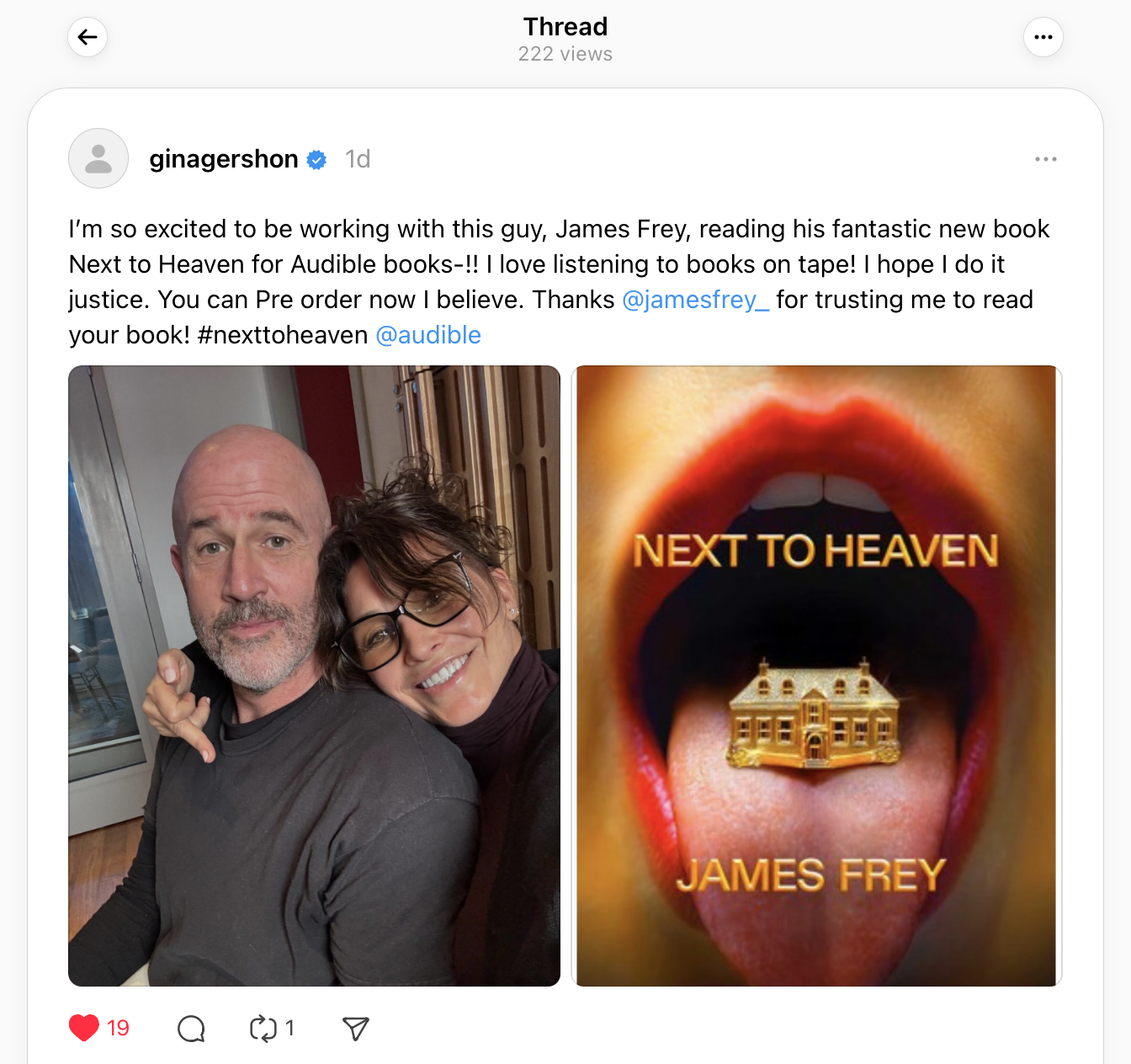
Gina Gershon Audibles NEXT TO HEAVEN
Michel Gondry’s ‘Maya’
Michel Gondry’s ‘Maya, Give Me A Title’ Getting North American Premiere At New York International Children’s Film Festival
Michel Gondry‘s latest film Maya, Give Me A Title, is set to have its North American premiere at the upcoming New York International Children’s Film Festival (Feb 28 – March 16).
The French-language film will have its international premiere at the upcoming Berlin Film Festival. Indie Sales is selling. Gondry’s regular producer Georges Bermann of Partizan Films is producing. A U.S. buyer has yet to be set but The Jokers released in France.
The Lumiere-nominated film is a stop-motion animation charting the long-distance relationship between Gondry and his daughter Maya. The two live in different countries, and on each of their nightly calls Gondry asks his daughter “Maya, give me a title.” Whatever her answer is, he creates a short animated story in which Maya is always the hero.
Everywhere a Fight Club
Fight Club’s Chuck Palahniuk: ‘Today, cults are the big thing. Secretive cults’
The novelist on transgressive literature, the ‘exhausting’ appeal of Elon Musk – and why Netflix would never accept his shocking TV pitch
by Duncan White

“There are probably a billion cults going on right now that we have no clue about.” Chuck Palahniuk is meditating on the American moment. At 62, and the author of 25 books of fiction, he has made a career diving into the murky waters of the national ID and dredging back to the surface its most transgressive desires.
From his 1996 debut, Fight Club, through to his latest, Shock Induction, Palahniuk’s propulsive novels have explored the dark recesses of the culture, his finger on a deeper pulse. And in this particularly disorienting moment, he sees some alarming precedents.
“I don’t think any historical moment is unique. I think about a similar period at the end of the Sixties, when hippie ideals and forms of protest no longer worked, people started to take more and more radical action, like the Hearst kidnapping, the Aldo Moro murder, and the Sharon Tate murders. Suddenly rich people had to have bodyguards. You had all sort of similar acts of radical action, because organised action was no longer working.
“And that’s what I thought of the other day when the Luigi Mangione shooting happened. And the two New Year’s Day attacks, in New Orleans and Las Vegas.”
JAMES FREY: Next To Heaven
James Frey’s Next to Heaven Is Made for White Lotus and Big Little Lies Fans — See the Cover! (Exclusive)
The ‘A Million Little Pieces’ author is back with a satirical look at the “beautiful, wealthy and unsatisfied”
:max_bytes(150000):strip_icc():focal(899x0:901x2)/James-Frey-010325-03-ff1fd263e29d4163871a32c0d6d402a8.jpg)
James Frey is known for pushing boundaries and his latest novel promises to be no different.
Billed as “a satirical thrill ride through the dark heart of privilege,” Next to Heaven is the perfect propulsive read for fans of shows like White Lotus and Big Little Lies, the publisher teases. The novel is set to be released on June 17, 2025 — and PEOPLE has the exclusive first look at the juicy cover!
With this new novel, Frey is ready to sink his teeth into the dark and frivolous.
“The world is so serious and dreadful these days, I wanted to write a fun, sexy, thrilling book that peels back the veneer of ‘perfect’ lives and exposes what money and desire can do to people,” Frey tells PEOPLE in an exclusive excerpt. “I hope readers laugh and generally have a great time watching it all unravel.”
A Light From Under
Eerie Light Haunts a Southern Town. It May Come From Under the Earth.

by NYT
Summerville, a town northwest of Charleston, S.C., has its share of ghost stories. One yarn that has stuck around for decades is the tale of the Summerville Light.
In the dead of night, along a dirt road in the nearby pine forest following abandoned railroad tracks, people have observed mysterious lights, bobbing up and down, pulsing with a pale blue, green or orange hue.
Along the tracks, the story goes, a woman waited for her husband, a railroad worker, to return. But he died, losing his head in an accident. Ever devoted, the widow searched for his remains. She continued — even after her own death: The flicker of her lantern was all that remained.
It’s a goose-bumpy explanation of the Summerville Light. The remote road in the story even became known to locals as Light Road, a spot where specter seekers reported glowing orbs and unusual noises in the 1960s.
AI Screenwriter v.1
Paul Schrader, writer of ‘Taxi Driver,’ admits AI is better at generating film ideas than people
by Ilana Gordon

After enjoying a five-decades-long career as a film critic, director, and screenwriter, Paul Schrader has come to the conclusion that AI is better at writing movies than humans.
For a certain subset of the population, Schrader is most recognizable as the pen behind Martin Scorsese projects like Taxi Driver (1976), Raging Bull (1980), and The Last Temptation of Christ (1988). For a younger demographic, he is best known for directing the erotic thriller The Canyons (2013), written by Bret Easton Ellis and starring Lindsay Lohan and James Deen (of adult film fame).
On Jan. 17, 2025, Schrader took to Facebook to announce “I’M STUNNED.” He elaborated: “I just asked chatgpt for “an idea for Paul Schrader film.” Then Paul Thomas Anderson. Then Quentin Tarantino. Then Harmony Korine. Then Ingmar Bergman. Then Rossellini. Lang. Scorsese. Murnau. Capra. Ford. Speilberg. Lynch. Every idea chatgpt came up with (in a few seconds) was good. And original. And fleshed out.”
Schrader ended his post by asking why “writers sit around for months searching for a good idea when AI can provide one in seconds?” and he got quite the response to his query. Concerns were raised about AI having hacked his Facebook page, but mostly people agreed that ChatGPT primarily functions as a new type of search engine, aggregating already existing content and concepts.
Marianne Faithful Gone
Marianne Faithfull Dies: Singer, Actor And Rolling Stones Muse Was 78
By Greg Evans
Marianne Faithfull, who during the Swinging ’60s in London built a career as a singer, songwriter, actor and a muse to such other stars as the Rolling Stones and David Bowie, died today in London. She was 78.
Marianne Evelyn Gabriel Faithfull was born in Hampstead, London, on December 29, 1946, to father Major Robert Glynn Faithfull, a British intelligence officer and professor at Bedford College of London University and mother Eva, the daughter of an Austro-Hungarian nobleman. With the beauty of a model and an aristocratic bearing, Faithfull was on 18 (some reports say 17) when she attended a party for the Rolling Stones and was discovered by the band’s manager Andrew Loog Oldham. Her debut album was released the following year.
That self-titled album was a commercial success, especially in the U.K., and included the hit that became her signature song: the sweetly sung “As Tears Go By,” written by Mick Jagger, Keith Richards and Oldham. The Rolling Stones’ version of the song made the Top 10 on both sides of the pond a year later.
Google “HELP”
Mysterious ‘HELP’ Signs On Google Maps In LA Might Have Disturbing Purpose
By Dave Basner

Google Maps is very helpful with providing directions, but it has also proven to be a wealth of strange and interesting images. From UFO crashes on deserted islands to invisible men running away to creepy killer clowns to cheaters caught in the act to demons or aliens to petty neighbors, you never know what you might find on it. Well this week, something disturbing was spotted in the satellite imagery of L.A. on Google Maps, and it has upset many people who have seen it.
In an area about a mile east of Los Angeles City Hall, just off of North Mission Road, is a plot of land that has the word “HELP” spelled out dozens of times on the ground with materials that had been laying around the site. In addition, words like “LAPD,” “FBI,” “FEDERAL,” and the Spanish words “TRAFFICO” and “TERRORISMO” (traffic and terrorism) can also be seen.
Some folks think the unsettling messages were put there by a person dealing with human trafficking as a cry for help, especially since the location is close to the city’s shipping yard, where human traffickers might be engaging in illegal activities. There also appears to be what looks like entrances to holes or tunnels in the pictures.
‘Studio 17: The Lost Reggae Tapes’ Premieres
Acclaimed reggae documentary to make NYC premiere at Bronx Music Hall
On Feb. 1, the newly-opened Bronx Music Hall will host the New York City premiere of the 2019 documentary, “Studio 17: The Lost Reggae Tapes,” which chronicles the roots of the genre beginning from a family-owned record store in Kingston, Jamaica.
The late legendary producer Quincy Jones called “Studio 17” one of his favorite documentaries at the time. “It’s documentaries like this that bring us closer to the music,” said Jones via Forbes.
The film traces the beginnings of a used record store called Randy’s, founded by a Chinese-Jamaican couple in downtown Kingston in the early 1960s. The store evolved into a recording studio and starting base for poor but up-and-coming reggae artists including Bob Marley and the Wailers, Lee “Scratch” Perry, Peter Tosh, Gregory Isaacs and Dennis Brown.
Alignment Oh My!
Planetary alignment 2025: This is what it really means when seven planets line up in the sky
by Jonathan O’Callaghan
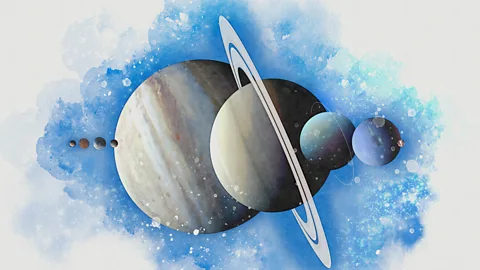
Stargazers will be treated to a rare alignment of seven planets on 28 February when Mercury joins six other planets that are already visible in the night sky. Here’s why it matters to scientists.
Peer up at the sky on a clear night this January and February and you could be in for a treat. Six planets – Venus, Mars, Jupiter, Saturn, Uranus and Neptune – are currently visible in the night sky. During just one night in late February, they will be joined by Mercury, a rare seven-planet alignment visible in the sky.
But such events are not just a spectacle for stargazers – they can also have a real impact on our Solar System and offer the potential to gain new insights into our place within it.
The eight major planets of our Solar System orbit the Sun in the same flat plane, and all at different speeds. Mercury, the closest planet to the Sun, completes an orbit – a year for the planet – in 88 days. Earth’s year, of course, is 365 days, while at the upper end, Neptune takes a whopping 60,190 days, or about 165 Earth years, to complete a single revolution of our star.
Palisades Art Disaster
Art Collector Says He Lost Warhols and Harings to L.A. Fire
by NYT

As the flames grew closer and closer to his home in the Pacific Palisades neighborhood of Los Angeles and his teenage daughter pleaded with him over the phone to evacuate, Ron Rivlin decided to flee, taking three Andy Warhols with him, all that he could carry.
“I grabbed those, and as I was leaving, I saw the fire ahead of me on the hill,” Rivlin said.
When he returned a few days later he found that his home had been destroyed, and with it his considerable art collection. Rivlin said he had lost more than two dozen Warhols — he owns a gallery in West Hollywood that specializes in Warhol — along with works by Keith Haring, Damien Hirst, John Baldessari and Kenny Scharf.
“It’s dust at this point,” Rivlin said on Monday as he returned to the site of his former home, which was built about five years ago, specially designed with his art collection in mind.
Now, it is a pit of rubble. Standing ankle-deep in the twisted metal and crumbled concrete, Rivlin searched for any remnants of the art collection he was forced to abandon.
Pessimistic Apocalypsism
The end of the world as we know it? Theorist warns humanity is teetering between collapse and advancement
When will human civilization end for 8.2 billion Earthlings? It could be happening right now
by Julia Musto
When is the end for humankind? Whether it’s by a nuclear holocaust, a result of exceeding a critical climate threshold, at the hands of artificial intelligence-powered robots, or the “Don’t Look Up” asteroid, the question plagues our thoughts, our research, and our Facebook rants.
Now, one theorist warns that the human civilization of 8.2 billion people is at a critical junction: teetering between what he forecasts will be authoritarian collapse and superabundance.
“Industrial civilisation is facing ‘inevitable’ decline as it is replaced by what could turn out to be a far more advanced ‘postmaterialist’ civilisation based on distributed superabundant clean energy. The main challenge is that industrial civilisation is facing such rapid decline that this could derail the emergence of a new and superior ‘life-cycle’ for the human species”, Dr. Nafeez Ahmed, the bestselling author and journalist who is a distinguished fellow at the UK-based Schumacher Institute for Sustainable Systems, said in a statement.
FutureSports
Is This Weird Dome the Future of Watching Sports?
Part sports bar and part planetarium, the screen-based entertainment venue Cosm promises an immersive game-day experience at a fraction of stadium prices.

For Dallas Cowboys fans gathered at Cosm, a new sports venue just north of Dallas, the climax of the Nov. 24 National Football League game against the Washington Commanders delivered a heart-attack-worthy spectacle.
Both teams were muddling through a 10-9 game until the fourth quarter, when a series of unlikely events turned things upside down. In the final stretch, the two offenses exploded for a collective 31 points. With less than a minute left and all the mojo behind them, the Commanders sneezed on an extra-point kick that would have tied the game. Then Washington surrendered a touchdown on the subsequent kickoff, sealing their fate in a 34-26 loss at their home field at Northwest Stadium in Landover, Maryland.
Cowboys fans all over the planet witnessed the same bewildering victory on TV. But few Dallas die-hards had better seats for this shocking turnabout than those watching at Cosm, an immersive sports theater that opened in August in The Colony, a north Dallas suburb. Hundreds of fans gathered inside the facility’s cavernous dome to watch a Sunday stunner on a concave three-story screen — an experience immense and vivid enough to be lifelike.
Legend Wade
Citizen Wade: The secret and remarkable life of a legendary hacker who received a rare presidential pardon
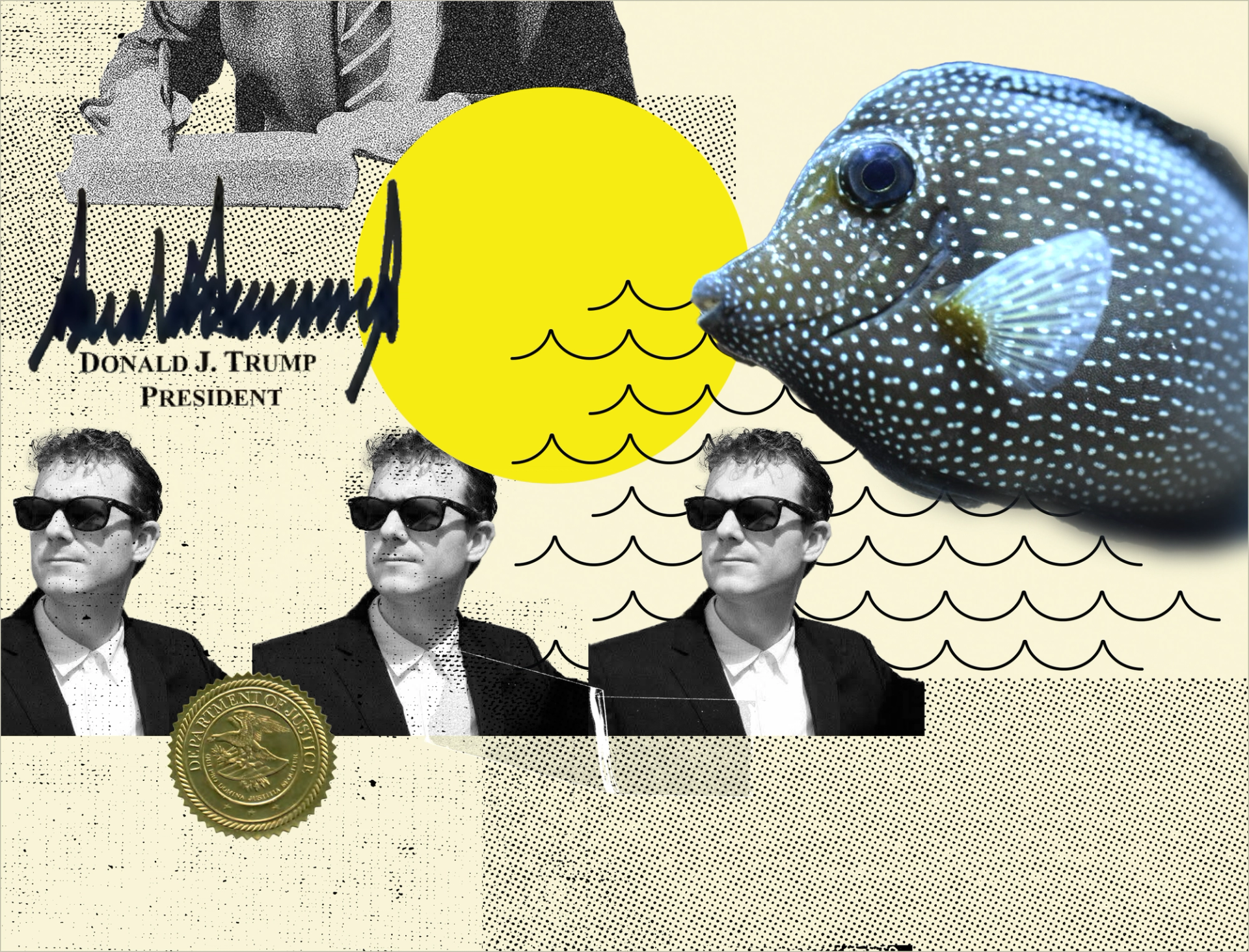
In early 2015, the Australian hacker Chris Wade got a visit from the fish doctor at his aquarium-filled Florida home. The patient was Gemmy the Gem Tang, a rare saltwater species known for its striking white dots and bright yellow tail that had cost Wade $3,500.
Wade was then nursing an uncomfortable secret: A 2005 criminal conviction, and years of quiet, compelled collaboration with federal law enforcement. And the fish doctor’s visit was the beginning of a strange sequence of events that would end, five years later, in a presidential pardon from Donald Trump for the legendary hacker, who now runs a cybersecurity research firm, that he believes spared him eventual deportation.
“It saved my life, honestly,” he said in his slightly watered-down Australian accent. “I didn’t even think a pardon was possible.” Wade, who is now 40, has never shared his story publicly, but said he was speaking to Semafor to set the record straight after his criminal case was partially unsealed in October, inviting speculation about his past.
Back To The DeLorean
Back to the Future’s time-travelling DeLorean set to return – plus five other ‘gullwing’ greats
The original DMC-12 was a flop despite its on-screen stardom, but the revamped sequel will be fit for the 21st Century

“If you’re gonna build a time machine into a car, why not do it with some style?”
The words of wacky Doc Brown in Back To The Future could describe the life of John DeLorean, the rebel General Motors executive who set out on his own to build a futuristic sports car that would unexpectedly star in a hit movie trilogy and cement a place in popular culture.
Designed by Giorgetto Giugiaro, the DMC-12 of 1981 featured a glass-fibre underbody wrapped in brushed, stainless steel panels. Unpainted, the mid-engined gullwing looked sensational but it was John DeLorean’s dramatic downfall and the coupé’s leading role in blockbuster Back To The Future that has given the car almost mythical status.
The Portal Too Oblivion?
MICK CRONIN’S HARSH COMMENTS SHOW THE RISK IN USING THE TRANSFER PORTAL
In the new era of college basketball, talent is too often prioritized over culture

Mick Cronin made headlines this week for his comments after UCLA’s 94-75 loss to Michigan. He criticized his players for being “soft” and “completely delusional about who they are,” suggesting the entire locker room has been apathetic. “I don’t need to do anything else. I almost got 500 wins. I’m only 53,” Cronin said. “You’d think I’m coaching the Lakers. It’s a joke. I come in and I have more passion and energy and pride than everybody in there. That’s the problem.”
This is the challenge that comes with using the transfer portal like UCLA did this offseason when it brought in six new players, including USC guard Kobe Johnson, Oklahoma State guard Eric Dailey Jr., Louisville guard Skyy Clark and Oregon State forward Tyler Bilodeau. If you change the dynamics of your locker room drastically and replace the guys who remained loyal to your program, you take a risk that the culture is going to suffer. That’s the coach’s decision, so it’s not fair to point fingers at the players when problems arise.
The Disco Ball Is Back
The Disco Ball Is Making a Playful Comeback
A iconic nightclub staple is entering new territory: the home

When Louis Bernard Woeste and William A. Stephens filed a patent for a so-called myriad reflector in 1916, the dawn of disco was still decades away. But their glittering mirror ball—destined for ballrooms, nightclubs, dance pavilions, and skating rinks—was made with revelry in mind. Shiny orbs hovered over bandstands hosting jazz musicians in the 1920s, twinkled above dancers in Casablanca (1942), and dazzled a club scene in Some Like It Hot (1959).
By the 1970s, when that super-glam, sparkly club culture—disco!—at last arrived, the mirror ball fit right in, a silvery staple of underground New York dance spots like The Loft, The Gallery, and, later, legendary nightclub Studio 54, where revelers grooved beneath its disorienting shimmer. (Studio 54’s was made by Omega National Products in Louisville, Kentucky, famous today for crafting disco balls for Beyoncé and Madonna.)
How The Art World Was Woven
How Textiles Took Over the Art World
This week, co-host Ben Davis speaks to curator and author Elissa Auther about the surging interest in fiber art.
by Sonia Manalili & Ben Davis

Contemporary art comes in many shapes and forms, but close your eyes and think of what an artist looks like and nine times out of 10, I bet you are still thinking of a painter in front of a canvas. If recent interest for museums and galleries is any indication, however, that image should be joined by another one: the fiber artist.
Think of a weaver seated at the loom or a quilt-maker laboriously stitching together layers of fabric. The textile arts have experienced a quiet but steady groundswell of interest in the last decades, and recently I’ve noticed that it feels as if it is kicked into a new, even higher level, from the many kinds of textile based art throughout the most recent Venice Biennale to the major show “Woven Histories: Textiles and Modern Abstraction,” which is on a tour of some of North America’s most important museums right now.
The Human vs. The Hare
The Speed of Human Thought Lags Far Behind Your Internet Connection, Study Finds
By NYT

In our digital age, few things are more irritating than a slow internet connection. Your web browser starts to lag. On video calls, the faces of your friends turn to frozen masks. When the flow of information dries up, it can feel as if we are cut off from the world.
Engineers measure this flow in bits per second. Streaming a high-definition video takes about 25 million bps. The download rate in a typical American home is about 262 million bps.
Now researchers have estimated the speed of information flow in the human brain: just 10 bps. They titled their study, published this month in the journal Neuron, “The unbearable slowness of being.”
“It’s a bit of a counterweight to the endless hyperbole about how incredibly complex and powerful the human brain is,” said Markus Meister, a neuroscientist at the California Institute of Technology and an author of the study. “If you actually try to put numbers to it, we are incredibly slow.”
Yes, or perhaps No.
We need dramatic social and technological changes’: is societal collapse inevitable?
Academic Danilo Brozović says studies of failed civilisations all point in one direction – today’s society needs radical transformation to survive
by Damian Carrington / Environment Editor
For someone who has examined 361 studies and 73 books on societal collapses, Danilo Brozović’s conclusion on what must happen to avoid today’s world imploding is both disarmingly simple and a daunting challenge: “We need dramatic social and technological changes.”
The collapse of past civilisations, from the mighty Mayan empire to Rapa Nui (Easter Island), has long fascinated people and for obvious reasons – how stable is our own society? Does ever-growing complexity in societies or human hubris inevitably lead to oblivion? In the face of the climate crisis, rampant destruction of the natural world, rising geopolitical tensions and more, the question is more urgent than ever.
“More and more academic articles are mentioning the threat of collapse because of climate change,” says Brozović at the school of business at the University of Skövde, Sweden. The issue of collapse hooked him after it was raised in a project on business sustainability, which then led to his comprehensive review in 2023.
Boy In Bubble Saved
Moment boy rescued after being found floating in bubble in the middle of the sea
Rafael Graça do Prado, 32, who runs a tourism boating business, has told how he spotted the large plastic ball while in the sea off Lazaro Beach near Sao Paulo, Brazil
By Tim Hanlon
A boy was found inside a large bubble out at sea by an alarmed sailor who was with his family in a boat.
Rafael Graça do Prado, 32, was on a boat trip with his children when he saw the bizarre object floating in the water off Lazaro Beach in Ubatuba, Sao Paulo, Brazil, on December 24. Footage shows the transparent bubble in the sea with the young boy, aged around eight, inside.
He is understood to have been playing with his parents on the beach inside the bubble which was held by a rope to stop it from blowing away. But the rope had snapped and the boy drifted out to sea where thankfully he was spotted by Rafael. He explained that his main concern was whether there was enough oxygen inside the ball.
Badly, is my guess.
Discovery of ET life is Imminent, Astronomer Says; So How People Will React?
By Sean Duke / Science Editor
Scientists have been searching the skies for an extraterrestrial intelligence for years and found nothing. However, many believe the chances of success are improving fast, so if 2025 turns out to be the year that we make first contact with a non-Earthly intelligence, how will people react?
“I’ve bet everyone a cup of Starbucks that this will happen, so obviously I believe the chances are good,” said Seth Shostak, a speaker, author and senior astronomer at the SETI (Search for Extra Terrestrial Intelligence) Institute.
Born in 1943, Shostak has observed scientific efforts to find an ET intelligence since his youth growing up in New York City. He explained why he is now more optimistic than ever.
The Midwinter of Our Content
Five curious health benefits of dark midwinter, according to science
As we reach the shortest day and the longest night, don’t despair, says Professor Miles Richardson. The natural connections that we make this time of year can boost our wellbeing and mindset in surprising ways

Christmas is a time of togetherness. We meet friends and family, and gifts are exchanged – a festival of relationships in many ways. Today’s winter solstice is a reminder of traditions linked to the natural cycles we’ve become increasingly detached from. It is the day when the sun reaches its lowest point in the sky, bringing the shortest day and the longest night.
Often called Yule, it has been celebrated for millennia across many cultures with gatherings and feasting as people salute the returning light that follows the shortest day. As dawn follows the longest darkness, it is a time of hope and renewal. It provides an opportunity to connect with natural cycles, to celebrate and deepen our relationship with the natural world.
[ Independent UK ]
Poof! (DO NOT WATCH or you’ll replay over and over again)
Always fun to revisit…
Always Go Balls-out
Inside a Fusion Startup’s Insane, Top-Secret Opening Ceremony
Robots! Huge capacitors! A pianist-programmer of impossible skill! One of Silicon Valley’s formative figures takes the stage at a wild event.
by JARON LANIER
ONCE IN A while, Silicon Valley is still Silicon Valley. It happened on August 8, 2024, at the opening ceremony for a nuclear fusion energy startup. The events of that day were so astonishing I wish I could blurt them out to you in an instant, like a hologram, but you will need to be patient, as the linear nature of language allows me to unveil only one piece at a time.
I had been sensing a malaise for a year or two, a feeling that tech had lost its flavor. The big AI leap was part of it. It wasn’t just the question of, “If AI could do everything, what would people be for?” (Deceptive question, since AI is made of people. Your data, remember?) More than that, the focus on AI seemed to change the way people thought about reality. A lot of my friends were talking about using language models to calculate the best future. Life was now a problem to be solved.
The way out of this trap, I think, is for people to become smaller. To get back in touch with the edge of mystery. This isn’t a conclusion I can argue for using language, but once in a while, if we’re lucky, it’s a thing that can be experienced.
So: An audience composed of venture capitalists, US military and intelligence agency officials, physicists, and San Francisco artists have been invited to a secret event. They enter through an imposing vault door to take their places in rows of seats that feel tiny in the shadows of a vast space. Behind them is a sea of refrigerator-sized capacitors. In front is a stage set that is a little hard to visually interpret. It is white and heavenly, high tech, large, glowing.
Rickey Henderson Gone
The Late Rickey Henderson Is An Exciting Look Into the Future
By John Tamny
“At 5-foot-10, Henderson was smaller than many big leaguers, but he overcame his size with a combination of horse power, a savant-like ability to exploit deficiencies in pitchers, and an extreme bravado that many players viewed as cockiness.” That’s how Michael Rosenwald described the recently passed Rickey Henderson in an obituary that Forbes publisher Rich Karlgaard correctly described as a “masterpiece.”
To think about Rosenwald writing Henderson’s obituary was to imagine that he had as much fun writing about Henderson as Henderson had playing baseball. Same with George Will in his own column memorializing Henderson. Henderson loved baseball, and those who love baseball are returning his affection to him. This is a big deal not just because Henderson was so special, but because understanding a little about Henderson is a way of understanding a future in which many more people will work with joy similar to Henderson’s.
What was most appealing about how Rosenwald described Henderson was in his focus on the player’s mind. He had “a savant-like ability to exploit deficiencies in pitchers,” while Will’s column was titled “Man of Steal, mind of titanium.” Will wrote that “The cerebral Tony La Russa, who won more games than any manager not named Connie Mack, and who managed Rickey and against him, remembers him even more for ‘his baseball IQ’ than for his legs.” Yes!
Wakeman Unwoke
Six Dildos Only
Texas Prevents People From Owning More Than 6 Dildos. Now Lawmakers Want to Ban Sex Toys at Walmart
by Jody Serrano
Texas is the land where regulation is always second, or so they say. However, it’s also a state where politicians have chosen to regulate oddly specific things, from laws allowing residents to hunt feral hogs from hot air balloons to laws outlining the number of dildos a person can own.
Recently, Texas lawmakers have set their sights on something that has become ubiquitous in recent years: sex toys in retail stores. Perhaps unsurprisingly, they want them out.
A ban on sex toys in stores. Republican Rep. Hillary Hickland is behind the proposal to ban sex toys. Earlier this week, Hickland filed HB 1549, a bill that would ban retail stores such as Walmart, Target, and CVS from selling sex toys. Under the bill, only a “sexually oriented business” will be able to sell sex toys.