
Egg McMuffin Man Dead
Egg McMuffin inventor dies aged 89
Rachel Stevenson and agencies, guardian.co.uk

Herb Peterson, the creator of the Egg McMuffin, shows off his invention in this April 1997 file photo, at one of his McDonald’s franchises in Santa Barbara, California. Photograph: John Hayes/ AP
The man who brought breakfast to McDonald’s when he invented the Egg McMuffin has died at the age of 89, it was reported today.
Herb Peterson, who began his career with the fast food chain while working for its Chicago-based advertising firm, died peacefully at his home in Santa Barbara, California, yesterday.
While working on the McDonald’s account, Peterson came up with the chain’s first national advertising slogan – Where Quality Starts Fresh Every Day.
He then took over the running of a number of McDonald’s outlets, and at the time of his death was the co-owner and operator of six restaurants in California.
Partial to eggs Benedict and keen to crack the market for morning trade, Peterson began working on a new sandwich for the fast food chain in the 1970s.
Breakfast had not even been an option at McDonald’s before then, but in 1972 Peterson launched the Egg McMuffin at his one of his own restaurants in Santa Barbara.
The sandwich consisted of an egg that had been cooked in a Teflon circle with the yolk broken, topped with a slice of cheese and grilled Canadian bacon.
It was served open-faced on a toasted English muffin, and went on to become one of the most ubiquitous items on the McDonald’s menu.
Although semi-retired, Peterson still visited all six of his stores in the Santa Barbara area until his health began to deteriorate last year.
“He would talk to the customers, visit with the employees – he loved McDonald’s,” Monte Fraker, a colleague from Santa Barbara, said.
“He embraced the community and the community embraced him. We loved the man.”
When Pornography Might Help
from the NY Daily News
Boyfriend of woman who got stuck to toilet seat arrested in separate case
Thursday, March 27th 2008, 4:51 PM
NESS CITY, Kan. – A man whose girlfriend sat on a toilet for so long that the seat adhered to her body has been arrested in a separate case.

Authorities say Kory McFarren was arrested Sunday for alleged lewd and lascivious behavior. He allegedly exposed himself to a neighbor’s teenage daughter and her friends. He spent the night in jail before posting bond.
No charges had been filed by Thursday. The 36-year-old McFarren could not be reached for comment.
He was charged last week with a misdemeanor count of mistreatment of a dependent adult. That was after his girlfriend was found stuck to the toilet in late February.
Save Spiral Jetty
from the New York Times
Plans to Mix Oil Drilling and Art Clash in Utah

ROZEL POINT, Utah — Will McMillin and Liz Wing walked more than three miles of rutted, muddy road on a recent afternoon carrying a bicycle wheel, a wooden stool and a golf club.
Following directions they had gleaned from art Web sites and small road signs, they arrived here at a remote spot on the shores of the Great Salt Lake.
“We felt like we had to go, and that this was the time to do it,” Mr. McMillin said.
Their goal (more later on what they did with their props; think about the Dadaist/Surrealist artist Marcel Duchamp) was “Spiral Jetty,” a 1,500-foot curved construction of rock and earth by the artist Robert Smithson that juts into the lake.
A fierce debate, with equal parts art, environmentalism and economics, has erupted over a plan by the state to allow oil drilling about five miles across the lake…. The face-off reflects a profound shift in attitudes about the Western landscape since Mr. Smithson, an earthwork artist, came here with an artistic vision and a dump truck in 1970. Then, these desolate, salt-soaked shores were loved or visited by almost nobody.

Now the soaring price of oil, a new environmental appreciation of the lake’s ecological niche and a tourist boom in bird-watching on the vast wetland fringe have coalesced into a fabric that Mr. Smithson, who died in a plane crash in 1973, never knew.
“Like everywhere in the West, the lake is being discovered and people want to protect it and people want to use it,” said John Harja, director of the Governor’s Public Lands Policy Coordination Office.
What Mr. Smithson might have thought about the drilling plan is among the issues in dispute. State officials and some art historians, pointing to Mr. Smithson’s own writing about the “Spiral Jetty,” and the film he made about its construction, said he reveled in the juxtaposition of industrialism and beauty, decay and rebirth, rot and permanence.

“The sense of ruined and abandoned hopes interested him,” said Lynne Cooke, the curator at Dia. “He didn’t look for beautiful places, but rather despoiled landscapes where industry and the wild overlap.”
State officials say that Rozel Point has always offered a fine tableau of the despoiled and the natural. A natural seep of oil sludge is right down the beach from the “Jetty,” harvested since pioneer days. And oil drilling was also under way, they say, in view of the “Jetty” in 1970, though it proved economically unviable. The new drill rigs, they say, are much farther away than the ones Mr. Smithson knew, and that can be glimpsed briefly in his movie.
“One of the things we’re having a hard time figuring is what the impacts will be,” said Dick Buehler, the director of the Utah Division of Forestry, Fire and State Lands.
Vonnegut Saved From The Grave
from The Village Voice
Kurt Vonnegut’s Unpublished Writings
Armageddon in Retrospect collects the late fabulist’s work on war
by Julie Phillips
 In a 1997 interview, the Voice asked Kurt Vonnegut why he had never written about his time as a prisoner of war in Germany aside from that one central episode, the firebombing of Dresden. He responded, essentially, that being a prisoner of war was a story with no protagonist, no hero. “It was an utterly passive experience…. Hell, I did nothing. It was all done to me. So you don’t want to talk about it.”
War was Vonnegut’s subject, but not one that came easy to him. It was, it seems, a subject that got hold of him, one that wouldn’t let him go until he tossed out all his beliefs and saw the Second World War as it really was. He tried to write about the war as the Good Fight, with heroes, or at least anti-heroes, played in the movie version by Frank Sinatra and John Wayne. It didn’t work. In the end, to write about that one devastating part of it, Dresden, took him more than 20 years. Not only did the truth not fit the available stories, it was too painful—especially since his own particular World War II hell, witnessing the slaughter of thousands in Dresden, came about through an attack committed by his own side.
He had to construct a new way of writing, and teach people to read it, before he could say what he needed to say. When he finally published Slaughterhouse-Five, in 1969, at the height of the counterculture and the anti-war movement, it became a bestseller.
Armageddon in Retrospect, published a year after Vonnegut’s death at age 84, is a volume—the first and last, or so it says—of Vonnegut’s uncollected fiction and nonfiction. All the pieces deal, in one way or another, with the theme of war. That may partly be why they’ve never been collected: Many of them seem to come from the time that Vonnegut was wandering in the wilderness.
In some of the fiction, he attempts to do what he eventually concluded was impossible: make a dramatic story about his other experiences as a prisoner of war. “Just You and Me, Sammy” is an adventure set right after the liberation. A German-American prisoner of war who enlisted out of idealism (“I must have seemed like quite a jerk to a lot of the guys, sounding off the way I did about loyalty, fighting for a cause, and all that”) encounters, and ultimately kills in self-defense, his counterpart—a German-American boy who had returned to Germany to spy for the Nazis. This story seems like a rehearsal for Vonnegut’s 1961 novelMother Night, about an American spy whose impersonation of Nazi loyalty becomes indistinguishable from the real thing. But here, Vonnegut hasn’t yet abandoned the notion that a war story should have a good guy, a bad guy, and a moral at the end, like the one in the cute fable “The Commandant’s Desk,” in which the American liberators are seen from a Czech cabinetmaker’s point of view.
These early stories mainly illustrate the traps Vonnegut didn’t fall into, the wrong turns he didn’t take, the superficial answers he didn’t accept. They make you go back and look at how well-put-together his best books are beneath their loose, apparently absurdist exteriors. They also hint at how his literary persona developed over time, though we’ll need a biographer to tell us more. (Charles Shields, who wrote about Harper Lee in Mockingbird, is working on a Vonnegut book.) Vonnegut cultivated a folksy, Midwestern, man-from-Indiana air, but the early photos—before the Mark Twain hair and mustache—show him as a clean-cut, cheerful, almost preppy kid, and then as a Writer trying hard to look serious. He seems to have had a talent for self-creation.
No shit, Monsieur Plastic Picnic-ware Maker
from AFP via Breitbart.com
Philippe Starck tells magazine design is dead
Renowned French designer Philippe Starck says he is fed up with his job and plans to retire in two years, in an interview published in a German weekly on Thursday.”
I was a producer of materiality and I am ashamed of this fact,” Starck told Die Zeit weekly newspaper.”
“Everything I designed was unnecessary.”

“I will definitely give up in two years’ time. I want to do something else, but I don’t know what yet. I want to find a new way of expressing myself …design is a dreadful form of expression.”
Starck, who is known for his interior design of hotels and Eurostar trains and mass consumption objects ranging from chairs to tooth brushes and lemon juice squeezers, went on to say that he believed that design on the whole was dead.”
In future there will be no more designers. The designers of the future will be the personal coach, the gym trainer, the diet consultant,” he said.
Starck said the only objects that he still felt attached to were “a pillow perhaps and a good mattress.” But the thing one needs most, he added, was the “ability to love”.
Copyright AFP 2008, AFP stories and photos shall not be published, broadcast, rewritten for broadcast or publication or redistributed directly or indirectly in any medium
The Pixel As Enemy
clipped from The Guardian UK
Pictures and power
Whoever controls images has great social influence. Did the camera damage the church’s popularity?
David Hockney
The Guardian
Michael Curtis, one of the founders of Hollywood and director of Casablanca and many swashbuckling Erroll Flynn movies, tells a story about seeing his first bit of cinema in about 1908, in the Cafe New York in Budapest. He recalls what fascinated him: it wasn’t the film itself but the fact that everybody watched it. He realised not everyone goes to the theatre, not everyone goes to the opera, but the cinema will attract the masses. By 1920 he was in Hollywood – which was the sticks then, compared with Budapest – but California had the money, the light, and the technology. He was right.

Now let’s go back 350 years, to Neopolitan scholar Giambattista Della Porta, who published a book, Natural Magick, about optical projections of nature. He was a renaissance man: scientist, playwright and showman. He put on shows using optical projections (simple to do) and was hauled before the Inquisition by the church.
The church at that time was the sole purveyor of pictures. It knew the power of images, and Della Porta would have noticed, like Michael Curtis, how people were attracted to that optical projection. They still are.
The church had social control. Whoever controlled the images had power. And they still do. Social control followed the lens and mirror for most of the 20th century. What’s now known as the media exert social control, not the church, but we are moving into a new era, because the making and distribution of images is changing. Anyone can make and distribute images on a mobile phone. The equipment is everywhere.
We do not have debates about images. The world of art is separate from the world of images, but the power is with images, not art. An obvious problem is seen. The world of images claims a relationship to visual reality – television and cinema – but this claim cannot now be sustained. We will get more confused if we don’t think about them.
For instance, the NHS published an image of a boy (it could have been a girl) with a fish hook in his mouth. “Don’t get hooked,” it said, for the anti-smoking campaign. There were protests at the disturbing image, which had been seen on television and bus stops. It had to be withdrawn.
The image looked like a photograph, and by that I mean the idea that an event took place in front of a camera at a particular time and place. If this had been true, the photographer should have been prosecuted – depicting cruelty to another human being is against the law in Britain under the Obscene Publications Act, obviously meaning there is a difference between painting and photography because paintings of the crucifixion are “allowed”.
No one was prosecuted. Why? Because no one believed the event actually happened. It was made with an application such as Photoshop. People are now prosecuted for owning images. How do we know they have anything to do with reality?
Parliament will discuss depiction, but not art. We are in a confusing time. The decline of religion in Europe is seen as part of the “scientific” revolution. I have begun to doubt this now; it is quite likely that it’s to do with images. The decline of the church parallels the mass manufacture of cameras. They are deeply connected. I noticed on a recent tour of Italy that not many Italians went in the churches to see pictures. They see them at home, not made by Botticelli but by Berlusconi. Think about it.
· David Hockney this week donated his largest work, Bigger Trees Near Water, to the Tate; it will hang at Tate Britain
More Hells Angels Jagger Death Plot
from New York Times blog The Board
The Hells Angels Vs. The Rolling Stones
A small, strange news item earlier this month caught my eye:

“A plot by the Hells Angels to kill Mick Jagger nearly 40 years ago failed when the would-be assassins, traveling by boat, encountered a storm and were thrown overboard, according to a new BBC radio series.”
Talk about your memorable mental images: a tiny boat in churning seas, stuffed with large men in leather vests, their bare, hairy arms flailing at the waves with paddles — or are those pool cues? The big capsize, the long dogpaddle to shore, the dejected ride home, chastened hit men shivering on their Harleys, dripping from beard to boots.
Maybe the story is true, but I doubt it. It’s based on a 1985 F.B.I. interview with John Joseph Miller, a former Hell’s Angel who became a government informer.
By his account, the Angels were furious at being fired as bodyguards for the Stones after the group’s disastrous 1969 concert at the Altamont Speedway in California, where Angels beat and fatally stabbed a fan. They plotted murderous revenge by sea, Mr. Miller said, because that was the easiest way onto Mr. Jagger’s heavily guarded Long Island estate.
The F.B.I. report is on The Smoking Gun.
Mr. Miller’s account is dubious, for a few reasons beyond the simple fact that bikers generally aren’t sailors, and vice versa. It’s a secondhand account — Mr. Miller said he never was a member of the Angels’ New York City chapter, which supposedly hatched the plot. And Mark Young, the former agent who relates the tale to the BBC, said it happened on Long Island Sound. Mr. Jagger’s home was in the Hamptons, on the Atlantic Ocean.
We’re grateful to Mr. Young and Mr. Miller, though, because they led us to the radio series on BBC4 that rehashes the plot. It’s called “The F.B.I. at 100,” and it’s a lot of fun.
The British reporter is named Tom Mangold, and it’s hard to listen to him and not think of Opal, the BBC reporter played by Geraldine Chaplin in Robert Altman’s great 1975 movie, “Nashville.” You may recall her walking through a school-bus parking lot, talking into a tape recorder while trying to capture the essence of America, or something:
“The buses! The buses are empty and look almost menacing, threatening, as so many yellow dragons watching me with their hollow, vacant eyes.”
The sonorous Mr. Mangold reaches almost as far in his portentous enthusiasm. This is him on the F.B.I.’s campaign against organized crime:
“The Mafia was the rotten core of America, and its fat cats fed free off the body of the nation.”
And on that motorcycle gang:
“There was one group of organized criminals the bureau. had never tackled. They may have had a slightly wacky and romantic image, but in truth they were violent, dangerous, largely impenetrable, and at the extremes, drug dealers and killers on an industrial scale: THE HELL’S ANGELS.”
I’d share more but I don’t want to ruin it for you. A series about the F.B.I. from a country where a “hoover” is a vacuum cleaner — you don’t see such a thing very often, and it’s something to savor, or rather savour.
Here’s how to hear this odd bit of radio:
1. Go to the BBC4 here to find two saved recordings: “The F.B.I. at 100″ and “The F.B.I. at 100 Omnibus.”
2. To the right of “The F.B.I. at 100 Omnibus” (NOT “The F.B.I. at 100) click on “Listen to latest show.”
3. Then click on “Listen using stand-alone Real Player” (you’ll find this option in the column on the left-hand side of the page) to download the program. You’ll be able to hear the Jagger Death Plot beginning at about 14:45. But it’s worth it to listen to the whole 57:57.
Support Your Local Banned Books
from the Indianapolis Star
Booksellers incensed over sexual content law
Critics say state effort to target adult material casts too wide a net

“This lumps us in with businesses that sell things that you can’t even mention in a family newspaper,” said Ernie Ford, owner of Fine Print Book Store in Greencastle. The new law that takes effect July 1 requires businesses that sell sexually explicit material to pay a $250 fee and register with the secretary of state, which would then pass the information to municipal or county officials so they can monitor the businesses for potential violations of local ordinances.
Henry Karlson, a professor and First Amendment expert said the law could potentially cover “just about any coming-of-age novel and books on health, hygiene and human sexuality.” It relies on a statute that describes sexually explicit material that can be viewed as “harmful” to minors, including material that “appeals to the prurient interest in sex of minors.”
“The problem is, minors have an interest in sex, prurient or otherwise,” Karlson said, “and how do you distinguish what is normal and what is prurient?”
Another provision of the statute requires registration if a business carries an item when “considered as a whole, it lacks serious literary, artistic, political or scientific value for minors.” While such a definition is pretty clear for adults, Karlson said, that is not the case when it involves minors.”
I can see some communities where people might think some of the literary classics did not meet that standard for minors,” he said.
Karlson said he thinks businesses may have trouble knowing whether to register. “There’s this huge gray area,” he said. “If you register, you get lumped in with businesses that sell pornography and other sexually explicit material on some state list, and if you don’t, you could face a fine or charges.”
[ click to read complete article at the Indianapolis Star ]
‘Can’t Stop Moving’ to the Jackson 5
Come now, Professor! Harry Potter Does Horses!
from CNN.com
Pottermania lives on in college classrooms
By Patrick Lee Special to CNN
NEW HAVEN, Connecticut (CNN) — J.K. Rowling has retired Harry Potter, but the fictional boy wizard lives in on college classes across the country where the children’s books are embraced as literary and academic texts.

Drawing on their expertise in theology, children’s literature, globalization studies and even the history of witchcraft, professors have been able to use Harry Potter to attract crowds of students eager to take on a disciplined study of the books.
Danielle Tumminio, a Yale Divinity School graduate student and the instructor for Yale’s Harry Potter course “Christian Theology and Harry Potter,” said her academic background in literature and theology, combined with her personal interest in the books, inspired her to design the course.
The course uses all seven Potter books and the students examine Christian themes such as sin, evil and resurrection.
“It was a struggle for me as I put the class together, because I knew if I didn’t construct this really well … that a lot of what I was doing would be missed or misconstrued. I certainly didn’t want to come across as someone trying to indoctrinate my students,” Tumminio said. “I also wanted to make it clear that it was a critical endeavor, and that it wasn’t … that you’d sit around all day talking about how great Luna Lovegood was.”
Rowling’s books are often analyzed in the context of other relevant texts, such as contemporary British fantasy or potential influences, including C.S. Lewis and J.R.R. Tolkien.
“If somebody says this isn’t worth a Yale class, I would say if we were just reading the Harry Potter books for their literary merit … I would probably agree with them. [But] the lens of the Harry Potter books actually makes theology … easier to understand,” [a Yale Professor] said. “It’s amazing how many connections you can draw between the theology that we’re reading outside of class and the Harry Potter that we’ve known for 10 years.”
Lisa Lowe, professor of American Studies at Yale, has read all seven books not as a scholar, but as a parent.
“As an adult, you’ll be thinking, ‘What would Harry have done?'” – the Yale professor said.
All About J.K. Rowling • Young Adult Books • Harry Potter
[ click to view full article at CNN.com ]
Soda For The Last Real Rock Star
found at spinner.com
Dr. Pepper to Give Away Free Product If Axl Rose Releases ‘Chinese Democracy’
 Dr. Pepper is imploring Axl Rose to put out his album that’s been an astounding 17 years in the making. The creators of the curiously candy-like beverage have promised that if Rose releases Guns N’ Roses‘ ‘Chinese Democracy’ at any point in 2008, everyone in America will receive a free can of Dr. Pepper.
But free soda aside, the best part about the proposal might just be the way the company is not only relating to, but sympathizing with, the 46-year-old singer. “It took a little patience to perfect Dr Pepper’s special mix of 23 ingredients that our fans have come to know and love,” said Jaxie Alt, director of marketing for Dr. Pepper — not even blinking at her nod to the band’s 1989 hit ‘Patience.’ “So we completely understand and empathize with Axl’s quest for perfection — for something more than the average album.” What’s more? The “everyone” in their promise comes with a big, wickedly funny asterisk: According to the Dr., both Slash and Buckethead will be left off the gift list. Bet they didn’t see that coming.
Feel like supporting the cause? Head here to get involved.
L.A. Real Estate Mogul Joseph Wambaugh’s “Hollywood Crows”
from the LA Times
BOOK REVIEW
Wambaugh as social chronicler?
In “Hollywood Crows,” the novelist takes his cops into Hollywood’s tumultuous, changing immigrant community.
March 26, 2008
Joseph Wambaugh is one of those Los Angeles authors whose popular success always has overshadowed his importance as a writer.
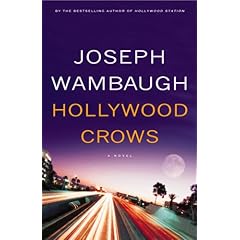
His fans will find “Hollywood Crows” — the second novel in two years set in that surreal neighborhood’s police station — as entertaining as ever, while readers who have followed Wambaugh’s fascinating 37-year career will savor a book whose flaws are not only engaging but also redolent with promise. At 71, the author appears to have tired of picking up lifetime achievement awards and to have opened a new chapter in his own literary story.
That’s an entirely welcome event, because Wambaugh is an important writer not simply because he’s ambitious and technically accomplished, but also because he “owns” a critical slice of L.A.’s literary real estate: the Los Angeles Police Department — not just its inner workings, but also its relationship to the city’s political establishment and to its intricately enmeshed social classes. There is no other American metropolis whose civic history is so inextricably intertwined with the history of its police department. That alone would make Wambaugh’s work significant, but the importance of his best fiction and nonfiction is amplified by his unequaled ability to capture the nuances of the LAPD’s isolated and essentially Hobbesian tribal culture.
The reforming chief William H. Parker set out to make his department a unique institution, one separate and apart from both the city’s political institutions and the communities it policed. He succeeded spectacularly. As a former detective sergeant who spent 14 years on the force, Wambaugh comes by his knowledge of that success — and its consequences — the hard way. Thus, his books on the department instinctively and, therefore, unobtrusively convey the way in which LAPD patrol officers seem constantly at odds with their commanders and the whole force appears locked in never-ending antagonism with City Hall. Meanwhile, for the officers on the street, the day-to-day grind of policing remains a nearly run race between stubborn but well-concealed idealism and far-too-intimate contact with far too much of badly fallen mankind.
No way! Now who could have seen this one comin’!
from Jeff Bercovici’s Mixed Media Blog at Portfolio.com
‘NY Times’: Now With Cliffs Notes
The New York Times has been around for 156 years. For all that time, it has trusted its readers, more or less, to find what they’re looking for.

Not anymore. Today saw the introduction of “Inside the Times,” a new multi-page index of that day’s highlights, in print and online, which runs on pages 2, 3 and 4 of section A. The purpose is “to help readers navigate and mine the paper and its Web site,” according to an editor’s note.
Newspapers are such instruments of habit that any change at all, no matter how necessary or obvious in retrospect, is likely to encounter knee-jerk opposition. I don’t want to give into that impulse…but “Inside theTimes feels a bit excessive — a barrier to reaching the stories rather than a map to finding them.
As one close Times reader pointed out to me, it’s an odd decision to devote so much prime space to teasers at a time when the news hole is already shrinking — and when more and more readers aren’t bothering with the physical paper in the first place.
BMW That Glows in the Dark
Magazine Embeds Glow-in-the-Dark Ad on Cover
BMW’s Vice cover appears to be an industry first.
BY DYLAN STABLEFORD 
It’s not embedded Swarovski crystals or shameless Nike plugs, but Vice—the irreverent free glossy with 14 international editions based in New York—has figured out a new way to sneak an advertiser’s product onto its cover: glow-in-the-dark ink.
Vice publisher Erik Lavoie wrote in an e-mail to FOLIO: that “there are no plans as yet” to run a similar ad in the U.S. version.
“Maintaining the integrity of our cover—which is not usually for sale—while delivering a unique and rad brand message for BMW was an amazing challenge,” Shawn Phelan, director of sales and marketing at Vice’s Toronto office, told Strategy, a Canadian marketing magazine, last week.
That’s because e glow-in-the-dark ad is a something of a production department nightmare. According to Phelan, the magazine had to print its covers at one plant; ship them to another to add the glow-in-the-dark ink, a UV coat; then back to the original plant for binding.
[ click to view full article at FolioMag.com
“Fuckeeng Bullsheet Niños”
from LA Weekly
MORE ON THE EMO ATTACKS IN MEXICO
BY DANIEL HERNANDEZ
March 22, 2008 6:37 PM
In Mexico, emo culture is a butt of many jokes. It is either despised intensely or generally ignored. But it’s only the despising sentiment that lately has been getting wide airply. In the above clip, a Televisa on-air personality named Kristoff expresses a serious dose of anti-emo rhetoric and switches to English to say, on network television, “Fucking bullshit” to the emo movement. Some emos I’ve interviewed point to the Kristoff clip as a defining provocation of the current wave of anti-emo violence. Now check out this clip from another Televisa program where three emos are interviewed about the attacks. At the end, the kid on the left asks if he can say more thing: he directly accuses Kristoff of spreading anti-emo hate.
At Last.fm, a user named Harry24 posts a lengthy analysis of the anti-emo phenomenon, suggesting that it’s part of a government conspiracy to divide the populace. Stay with me here. According to the respected left-leaning daily La Jornada, this is in fact not a far-fetched delusion by a small fringe of online crazies. As linked at Intersections, La Jornada flat-out goes and says it, quoting a professor at the UNAM who says the violence is a “reflection” of the social tensions dredged up by the 2006 electoral crisis. (If you don’t read Spanish, Google’s translation function is a useful tool to generate a nominally comprehensible version in English.
[ click to view original article and comments at LA Weekly ]
Lou Reed Disowns What Metal Machine Music Hath Wrought
from MediaBistro.com
Lou Reed Trashes MP3 Format
Lou Reed is lashing out at new modes of audio technology, saying that “people have got to demand a higher standard” than current MP3 music files, according to a recent Billboard story.
 Reed had delivered a keynote speech at the South By Southwest Music Festival + Conference in Austin, Texas. But when interviewed later by producer Hal Willner, Reed trashed the current state of audio and other digital technologies, saying that “it’s like the technology is taking us backwards. It’s making it easier to make things worse.
“Here’s our song reduced to a pin drop—what, what, what?!” Reed explained, sort of. “It’s like if no one knows any better or doesn’t care, it’s gonna stay on a really, really low level and people who like good sound are gonna be thought of as some kind of strange zoo animal.”
All joking aside, he’s right, of course; MP3 files sound blurry and indistinct at lower bit rates. Even at higher bit rates—such as the better sounding, 256 Kbps files sold in Amazon’s MP3 store—you can still tell the difference when listening on your cell phone or MP3 player if you have good enough earbuds.
But at the same time, a lot of people miss the point of MP3s—we see the format as the successor to the cassette, which was extremely portable and convenient, but not as good sounding as full-blown LPs, and later, CDs. How else could you carry 2,000 songs (that’s roughly 200 CDs, if you think about it) on an 8GB microSD card the size of a dime?
More Bad Art Thieves
Scotland Yard seizes £10m old masters
Charlotte Higgins, arts correspondent
Wednesday March 26, 2008
The Guardian
A pair of old masters by Francesco Guardi worth £10m have been seized by Scotland Yard after they were allegedly exported from Italy illegally.
The paintings – The Departure of the Bucintoro to San Nicolo on the Lido, and The Return of the Bucintoro to the Palazzo Ducale – depict scenes from the old Venetian tradition in which the doge would go out on a bucintoro galley to symbolically marry Venice to the sea. They date from around 1780.

A source at the Italian public prosecutor’s office in Rome confirmed that the pictures had been seized in Britain at the request of the Italian authorities.
The paintings were owned by Mario Crespi, whose family owned the Corriere della Sera newspaper. After his death in 1962 the works remained with his family, but were sold three years ago to a dealer.
Italian art export laws are strict, and important paintings can only leave the country with a special licence. The glut of artworks within Italy, meanwhile, means paintings of this kind fetch far less on the domestic market than abroad. It is understood that when an export licence for the Guardis was given in Milan, it was without their provenance being made clear.
The works were passed on to a UK dealer, who apparently sold them on to the US. However, the works were seized before they left the country.
Don’t Mess With Little Willie (though the whole thing looks staged to this viewer)
from Defamer.com
While the coastal aesthete in us is particularly fond of the night-vision effect and slow-motion instant replay, the old-school redneck we’ve suppressed over the years can relate to Nelson-San’s pure, unchecked animus. This would never fly at the Troubador.
How The Hip Kids Are Enjoying Sex These Days
Quotation of the Day from Shelf-Awareness
The Book as ‘An Art Object That We Should Defend’
“Literature is inseparable today from the books that carry their stories. If we want to save literature we have to save the rectangular objects that carry and spread their words. We have to respect the book for what it is: an art object that we should defend, defend against censors, narrow-minded educators and, most of all, the dangers of war.
Fiction has described wars better than any history book because a novelist, a true novelist, is not a warrior. Literature and war carry opposite genes.”
—Mai Ghoussoub, from “Texterminators,” published in this month’s issue of Words Without Borders.
The Man Who Defined White Suburban Partying
from the Los Angeles Times
John Hughes’ imprint remains
He’s still revered in Hollywood, but whatever happened to the king of the teens?
JOHN HUGHES hasn’t set foot in Hollywood for years, but his influence has never been more potent. The king of 1980s comedy, Hughes now qualifies as something of a Howard Hughes-style recluse — he doesn’t have an agent, doesn’t give interviews and lives far away, somewhere in Chicago’s sprawling North Shore suburbs where most of his films were set.

But he has an entire generation of fans in the industry who grew up infatuated with his films, especially a string of soulful mid-1980s teen comedies that helped capture the eternal drama of modern teenage existence. They include “Sixteen Candles,” “Pretty in Pink,” “Ferris Bueller’s Day Off” and “The Breakfast Club,” which no less an authority than Courtney Love once called “the defining moment of the alternative generation.” Any number of successful actors and filmmakers, from Judd Apatow and Kevin Smith to Vince Vaughn, Ben Stiller and Wes Anderson, are fans, having soaked up Hughes’ keen observational humor, love of mischief and shrewd dissection of social hierarchies.
“John Hughes wrote some of the great outsider characters of all time,” says Apatow, the writer-director-producer whose new film, “Drillbit Taylor,” is loosely based on an old Hughes story idea. “It’s pretty ridiculous to hear people talk about the movies we’ve been doing, with outrageous humor and sweetness all combined, as if they were an original idea. I mean, it was all there first in John Hughes’ films. Whether it’s ‘Freaks and Geeks’ or ‘Superbad,’ the whole idea of having outsiders as the lead characters, that all started with Hughes.”
White People Make Out Like Bandits Again Ho Hum…
from the New York Observer
‘Stuff White People Like’ Book Sold to Random House For At Least $350,000

You know that funny Web site Stuff White People Like, the one with the jokes? The Canadian guy who runs it just sold a book to Random House for an advance that publishing insiders said had reached at least $350,000 when it was at auction last week. Unclear how high it ended up climbing, but frankly, $350,000 is already a staggering sum for a paperback inspired by a faddish blog that launched just over two months ago.
The book, sold by William Morris literary agent Erin Malone, will be edited by Random House editor Jill Schwartzman, but according to a source familiar with the situation, Kurt Andersen—who serves at Random as editor at large—has taken an active interest in it and will play a role in its development. UPDATE: Barbara Fillon, the publicist from Random House who is working on the book, called this morning to say that the dollar amount we have is wrong. She would not specify whether the real number is higher or lower.
According to the announcement that just went out from Random House, the book will use some material that has already appeared on the Web site (which has accumulated almost 15 million hits since its launch in late January), though two-thirds of it will be new. The press release promises a book that “will present a provocative, wickedly funny ‘study’ of upper-middle-class white people, satirically exposing a culture that prides itself on individuality and diversity, yet manages to express these beliefs in exactly the same way.” Topics to be covered: “Whole Foods, Wes Anderson, Starbucks, graduate school, kitchen gadgets, Barack Obama, Apple products, the movie Juno, expensive sandwiches, and vintage t-shirts, to name a few.”
“White People” is only the latest Web phenomenon to result in a major book deal. Earlier this month, the person behind http://barackobamaisyournewbicycle.com signed a contract with Gotham Books, and before that, so did the person who runs LOLcat emporium I Can Haz Cheeseburger. As it happens, Gotham was also the publisher on The Truth About Chuck Norris, “an illustrated book of 400 farcical ‘facts’ about movie star Chuck Norris… based on the popular internet meme.”
According to the deal wire at industry site Publisher’s Marketplace, Patrick Mulligan, an associate editor at Gotham, is overseeing all three of those books, and one wonders how eagerly, if at all, he pursued the “White People” contract. We have been leaving messages for Mr. Mulligan since we heard about the auction last week, but have so far not gotten a call back.
SCARLETT JOHANSSON’S TOM WAITS’ COVERS ALBUM PREVIEWED!
clipped from uncut.co.uk
 As a rule, we’re as suspicious of actors making records as we are of, well, rock stars appearing in movies. But Scarlett Johansson’s previous, if brief, forays into music have at least demonstrated both flashes of talent and an unnerring grasp of cool. There’s an abiding memory of her in a pink wig singing karaoke to The Pretenders’ “Brass In Pocket” in Lost In Translation, or seen in fuzzy Youtube clips providing backing vocals for “Just Like Honey” at the Jesus & Mary Chain’s comeback show at last year’s Coachella festival. She also recorded the Geshwin standard “Summertime” for a US compilation and even starred in a Bob Dylan video, “When The Deal Goes Down…”, to support his Modern Times album.
Now she’s recorded her debut, an album of Tom Waits’ covers (and one self-penned track), produced by TV On The Radio’s Dave Sitek and featuring guest spots by Yeah Yeah Yeah’s guitarist Nick Zinner and, on two songs, David Bowie, with whom she co-starred in Christopher Nolan’s movie, The Prestige. Although the songs here run as far back as 1976, most of them actually come from the later part of Waits’ career; only one song pre-dating 1983’s Swordfishtrombones.
Here, then, is our track by track preview at what you can expect…
2008 HUGO AWARDS NOMINEES
2008 HUGO AWARDS NOMINEES
http://www.denvention.org/hugos
Best Novel
(382 ballots cast)
The Yiddish Policemen’s Union by Michael Chabon (HarperCollins; Fourth Estate)
Brasyl by Ian McDonald (Gollancz; Pyr)
Rollback by Robert J. Sawyer (Tor; Analog 10/06-1-2/07)
The Last Colony by John Scalzi (Tor)
Halting State by Charles Stross (Ace)
For After the Burgundy Room and Before the Ski Room
From AP via NY Daily News
Used to be the best rejuvenatory fast-food meal in Hollywood was Popeye’s Red Beans and Rice on the corner of Hollywood & Vine. It may still be, tho now you’ll have to valet park and order a bottle of spritzer with your beans.

Popeyes chicken founder dies
THE ASSOCIATED PRESS
Monday, March 24th 2008, 4:00 AM
Al Copeland, who became rich selling spicy fried chicken and notorious for his flamboyant lifestyle, died Sunday at a clinic near Munich, Germany. He was 64.
The founder of the Popeyes Famous Fried Chicken chain grew up in New Orleans. Copeland sold his car at age 18 for enough money to open his own one-man doughnut shop. He went on to spend 10 modestly successful years in the doughnut business.
The opening of a Kentucky Fried Chicken restaurant in New Orleans in 1966, however, caught Copeland’s eye. Inspired by KFC’s success, Copeland in 1971 used his doughnut profits to open a restaurant, Chicken on the Run. (“So fast you get your chicken before you get your change.”) After six months, Copeland chose a spicier Louisiana Cajun-style recipe and reopened the restaurant, eventually calling it Popeyes Famous Fried Chicken after Gene Hackman‘s character in the film “French Connection.”
Copeland frequently made headlines away from his business empire. His hobbies included racing 50-foot powerboats, touring New Orleans in Rolls-Royces and Lamborghinis, and outfitting his Lake Pontchartrain home with lavish Christmas decorations, including half-a-million lights and a 3-story-tall snowman.
 Popeye’s Red Beans and Rice
Dr. Marten Uptight
snipped from The Daily Swarm
Exclusive: Dr. Martens to Saatchi: You’re Fired!
TDS EDITORS
***Update: The final word(s) on ‘Heavensgate’***
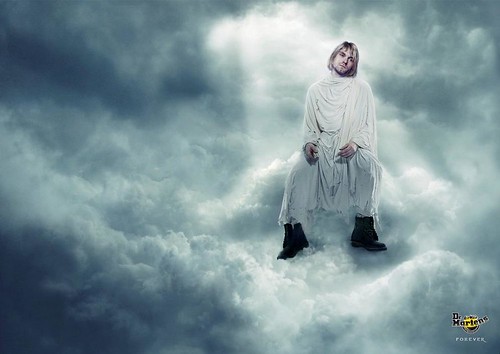
The Daily Swarm has learned that Airwair Ltd., the creators of Dr. Martens famous footwear, has fired its advertising agency, Saatchi and Saatchi London, in the midst of an ongoing uproar over a poster campaign featuring the images of deceased musicians wearing their shoes in heaven. David Suddens, CEO of Dr. Martens’ parent company AirWair Ltd., told The Daily Swarm in a phone interview that the posters were never intended to see the light of day. “We said no. It was creative that was put to us, but we didn’t like it. It doesn’t represent the company at all.”
Saatchi later released a statement standing by the ads. Kate Stanners, executive creative director, Saatchi & Saatchi said, “We believe the ads are edgy but not offensive. There has been blog commentary both for and against the ads, but it is our belief that they are respectful of both the musicians and the Dr. Martens brand.”
The firestorm began on May 14, when The Daily Swarm published the posters that feature punk icons Kurt Cobain, Joe Strummer, Joey Ramone, and Sid Vicious. The rockers images were retouched by noted French commercial artist Christophe Huet who placed them in heaven with steel-toed boots.
Lemmy Kilmister Turned Into Molded Plastic
LocoApe releases the Lemmy Kilmister action figure – $19.99 or $100.00 for an autographed version. Motorhead rules.

The very first officially licensed Lemmy figure ever made!
- Stands 7 inches tall with base.
- Sculpted to accuracy, this figure captures Lemmy in all his Motorhead glory.
- Includes: Highly detailed and accurate figure, Rickenbacker Figural Bass Guitar, Bass Guitar Strap, Microphone & Stand, Figural Base, Motorhead Logo Plate & War Pig Themed Backdrop.
- The officially licensed Rickenbacker guitar replica features real strings and Rickenbacker trademarks. (Guitar does not play music.)
- Officially licensed product.
Rewriting The Rewriting Of James Agee
book review in the Los Angeles Times
‘A Death in the Family: A Restoration of the Author’s Text’ edited by Michael A. Lofaro
Did James Agee’s editor know what he was doing? Apparently not, as a new version of a Pulitzer Prize-winning novel is given a makeover.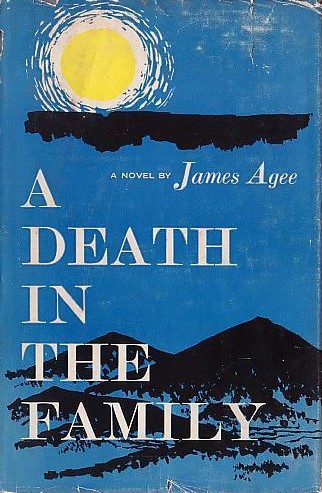
By Nina Revoy
A Death in the Family:
A Restoration of the Author’s Text
James Agee, edited by Michael A. Lofaro
University of Tennessee Press: 582 pp., $49.95
AT the time of his death of a heart attack at 45, James Agee had published relatively little of his own creative work. Known more for his insightful movie reviews and film adaptations, Agee had produced a novella, a volume of poetry and “Let Us Now Praise Famous Men,” a study of Alabama sharecroppers. He left behind the manuscript of a novel he’d been working on for more than a decade, which editor David McDowell published as “A Death in the Family.”
Appearing in 1957 — two years after Agee died — “A Death in the Family” received great acclaim and was awarded the Pulitzer Prize.
A lyrical, perfectly calibrated and deeply moving account of a man’s death and its effects on his family, it still stands — more than 50 years after its publication — as one of the most beautiful of American novels.
Now, editor Michael A. Lofaro has incorporated recently recovered material and rearranged existing chapters in “A Death in the Family: A Restoration of the Author’s Text.” Much of this material became available to scholars in 2002, after a change in the directorship of the James Agee Trust. Motivated by McDowell’s claim in the original introduction that Agee’s novel was “presented . . . exactly as he wrote it,” Lofaro sets out to correct the “degradation” of Agee’s original manuscript from McDowell’s “editorial decisions, inaccuracy, and deception.” He includes more than 10 additional chapters, replaces substitute versions of three additional chapters and reinserts scenes that appeared as flashbacks in McDowell’s version into the beginning of the story. Lofaro also removes the famous prologue “Knoxville: Summer, 1915” — a previously published set piece that McDowell acknowledges he added to the manuscript — and replaces it with a new introduction, a nightmare sequence. The result is a longer and drastically different book.
Reconstructing Agee’s novel is a questionable undertaking, not least because the existing novel is a masterpiece.
The Year Of The Brawling Lepus
A Short Happy Easter Film from dadeca50
Bret Easton Ellis, two decades beyond ‘Zero’
from the LA Times
Bret Easton Ellis, two decades beyond ‘Zero’
The onetime enfant terrible, now 44, still has no patience for critics, but some of his colleagues say Ellis’ writing may one day get the respect it deserves.
In his 1985 breakout novel, Less Than Zero, Bret Easton Ellis, then all of 21 years old, created young, jaded Angelenos who just didn’t care about anything: They recounted cocaine  scores and semi-anonymous sex in the same tone with which they lamented their fading suntans. That ennui became Ellis’ literary signature, and as he began to grow up in public, he became known as a photogenic and glamorous figure who liked booze and excess.
More than two decades later and almost four years after returning home to L.A., the city in which he grew up as the offspring of affluent Goldwater Republicans, Ellis himself claims to be in a phase in which he just doesn’t care about anything — a middle-aged wrinkle on the old Ellis ennui. “The only thing I care about,” he requested when setting up a dinner interview, “is valet parking and a full bar.”
Ellis in person is witty if often deadpan, good company, discussing the literary novel and popular music with enthusiasm and authority. His classic good looks have become almost conventional as he’s aged. He’s more down-to-earth, and more intellectual, than his party-boy image would suggest.
He can be uncomfortable as well: Sitting down at a tighter-than-expected Campanile one recent Wednesday night, wearing a black jacket over a casual shirt left mostly unbuttoned, he was unnerved by a slightly raucous, beret-wearing family at a nearby table, until his first drink arrived and he found himself in a spirited defense of Elvis Costello’s “Imperial Bedroom.” As he leaned into the argument — the album, which he called “sonically, an absolute ’80s masterpiece,” will lend its name to a new sequel to “Less Than Zero” — it was easy to see that he’s more engaged with things than he lets on.
But while he spoke with enthusiasm about “The Wire” and Jonathan Franzen’s “The Corrections” — “the novel of my generation” — he’s truly uninterested in talking about his own career, his own place in the literary firmament. “I don’t care anymore,” he said. “I never really did care.”
That’s probably a good thing too: In most of the important conversations about contemporary American literature, Ellis doesn’t show up. Academia doesn’t take him seriously: He’s not taught or written about critically like his generational peers Franzen, Michael Chabon, David Foster Wallace, Jonathan Lethem, Chang-Rae Lee or Lorrie Moore.
His work is often savaged by critics: His last book, the 2005 quasi-autobiographical novel “Lunar Park,” was deemed “the worst novel I’ve ever read” by Steve Almond in the Boston Globe. And almost a quarter-century into his career, he’s never won, or been within shouting distance, of a major literary award. Back in the ’80s, he was even dissed by his idol Elvis Costello.
[ click to read rest of article at the LA Times ]