
Working Class Hollywood Relying On Salvation Army For Food
TV crew members still feeling effects of writers strike
Many can’t find work with production down, and their bills are piling up. Some are facing foreclosure and bankruptcy. By Richard Verrier, Los Angeles Times
The writers strike ended two months ago. But many in Hollywood remain on the brink. Some are at risk of losing their homes. Some can’t afford groceries. Others have filed for bankruptcy. Still others struggle to work enough hours to hold on to their health insurance.

Across Los Angeles, many crew members who work behind the scenes and on the sets of television shows and movies are still quaking from the temblor of the 100-day writers strike that shut down scripted TV production.
Blame the aftershocks. Networks have sharply curtailed the number of TV pilots this year, continuing a trend toward ordering fewer shows for the new season.
The shows that did return are filming 20% to 40% fewer episodes. And in Los Angeles County, location permits for sitcoms and dramas since the strike ended have plunged 51% and 35% from last year, respectively, according to FilmL.A., which handles film permits.
Although hard figures are not available, union officials say that thousands of crew members who normally would be busy at this time of year are still idled because of the sharp contraction in television production. Some union locals report a quarter of their members are sitting at home.
Karen Hartjen is one. She can’t bring herself to open the utility bills lying on her kitchen table in Simi Valley.
The 53-year-old assistant prop master has been out of work since early November, when a string of jobs on TV shows such as “CSI: New York” and “Medium” came to a halt after the writers walked out.
Although Hartjen is accustomed to earning $100,000 a year, she is now $10,000 in debt and her home is threatened with foreclosure. She has turned to her church and the Salvation Army for help with groceries.
“I’ve been in this business for two decades, and I’ve never experienced anything like this,” Hartjen said. “I’m just fighting for my life.”
Across Los Angeles, many crew members who work behind the scenes and on the sets of television shows and movies are still quaking from the temblor of the 100-day writers strike that shut down scripted TV production.
Blame the aftershocks. Networks have sharply curtailed the number of TV pilots this year, continuing a trend toward ordering fewer shows for the new season.
Win a Free Copy of GODS BEHAVING BADLY by Marie Phillips
courtesy of Kelly Hewitt’s LOADED QUESTIONS blog

 Marie Phillips’ first novel finds a number of the famed Greek Gods and Goddesses living in modern day London, all packed in a dilapidated house that no one takes the time to upkeep. Far from the powerful beings they once were these gods find that their powers are wanning, the monotony of holding down mortal jobs taxing. In Gods Behaving Badly we find Apollo working as a television psychic, his aunt Aphrodite passes her days working as phone-sex worker and Artemis a dog walker all while Zeus ages slowly in the attic under the watchful eye of the dangerous Hera.Gods Behaving Badly picks up steam as Aphrodite and her son Eros hatch a plan to make Apollo fall in love with a mousy cleaning lady who continually dodges his attempts at wooing her.
I read this book before it was released and really enjoyed it, Phillips does a great job of keeping the story moving while offering the reader a very new view of otherwise ancient Greek mythological characters.
One-Hour Scorcese Revisited
I love this commercial so I posted it – the best of the AmEx ads…
Revamping East L.A. – One Artist At A Time
CULTURE MIX
A rediscovering of East L.A.’s core
Latino artists help revamp a place where the community (and freeways) intersects.
People often refer to the heart of East Los Angeles, but it never seems to be in the same place. In newspapers, the term turns up all over the map. That’s because the area is more identified by its busy arteries — Whittier, Atlantic or Cesar Chavez — than by any essential center.

Finding the heart of this sprawling Latino neighborhood was on the mind of artist Linda Arreola when she won her first public art commission recently. Her task was to design a sculptural piece for the expansive new courthouse plaza at the East Los Angeles Civic Center, a refurbished and repurposed government complex that will be dedicated next month. Her design started with the idea of a public square that would serve as a focal point for residents.
“I really wanted to create a space for gathering of the community,” says Arreola. “I felt our community really needed that.”
The result is “Meso-American Dream,” a tranquil network of gardens and water fountains leading to an open space defined by stone blocks laid out in a square. The 1,300-pound blocks, made of red and gold travertine from New Mexico and Peru, are stacked two and three high, to create seating areas that evoke the shape of a pyramid.
Arreola is one of several East L.A. artists commissioned to beautify the park-like complex that once was a foreboding, military-like compound used primarily by law enforcement. Near the intersection of the 60 and 710 freeways, the Civic Center features a new bilingual library with a mosaic mural by Jose Antonio Aguirre, a pristine lake with two leaping fish sculptures by Jose Rude Calderon and two inviting gateways marked by Michael Amescua’s towering steel sculptures carved to recall papel picado, the traditional Mexican folk art of intricate designs on colored paper.
American Idol Tragedy
Graffiti is Writing As Well As Art
‘Bomb It’ looks at all sides of graffiti issue
Wednesday, April 23rd 2008, 1:52 AM
Jon Reiss‘ latest documentary, “Bomb It,” explores the controversial subculture of graffiti through themes of public space, freedom of speech, corporate advertising, and social and political issues. The film visits cities from around the world – Los Angeles, Philadelphia, New York, London, Paris, Amsterdam, Hamburg, Barcelona, Cape Town, Sao Pãulo and Tokyo – and delves into how writers have incorporated graffiti into each of their varying cultures as a means of expression, protest, and beautification.

Around 200 graffiti artists were interviewed for the documentary, including prominent names such as Cornbread, Taki 183, Terrible T-Kid 170, Os Gemeos, Blek Le Rat, Faith 47, Zypher, Revok, 2ESAE, and many more. Reiss also spoke with people who opposed graffiti including government officials from around the globe, anti-graffiti groups like T.A.G. (Totally Against Graffiti), and even New York’s own City Councilman Peter Vallone. The film brings both views to the fore, presenting a comprehensive look at how graffiti is viewed throughout the world and revealing the depths of graffiti culture.
“We made [“Bomb It”] so that it would appeal to all people not just people interested in graffiti and street art,” says Reiss. The film succeeds in this mission by presenting a riveting narrative with a mix of global music, striking interviews, amusing animated segments and stunning artwork.
 Award Winning director Jon Reiss discuses his explosive new documentary and what to expect with the May DVD release.
Daily News: What inspired you to create this film?
Jon Reiss: I was approached in Los Angeles to write a narrative, like a regular feature film about graffiti writers. Even though it was kind of interesting to me, I realized I didn’t know enough about graffiti to write a script for a Hollywood studio without doing some research. When I made a film called “Better Living Through Circuitry,” I became friends with some people I met and one of them, who was a DJ, said, “Oh, I’m a writer, I know lots of writers”.
In terms of graffiti writers, most of them don’t consider themselves artists, they call themselves writers, it depends on who you’re talking to. She introduced me to a couple of people and that was when I interviewed my first “old school” guy, [Sharp], who had amazing depth and understanding of not only graffiti, but also its relationship to society and its relationship to history. Then I also met an up and coming writer, 2ESAE, they’re both in the film. Between those two guys I was kind of hooked. Usually when I find a culture or a subculture that has so much more depth to it than most people are aware of, to me, that’s a pretty interesting story to tell.
50 Best Cult Books
|
Our critics present a selection of history’s most notable cult writing. Some is classic. Some is catastrophic. All of it had the power to inspire What is a cult book? We tried and failed to arrive at a definition: books often found in the pockets of murderers; books that you take very seriously when you are 17; books whose readers can be identified to all with the formula “<Author Name> whacko”; books our children just won’t get… 
Slaughterhouse-Five by Kurt Vonnegut (1969) Sideways fantasy from the Diogenes of American letters, a comic sage who survived the firebombing of Dresden and various familial tragedies to work out his own unique brand of science-fictional satire. Like much of Vonnegut’s stuff, this is savage anger barely masked by urbane anthropological sarcasm. Very much the place to start. TM The Alexandria Quartet by Lawrence Durrell (1957-60) The Beauty Myth by Naomi Wolf (1991) The Bell Jar by Sylvia Plath (1963) Catch-22 by Joseph Heller (1961) Bitterly bouncy military farce, responsible for inventing the dilemma to which it gave its name: you’re only excused war if you’re mad, but wanting an exemption argues that you must be sane. Literary history would be entirely different if Heller had followed his original intention and called it Catch-18: it was changed to avoid confusion with a Leon Uris book. TM The Catcher in the Rye by JD Salinger (1951) Ur-text of adolescent alienation, beloved of assassins, emos and everyone in between, Gordon Brown included. Complicated teen Holden Caulfield at large in the big city, working out his family and getting drunk. You’ve probably read it, be honest. TM
The Dice Man by Luke Rhinehart (1971) Chariots of the Gods: Was God An Astronaut? by Erich Von Däniken (1968) The Doors of Perception by Aldous Huxley (1954) The book that launched a thousand trips. William Blake said that if we could cleanse the “doors of perception” we would perceive “the infinite”. Huxley thought mescalin was the way to do so. In this essay, he pops a pill, goes on about “not-self” and “suchness”, and decides love is the ultimate truth. He also took LSD when dying, but hardly stuffed it down the way his fans did. Jim Morrison was one: he named the Doors after Huxley’s book, gobbled mouthfuls of acid and was dead by 27. SD
The Hitchhiker’s Guide to the Galaxy by Douglas Adams (1979) The Electric Kool-Aid Acid Test by Tom Wolfe (1968) The Female Eunuch by Germaine Greer (1970) The Fountainhead by Ayn Rand (1943) Bewilderingly popular and extremely silly Nietzschean melodrama, in which Ayn Rand gives her mad arch-capitalist philosophy a run round the block in the person of Howard Roark, a flouncy architect. Loved by the kind of person who tells you selfishness is an evolutionary advantage, before stealing your house/lover/job. TM On The Road by Jack Kerouac (1957) Fear and Loathing in Las Vegas by Hunter S Thompson (1971) Needs little introduction. Bad craziness as the Duke of Gonzo and his helpless attorney blaze a streak of pharmaceutical havoc across 1970s California, all in demented bar-fight prose and fever-dream set-pieces. Now also a core text for ex-public school drug bores, which tends to obscure the anarchic excellence of HST’s journalistic talent. TM The Outsider by Colin Wilson (1956) Required reading in the coffee bars of the East Midlands in the late 1950s; unbelievably, some people paid good money for this study of the outsider figure in Western literature. The TLS found 285 mistakes in a sample of 249 lines, but in its young author’s eyes, it confirmed him as “the major literary genius of our century”. Modesty was not one of his virtues; nor, sadly, was literary ability. DS The Rubáiyát of Omar Khayyám tr by Edward FitzGerald (1859) The Stranger by Albert Camus (1942) “Mother died today. Or maybe yesterday, I don’t know.” The beach, the sun, the Arab, the gunshots, the chaplain: the stuff of millions of adolescents’ fevered imaginings. If you don’t love this when you’re 17, there’s something wrong with you. In the film Talladega Nights, Sacha Baron Cohen’s snooty French racing driver reads it on the starting grid. Strange but true: George W Bush read it on holiday two years ago. DS The Teachings of Don Juan: a Yaqui Way of Knowledge by Carlos Castaneda (1968) Take an enterprising anthropology student (Castaneda) and a Mexican shaman (Don Juan), mix in liberal quantities of peyote, and you end up with a text rooted in “nonordinary reality”. Castaneda’s multi-part account of his adventures, which started to appear in 1968, and includes lessons in how to fly and talk to coyotes, has always elicited queries as to its veracity. But when you’ve taken that many drugs, it may not matter. AC
Thus Spoke Zarathustra by Friedrich Wilhelm Nietzsche (1883-85) To Kill a Mockingbird by Harper Lee (1960) Zen and the Art of Motorcycle Maintenance: an Inquiry into Values by Robert M Pirsig (1974) Burnt-out hippy takes son on bike trip. Remembers previous self: lecturer who had nervous breakdown contemplating Eastern and Western philosophy. Very bad course in Ordinary General Philosophy follows. If he’d done Greek at school and knew what “arête” meant, we could have been spared most of the 1970s. AMcK |


The Oldest Living Master, Maria Lassnig
Truth and dare
At nearly 90, the painter Maria Lassnig is producing the most confrontational work of her life. She talks to Adrian Searle
In pictures: Maria Lassnig’s new exhibition
Thursday April 24, 2008
The Guardian

You or Me by Maria Lassnig. Courtesy the artist, Hauser & Wirth Zürich London and Friedrich Petzel Gallery, New York © 2008 Maria Lassnig
The painter greets us, naked. She holds a gun to her own head, and aims another at her spectators. Maria Lassnig, approaching 90, might be trying to tell us something. You or Me is the title of this self-portrait, painted in 2005 and the first thing you see in her exhibition at the Serpentine Gallery in London. As well as an introduction, the painting is a test: bolt and run, or stay and face the consequences. I plunged right in.
Born in Austria in 1919, Maria Lassnig is little known in this country. This exhibition of her awkward, confrontational, strange and tender paintings is her first show in a public space in Britain. Lassnig’s works have sometimes been regarded as pathological caricatures. In Austria, one might almost take this as a compliment, or a sign of her authenticity. Lassnig, on the other hand, insists that her art is completely rational.

I sat with her among her paintings, some still being positioned on the walls, and she told me she often begins with no idea in mind at all. Nevertheless, there are constant themes. War, love, the battle of the sexes, the subjective experience of the body. Most of all, the body: dressed, undressed, veiled in plastic, malleable, devilish, sexual, grotesque. In one recent painting, a man pulls himself upwards on a gymnast’s rings – “I hate sport,” Lassnig remarks – and in another, someone gets tangled in plastic sheeting. There’s comedy here, but it never comes unalloyed.
You see the dude singing and shredding… he’s 15-years-old.
(Or, check this alternate Travis Kopach video of ‘Shockwave’ featuring a sweet in-living room half-pipe. It’s the censored version of the song tho which sucks.)
You can catch BLACK TIDE with JAMES FREY and JOSH KILMER-PURCELL at the Whisky A Go-Go in L.A., May 15th.
Bullies, Addicts and Losers: A Poet Loves Them All
Bullies, Addicts and Losers: A Poet Loves Them All
A couple of years ago, writing in Poetry magazine, August Kleinzahler lighted a string of firecrackers under Garrison Keillor and his “Writer’s Almanac” segments on National Public Radio.
 Mr. Kleinzahler criticized the “anecdotal, wistful” poems Mr. Keillor often chooses to read — poems he summarized as “middle-aged creative writing instructor catching whiff of mortality in the countryside.” Mr. Kleinzahler wasn’t very nice about Mr. Keillor’s “treacly baritone” either.
Ultimately Mr. Kleinzahler boiled his case against Mr. Keillor down to these three-and-a-half sentences: “Multivitamins are good for you. Exercise, fresh air, and sex are good for you. Fruit and vegetables are good for you. Poetry is not.”
It makes a certain kind of sense, then, that Mr. Kleinzahler’s career-spanning new book of poems, “Sleeping It Off in Rapid City,” features on its cover a nighttime photograph of a White Castle hamburger franchise. Like White Castle’s pint-size hamburgers, Mr. Kleinzahler’s poems are of uncertain if not dubious nutritional value. And while there is nothing made-to-order about them, his poems arrive salty and hot; you’ll want to devour them on your lap, with a stack of napkins to mop up the grease.
Mr. Kleinzahler is an American eccentric, a hard man to pin down. Born in New Jersey, he writes poems that have a pushy exuberance and an expert recall of that state’s tougher schoolyards — of bullies with names like Stinky Phil and of “fire trucks and galoshes,/the taste of pencils and Louis Bocca’s ear.” And he writes with elegiac insight about life’s losers, the people he calls “strange rangers,” the addicted, insane or destitute.
Linda Savage Will Be Pissed
from the San Jose Mercury News
Anti-addiction pills set back
Risk of depression dims enthusiasm
CHICAGO – Two years ago, scientists had high hopes for new pills that would help people quit smoking, lose weight and maybe kick other tough addictions like alcohol and cocaine.

The pills worked in a novel way, by blocking pleasure centers in the brain that provide the feel-good response from smoking or eating. Now it seems the drugs may block pleasure too well, possibly raising the risk of depression and suicide.
Margaret Bastian of suburban Rochester, N.Y., was among patients who reported problems with Chantix, a highly touted quit-smoking pill from Pfizer that has been linked to dozens of reports of suicides and hundreds of suicidal behaviors.
“I started to get severely depressed and just going down into that hole . . . the one you can’t crawl out of,” said Bastian, whose doctor took her off Chantix after she swallowed too many sleeping pills and other medicines one night.
It may be possible to improve the drugs so they act more precisely. Chantix targets a different pathway – nicotine pleasure switches – and in a different way than the obesity drugs, which aim at the same pathway that gives pot smokers the munchies. That is one reason many doctors are optimistic that any risks about Chantix will prove manageable.
But doctors are no longer talking about so-called “super pills” for a host of addictions.
BLACK TIDE – Full EPK Uncensored
BLACK TIDE rips. Check ’em out at the BRIGHT SHINY MORNING reading in Los Angeles at the Whisky A Go-Go.
“It’s Real…. We saw. What was left was tiny.”
Penis theft panic hits city..
By Joe Bavier
KINSHASA (Reuters) – Police in Congo have arrested 13 suspected sorcerers accused of using black magic to steal or shrink men’s penises after a wave of panic and attempted lynchings triggered by the alleged witchcraft.
Reports of so-called penis snatching are not uncommon in West Africa, where belief in traditional religions and witchcraft remains widespread, and where ritual killings to obtain blood or body parts still occur.

Rumors of penis theft began circulating last week in Kinshasa, Democratic Republic of Congo’s sprawling capital of some 8 million inhabitants. They quickly dominated radio call-in shows, with listeners advised to beware of fellow passengers in communal taxis wearing gold rings.
Purported victims, 14 of whom were also detained by police, claimed that sorcerers simply touched them to make their genitals shrink or disappear, in what some residents said was an attempt to extort cash with the promise of a cure.
Police arrested the accused sorcerers and their victims in an effort to avoid the sort of bloodshed seen in Ghana a decade ago, when 12 suspected penis snatchers were beaten to death by angry mobs. The 27 men have since been released.
“I’m tempted to say it’s one huge joke,” Oleko said. “But when you try to tell the victims that their penises are still there, they tell you that it’s become tiny or that they’ve become impotent. To that I tell them, ‘How do you know if you haven’t gone home and tried it’,” he said.
Some Kinshasa residents accuse a separatist sect from nearby Bas-Congo province of being behind the witchcraft in revenge for a recent government crackdown on its members.
“It’s real. Just yesterday here, there was a man who was a victim. We saw. What was left was tiny,” said 29-year-old Alain Kalala, who sells phone credits near a Kinshasa police station.
(Editing by Nick Tattersall and Mary Gabriel)
Things To Do When You’re Bored And The Toilet Doesn’t Work
Mysterious Moose Seen Holding Inflatable Deer Head Emblazoned With Miller High Life Logo
A Broadway Flop Again Raises Its Antlers
It is generally not a good sign for a Broadway show when people leave the opening-night party early. That is what Arthur Bicknell noticed at the celebration for the premiere of his play. As soon as the dessert forks were down, there they went, acquaintances, cast members, even family, out the door of Sardi’s restaurant. A friend finally approached with a report on the reviews.
Two words: “the worst.”
Indeed they were. The play was “Moose Murders,” and even now, 25 years later, it is considered the standard of awfulness against which all Broadway flops are judged.

Things weren’t so grim at the L & M bowling lanes in Rochester, N.Y., on Friday night, when a cast of nonprofessional — most barely even amateur — actors had just finished a second performance of “Moose Murders” at the Rochester Contemporary Art Center. The show, a staged reading but with original music, was put together by John Borek, 58, a self-described “part-time conceptual artist” who works by day as an aide to a Rochester city councilman.
“Maybe Broadway had its chance, and they blew it,” Mr. Borek said. “Maybe it will have a more receptive audience as a work of art.” It is certainly true that Broadway audiences were less than receptive.
“If your name is Arthur Bicknell — or anything like it — change it,” declared Dennis Cunningham, the critic at the CBS affiliate in New York.
Critics described “Moose Murders” as “titanically bad” and “indescribably bad,” a play that “would insult the intelligence of an audience consisting entirely of amoebas” (Brendan Gill, The New Yorker), that looked as it were staged by “a blind director repeatedly kicked in the groin” (John Simon, New York magazine). The columnist Liz Smith had some nice things to say, Mr. Bicknell recalled.
Years later, Frank Rich, who was then the theater critic for The New York Times, would call it “the worst play I’ve ever seen on a Broadway stage.” (Mr. Rich’s writings about “Moose Murders” have become such a part of its lore that a recent production of the play in Manila credited Mr. Rich with having written the play.)
The reviews, which were not helped by the man reeking of vomit who sat in the third row during a press preview, made the 14 performances of “Moose Murders” legendary in theater history.
[Mr. Bicknell] tried to move on, writing another play and even a midnight drag show, but eventually gave up and worked for a few years as a literary agent. Someone tried to get permission to turn the play into a musical called “Moose Murders: The Afterbirth,” Mr. Bicknell said, but he was not ready for that.
[ In the new production,] the mysterious moose character was a woman dressed in black holding an inflatable deer head emblazoned with the Miller High Life logo. Sidney Holloway, the mummified quadriplegic, was played by a mannequin, whose head rolled off during the first act.
The audience members, most of them anyway, seemed to love it.
Poster for BRIGHT SHINY MORNING L.A. Event @ The Whisky

AIDS Trashman Says Jim Jones Paid Him to Kill Stack Bundles
The Cowboy At Heaven’s Gate
A Texas cowboy appeared before St. Peter at the Pearly gates.
 “Have you ever done anything of particular merit?’ St Peter asked.
“Well, I can think of one thing,” the cowboy offered.
”Once, on a trip to the Black Hills in South Dakota, I came upon a gang of bikers who were threatening a young woman. I directed them to leave her alone, but they wouldn’t listen. So, I approached the largest and most heavily tattooed biker, smacked him in the face, kicked his bike over, ripped out his nose ring, and threw it on the ground.’ I yelled, ‘Now back off!! Or I’ll kick the crap out of all of you!!”
St. Peter was impressed, “When did this happen?”
”Just a couple of minutes ago, ” the man replied.
One Man I wouldn’t Want Pissed at Me
Hells Angel Barger sues HBO over biker drama
PHOENIX (Reuters Life!) – Veteran Hells Angel Sonny Barger has sued cable firm HBO alleging it cut him out of a biker drama he helped to develop, Barger’s attorney said on Monday.
 Barger lodged the suit against HBO in federal court in Los Angeles last week, saying it sidelined him from the pilot of a drama called “1%”, about a troubled Arizona motorcycle club.
The suit also named the executive producer and writer of the pilot, Michael Tolkin, and his holding company, White Mountain Co, Barger’s attorney Fritz Clapp said.
“Basically, Michael Tolkin stole our show and sold it to HBO,” Clapp said in a telephone interview.
“Everything that he knows about motorcycle clubs he knows from Sonny Barger,” he added.
The term “1 percenter” was coined by the American Motorcycle Association decades ago to describe the 1 percent of motorcycle riders that they deemed troublemakers.
The pilot focused on a chapter of the fictional Death Rangers motorcycle club in Arizona, and centered on a veteran member who is sent from California to bring it under control.
In the complaint, Barger said he and Tolkin pitched HBO on a motorcycle club-centered series, and HBO subsequently turned to Tolkin to create it.
After Barger objected to some of the elements in the pilot, HBO “refused to acknowledge the contributions or authorship” of Barger and did not seek permission to “use or publish the name, trademark, persona or likeness of Sonny Barger for any purpose,” the lawsuit suit said.
Barger, 69, is a founding member of the Hells Angels chapter in Oakland, California, and is the most famous member of the club that turned 60 last month.
He moved to Arizona from California a decade ago. He now raises horses and rides with the club’s Cave Creek, Arizona, chapter.
Share A Dream – Build A Future

Having books in the home encourages reading and the lifelong love of learning.
Books for Kids drive is changing lives
Margaret Sullivan
In my childhood home, my mother was in charge of birthday presents and what went under the Christmas tree. And she did it thoughtfully and well, month after month, year after year.
My father, by contrast, rarely got into the gift-giving business. But one Christmas when I was in high school, he came up with a spectacular present for his word-happy daughter: A full set of Shakespeare’s plays — four volumes, bound in red leather. More than three decades later, the books are within my line of vision, on the top shelf of a bookcase in my office. Nowthat was a gift with enduring value.
Two of the best possible gifts for children, I’m convinced, are the love of reading and the presence of books in the home. This is true now, in the Internet Age, every bit as much as it was in the 1970s when I got to know “Hamlet” and “Macbeth.”
In fact, it may be more valuable now than ever, since reading develops a child’s attention span, balancing the effects of the fast-flickering digital world that 21st century children increasingly live in.
Seeing my own children — both teenagers now — reading for pleasure has been one of the great satisfactions of motherhood for me. That’s because I know it has helped them, making them better students, more informed citizens and more interesting people.
I have no doubt that adult success is tied closely to childhood reading. This is true whether a child grows up in an affluent suburb or the inner city. It’s probably more important for those who lack other advantages.
But not every parent, and not every child, has the opportunity to make books — especially one’s own books — a part of everyday life.
In Buffalo, the nation’s second-poorest city, many families simply don’t have the money to buy books. Trips to the public library are wonderful, of course, and irreplaceable. But so is the presence of books that are owned by the family, or better yet, the child.
Study after study has shown that having books in the home encourages reading and the lifelong love of learning.
That’s where an effort called Books for Kids comes in.
Charlie Bit Me
Budonka-Bonk
BOOK REVIEW
‘Bonk’ by Mary Roach
The scientific exploration of human sexuality.
By Tara Ison
April 20, 2008
Bonk: The Curious Coupling of Science and Sex
by Mary Roach
W.W. Norton: 288 pp., $24.95
What Mary Roach won’t do for a book! In her delicious “Stiff: The Curious Lives of Human Cadavers,” Roach hung out with severed heads in a dissection lab, sniffed around a body farm (more politely known as a forensic anthropology facility) and studied smashed corpses donated for automobile-crash research — all to aid her investigation of an aspect of existence most of us prefer to ignore.
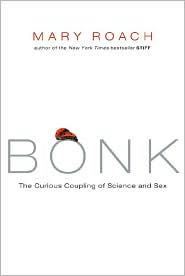 Now, in “Bonk: The Curious Coupling of Science and Sex,” Roach has chosen a topic that is perhaps the antithesis of death: our sexual physiology and psychology. Like “Stiff,” “Bonk” (almost interchangeable titles, no?) is rich in dexterous innuendo, laugh-out-loud humor and illuminating fact. It’s a compulsively readable, informative history of the scientific inquiry into the hows and wherefores of engorged tissues and sweaty palms, from Leonardo to Kinsey and on to Annie Sprinkle, including coverage of “artificial coition machines,” panda porn, the challenges of conducting sex studies in Islamic countries and the workings of the orgasm in people with spinal cord injuries.
She details gender bias in research and language (such as the longtime male-dominated debate between the “vaginocentrists” and the pro-clitoral orgasm team), but she too often glosses over the tragic effects of misguided “treatments.” The profit-seekers or perpetrators of scientific sexual brutalities (such as Leo Stanley’s experimental testicular grafts of animal gonads into San Quentin inmates in the 1920s) often get off easy. And for a writer so conscious of the power of language, her discussion of “clitoridectomies” as the treatment for female “hysteria” up to the 1950s, with no mention of the continuing crisis of female genital mutilation, is too determinedly apolitical.
Beware, too, the queasy-making or cringe-inducing sequences. There wasn’t a sentence in “Stiff” that made me squirm, but Roach’s needles-and-tubes descriptions of Dr. Gen-Long Hsu’s surgical treatments for erectile dysfunction were hard to bear.
Happy 4th Of July!
A guy gets into a three-way with two girls draped in the American flag…
Odd forms follow funk with Was (Not Was)
Sunday, April 20th 2008, 4:00 AM

It’s safe to say there’s only one living funk band who would record a lyric with the following plot:
A guy gets into a three-way with two girls draped in the American flag, then meets an insane skinhead who hurls an anti-Semitic comment at him, causing him to kill and dismember the lout, after which our narrator sees a UFO land on the Hollywood sign, out of which emerges Tom Cruise and Scientology leader L. Ron Hubbard in postcoital bliss.
Who but the twisted talents of Was (Not Was) would dare match such a heady scenario to the low-down fire of funk?

Not that they’re entirely without antecedents. George Clinton made surreality a central part of his shtick. And Frank Zappa pioneered the whole universe of nut-case funk, even if he never got the sexual chemistry part quite right.
Was (Not Was) has that part down. In fact, no band has so perfectly balanced the pull of funk with language worthy of the theater of the absurd.
To broaden the band’s already sprawling music, they brought in a special guest orator – Kris Kristofferson – who grumbles his way through the existential poem “Green Pills in the Dresser.” No less a talent than Bob Dylan came along too, co-authoring the crazed tale “Mr. Alice Doesn’t Live Here Anymore.”
But it wasn’t the great bard who came up with lines like this typical Was quatrain: “High in fiber/low in fat/come at your mama/with a baseball bat.”
Even on the odd chance that someone else could have written those lines, only the Was brothers could make them dance.
Leading a contemplative literary life isn’t dead…
BOOKS
Young authors embrace the thought process
Leading a contemplative literary life isn’t dead even in these hectic times. Just ask Nathaniel Rich, left, Keith Gessen and Ed Park.
By Scott Timberg, Los Angeles Times Staff Writer
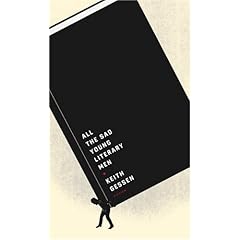 NEW YORK — Is it possible to lead a dedicated literary life in the billionaire-filled, media-crazed New York of today? To be heedless of the material world as you burrow into novels and ideas the way the old Partisan Review gang did in the ’40s and ’50s, to come up with notions that rock the intellectual landscape? And if so, who exactly is still paying attention?
Those are questions three reasonably young men are asking now in much-awaited first novels that emerge over the next few weeks. Each novelist takes a very different position toward rendering literary life in a city where bohemian writers have been forced out by hedge-fund guys. And each co-edits a journal that is proud, almost defiant about its print status — in a nation where the image has been replacing the word for at least half a century now, and even some well-funded publications are in free-fall.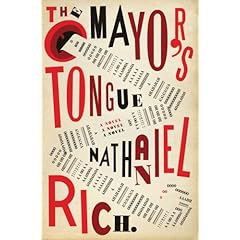
Outside of a few college towns, perhaps, it’s hard now to embrace the cerebral unapologetically without a sense of irony, of operating a bit out of time. But that didn’t stop Keith Gessen and some Ivy League-educated friends from launching, in 2004, the ambitious and pugilistic journal n+1, which was greeted by some as a kind of knowing, intellectual stunt. “Oh, no,” Gessen, who has heavy brows and a wide Russian mouth, said one recent evening. “It wasn’t a joke.”
That first issue was dedicated mostly to outlining what it opposed. “We were against the New Republic, we were against McSweeney’s, we were against the war, we were against exercise,” Gessen continued, sitting in a dive bar on the Upper West Side, where he once lived in an illegal sublet before decamping for Brooklyn, like most of the city’s other literati. ” And to this day we’re against many things.”
 At this point he’s kidding, but he’s a serious guy: His journal is dedicated first and foremost, he said, to bringing “a fighting spirit” back to a conflict-averse literary culture.
The Moscow-born Gessen, 33, may be the end of the line, the last of the bold, hungry, text-based thinkers, a throwback to the heyday of Dissent, the quarterly at which he once toiled. His semi-autobiographical novel, “All the Sad Young Literary Men,” came out last week to mostly strong reviews. His journal, meanwhile, takes what might be called the hard-line position on intellectual life: We don’t need more creativity, it says, we need more rigorous argument and political commitment. With Nathaniel Rich, a Paris Review editor whose surreal novel, “The Mayor’s Tongue,” came out last week, and Ed Park, the Believer co-founder and author of the upcoming “Personal Days,” which takes the glamour entirely out of the world of literary journalism, Gessen shows the pleasures and perils of taking ideas seriously in a city attuned more to Dow Jones than Irving Howe.
Fight Night
Bernard Hopkins vs. Joe Calzaghe on HBO.
http://www.hbo.com/boxing/events/2008/0419_calzaghe_hopkins/news/announcement.html
Matt Serra vs. George St. Pierre for UFC Welterweight Championship on PPV.
I predict Calzaghe and St.Pierre will win. Make fun of me tomorrow if I’m wrong.
“Remember when we got the toy for you the first time and it hurt so much…”
CBGB’s Remains
CBGB’s Reincarnation: Take A Tour Of The Boutique In The Once-Great Punk Club’s Location
‘We wanted to marry history, rock and roll and fashion,’ designer John Varvatos says of his shop.
NEW YORK — From the outside, 315 Bowery — the former address of New York’s CBGB — looks nothing like its former self.

There’s no Sharpie-inflicted graffiti praising the likes of the Dictators or Black Flag adorning the entrance. Instead, a security guard wearing a black tailored suit is manning the space’s humongous glass door, across which the words “John Varvatos” are stenciled in black. Through the glass, one notices an array of church candles flickering wildly and a 6-foot-tall replica of the Statue of Liberty.
Inside, the smell of fine Italian leather and $190 blue jeans has replaced the tang of a million stale cigarettes, rat poop, spilled beer and all manner of bodily fluids. Instead of aged gutter punks with protruding gray nose hairs, there are rail-thin models — including Daisy Lowe, daughter of Bush’s Gavin Rossdale — and other types of beautiful people here, splayed across antique chaise lounges, all as the final preparations for the store’s impending opening are being made.
This isn’t CBGB — the once-great punk club that helped launch the careers of the Ramones, Blondie, Talking Heads, Bad Brains and Sonic Youth. It’s now a John Varvatos boutique. Since the club’s sole owner, the late Hilly Kristal, had a moving company pack up all of CBGB’s contents — including the pee-stained, vomit-lined urinals — before the venue shut its doors for the last time, there isn’t much in the way of “artifacts” here. But there are a few relics left.
(Click here for photos of the store’s interior.)
And covering the walls on either side are concert posters for bands like the Dillinger Escape Plan, the Ramones, Guns N’ Roses, Iron Maiden, Kiss and Social Distortion. There are rare and imported vinyl records and autographed Stratocasters, all from Varvatos’ personal collection. There’s also Ramones memorabilia on loan from Arturo Vega, who created the band’s logo.
CBGB’s dubious bar is gone too, packed up and lying in wait somewhere inside a storage truck in Connecticut. But as part of his vision to restore the space as much to its original design and layout, Varvatos had an old wooden bar shipped in from Pennsylvania that looks very similar to the original and is just as long. The bar serves as the store’s checkout area. Flanking the wall behind the bar is a set of four stained-glass windows, which were extracted from an old church.
High-Impact Workout Tips for Exercise Ball
This Week’s NY Times Fiction Bestseller List
Hardcover Fiction
| This Week |
Last Week |
Weeks On List |
|
| 1 | WHERE ARE YOU NOW?, by Mary Higgins Clark. (Simon & Schuster, $25.95.) A woman searches for the truth about her brother, who is alive but has disappeared. | 1 | |
| 2 | UNACCUSTOMED EARTH, by Jhumpa Lahiri. (Knopf, $25.) Stories about the anxiety and transformation experienced by Bengali parents and their American children. | 1 | 2 |
| 3 | CERTAIN GIRLS, by Jennifer Weiner. (Atria, $26.95.) A girl discovers the sexy, somewhat autobiographical novel her mother wrote years earlier. | 1 | |
| 4 | BELONG TO ME, by Marisa de los Santos. (Morrow, $24.95.) When she moves to the suburbs, a woman becomes enmeshed in complications and secrets. | 5 | 2 |
| 5 | * SMALL FAVOR, by Jim Butcher. (Roc, $23.95.) Book 10 of the Dresden Files series about a wizard detective in Chicago. | 2 | 2 |
| 6 | THE APPEAL, by John Grisham. (Doubleday, $27.95.) Political and legal intrigue ensue when a Mississippi court decides against a chemical company accused of dumping toxic waste. | 4 | 11 |
| 7 | COMPULSION, by Jonathan Kellerman. (Ballantine, $27.) Several Los Angeles women are murdered, and the psychologist-detective Alex Delaware investigates. | 3 | 3 |
| 8 | CHANGE OF HEART, by Jodi Picoult. (Atria, $26.95.) A prisoner on death row begins performing miracles. | 6 | 6 |
| 9 | BULLS ISLAND, by Dorothea Benton Frank. (Morrow, $24.95.) An investment banker returns to the South Carolina island home she had left 20 years before. | 1 | |
| 10 | A THOUSAND SPLENDID SUNS, by Khaled Hosseini. (Riverhead, $25.95.) A friendship between two women in Afghanistan against the backdrop of 30 years of war. | 8 | 47 |
| 11 | * REMEMBER ME?, by Sophie Kinsella. (Dial, $25.) After an auto accident, a London woman loses her memory. | 7 | 7 |
| 12 | ZAPPED, by Carol Higgins Clark. (Scribner, $24.) The adventures of several New Yorkers, including the P.I. Regan Reilly, on the night of the 2003 blackout. | 1 | |
| 13 | 7TH HEAVEN, by James Patterson and Maxine Paetro. (Little, Brown, $27.99.) In San Francisco, Detective Lindsay Boxer and the Women’s Murder Club hunt for an arsonist. | 9 | 10 |
| 14 | DEAD HEAT, by Joel C. Rosenberg. (Tyndale, $24.99.) With the world on the brink of war, terrorists plot to assassinate a candidate in a closely fought presidential election. | 13 | 4 |
| 15 | THE BRIEF WONDROUS LIFE OF OSCAR WAO, by Junot Díaz. (Riverhead, $24.95.) A Dominican-American in New Jersey struggles to escape a family curse. | 3 | |
| 16 | * WINTER STUDY, by Nevada Barr. (Putnam, $24.95.) The national park ranger Anna Pigeon returns to an island park in Lake Superior, where a monstrous wolf is at large. | 10 | 2 |
| Also Selling | |||
| 17 | A PRISONER OF BIRTH, by Jeffrey Archer (St. Martin’s) | ||
| 18 | WORLD WITHOUT END, by Ken Follett (Dutton) | ||
| 19 | GUILTY, by Karen Robards (Putnam) | ||
| 20 | HOLLYWOOD CROWS, by Joseph Wambaugh (Little, Brown) | ||
| 21 | LUSH LIFE, by Richard Price (Farrar, Straus and Giroux) | ||
| 22 | PLEASURE, by Eric Jerome Dickey (Dutton) | ||
| 23 | THE THIRD ANGEL, by Alice Hoffman (Shaye Areheart) | ||
| 24 | SEPULCHRE, by Kate Mosse (Putnam) | ||
| 25 | THE DARK TIDE, by Andrew Gross (Morrow) | ||
| 26 | TEN-YEAR NAP, by Meg Wolitzer (Riverhead) | ||
| 27 | LOST SOULS, by Lisa Jackson (Kensington) | ||
| 28 | HONOR THYSELF, by Danielle Steel (Delacorte) | ||
| 29 | WRATH OF A MAD GOD, by Raymond E. Feist (Eos/HarperCollins) | ||
| 30 | PEOPLE OF THE BOOK, by Geraldine Brooks (Viking) | ||
| 31 | DUMA KEY, by Stephen King (Scribner) | ||
| 32 | THE WINDING WAYS QUILT, by Jennifer Chiaverini (Simon & Schuster) | ||
| 33 | BUCKINGHAM PALACE GARDENS, by Anne Perry (Ballantine) | ||
| 34 | BLACK WIDOW, by Randy Wayne White (Putnam) | ||
| 35 | CHRIST THE LORD: THE ROAD TO CANA, by Anne Rice (Knopf) | ||