
Michelangelo in Marble (with a 500-year Warranty)
Michelangelo for Readers With Deep Pockets
BOLOGNA, Italy — The gala presentation of “Michelangelo: La Dotta Mano” (“Michelangelo: The Wise Hand”), a volume of photographs of this Renaissance master’s sculptures, may well have been the most lavish book debut in history.
 |
| Aurelio Amendola/FMR |
With Piazza Maggiore, Bologna’s main square, as the backdrop, a short video depiction of the volume, which can be seen onwww.fmronline.it, was followed on Thursday night by an hourlong spectacle that included dozens of costumed dancers, a string quartet playing from a stage suspended in midair, suckling pigs roasted over a pit, a fake snowfall and a foppishly dressed acrobat walking Spiderman-style up the facade of San Petronio, the city’s cathedral.
But then, this is no ordinary book, starting with its retail price of 100,000 euros, or around $155,000, at Friday’s exchange rate.
Included in the price of what its publishers are calling “the most beautiful book in the world” is a sleek black case, its own stand and a 500-year guarantee.
“This isn’t an appliance,” Marilena Ferrari, chairman of the book’s publisher, Gruppo FMR, told Bologna’s mayor and guests at the book’s official presentation in a grand salon in City Hall on Thursday morning. “That’s the amount of time we feel we can guarantee the materials we used to craft it.”
 Using the high standards of the privately published books in the 19th century — an ideal known as the “book beautiful” — as a starting point, FMR sought expert artisans from various fields to create something Ms. Ferrari described as “a work of art in itself.”
Aurelio Amendola’s black-and-white photographs were printed on paper made exclusively for the project. There are detachable reproductions of Michelangelo drawings on handmade folios created according to centuries-old traditions. And then there’s the cover: a scale reproduction in marble of the “Madonna della Scala” (“Madonna of the Steps”), a bas-relief of the Virgin and Child sculptured by Michelangelo when he was still in his teens. The original is housed in the Casa Buonarroti in Florence.
I Hope Jerry Garcia Goes Zombie So He Can Stomp All Over This
Simply wrong.

Activist Guerillas Begin Bombing L.A.
Guerrilla gardener movement takes root in L.A. area

Scott planted the garden on the median early in the morning to avoid detection. He continues to weed and clean. Residents encourage his work. Photo by Mark Bolster/LA Times
Stealth growers seed or plant on land that doesn’t belong to them. The result? Plants that beautify or yield crops in otherwise neglected or vacant spaces.
BRIMMING with lime-hued succulents and a lush collection of agaves, one shooting spiky leaves 10 feet into the air, it’s a head-turning garden smack in the middle of Long Beach’s asphalt jungle. But the gardener who designed it doesn’t want you to know his last name, since his handiwork isn’t exactly legit. It’s on a traffic island he commandeered.
“The city wasn’t doing anything with it, and I had a bunch of extra plants,” says Scott, as we tour the garden, cars whooshing by on both sides of Loynes Drive.
Scott is a guerrilla gardener, a member of a burgeoning movement of green enthusiasts who plant without approval on land that’s not theirs. In London, Berlin, Miami, San Francisco and Southern California, these free-range tillers are sowing a new kind of flower power. In nighttime planting parties or solo “seed bombing” runs, they aim to turn neglected public space and vacant lots into floral or food outposts.
 Part beautification, part eco-activism, part social outlet, the activity has been fueled by Internet gardening blogs and sites such as GuerrillaGardening.org, where before-and-after photos of the latest “troop digs” inspire 45,000 visitors a month to make derelict soil bloom.
“We can make much more out of the land than how it’s being used, whether it’s about creating food or beautifying it,” says the movement’s ringleader and GuerrillaGardening.org founder, Richard Reynolds, by phone from his London home. His tribe includes freelance landscapers like Scott, urban farmers, floral fans and artists.
“I want to encourage more people to think about land in this way and just get out there and do it,” says Reynolds, whose new handbook for insurgent planters, “On Guerrilla Gardening,” is out this week.
The activists see themselves as 21st century Johnny Appleseeds, harvesting a natural bounty of daffodils or organic green beans from forgotten dirt. It’s a step into more self-reliant living in the city,” says Erik Knutzen, coauthor with his wife, Kelly Coyne, of “The Urban Homestead” to be released in June. The Echo Park couple have chronicled “pirate farming” on their blog, Homegrown Evolution. Guerrilla gardening, Knutzen says, is a reaction to the wasteful use of land, such as vacant lots and sidewalk parkways. He’s turned the parkway in front of his home into a vegetable garden.
Welcome to LA
Bright Shiny Morning by James Frey
From the publisher: Welcome to LA. City of contradictions. It is home to movie stars and down-and-outs. Palm-lined beaches and gridlock. Shopping sprees and gun sprees. Bright Shiny Morning takes a wild ride through the ultimate metropolis, where  glittering excess rubs shoulders with seedy depravity. Frey’s trademark filmic snapshots zoom in on the parallel lives of diverse characters, bringing their egos and ideals, hopes and despairs, anxieties and absurdities vividly to life. Some suffer, like the otherworldly wino who tries to save a spoilt teenage runaway. Others gain, like the canny talent agent who turns sexual harassment to blackmailing advantage. Some are loaded, or grounded, and have luck on their side. Others, like the countless actresses-turned-hookers, or schoolboys-turned-gangsters, are doomed.“
Out of the many characters in Bright Shiny Morning, one dominates them all – the city of Los Angeles. Frey etches out the city’s persona through the experiences of a cross-section of its inhabitants, from the highest to the very lowest. It is testament to his skills that even the most profoundly unsympathetic of these individuals cannot fail to get under your skin and the novel is always engaging although don’t expect a story in the conventional sense.”
Tom Goddard, Waterstones.com
 An ambitious and wide-ranging first novel from the author of the controversial rehab memoir, A Million Little Pieces which paints a vivid fictional portrait of the city of Los Angeles and its many and varied inhabitants…Did you feel that James Frey suceeded in creating believable and sympathetic characters here? How did you find the unconventional narrative structure of the book? Did it affect your overall enjoyment of the book? Does the book provide a rounded portrait of the city that gives a real impression of sense of place and what the city is like? Did you empathise with any of the characters more than others? Amberton, Dylan, Old Man Joe – who did you feel was the most convincing character?
UK Releases Slasher PSAs To Quell Knife Crimes
Home Office enlists teenagers for £3m anti-knife adverts
Video ads such as the one above will be distributed on mobile phones and social networking sites. WARNING: CONTAINS EXTREMELY GRAPHIC IMAGES OF STAB WOUNDS. DO NOT CLICK PLAY IF YOU ARE ONE TO ABHOR THE GORE.
A £3m advertising campaign devised by teenagers to warn young people of the physical and emotional consequences of knife crime is to be launched today by the Home Office.
The campaign, which will run over the next three years, will feature national radio, website and mobile phone adverts as well as print and “viral ads” to be distributed via social networking sites such as Bebo and mobile phones.
The radio commercials feature teenagers talking about the emotional impact of a knife attack on their boyfriends and girlfriends while promotional postcards feature a thumbless hand, with the message: “If you carry a knife you’re more likely to get stabbed yourself.”
The campaign concept was devised by a group of young people who also scripted and recorded the radio adverts. The 18 teenagers from England and Wales took part in a creative summit in April to share ideas on how to make their peers think twice about carrying a blade.
One of those who took part, Khadijah Murchison, aged 18, from Bristol, said: “All the young people that went to the creative summit have been affected by knife crime, so to share our experiences and come up with ideas and adverts that will help reduce knife crime was great. Hopefully it will make a real difference.”
The creative summit followed discussions between the Home Office and 70 teenagers which aimed to gain an understanding of young people’s experience of knife crime and possession and what motivated them to carry a blade.
The ads are to be supplemented by a series aimed at mothers encouraging them to talk about knives with their children, and to offer them support.
Home Office minister Vernon Coaker said: “We know that many young people carry a knife because they are fearful and these adverts tell powerful stories about the dangers of going down that path. People have got to get the message that if they carry a knife there’s more chance of it being used against them.”
Instructions for a fun time on the interstate
Step 1. Tie these balloons to your car.
Step 2. Drive like a bat out of hell.

“If he wasn’t such a [punk], he could have avoided all of that…”
Comcast Hijackers Say They Warned the Company First
By Kevin Poulsen May 29, 2008 | 7:44:07 PMCategories: Crime, Hacks And Cracks
The computer attackers who took down Comcast’s homepage and webmail service for more than five hours Thursday say they didn’t know what they were getting themselves into.
 In an hour-long telephone conference call with Threat Level, the hackers known as “Defiant” and “EBK” expressed astonishment over the attention their DNS hijacking has garnered. In the call, the pair bounded freely between jubilant excitement over the impact of their attack, and fatalism that they would soon be arrested for it.
“The situation has kind of blown up here, a lot bigger than I thought it would,” says Defiant, a 19-year-old man whose first name is James. “I wish I was a minor right now because this is going to be really bad.”
The two hackers are members of the underground group Kryogeniks. The interview was arranged by Mike “Virus” Nieves, an 18-year-old New Yorker who pleaded guilty as a minor last year to hacking AOL. Neives, who was on the call, is also a member of Kryogeniks, though he and his compatriots say he’s stopped hacking.
Nieves vouched for the identities of the hackers. Threat Level also confirmed Defiant’s identity over AOL instant messenger, on a handle that’s known to belong to Defiant.
Neither hacker would identify their full names or locations. Defiant’s MySpace profile lists him in Cashville, Tennessee, but he says that’s incorrect. His girlfriend lists herself in New York. Threat Level expects both hackers’ names and locations will emerge soon.
The hackers say the attack began Tuesday, when the pair used a combination of social engineering and a technical hack to get into Comcast’s domain management console at Network Solutions. They declined to detail their technique, but said it relied on a flaw at the Virginia-based domain registrar.
 Network Solutions spokeswoman Susan Wade disputes the hackers’ account. “We now know that it was nothing on our end,” she says. “There was no breach in our system or social engineering situation on our end.”
However they got in, the intrusion gave the pair control of over 200 domain names owned by Comcast. They changed the contact information for one of them, Comcast.net, to Defiant’s e-mail address; for the street address, they used the “Dildo Room” at “69 Dick Tard Lane.”
Comcast, they said, noticed the administrative transfer and wrested back control, forcing the hackers to repeat the exploit to regain ownership of the domain. Then, they say, they contacted Comcast’s original technical contact at his home number to tell him what they’d done.
When the Comcast manager scoffed at their claim and hung up on them, 18-year-old EBK decided to take the more drastic measure of redirecting the site’s traffic to servers under their control. (Comcast would neither confirm nor deny the warning phone call.)
“If he wasn’t such a prick, he could have avoided all of that,” says EBK. “I wasn’t even really thinking. Plus, I’m just so mad at Comcast. I’m tired of their shitty service.”
“They called me back five minutes later and said, ‘We got Comcast’,” recalls Nieves.
The defacement message was short and simple: “KRYOGENICS Defiant and EBK RoXed Comcast,” it read. “sHouTz to VIRUS Warlock elul21 coll1er seven.”
 Fellow hackers, relying on press reports claiming that customer data may have been compromised, are hitting up the duo for passwords to Comcast e-mail accounts, which they say they don’t have. “Nobody was listening in on the ports to try and get usernames and password,” says Defiant. “We could have, but we didn’t.” (On this point, Comcast and the hackers agree).
The hackers say the flaw they exploited still exists, and that other large websites are equally vulnerable. Asked if they plan to attack anyone else, EBK says, “Who knows. Only Kryogeniks knows”
The elder hacker in the team says he was reluctant to use his access to take over Comcast.net, and emphasizes that the pair tried to warn Comcast about the flaw.
“I was trying to say we shouldn’t do this the whole damn time,” says Defiant.
“But once we were in,” adds EBK, “it was, like, fuck it.”
(David Kravets contributed to this report)
Circle K Launches Answering Service For Chatty Wives – Marks First Foray Into Telecom Sector for Slurpee King
Let’s Read To Our Kids More. Please.
Parents urged to read to children
Fewer than one in two parents say they read to their children each day, with one child in 10 getting a bedtime story less than once a month or never, according to figures published today.

A “state of the storytelling nation” study by the campaign team behind this year’s National Year of Reading presents both good and bad news: parents who do read to their children regularly do so with humour and inventiveness; but there is a rump of parents who do not bother at all.
Honor Wilson-Fletcher, director of the National Year of Reading, said: “Parents just need to understand the importance of making it fun. There is a relationship between reading in later life and storytelling and how well you do it. The better you are at it the more likely you will enjoy it, and the other way round.”
Of 2,207 parents surveyed by YouGov, 49% read to children each day. On average, 19% read four or five times a week, 14% two or three times a week, 5% once a week, 5% once a month or less, and 5% never.
Funny stories are the most popular choice. While 12% of parents said their children liked traditional fairytales, 28% said humorous stories by the likes of Roald Dahl and Dr Seuss went down the best.
Most parents throw themselves into storytelling, with 82% putting on accents for characters – “posh” was top choice for a hero (followed by Yorkshire and cockney) and cockney top for a villain (then posh and Scottish). Most popular books were The Gruffalo, The Very Hungry Caterpillar, The BFG, and (tied) Where’s Spot? by Eric Hill and CS Lewis’s The Lion, the Witch and the Wardrobe.
James Frey As Yenta to DolceGoldin
MEDIA FIRM OWES ALL TO WRITER FREY
By PETER LAURIA
May 30, 2008 — In addition to being a notorious author, it turns out that James Frey is also a matchmaker.

The author of the partially fabricated memoir “A Million Little Pieces” is responsible for bringing former Details and Star Editor-In-Chief Joe Dolce and former MSNBC Editorial Director Davidson Goldin together to launch a media-strategy and branding consulting firm called DolceGoldin, The Post has learned.
The firm, which officially went into business this month, aims to be a behind-the-scenes operator helping politicians, pop culture figures and businesses make sure “the attention they are getting is the attention they want,” Goldin said in an interview with The Post.
DolceGoldin was founded after Frey’s wife, Maya, who was friends with Goldin at Cornell University, introduced Goldin to her author husband.
The two hit it off and Frey hired Goldin in January to provide support for a media strategy devised by his publisher, HarperCollins, ahead of the launch of “Bright Shiny Morning,” which will debut at No. 9 on the New York Times bestseller list this weekend.
The next month Goldin received an e-mail from Frey introducing him to Dolce and suggesting that the pair go into business together. Dolce and Goldin were soon drawing up plans and seeking out office space for their new venture.
“There are many people and companies that are great at making products, but are not as great at communicating their message to the public,” Dolce said.
Let’s Live!
My Mom Just Bought Me This New Chair But I’m Not Sure Where To Stick It

Hell’s Canucks Rumble With Canadian Politicians
Canadian Sex and Biker Scandal Comes Alive on YouTube
Finally, an inventive new use for YouTube that doesn’t involve a kid practicing Star Wars moves or Kobe Bryant jumping over a pool full of snakes. Someone by the screenname BLABLABLAPQ has posted a musical montage that starts with the phrase “Le Scandale de la Semaine au Quebec” (“The Scandal of the Week in Quebec”). The video, which is comprised of screenshots and French pull quotes, highlights the sex-politics-and-biker-gang scandal currently engulfing Canada, all set to a poppy Francophone soundtrack. (Minus a random Britney Spears vamp.)
According to Ian Austen in today’s New York Times, Canadian minister of foreign affairs Maxime Bernier has resigned because “his former romantic interest, Julie Couillard, was linked to Quebec’s motorcycle gangs, which have long tried to infiltrate politics and the justice systems. … Biker gangs in Mr. Bernier’s home province of Quebec have, among other things, killed prison guards and shot one prominent crime journalist.” (Who knew our neighbors to the north were so hardcore?)
Shelfari Review of BRIGHT SHINY MORNING

Bright Shiny Morning
by James Frey
Editorial Review
One of the most celebrated and controversial authors in America delivers his first novel—a sweeping chronicle of contemporary Los Angeles that is bold, exhilarating, and utterly original.
Dozens of characters pass across the reader’s sight lines—some never to be seen again—but James Frey lingers on a handful of LA’s lost souls and captures the dramatic narrative of their lives: a bright, ambitious young Mexican-American woman who allows her future to be undone by a moment of searing humiliation; a supremely narcissistic action-movie star whose passion for the unattainable object of his affection nearly destroys him; a couple, both nineteen years old, who flee their suffocating hometown and struggle to survive on the fringes of the great city; and an aging Venice Beach alcoholic whose life is turned upside down when a meth-addled teenage girl shows up half-dead outside the restroom he calls home.
Throughout this strikingly powerful novel there is the relentless drumbeat of the millions of other stories that, taken as a whole, describe a city, a culture, and an age. A dazzling tour de force, Bright Shiny Morning illuminates the joys, horrors, and unexpected fortunes of life and death in Los Angeles.
Bovine Growth Hormone Hits Women’s Professional Tennis

As with athletes in most professional sports, today’s tennis players are much more physically developed than their predecessors. While critics concede that bigger players have made women’s tennis in particular a faster and more exciting game for the TV audience, they also blame this rapid increase in size for the decline of the backhand on the WTA circuit.
The Fuzz on Buket
Tagger whose work allegedly appears on YouTube is arrested

YouTube
“Buket” seen applying his moniker to an MTA bus in broad daylight as passersby and passengers watch in surprise.
Cyrus Yazdani is a 24-year-old San Jose State University graduate with a degree in art and a job as a convention planner in Las Vegas.
But authorities say Yazdani is also “Buket,” one of Los Angeles’ most prolific taggers who is featured in several heavily viewed YouTube videos defacing signs and buses. His most popular video — with nearly 170,000 page views — shows him clambering behind the Hollywood Freeway sign near Melrose Avenue and tagging the structure as traffic speeds below.
Los Angeles County sheriff’s investigators arrested Yazdani on Tuesday, saying that his moniker has marked hundreds of freeway overpasses, concrete walls and transit buses across the state and southern Nevada. He is believed responsible for upward of $150,000 in property damage along the Los Angeles River and in the areas patrolled by the Los Angeles County Sheriff’s Department — and at least that much in other parts of California.
Yazdani was nabbed when he showed up to meet with his probation officer and booked on multiple charges of felony vandalism.
Authorities are used to dealing with graffiti vandals — even those who display their handiwork on the Internet. But there is general agreement that “Buket” is different.
According to investigators, Yazdani is a professional graphic artist. Though he works in Las Vegas, he is frequently in Los Angeles, living with roommates at a downtown Los Angeles loft. He moved to Los Angeles two years ago, authorities said.
He’s older than many taggers — but his age hasn’t kept him down, said Sheriff’s Deputy Devin Vanderlaan, who has tracked Buket for months.
“He’s one of the most prolific taggers we’ve seen,” Vanderlaan said. “He’s on buses, overpasses, in the L.A. riverbed — he’s everywhere.”
The investigators said they spotted four “Buket” scrawls Tuesday during the short trip from downtown to the Crenshaw District to pick Yazdani up at the probation office.
But you don’t have to drive throughout L.A. to see “Buket’s” work — and that’s what did him in, authorities said.
“Buket,” they said, became something of an Internet sensation with the daredevil tagging 20 feet above the busy Hollywood Freeway — vandalism captured on videotape and posted with a rap soundtrack on You Tube and numerous tagger-related blogs.
Nikki Bitch-slaps Nicky
Finke to Defamer: No Links For You

Nikki Finke, The Observer‘s 2007 Media Mensch of the Year, has a bone to pick with Defamer.
On her Deadline Hollywood Daily blog, Ms. Finke offers a look inside the Hollywood gossip sausage factory and shows how an anonymous comment on her site attributed to “A CAA Agent” was picked up by Defamer and went on to become fodder for outlets like Variety, The Los Angeles Times, and Slate.
Ms. Finke’s tick-tock may be a bit too inside Hollywood baseball, but the best part of her post is the way she flouts Gawker Media’s entire business model in an aside:
I’m not linking because the blogger who wrote it gets paid by the page view. So don’t reward someone for inaccurate info…
Escape From Tchaikovsky’s First Concerto
From The Race That Invented Rock ‘n Roll Anyway
Rock is the new black
Sunday, May 25th 2008, 4:00 AM
The rock star named Stew doesn’t have the fondest memories of growing up African-American and loving the likes of Led Zeppelin.
 “There were about four of us in this predominantly black school who listened to rock ‘n’ roll,” he says. “Everyone else would tease us. It meant you were a pansy.”
Fast-forward thirtysomething years and it’s another story.
As Stew observes, “If you walk into the Foot Locker on Times Square, every kid working there is black, Puerto Rican or Dominican. And when rock videos come on the screen, those kids rock out just as hard to emo bands as to rap. To them, it’s all the same.”
He’s not the only one who has observed the change. Earl Douglass, executive director of the Black Rock Coalition, says that growing up in the ’80s as a black kid listening to the Stones was “excruciatingly alienating. My friends, who listened to hip hop, didn’t understand or didn’t want to understand,” he says. “Now, a lot of those walls are being torn down. Black kids listen to everything.”

For proof, look to a whole wave of cool and respected modern rock acts who just happen to be led by, or entirely composed of, African-Americans. They include Gnarls Barkley, TV on the Radio, N.E.R.D.,Saul Williams and Lightspeed Champion, all of whom are so well-integrated into music’s hot set that their race is rarely mentioned.
At the same time, we’re seeing emerging artists like Danielia Cotton(a black singer who performs straight-on classic rock) and a Tony-nominated Broadway musical, “Passing Strange,” which deals specifically with the emotional issues of growing up as a black rock fan. (“Passing” stars Stew, now 46, who interacts with his alienated 22-year-old self throughout the play.)
So, why are such stunning changes happening now?
Nature Always Wins
Quake images show lake forming
Landslides caused by the Sichuan earthquake have blocked rivers and formed new, possibly unstable, lakes. Satellite images taken by the Taiwan’s National Space Organisation (NSPO) show one such lake forming in Beichuan County, one of the areas worst hit by the quake.
|

James Frey’s Happy Ending
James Frey’s happy ending
His sensational memoir sold more than five million copies. But when he was forced to admit fabricating some of the details, his life fell apart. Now he’s back, with a work of fiction – and it’s already a bestseller. Guy Adams reports
Monday, 26 May 2008
Should James Frey, the American writer who was first endorsed and then publicly disowned by Oprah Winfrey for faking his bestselling memoir A Million Little Pieces, turn his topsy-turvy life story into a Hollywood film, its latest chapter would be the heart-warming, if deeply ironic, happy ending.

The author and former drug addict, whose fall from grace two years ago rocked America’s publishing industry, has miraculously rehabilitated his tattered reputation with a new book in the very literary genre he should have attempted from the start of his career: fiction.
Two weeks after its launch, Frey’s third novel, Bright Shiny Morning, has shot up the sales charts, debuting at number nine in The New York Times bestseller list, despite the onset of the fiercely competitive summer sales season which coincides with today’s Memorial Day holiday.
Having received a series of flattering reviews, the once-besmirched author has emerged from a self-imposed public exile for an international book tour. And to underline his new-found popularity, he’s also popped up in a series of surprisingly sympathetic newspaper, magazine, radio and television interviews.
It’s a far cry from the grisly events that followed the revelation in January 2006 that Frey had fabricated several elements in both A Million Little Pieces, the gut-wrenching “memoir” about his lengthy struggle with alcohol and drugs, and its sequel My Friend Leonard.
The author, who at the time was something of a literary “It” figure, had achieved fame, fortune, and sold more than five million of his book, after Oprah Winfrey chose A Million Little Pieces for her influential monthly book club, inviting him on to her daytime chat show in September 2005 as: “the man who kept Oprah awake at night”.
Fans and critics alike were impressed by Frey’s gritty narrative style, together with the moving tale of his personal journey from promising university graduate with a bright future, to a drink and drug-addled petty criminal and dropout.
Frey was born in 1969 and enjoyed a normal middle-class childhood in Ohio and Michigan. After graduating from the School of the Art Institute of Chicago, he moved to Los Angeles in the early 1990s, where he began working as a screenwriter, director and producer.
Things soon went awry, though. At least according to his memoir they did. A Million Little Pieces told how his dream of a career in Hollywood turned into a nightmare after he became addicted to alcohol and crack cocaine, endured a series of run-ins with the police and ended up in a treatment facility. The truth, however, turned out to be a little bit less exotic. After Frey’s first appearance with Oprah, muck-raking internet sites quickly began to investigate key claims in the memoir – and soon discovered that several important biographical details were at odds with the facts.
In particular, it was discovered that Frey’s claim to have spent three months behind bars during the 1980s was false: court records showed that he had spent just a day in jail, and that was following a drink-driving incident.
As the scandal took off, Oprah invited Frey and his publisher, Nan Talese, back on air, ostensibly to discuss another subject. Then she tearfully accused them of flat-out deception. “I feel duped,” she said. “More importantly, I feel you betrayed millions of readers.”
Literary America agreed, and the broadcast media could hardly contain its outrage. Frey and his wife, Maya, were forced into hiding in New York, while his publisher, Random House, decided to establish a legal settlement giving readers who felt cheated the chance to return their books.
Many in the industry thought that Frey would never find work again, and he was abandoned by friends and family, together with Penguin, with whom he had signed a two-book deal, and his literary agent.
But the scandal blew over, and in the event, fewer than 2,000 of the books were returned. Frey, meanwhile, set to work on Bright Shiny Morning, a novel about contemporary Los Angeles. Although the original book contract for the novel was cancelled following the televised accusation by Oprah, HarperCollins later snapped it up – and was rewarded last week when 14,000 copies were sold in hardback.
Critics have been divided by the new book. Flattering reviews, of which there were many, hailed him as a new star of serious fiction, drawing admiring comparisons with the likes of Jack Kerouac, Tom Wolfe and John Steinbeck.
“[James Frey] got a second act. He got another chance,” wrote the influential New York Times critic Janet Maslin. “Look what he did with it. He stepped up to the plate and hit one out of the park. No more lying. No more melodrama, still run-on sentences, still funny punctuation, but so what? He became a furiously good storyteller in his time.”
Lev Grossman, Time magazine’s well-regarded reviewer, was also congratulatory. “The worst bits of Morning are probably worse than anything else you’ll read this year, but Frey is such a relentlessly entertaining storyteller that you just won’t care. Frey has a history of having a little too much fun with facts, among other controlled substances. As a writer of fiction, he may finally have found a job where that’s not a problem.”
The only sour note came from David Ulin, the books editor of The Los Angeles Times, who gave Frey’s new book the proverbial stinker, claiming that it offered “a cheap Hollywood movie” portrayal of Los Angeles. “Bright Shiny Morning is a terrible book,” he wrote. “One of the worst I’ve ever read. But you have to give James Frey credit for one thing: he’s got chutzpah.”
Away from the review pages, though, the book-buying public has embraced Frey’s comeback story. Having become a household word for “liar” – “I was a pariah,” he told this month’s Vanity Fair. “I was under no illusion that I was anything but that” – Frey has been enjoying a brand of celebrity reminiscent of the era before his original downfall.
Also celebrating was Eric Simonoff, the legendary Manhattan literary agent who took on the then down-at-heel Frey last year and was the man who persuaded HarperCollins to invest in Bright Shiny Morning.
“When I took James on as a client, the notion was met with some scepticism by friends in the industry,” he admitted yesterday. “It really had been pretty bad. In fact, I would go so far as to say it was unprecedented.”
“There have been other scandals in literature, but I cannot ever recall someone having received so public a drubbing. Some people felt that he was actually untouchable. But I talked to him, and looked at his writing, and felt strongly that he deserved another chance.”
Even Nan Talese, the superstar publisher at Random House whose reputation was also seriously sullied by the Oprah affair, offered congratulations, and continued to defend A Million Little Pieces when The Independent contacted her.
“James always wanted to be a novelist, and it’s good that he could put this behind him and write the California book he intended,” she said. “The incidents of exaggeration that the Smoking Gun brought to light were not germane to the story, and I hardly remembered them when they came to light.”
With Frey, who is now teetotal and happily married, gearing up for a world tour (the book is due for release in the UK in August), the eyes of literary America will now be on the bidding war for his next novel.
Mr Simonoff has revealed that it will be about “a secular Jew who believes he’s the Messiah”. Although he conceded that HarperCollins will be favourites to clinch the deal, no contract has yet been signed.
Industry experts, meanwhile, are reflecting that the success of Bright Shiny Morning proves that there is, after all, no such thing as bad publicity.
“If you look at the data, there were actually sales spikes for A Million Little Pieces when the scandal was happening,” said Rachel Deahl, of the magazine Publishers Weekly. “So while he may have lost respect in some people’s eyes, he already had plenty of fans. In many ways, the scandal has turned out to be commercially helpful.”
The launch of Bright Shiny Morning also turned out to be an object lesson in constructing a literary PR campaign. “Everyone loves a come-from-behind story, and this is certainly that,” she added. “But he’s very definitely not been doing hardball interviews. He’s not gone on Larry King. What happened two years ago has made him very cagey about talking to the press, so he has taken things slowly.”
Also still taking Frey’s rehabilitation slowly is Oprah Winfrey, whose book club managers would not respond to specific inquiries about Bright Shiny Morning yesterday.
Meanwhile, William Bastone, the investigative journalist who is also the editor of the Smoking Gun, commented that Frey’s rehabilitation and re-found success was a sad indictment of modern American morality.
“Twenty or thirty years ago, if you had been caught pulling a stunt like this you would be ostracised for good,” he said. “But this is now a country where penance ends up being very compressed. Look at Martha Stewart. She went to prison, and it was no more than a bump in the road for her.”
“Still, we have no plans to go through this book with a fine toothcomb. Frey has put a disclaimer in the front of it: he’s said that it’s fiction, so I guess he’s covered himself this time.”
Blood On Paper: Publishing As Art
BLOOD ON PAPER: THE ART OF THE BOOK
REVIEW: CHAPTERS AND VERSE Ben Lewis, Evening Standard
|
There’s only a drop or two of blood on paper, in this unassuming but exquisite show of artists’ books. You’ll find the red stuff in Stains, an ultra-ironic, methodical volume of marks on the white stuff produced by various everyday substances from the cult American conceptual painter Ed Ruscha. Still, to make up for the shortage of blood there is gunpowder on paper from the Chinese artist Cai Guo Caing, cracked earth on paper from Anselm Kiefer, dried mud on paper from Richard Long, fabric as paper from Louise Bourgeois, a laser-cut fissure through a pile of paper by Anish Kapoor and plenty of lithographer’s ink on paper from a fairly inclusive list of the 20th century’s greatest artists. This bold display of work ranges from Matisse to Rauschenberg to Hirst. It includes great surprises, such as the saturated totemic prints of abstract Basque sculptor Eduardo Chillida. There isn’t an overriding theme but the curators have selected works which demonstrate great craftsmanship, which is appropriately so very V&A. The book has been a hugely popular medium for modern artists but exhibitions of them are rare. It’s a broad genre which ranges from fragile portfolios in tiny editions, collected then stored in a dark place by obsessive collectors, to mass-produced artist’s catalogues, which, if out of print, have recently soared in value. Among the greatest pleasures of the exhibition are the illustrated books of poetry. The conjunction of artist and poet inspires thoughts about the shared cultures of different eras — opposite Allen Ginsberg’s anti-war poem, “Whom bomb? We bomb them!”, is a print of explosions by Roy Lichten-stein; a play by Antonin Artaud, the inventor of the Theatre of Cruelty, is accompanied by some tor tured lithographs by German Neo-Expressionist Georg Baselitz. Until 29 June. Open Sat-Thurs 10am-5.45pm, Fri 10am-10pm; admission free. Information: 020 7942 2211, www.vam.ac.uk |
 In the moment: Damien Hirst’s I want to spend the rest of my life everywhere, with everyone, one to one, always, forever, now, 1997 In the moment: Damien Hirst’s I want to spend the rest of my life everywhere, with everyone, one to one, always, forever, now, 1997
Suitcase: Detritus by Francis Bacon
Artistic licence: Anselm Kiefer’s Steigend
No shame: Joan Miro’s Le Courtisan Grotesque
|


South Central Acres
South L.A. backyards are becoming barnyards

Luis Sinco, Los Angeles Times
Barnyard fowl are penned in a chain link enclosure in the backyard of a residence in South Los Angeles. Some area residents complain that their neighborhood is being overrun with roosters. The problem illustrates an ongoing divide in a traditionally black neighborhood that is transitioning into a Latino enclave.
Once predominantly African American, the area has seen an influx of Latino immigrants, along with their roosters, chickens and other barnyard beasts not typically part of the urban scene.
When her neighbor’s roosters and chickens persisted in running through her yard, G. Stone took matters into her own hands. She marched next door and issued a warning: Do something about the uninvited guests or the birds “were going in my pot.” The incursions stopped. But Stone, a retired Los Angeles County librarian who lives northwest of Watts, shook her head in exasperation as she recalled the incident. “I’ve lived here for 50 years,” she said. “All of a sudden, there’s an influx of chickens. You’re not supposed to have chickens in the city.”
For many, the image of South Los Angeles is that of a paved, parched, densely packed urban grid. But increasingly, it is also a place where untold numbers of barnyard animals — chickens, roosters, goats, geese, ducks, pigs and even the odd pony — are being tended in tiny backyard spaces.
 “Most people don’t realize just how many farm animals there are in the city,” said Ed Boks, the general manager of the city’s Animal Services department.
Indeed, about a block from the beauty parlor where Stone was getting her hair done earlier this month, a pair of goats chewed something dark and unidentifiable as they stood placidly near the traffic whizzing by on Avalon Boulevard. A pit bull next door eyed them lazily.
The cacophony of cock-a-doodle-doos south of the 10 Freeway is one of the louder manifestations of a demographic change that has transformed South Los Angeles in the last few decades.
Once primarily an African American community — and still the cultural and political heart of the state’s African American population — the area has absorbed tens of thousands of immigrants from Mexico and Central America and is now predominantly Latino. In Southeast L.A., the black population has dropped from 71% in 1980 to 24% in the 2000 census; the Latino population grew from 27% in 1980 to 74% in 2000.
For some folks, the rooster has become a potent symbol of the way their neighborhood is changing.
“Sometimes, I think it’s Mexico,” said Tony Johnson, who lives in Southeast L.A. He confessed that after being roused early some mornings, he has fantasized about silencing the birds permanently. “Boom. Boom. Boom,” he said, pantomiming how he would do it.
Making love to the helicopter from AIRWOLF
Man admits to having sex with 1,000 cars
Last updated: 1:23 PM BST 21/05/2008
A man who claims to have had sex with 1,000 cars has defended his “romantic” feelings towards vehicles.
Edward Smith, who lives with his current “girlfriend” – a white Volkswagen Beetle named Vanilla, insisted that he was not “sick” and had no desire to change his ways.

“Maybe I’m a little bit off the wall but when I see movies like Herbie and Knight Rider, where cars become loveable, huggable characters it’s just wonderful.
“I’m a romantic. I write poetry about cars, I sing to them and talk to them just like a girlfriend. I know what’s in my heart and I have no desire to change.”
Mr Smith, 57, first had sex with a car at the age of 15, and claims he has never been attracted to women or men.
But his wandering eye has spread beyond cars to other vehicles. He says that his most intense sexual experience was “making love” to the helicopter from 1980s TV hit Airwolf.
As well as Vanilla, he regularly spends time with his other vehicles – a 1973 Opal GT, named Cinnamon, and 1993 Ford Ranger Splash, named Ginger.
Before Vanilla, he had a five-year relationship with Victoria, a 1969 VW Beetle he bought from a family of Jehovah’s Witnesses.
But he confesses that many of the cars he has had sex with have belonged to strangers or car showrooms.
His last relationship with a woman was 12 years ago – and he could not bring himself to consummate it, although he did have sex with girls in his younger days.
“I just loved cute cars right from the beginning, but over the years it got stronger once I got into my teenage years and was having my first sexual urges.

“When I turned 13 and the famous Corvette Stingray came about, that car was pure sex and just an incredible machine. I wanted it.
“There have been certain cars that attracted me and I would wait until night time, creep up to them and just hug and kiss them.
“As far as women go, they never really interested me much. And I’m not gay.”
A man attaches jet engines to his legs and jumps out of a hot air balloon wearing a wingsuit
Literary Adequacy For Dummies
Volumes to Go Before You Die
 The book is British. Of course. The British love literary lists and the fights they provoke, so much so that they divide candidates for the Man Booker Prize into shortlist books and longlist books. In this instance Peter Boxall, who teaches English at Sussex University, asked 105 critics, editors and academics — mostly obscure — to submit lists of great novels, from which he assembled his supposedly mandatory reading list of one thousand and one. Quintessence, the British publishers, later decided that “books” worked better than “novels” in the title.
Even without Milton or Shakespeare, Professor Boxall has come up with a lot of books. Assume, for the sake of argument, that a reasonably well-educated person will have read a third of them. (My own score, tallied after I made this estimate, was 303.) That leaves 668 titles. An ambitious reader might finish off one a month without disrupting a personal reading program already in place. That means he or she would cross the finish line in the year 2063. At that point, upon reaching the last page of title No. 1,001, “Never Let Me Go” by Kazuo Ishiguro, death might come as a relief.
Two potent factors make “1001 Books” (published in the United States in 2006 by Universe; $34.95) compelling: guilt and time. It plays on every serious reader’s lingering sense of inadequacy. Page after page reveals a writer or a novel unread, and therefore a demerit on the great report card of one’s cultural life. Then there’s that bullying title, with its ominous allusion to the final day when, for all of us, the last page is turned.
Public Craving for Real Music Makes Heavy Metal Hip Again
For those about to rock … heavy metal set to be the soundtrack of summer
Iron Maiden, Def Leppard and Kiss among 1980s acts leading genre’s resurgence
Owen Gibson, media correspondent
The Guardian

Gene Simmons of Kiss. Photograph: Fred Greaves/Reuters
Turn the volume to 11 and set the pyrotechnics to stun. For those ageing fans about to rock, perhaps less energetically than before, the concert promoters and marketing men salute you.
This summer will see a slew of 1980s heavy metal acts releasing new material and playing live to hundreds of thousands of ageing rockers keen to swap their suit jackets for faded denim.
In 2007 it was the AOR reformations of the Police, Genesis and the Eagles that sold out arenas around the world and kept the cash registers ringing among loyal older record buyers who still purchase CDs and have the money for expensive concert tickets and merchandise. But this summer it will be a string of  superannuated rockers – including Kiss, Def Leppard, Whitesnake, Meat Loaf, Metallica, Iron Maiden and Judas Priest – who are being relied upon to catch the next wave of nostalgia. Enthusiasts believe a range of factors have led to the long-derided heavy metal genre undergoing a renaissance.
The popularity of the video game Guitar Hero, which requires players to strum along to classic tracks with a plastic axe, has brought classic heavy metal to a new audience.
Meanwhile, vintage heavy metal T-shirts have been a favourite with fashionistas in recent years, and younger artists such as Jimmy Eat World and My Chemical Romance have cited older bands as influences.
“Guitar Hero has had a big impact in bringing these songs to a new generation. iTunes has also had a big effect. However old you are, you want to hear the best music,” said Paul Brannigan, editor of rock magazine Kerrang!
The Download festival, which began predominantly as a home for a wave of so-called nu-metal acts, this year looks more like a retirement home for classic artists.
Kiss, the US group led by Gene Simmons and famed for their iconic makeup, will play their only UK gig of the summer at Donington Park, and Birmingham-born heavy metal pioneers Judas Priest will play their first gig there since Monsters of Rock in 1980.
“It’s suddenly very cool whereas before people wouldn’t dare admit to liking this music,” said Andy Copping, vice-president, music at concert promoter Live Nation.  “More and more people want to relive what they were doing 25 years ago and it’s really taking off for these 1980s acts. For the most part these bands are just unbelievably good live – they put on big, big shows.”
Other older acts to appear at Download include Motorhead, Saxon and Testament. Elsewhere, Iron Maiden – one of the most popular heavy metal acts during the 1980s – have toured almost constantly since frontman Bruce Dickinson rejoined the band in 1999.
He draws a distinction between artists like Iron Maiden and Metallica, who are still attracting new fans, and the likes of Def Leppard and Whitesnake who appeal mainly to their original audiences. Meat Loaf, the singer best known for his Bat Out of Hell trilogy of albums, is also planning to tour this summer.
Many of the acts have reunited not only to play live but also to record new material. Whitesnake recently achieved their best chart placing for 30 years, Judas Priest are planning a concept album with a Nostradamus theme, and the release schedules for this autumn are packed with other rock acts.
John McWhinnie & Glenn Horowitz Open New Shop
Little Shop of Horowitz
By Baylis Greene
|
John McWhinnie, a partner of the bookseller Glenn Horowitz, at the team’s newest outpost in East Hampton, a shop he said was “so small, it’s meant to be a jewel box.” |
 Morgan McGivern
(5/21/2008) It will be a far cry from Steph’s Stuff for the narrow storefront at 38 Newtown Lane in East Hampton. Come Saturday, the formerly cheek-by-jowl Paddington Bears and Snoopys, who long since beat it across the street to new digs, will see their places filled by a different kind of cultural ephemera — a copy of Jack Kerouac’s “Lonesome Traveler” inscribed to Neal Cassady, Mario Puzo’s heavily annotated manuscripts and screenplays, even Francis Cugat’s original artwork for the dust jacket of “The Great Gatsby,” one of publishing’s most famous images.
The new shop will be many things: a sister store to Glenn Horowitz Bookseller at 87 Newtown Lane, an extension of a business on 64th Street in New York called John McWhinnie @ Glenn Horowitz Bookseller, and an expression of the personal tastes of Mr. McWhinnie, an art and rare books dealer who has a house in Northwest Woods. Its name itself is a hybrid: John McWhinnie and Glenn Horowitz Bookseller.
 “This shop is so small, it’s meant to be a jewel box, a showroom, a display space,” Mr. McWhinnie said last week as he paced the still-empty, whitewashed shop. It measures 8 feet wide by 30 feet long, expanding to 11 feet wide at the rear. “There will be 50 books, maximum. I’m a minimalist by training, if not by inclination. One of my overriding concerns here is that it look spare and clean. One thing I’ve always noticed is that the more books there are, the more people miss things.”
“In the city, the majority of the business is in rare books. A $50,000 book that’s sold is never put out on display cases. A store like 87 Newtown Lane,” which he managed from 1998 to 2005, “shows just the tip of the iceberg. The idea here is to show what’s behind the scenes, the absolute cream of the crop” — an Edward Ruscha art book inscribed to Bruce Nauman, other art books by Andy Warhol and Richard Prince decorated with their drawings, Raymond Chandler’s manuscript for “The Long Goodbye,” correspondence between Kerouac and Allen Ginsberg, F. Scott Fitzgerald’s drinking flask, Alberto Giacometti’s leather suitcase.
One thing that’s changed in the rare books business is that rare books often aren’t rare enough. A dealer with a nice Hemingway first edition won’t make it when 20 others offer it as well, Mr. McWhinnie said. “Collectors are looking more and more for the unique — the unique copy that the author inscribed to someone important to them. And Glenn was a pioneer in this.”
Take Fitzgerald, for example. A book Mr. McWhinnie will have in the new shop is “Taps at Reveille,” with an inscription in which the author takes giddy or alcohol-fueled flight:
For Jim Boyd
Statesman, sailor, devoted son of old Eli Wheelright, piano tuner, opthamalogist [sic] and founder of the National Pornographic / from his loyal (over) and devoted constituency
Hung Lee Song
Chief Horse protection
Hdckld Rzhxytche
(Notre Dame ’27)
Bernie Hauptman
and
Father (“Pa”) Coughlin
F. Scott Fitzgerald (sec.)
Baltimore, March 1935
To hold such items, Mr. McWhinnie had Jameson Ellis, a Sag Harbor artist, design and build four maple and aluminum vitrines with innovative spring-loaded pins that allow shelves to lock in an upright position as cases for display.
 THE ATOMIC SUBLIME Jameson Ellis THE ATOMIC SUBLIME Jameson Ellis |
“I did some studio visits with Eric Fischl and David Salle, and I saw a display case and artist’s table he’d done,” Mr. McWhinnie said. “The plexiglass covers are by James Ashley. These are some of the most incredible display cases I’ve seen. The warm wood front and the cold metal” will complement Mr. Ellis’s art in the shop “in mixing the industrial and the handmade.” A new series of his works on paper, with a similar color palette and metal frames, will hang above the vitrines.
The two Newtown Lane shops will also complement each other. “Three shows at 87 Newtown are planned for the summer, and we will have a related selection here,” Mr. McWhinnie said. “When we open on Saturday, there will be a David Levinthal show down the street. The reception here will point people to the new show.”
“We found that people often didn’t cross the barrier to get to the old store,” he said of the no man’s land that starts with the middle school and Herrick Park. Now there’s a cultural bridge.
“A little ironic given his socio-artistic aims”
Surrealist Manifesto sold for real money
Guy Dammann
guardian.co.uk
 Surrealist founders Paul Éluard, André Breton and Robert Desnos. Photograph: Corbis |
 |
“All my life, my heart has yearned for a thing I cannot name.” Had this yearning been for money, rather than revolutionary art, André Breton would today have seen his dream realised, on learning that a selection of his personal effects have been sold at auction in Paris for a total of €3.6m (£2.9m).
The price for the documents, including the only known original copy of the Surrealist Manifesto, exceeded all previous estimates after a bidding war in Sotheby’s Paris auction house. The nine manuscripts were eventually acquired by Gérard Lhéritier, a noted collector and the founder of the Museum of Letters and Manuscripts in Paris, assuaging fears the collection would be split up and sold separately. Previous estimates suggested the Manifesto would be sold separately for a value between €300,000 and €500,000 (£240,000 to £401,000).
Breton’s 21-page Surrealist Manifesto was the defining document of an artistic movement that in many ways defies definition. 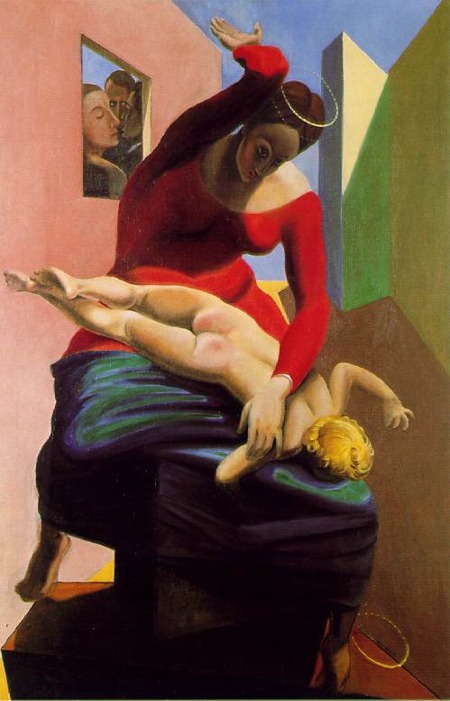 At heart a philosophy of revolution through art, surrealism’s influence reaches from poetry and literature to visual art and film.
Included in the sale was the autograph version of Breton’s Poisson soluble (Soluble Fish). This takes the form of four years’ worth of exercise books in which he experimented with the creative process he called “pure psychic automatism”, reflecting his belief that the creative process should bypass conscious decision-making processes and draw on the Freudian unconscious.
Defining surrealism for the manifesto, Breton stated that it describes a process “in which you attempt to express, in words, in writing, or in any other manner, the real process of thought. A transcription of thoughts without any form of control by reasoning and without any reference to aesthetic or moral considerations.”
Responding to the sale, Michael Sheringham of Oxford University welcomed the news, suggesting that it signalled a renewal interest in Breton as a hugely influential thinker and artist.
“Breton is often written off as the pompous ‘pope’ of Surrealism, but he was actually a writer of the first rank whose work still merits thorough exploration.  The fact that his wonderful 1924 manifesto is priced so highly, while a little ironic given his socio-artistic aims, is a welcome sign.”
Professor Sheringham, who is an acknowledged expert on Surrealist poetry and literature, added that “it is especially appropriate that the manuscripts from Poisson Soluble should have been sold in the same lot as they originally provided evidence that the Surrealism method could be put into practice.”
The manifesto and other documents were being sold for the first time by the estate of Simone Collinet, Breton’s first wife, who died in 1980. The sale was part of large auction of documents from French literary history, including manuscripts by Gustave Flaubert, Paul Verlaine, Simone de Beauvoir and André Gide.
Breton was born in 1896 and died in 1966.
Date Rape At The Sperm Bank
Suit Against Sperm-Bank Firm Claims Sexual Harassment and Cult-Like Behavior
by Graham Rayman
Stuart Miller runs a profitable company with offices in New York and Los Angeles, and which provides surrogate moms to gay couples and houses sperm and egg banks.
 Miller is CEO of Growing Generations, which has been featured in glossy magazines and had two favorable write-ups in The New York Times.
Miller’s least favorable write-up is in a lawsuit recently filed in Manhattan federal court. Scott Glasgow, 40, the company’s former marketing director, claims he was fired in June 2007 after he refused to attend Landmark “personal-growth” seminars and spurned Miller’s amorous advances.
In the suit, Glasgow also claims that Miller required him to share a bed with him on company trips and sent him suggestive e-mails and shirtless pictures of himself in bondage wear, holding a whip. Glasgow is suing under sexual-harassment and religious-discrimination statutes.
Glasgow claims the sexual harassment by CEO Miller began in the fall of 2006 with e-mails. Miller chose Glasgow as his roommate and insisted on sharing a king-size bed with him for both a cruise and a conference in New Orleans. At one point, he says, Miller caressed his head. “It was uncomfortable,” Glasgow says.
“A few days later,” he says, “I could do nothing right. In December, I spent the holidays at [Miller’s] home, and a few months later he fired me.”
Glasgow now works as a waiter.