
South Central Acres
South L.A. backyards are becoming barnyards

Luis Sinco, Los Angeles Times
Barnyard fowl are penned in a chain link enclosure in the backyard of a residence in South Los Angeles. Some area residents complain that their neighborhood is being overrun with roosters. The problem illustrates an ongoing divide in a traditionally black neighborhood that is transitioning into a Latino enclave.
Once predominantly African American, the area has seen an influx of Latino immigrants, along with their roosters, chickens and other barnyard beasts not typically part of the urban scene.
When her neighbor’s roosters and chickens persisted in running through her yard, G. Stone took matters into her own hands. She marched next door and issued a warning: Do something about the uninvited guests or the birds “were going in my pot.” The incursions stopped. But Stone, a retired Los Angeles County librarian who lives northwest of Watts, shook her head in exasperation as she recalled the incident. “I’ve lived here for 50 years,” she said. “All of a sudden, there’s an influx of chickens. You’re not supposed to have chickens in the city.”
For many, the image of South Los Angeles is that of a paved, parched, densely packed urban grid. But increasingly, it is also a place where untold numbers of barnyard animals — chickens, roosters, goats, geese, ducks, pigs and even the odd pony — are being tended in tiny backyard spaces.
 “Most people don’t realize just how many farm animals there are in the city,” said Ed Boks, the general manager of the city’s Animal Services department.
Indeed, about a block from the beauty parlor where Stone was getting her hair done earlier this month, a pair of goats chewed something dark and unidentifiable as they stood placidly near the traffic whizzing by on Avalon Boulevard. A pit bull next door eyed them lazily.
The cacophony of cock-a-doodle-doos south of the 10 Freeway is one of the louder manifestations of a demographic change that has transformed South Los Angeles in the last few decades.
Once primarily an African American community — and still the cultural and political heart of the state’s African American population — the area has absorbed tens of thousands of immigrants from Mexico and Central America and is now predominantly Latino. In Southeast L.A., the black population has dropped from 71% in 1980 to 24% in the 2000 census; the Latino population grew from 27% in 1980 to 74% in 2000.
For some folks, the rooster has become a potent symbol of the way their neighborhood is changing.
“Sometimes, I think it’s Mexico,” said Tony Johnson, who lives in Southeast L.A. He confessed that after being roused early some mornings, he has fantasized about silencing the birds permanently. “Boom. Boom. Boom,” he said, pantomiming how he would do it.
Making love to the helicopter from AIRWOLF
Man admits to having sex with 1,000 cars
Last updated: 1:23 PM BST 21/05/2008
A man who claims to have had sex with 1,000 cars has defended his “romantic” feelings towards vehicles.
Edward Smith, who lives with his current “girlfriend” – a white Volkswagen Beetle named Vanilla, insisted that he was not “sick” and had no desire to change his ways.

“Maybe I’m a little bit off the wall but when I see movies like Herbie and Knight Rider, where cars become loveable, huggable characters it’s just wonderful.
“I’m a romantic. I write poetry about cars, I sing to them and talk to them just like a girlfriend. I know what’s in my heart and I have no desire to change.”
Mr Smith, 57, first had sex with a car at the age of 15, and claims he has never been attracted to women or men.
But his wandering eye has spread beyond cars to other vehicles. He says that his most intense sexual experience was “making love” to the helicopter from 1980s TV hit Airwolf.
As well as Vanilla, he regularly spends time with his other vehicles – a 1973 Opal GT, named Cinnamon, and 1993 Ford Ranger Splash, named Ginger.
Before Vanilla, he had a five-year relationship with Victoria, a 1969 VW Beetle he bought from a family of Jehovah’s Witnesses.
But he confesses that many of the cars he has had sex with have belonged to strangers or car showrooms.
His last relationship with a woman was 12 years ago – and he could not bring himself to consummate it, although he did have sex with girls in his younger days.
“I just loved cute cars right from the beginning, but over the years it got stronger once I got into my teenage years and was having my first sexual urges.

“When I turned 13 and the famous Corvette Stingray came about, that car was pure sex and just an incredible machine. I wanted it.
“There have been certain cars that attracted me and I would wait until night time, creep up to them and just hug and kiss them.
“As far as women go, they never really interested me much. And I’m not gay.”
A man attaches jet engines to his legs and jumps out of a hot air balloon wearing a wingsuit
Literary Adequacy For Dummies
Volumes to Go Before You Die
 The book is British. Of course. The British love literary lists and the fights they provoke, so much so that they divide candidates for the Man Booker Prize into shortlist books and longlist books. In this instance Peter Boxall, who teaches English at Sussex University, asked 105 critics, editors and academics — mostly obscure — to submit lists of great novels, from which he assembled his supposedly mandatory reading list of one thousand and one. Quintessence, the British publishers, later decided that “books” worked better than “novels” in the title.
Even without Milton or Shakespeare, Professor Boxall has come up with a lot of books. Assume, for the sake of argument, that a reasonably well-educated person will have read a third of them. (My own score, tallied after I made this estimate, was 303.) That leaves 668 titles. An ambitious reader might finish off one a month without disrupting a personal reading program already in place. That means he or she would cross the finish line in the year 2063. At that point, upon reaching the last page of title No. 1,001, “Never Let Me Go” by Kazuo Ishiguro, death might come as a relief.
Two potent factors make “1001 Books” (published in the United States in 2006 by Universe; $34.95) compelling: guilt and time. It plays on every serious reader’s lingering sense of inadequacy. Page after page reveals a writer or a novel unread, and therefore a demerit on the great report card of one’s cultural life. Then there’s that bullying title, with its ominous allusion to the final day when, for all of us, the last page is turned.
Public Craving for Real Music Makes Heavy Metal Hip Again
For those about to rock … heavy metal set to be the soundtrack of summer
Iron Maiden, Def Leppard and Kiss among 1980s acts leading genre’s resurgence
Owen Gibson, media correspondent
The Guardian

Gene Simmons of Kiss. Photograph: Fred Greaves/Reuters
Turn the volume to 11 and set the pyrotechnics to stun. For those ageing fans about to rock, perhaps less energetically than before, the concert promoters and marketing men salute you.
This summer will see a slew of 1980s heavy metal acts releasing new material and playing live to hundreds of thousands of ageing rockers keen to swap their suit jackets for faded denim.
In 2007 it was the AOR reformations of the Police, Genesis and the Eagles that sold out arenas around the world and kept the cash registers ringing among loyal older record buyers who still purchase CDs and have the money for expensive concert tickets and merchandise. But this summer it will be a string of  superannuated rockers – including Kiss, Def Leppard, Whitesnake, Meat Loaf, Metallica, Iron Maiden and Judas Priest – who are being relied upon to catch the next wave of nostalgia. Enthusiasts believe a range of factors have led to the long-derided heavy metal genre undergoing a renaissance.
The popularity of the video game Guitar Hero, which requires players to strum along to classic tracks with a plastic axe, has brought classic heavy metal to a new audience.
Meanwhile, vintage heavy metal T-shirts have been a favourite with fashionistas in recent years, and younger artists such as Jimmy Eat World and My Chemical Romance have cited older bands as influences.
“Guitar Hero has had a big impact in bringing these songs to a new generation. iTunes has also had a big effect. However old you are, you want to hear the best music,” said Paul Brannigan, editor of rock magazine Kerrang!
The Download festival, which began predominantly as a home for a wave of so-called nu-metal acts, this year looks more like a retirement home for classic artists.
Kiss, the US group led by Gene Simmons and famed for their iconic makeup, will play their only UK gig of the summer at Donington Park, and Birmingham-born heavy metal pioneers Judas Priest will play their first gig there since Monsters of Rock in 1980.
“It’s suddenly very cool whereas before people wouldn’t dare admit to liking this music,” said Andy Copping, vice-president, music at concert promoter Live Nation.  “More and more people want to relive what they were doing 25 years ago and it’s really taking off for these 1980s acts. For the most part these bands are just unbelievably good live – they put on big, big shows.”
Other older acts to appear at Download include Motorhead, Saxon and Testament. Elsewhere, Iron Maiden – one of the most popular heavy metal acts during the 1980s – have toured almost constantly since frontman Bruce Dickinson rejoined the band in 1999.
He draws a distinction between artists like Iron Maiden and Metallica, who are still attracting new fans, and the likes of Def Leppard and Whitesnake who appeal mainly to their original audiences. Meat Loaf, the singer best known for his Bat Out of Hell trilogy of albums, is also planning to tour this summer.
Many of the acts have reunited not only to play live but also to record new material. Whitesnake recently achieved their best chart placing for 30 years, Judas Priest are planning a concept album with a Nostradamus theme, and the release schedules for this autumn are packed with other rock acts.
John McWhinnie & Glenn Horowitz Open New Shop
Little Shop of Horowitz
By Baylis Greene
|
John McWhinnie, a partner of the bookseller Glenn Horowitz, at the team’s newest outpost in East Hampton, a shop he said was “so small, it’s meant to be a jewel box.” |
 Morgan McGivern
(5/21/2008) It will be a far cry from Steph’s Stuff for the narrow storefront at 38 Newtown Lane in East Hampton. Come Saturday, the formerly cheek-by-jowl Paddington Bears and Snoopys, who long since beat it across the street to new digs, will see their places filled by a different kind of cultural ephemera — a copy of Jack Kerouac’s “Lonesome Traveler” inscribed to Neal Cassady, Mario Puzo’s heavily annotated manuscripts and screenplays, even Francis Cugat’s original artwork for the dust jacket of “The Great Gatsby,” one of publishing’s most famous images.
The new shop will be many things: a sister store to Glenn Horowitz Bookseller at 87 Newtown Lane, an extension of a business on 64th Street in New York called John McWhinnie @ Glenn Horowitz Bookseller, and an expression of the personal tastes of Mr. McWhinnie, an art and rare books dealer who has a house in Northwest Woods. Its name itself is a hybrid: John McWhinnie and Glenn Horowitz Bookseller.
 “This shop is so small, it’s meant to be a jewel box, a showroom, a display space,” Mr. McWhinnie said last week as he paced the still-empty, whitewashed shop. It measures 8 feet wide by 30 feet long, expanding to 11 feet wide at the rear. “There will be 50 books, maximum. I’m a minimalist by training, if not by inclination. One of my overriding concerns here is that it look spare and clean. One thing I’ve always noticed is that the more books there are, the more people miss things.”
“In the city, the majority of the business is in rare books. A $50,000 book that’s sold is never put out on display cases. A store like 87 Newtown Lane,” which he managed from 1998 to 2005, “shows just the tip of the iceberg. The idea here is to show what’s behind the scenes, the absolute cream of the crop” — an Edward Ruscha art book inscribed to Bruce Nauman, other art books by Andy Warhol and Richard Prince decorated with their drawings, Raymond Chandler’s manuscript for “The Long Goodbye,” correspondence between Kerouac and Allen Ginsberg, F. Scott Fitzgerald’s drinking flask, Alberto Giacometti’s leather suitcase.
One thing that’s changed in the rare books business is that rare books often aren’t rare enough. A dealer with a nice Hemingway first edition won’t make it when 20 others offer it as well, Mr. McWhinnie said. “Collectors are looking more and more for the unique — the unique copy that the author inscribed to someone important to them. And Glenn was a pioneer in this.”
Take Fitzgerald, for example. A book Mr. McWhinnie will have in the new shop is “Taps at Reveille,” with an inscription in which the author takes giddy or alcohol-fueled flight:
For Jim Boyd
Statesman, sailor, devoted son of old Eli Wheelright, piano tuner, opthamalogist [sic] and founder of the National Pornographic / from his loyal (over) and devoted constituency
Hung Lee Song
Chief Horse protection
Hdckld Rzhxytche
(Notre Dame ’27)
Bernie Hauptman
and
Father (“Pa”) Coughlin
F. Scott Fitzgerald (sec.)
Baltimore, March 1935
To hold such items, Mr. McWhinnie had Jameson Ellis, a Sag Harbor artist, design and build four maple and aluminum vitrines with innovative spring-loaded pins that allow shelves to lock in an upright position as cases for display.
 THE ATOMIC SUBLIME Jameson Ellis THE ATOMIC SUBLIME Jameson Ellis |
“I did some studio visits with Eric Fischl and David Salle, and I saw a display case and artist’s table he’d done,” Mr. McWhinnie said. “The plexiglass covers are by James Ashley. These are some of the most incredible display cases I’ve seen. The warm wood front and the cold metal” will complement Mr. Ellis’s art in the shop “in mixing the industrial and the handmade.” A new series of his works on paper, with a similar color palette and metal frames, will hang above the vitrines.
The two Newtown Lane shops will also complement each other. “Three shows at 87 Newtown are planned for the summer, and we will have a related selection here,” Mr. McWhinnie said. “When we open on Saturday, there will be a David Levinthal show down the street. The reception here will point people to the new show.”
“We found that people often didn’t cross the barrier to get to the old store,” he said of the no man’s land that starts with the middle school and Herrick Park. Now there’s a cultural bridge.
“A little ironic given his socio-artistic aims”
Surrealist Manifesto sold for real money
Guy Dammann
guardian.co.uk
 Surrealist founders Paul Éluard, André Breton and Robert Desnos. Photograph: Corbis |
 |
“All my life, my heart has yearned for a thing I cannot name.” Had this yearning been for money, rather than revolutionary art, André Breton would today have seen his dream realised, on learning that a selection of his personal effects have been sold at auction in Paris for a total of €3.6m (£2.9m).
The price for the documents, including the only known original copy of the Surrealist Manifesto, exceeded all previous estimates after a bidding war in Sotheby’s Paris auction house. The nine manuscripts were eventually acquired by Gérard Lhéritier, a noted collector and the founder of the Museum of Letters and Manuscripts in Paris, assuaging fears the collection would be split up and sold separately. Previous estimates suggested the Manifesto would be sold separately for a value between €300,000 and €500,000 (£240,000 to £401,000).
Breton’s 21-page Surrealist Manifesto was the defining document of an artistic movement that in many ways defies definition.  At heart a philosophy of revolution through art, surrealism’s influence reaches from poetry and literature to visual art and film.
Included in the sale was the autograph version of Breton’s Poisson soluble (Soluble Fish). This takes the form of four years’ worth of exercise books in which he experimented with the creative process he called “pure psychic automatism”, reflecting his belief that the creative process should bypass conscious decision-making processes and draw on the Freudian unconscious.
Defining surrealism for the manifesto, Breton stated that it describes a process “in which you attempt to express, in words, in writing, or in any other manner, the real process of thought. A transcription of thoughts without any form of control by reasoning and without any reference to aesthetic or moral considerations.”
Responding to the sale, Michael Sheringham of Oxford University welcomed the news, suggesting that it signalled a renewal interest in Breton as a hugely influential thinker and artist.
“Breton is often written off as the pompous ‘pope’ of Surrealism, but he was actually a writer of the first rank whose work still merits thorough exploration.  The fact that his wonderful 1924 manifesto is priced so highly, while a little ironic given his socio-artistic aims, is a welcome sign.”
Professor Sheringham, who is an acknowledged expert on Surrealist poetry and literature, added that “it is especially appropriate that the manuscripts from Poisson Soluble should have been sold in the same lot as they originally provided evidence that the Surrealism method could be put into practice.”
The manifesto and other documents were being sold for the first time by the estate of Simone Collinet, Breton’s first wife, who died in 1980. The sale was part of large auction of documents from French literary history, including manuscripts by Gustave Flaubert, Paul Verlaine, Simone de Beauvoir and André Gide.
Breton was born in 1896 and died in 1966.
Date Rape At The Sperm Bank
Suit Against Sperm-Bank Firm Claims Sexual Harassment and Cult-Like Behavior
by Graham Rayman
Stuart Miller runs a profitable company with offices in New York and Los Angeles, and which provides surrogate moms to gay couples and houses sperm and egg banks.
 Miller is CEO of Growing Generations, which has been featured in glossy magazines and had two favorable write-ups in The New York Times.
Miller’s least favorable write-up is in a lawsuit recently filed in Manhattan federal court. Scott Glasgow, 40, the company’s former marketing director, claims he was fired in June 2007 after he refused to attend Landmark “personal-growth” seminars and spurned Miller’s amorous advances.
In the suit, Glasgow also claims that Miller required him to share a bed with him on company trips and sent him suggestive e-mails and shirtless pictures of himself in bondage wear, holding a whip. Glasgow is suing under sexual-harassment and religious-discrimination statutes.
Glasgow claims the sexual harassment by CEO Miller began in the fall of 2006 with e-mails. Miller chose Glasgow as his roommate and insisted on sharing a king-size bed with him for both a cruise and a conference in New Orleans. At one point, he says, Miller caressed his head. “It was uncomfortable,” Glasgow says.
“A few days later,” he says, “I could do nothing right. In December, I spent the holidays at [Miller’s] home, and a few months later he fired me.”
Glasgow now works as a waiter.
This is how it goes when you’re a person of the 20th Century
ALL THE NEWS THAT’S FIT TO SQUINT
If the New York Times disappears, will the world survive? DAVID BLUM ponders a future without ink stains.
Gay Talese won’t go online, bless his ornery old-fashioned soul. He answers his phone like people used to (he’s listed in the phone book and it’s a land line, remember those? Riiiiiiiiiiiiiiiing! Riiiiiiiiiiiiiiing!) and says “Hello?” and if you have a request he’ll ask you to please fax it to him, because, yes, Gay has progressed into the modern  era far enough to own a fax machine, he doesn’t mind that particular whirring contraption, probably because it involves paper and the ringing of a phone…it’s like a Dixie cup and a string, only longer, looser, lighter than air, the connection invisible yet somehow tangible. He rises every morning and paws through the newspaper with the diligence of an obedient journalism student and checks his mailbox for letters with stamps on them (and there will be letters; people write to Gay Talese; I did when I was a young starry-eyed reporter; wouldn’t you if you were?) and puts on an elegant Italian suit and, often, a wide-brimmed hat to match. He walks the streets of his Upper East Side neighborhood with the gait of a go-getting reporter, because he still is one, and he presses his opinions on people with the passion of a high-school debate team captain, only with more grace, more wit, more aplomb. Yes, the man has aplomb.

The Need For Cultural Gatekeepers (According to Salon)
Who killed the literary critic?
In the age of blogging, great critics appear to be on life support. Salon’s book reviewers discuss snobbery, how to make criticism fun and the need for cultural gatekeepers.
By Louis Bayard and Laura Miller
Read More: Books, Laura Miller, Newspapers, Criticism, Novels, Books Features, Bloggers
May. 22, 2008 | Has the role of the professional critic become obsolete in an age of book clubs, celebrity endorsements and blogs? A new book, “The Death of the Critic,” says no, and argues that there are still reasons to regard some opinions as better than others. We asked Salon’s own book reviewers, Louis Bayard and Laura Miller, to consider its case.

Louis Bayard: The signs are ominous, Laura. Book reviews are closing shop or drastically scaling back inventory. Film critics at newspapers all over America are getting tossed on their ears. TV reviewers are heard no more in the land. All the indicators suggest that America’s critics are becoming an increasingly endangered species.
Or maybe something a little more than endangered, judging from the title that’s just come across our desks: “The Death of the Critic.” Ronan McDonald, the author, is a lecturer in English and American studies at Britain’s University of Reading, and he’s particularly exercised by what he sees as the loss of the “public critic,” someone with “the authority to shape public taste.” It’s only in the final chapter that the mystery behind the critic’s disappearance is solved. The culprit is none other than … cultural studies! (With a healthy assist from poststructuralism.) By treating literature as an impersonal text from which any manner of political meaning can be wrung, cultural studies professors have robbed criticism of its proper evaluative function — the right to say this is good, this isn’t, and here’s why.
So, Laura, it seems that, if we aren’t quite dead, we critics are on something like life support.
James Frey’s BRIGHT SHINY MORNING Hits NYT Bestseller List
Frey Number 9 on Times Bestseller List; First Week Sales at Around 14,000

The numbers are in: James Frey’s Bright Shiny Morning, published by the flagship imprint of HarperCollins on May 13th, sold 14,343 copies in its first week, putting it at number nine on the New York Times Bestseller List. (It should be noted BookScan only tracks 70% of total sales.)
We hear HarperCollins is pleased.
SENTENCES and THE BOOK BENCH
Harpers and The New Yorker Both Have New Book Blogs

Because heaven knows the world needs more book blogs, the New Yorker now has a blog called The Book Bench, named after their office’s discarded-book pile (pictured). And Harpers now has Sentences. The latter, so far, is pretty super—entirely the work of contributing editor Wyatt Mason, it features long, discursive entries about recent reading and original reporting about Jonathan Franzen‘s recent public chat with James Wood at Harvard. The Book Bench, so far, has long linkdumps and posts about recent lit news with punny headlines like “A Pose for Emily [Dickinson]” and “Pain in the Library.” There’s also an odd, snobby post entitled “Bookspotting” that makes fun of an overheard conversation between an “Edie Falco look-alike” and a friend in a fancy Tribeca restaurant, about how reading books on tape are easier than reading “all that text.”
DASSdance presents Poor Man’s Boogie

DASSdance boogyin’ to aid underprivileged kids
DASSdance presents Poor Man’s Boogie
Thurs-Fri May 22-23, 2008, 8pm
37 Arts – Baryshnikov Arts Center
Howard Gilman Performance Space, 4th Floor
New York, New York 10018
$15 General Admission
www.paperbrowntickets.com/event/33409
Poor Man’s Boogie is Daniel Wilkins’ sixth full-length premiere for his athletic and no-holds-barred company of eight dancers. Motivated by his personal experiences as an artist struggling with the harsh reality of continual financial instability, Wilkins’ newest project, Poor Man’s Boogie takes on poverty and isn’t afraid to take its cause out into the real world.
University Settlement will host a special presentation of Poor Man’s Boogie for participants of The Beacon, the Settlement’s free after-school program for children and teens providing arts classes, sports, and tutoring.  In addition, DASS will collect donations during its performances at Baryshnikov Arts Center on behalf of the Performance Project at the University Settlement. The Performance Project brings innovative performing arts to the immigrant-heavy and low-income families of the Lower East Side at an affordable price.
Poor Man’s Boogie is a work that confronts the confinement of the lower class across the rural and urban landscapes of America. Hardship and struggle mingle with and motivate desperate schemes to climb the social ladder. Dependency and lack of social support are frictions exploding in outbursts of resentment and abuse. Wilkins’ treatment of poverty is unashamedly irreverent, showing a milieu of recognizable characters on the edge of extreme situations incurred from a relentless cycle of hunger, powerlessness, and violence. Using a multi-media approach to immerse its audience in this world, the work samples from music that has been the creative fruit of such struggles throughout American history, such as jazz, blues, and hip-hop. It also incorporates footage of the New York subway and rural homesteads of Eastern Washington to assist this compelling story.
A short Q&A with Artistic Director Daniel Wilkins and company dancers will follow each performance.
Warning: Poor Man’s Boogie contains adult language, mild adult content, and intense situations that may not be suitable for some children.
Fighting Over Cocks Fighting
from the AP via SiliconValley.com
Magazine in cockfight dispute agrees to stay off Amazon
Article Launched: 05/21/2008 07:29:51 AM PDT
SEATTLE – A magazine that the Humane Society of the United States says promotes cockfighting has agreed to ask Amazon.com to stop selling its publication online.

In the lawsuit, the Humane Society accused the online retailer of violating federal animal cruelty laws by selling The Gamecock and The Feathered Warrior, which the group described as cockfighting magazines.
Marburger Publishing Co., which publishes The Gamecock, agreed to settle with the Humane Society because it was a way to remove itself from the case, but the publication does not promote cockfighting or violate a federal ban on the bloody sport, said attorney Ali Beydoun of the law firm Carr Maloney.
 A recent federal law added felony-level penalties for activities promoting or encouraging animal fighting. The Animal Fighting Prohibition Act of 2007 also made it a felony to knowingly sponsor or exhibit an animal fight, or to buy, sell or transport knives, gaffs and other weapons used in cockfighting.
Cockfighting is illegal in every state except Louisiana, where a legislative ban goes into effect in August.
Lovvorn called The Gamecock “the oldest and best-known cockfighting magazine in the United States.”
Beydoun described the magazine as appealing to “chicken aficionados,” focusing on animal care and stories about people who raise chickens and game birds.
 “It’s a hard magazine to come by. It’s not as available as People magazine or Vanity Fair,” he said.
About the only places a chicken lover could buy the publication are at an animal feed store or via Amazon, where the publication was offered by a magazine distributor, not the publisher, said Barry A. Fisher, of the Los Angeles law firm Fleishman & Fisher, which also represents Marburger Publishing.
Fisher said the lawsuit isn’t really about The Gamecock or The Feathered Warrior.
“Their real target is Amazon,” he said.
Boneheads With Occasionally Lethal Weapons
‘Boneheads’ shoot each other with Tasers in fight over wheel clamp

Harvey Epstein, a restaurateur, and Casey Dane, a security supervisor, gave each other a simultaneous 50,000-volt jolt after an argument over the clamping of Epstein’s van spiralled out of control.
Colorado state police said neither man needed medical attention, but Epstein was arrested on suspicion of menacing and using a stun gun.
The incident happened on Saturday night outside Mamacita’s Restaurant in Boulder, Colorado after a van parked behind Epstein’s restaurant was clamped by a guard working for a security firm of which Dane is a supervisor.
Dane said Epstein, whose mother was with him, had tried to remove the clamp with bolt cutters and threatened a guard that he would “kick his ass” while holding a pair of bolt cutters above the guard’s head.

The 36-year-old restaurateur denied this, saying it all started when Dane put his hand on a holstered pistol and threatened to shoot him.
He claimed to have only drawn his Taser and fired after Dane aimed his own Taser at his mother’s face.
“(The guard) pointed a stun gun at my mother’s face and I immediately responded with my personal Taser,” Epstein told his local paper, the Camera, on Sunday evening within an hour of being released from Boulder county jail. “We shot each other at the same moment.”
Dane told police he reached for his Taser after Epstein refused to drop the bolt cutters, and only pointed the Taser at the woman after she picked up her son’s stun gun, which still had its probes buried in his skin.
Pat Wyton, a Boulder police sergeant, told the paper: “It was just kind of a bonehead deal. They shot each other.
“The security guard was in the right – he felt threatened.”
Historic West Adams Mural Plea To Gangs & Taggers

WEST ADAMS: Nothing like politely asking. This mural going up on Adams also had another note, asking bloggers not to post any photos of the artwork itself on the web (until its finished). Fair enough. So this shot only shows the note–the mural is to the right. [Curbed Staff]
Observer Review: Bright, Shiny and Long
Bright, Shiny and Long
James Frey’s first novel lulls L.A. into familiar territory
BRIGHT SHINY MORNING
By James Frey
Harper, 501 pages, $26.95
I WASN’T FAR INTO James Frey’s debut novel, Bright Shiny Morning—around page 50 of 501—when I felt a sense of déjà vu. The words weren’t stolen, but the story suddenly seemed so familiar.
 This particular Carveresque passage described a married couple, Tammy and Carl, who live in a trailer park in the Pacific Palisades. They’d gotten pregnant young and come west from Oklahoma, dreaming of living near the beach. They had a bunch of kids who all grew up to be successful, but Tammy and Carl stayed in their trailer, sharing views of Malibu that others paid millions for. “Like hundreds of thousands of people a year,” writes Mr. Frey, “[they] came to Los Angeles to make their dreams come true. Sometimes it happens.”
A song started looping in my head: “Into the Great Wide Open,” by Tom Petty. (It’s a song about a couple in L.A.—aren’t all Tom Petty songs about L.A.?—trying to make their dreams come true.) Later, at Mr. Frey’s mention of Reseda, a district in the San Fernando Valley, Mr. Petty’s “Free Fallin’” took over (“It’s a long day, living in Reseda/ There’s a freeway, runnin’ through the yard.”)
That was it: James Frey’s book is one very long Tom Petty song.
And like a Tom Petty song—which is quite repetitive and predictable but which also sticks in your head in such a way that it becomes inextricably linked to some memory from your teens or 20s, of driving to Ocean City or to a football game or to a really good party—Mr. Frey’s book will stick with you, too.
BRIGHT SHINY MORNING ISN’T a great book, though it is, as Sara Nelson wrote in Publisher’s Weekly, “un-put-downable.” Mr. Frey’s other books—the scandal-making memoir A Million Little Pieces (2003) and the quite obviously embellished follow-up, My Friend Leonard (2005)—were similarly addictive. His books are like crappy movies on a Sunday afternoon; you think, well, if I don’t like it, I don’t have to watch it. But then, you don’t really have anything else to do, and you get hooked—after 20 minutes, you have to know what happens to the druggie teenager—and, really, it’s only a few hours of your life. (Despite the length, the novel only takes an afternoon to read. More on that shortly.)
Still, Bright Shiny Morning isn’t very pleasurable. As always, Mr. Frey is obsessed with brutality, and few in his sprawling book escape to safety. There are four main stories: a superfamous Hollywood couple with a secret (their marriage is a sham—he’s gay and she’s bisexual); a young couple from Ohio escaping abusive families; a homeless man in Venice living an ethical, if drunk, life; and a young, smart Mexican-American woman working for an old, tyrannical white lady in Pasadena. All of these stories are crazy with violence.
Of course, that’s what makes the book a page-turner: Will Old Joe live after being assaulted by a bunch of meth heads? Will Dylan come back after being abducted by a biker gang? Will Amberton really order his lover’s mother to be killed? We have to know the answers to these questions, and Mr. Frey’s minimalist style is lighter than the breeze. At the same time, the stories are so over-the-top, the violence so grotesque, that it’s hard to take any of it very seriously. Which is unfortunate: Mr. Frey doesn’t intend for his novel to be read as a satire but rather as a hyper-realistic, this-is-the-way-it-is-out-there-motherfucker portrait of Los Angeles. He really believes that the world is relentlessly ugly. It isn’t.
BACK TO TOM PETTY, WHO tends to strike a more melancholy note in his odes to L.A. than Mr. Frey. Both trade almost entirely in stereotypes—that’s why Bright Shiny Morningfeels so rote.
Of course the Mexican-American woman gets sidetracked from going to college and has to work as a housekeeper—and for a woman of particular cruelty and fierce physical strength. And of course the young couple from Ohio gets pregnant. Of course the big movie star is secretly gay. And of course the homeless guy has a heart of gold. These characters are supposed to be revelatory in some way, their stories tragic and shocking. But they’re just what we’ve heard a million times before. Girl moves to Hollywood to be an actress; girl ends up in porn. Boy moves to Hollywood to break into TV; boy ends up a junkie.
Mr. Frey writes like he’s sharing these stories for the first time. In a way, it’s charming, and the book’s insistence on its own importance is part of what keeps you reading. You can’t shake the hope that Mr. Frey will surprise you. But he doesn’t. Every story turns out just as you expect.
SPRINKLED AMONG THE four main stories and countless other mini-profiles of unnamed, central-casting sorts of characters are facts about the county of Los Angeles. In the beginning, full pages sport three or four lines of text noting some fact about the area (all that white space is one reason why the book is such a snap to read); later, Mr. Frey gets more ambitious, writing long descriptive passages about various neighborhoods.
Although he slaps a disclaimer upfront (“Nothing in this book should be considered accurate or reliable”), these “fact” passages are a real problem. Yes, it’s a novel, and in a novel—as Mr. Frey was reminded time and again after the controversy over A Million Little Pieces—you can make stuff up. But not really—not if your book is clearly meant to be a sweeping history of a certain place. And given Mr. Frey’s track record, there are obvious questions looming: How accurate are these “fun facts,” as he calls them? What are his sources? It doesn’t help that long passages read just like Wikipedia entries.
Bright Shiny Morning isn’t the disaster some Frey-haters probably hoped for, but it’s not special, either. A supposedly honest look at the nastiness of human nature, written without punctuation (though there’s more than you’d think!) and a fake urgency that should lead somewhere new, the novel merely manipulates you into doing exactly what James Frey wants. He leads you into the hills high above Hollywood, shows you the most spectacular view of the hideousness that is Los Angeles, and then abandons you to make the only choice you can: to jump.
Hillary Frey (no relation) edits the culture pages of The Observer. She can be reached at hfrey@observer.com.
Bright Shiny Softballs
LAT Launches Some Bright, Shiny Softballs at James Frey

James Frey has already received a public caning. So (unless we get some comped ring-side seats) we don’t need to see another one. But still, the LAT piece on the front page acts as if “Pieces” was The Blair Witch Project and more of a hoax than a fabrication.
Is it because his new book is celebrating LA in literature and since Charles Bukowski isn’t around anymore we’ve been deprived of that?
From LAT:
“I’m definitely more humble, I’m definitely more contained, I’m definitely living a quieter life,” Frey said, popping one of many pieces of nicotine gum. “I’m just really grateful to have a book coming out. It’s similar to ‘A Million Little Pieces’ — I was just so excited to have a book coming out. It’s awesome. I write about L.A. as the city of dreams, and this is another dream . . .
New UK Site
My UK Publisher just put up a new site. Check it out if you have time. This one isn’t going anywhere, now you just have an option.

More Doodles For A Good Cause

Here’s a drawing by actress Anne Hathaway, accompanied by a catchy little poem.
Credits: Fevelo for News Published: 05/21/2008 04:00:00
[ click to view full slideshow at NYDailyNews.com ]
[ click here to view James Frey’s Doodle ]
[ click here to view a list of all the celebrities who doodled this year ]
New Carnival Ride for The Simpsons Opens At Universal Studios

Sadly, Connie Cassidy of Ireland doesn’t measure up to the 40-inch height requirement to enter the new Simpsons Ride at Universal Studios Orlando.
Suicide By Tide In The Most High-Stress Society In The World
‘Detergent Suicide’: Deadly Fad Rattles Japan
Dangerous ‘Gas Suicide’ Trend Puts Bystanders at Risk
The volunteer staff at the Suicide Prevention Center in Tokyo spent this year’s “golden week” holidays in early May taking calls from those who wanted to kill themselves.

Japanese health officials note a disturbing increase in “gas suicides.”
(Getty Images)
“We set up a special hot line during golden week this year,” said Yuzou Kato, the director of the center, referring to the popular annual bash of four national holidays packed into a single week. “We wanted to put a stop to the increasing number of gas suicides, which have been spreading all over Japan.”
The Japanese epidemic of suicides has become particularly lethal in the last year with the introduction of a new method: mixing store-bought detergents and chemicals to create toxic hydrogen sulfide gas. The gas almost always kills and sometimes the victims of the poisonous fumes are passers-by or rescue personnel.
Japan’s Fire and Disaster Management Agency said 145 such suicide cases have been reported in the last few months, killing 136 and injuring 188 others. Kato said many callers had started to talk about this gas method in the last year.
Japan already has one of the highest suicide rates in the world. The number of suicides reached 30,000 in 1998 and has not gone below that number for nine consecutive years.
James Frey’s Nightmare Morphs into a Calif. Dream
James Frey’s Nightmare Morphs into a Calif. Dream
Listen Now [9 min 0 sec]
Day to Day, May 20, 2008 ·Fabricator, fraud and fake — author James Frey tends to inspire F-words with ferocity. All because of what he describes as a “a really, really bad year at work.”
 “Frankly at this point, I don’t think it matters,” Frey shrugs two years later in an interview with NPR’s Madeleine Brand. “A Million Little Pieces is a book and people are either going to read it and enjoy it, or not. I feel like I’ve acknowledged the mistakes I’ve made and I’ve learned from them and I’ve moved on.”
As he’s moved on, he’s parted ways with his troublesome friend, “fact.” His new book,Bright Shiny Morning, a work of fiction, begins with the inscription, “Nothing in this book should be considered accurate or reliable.”
Problems with Accuracy and Reliability
Frey’s well-documented “bad year” began when entertainment Web site The Smoking Gun went searching for his mug shot and stumbled on a number of inaccuracies in his memoir, A Million Little Pieces.
Less than a month later, Oprah — the woman who had helped turn him into a best-selling author — was confronting him on national television about specific details in his book. In it, Frey vividly recounts his drug and alcohol addiction, including 87 days in jail. Under Oprah’s public scrutiny, however, he sheepishly clarified that it was actually just a few hours. The live audience punctuated the grillfest with hisses and boos. And that was just Chapter One.
Frey has attempted to rebuild himself against a backdrop of Los Angeles. He calls his new novel “a love letter that acknowledges the city has its faults and has things that aren’t great, but it’s still a love letter.”
Frey follows four main narratives and jumps in and out of the lives of dozens of characters. He calls his main characters “Los Angeles archetypes.” Critics call them stereotypes: a Mexican American maid, a homeless beach bum, a handsome movie star and a newly arrived couple from small-town America. All are trying to live out their Los Angeles dreams amid gridlock, gangs, poverty and racism.
Frey sold the idea for Bright Shiny Morning before the memoir controversy, but his contract was canceled. He decided to follow through with the book idea, but he says what happened in 2006 influenced the way it was written.
“It did make me value hope more, the idea of dreams more. I’ve had dreams come true; I’ve had dreams explode … and I think L.A. is a symbol of it around the world,” he says. “When people think of L.A., they think, that’s where you go! And that’s whether your dream is international superstardom or your dream is a green card and a job.”
Frey could not entirely resist the allure of fact. Between chapters, he employs little doses of L.A. history as a palate cleanser. According to Frey, his publisher “freaked out,” making him write a 38-page report sourcing every fact. Frey calls it “the most heavily vetted novel, maybe, in history.”
Right now, however, Bright Shiny Morning is in the top 40 on Amazon, making “fiction” an F-word that Frey can feel good about.
Sweet Home Alabamagrad
from Dr. Jack Wheeler’s TO THE POINT
| ROCKING RUSSKIES |  |
 |
| Written by To The Point News
Prepare yourself for this one – maybe with a Stoli martini or two. Back in the days of the Soviet Union, the Soviet Red Army had an official choir composed of male soldiers and musicians. It still exists. The Red Army Choir performs throughout Russia to this day. Now consider the Finnish rock band called The Leningrad Cowboys. A little while ago, they held a concert in Russia, in which – to the screaming applause of Russkie teen-agers – they got the Red Army Choir to join them on stage for a performance of “Sweet Home Alabama.” In English. You couldn’t make this up. We’re talking seriously off the wall here. Better have that Stoli ready when you watch it: |
LA Times: James Frey Rises From The Ashes
James Frey rises from the ashes

Robert Gauthier / Los Angeles Times
Author James Frey is promoting the release of his latest novel “Bright, Shiny Morning,” a book about life in Los Angeles.
He’s trying to step clear of ‘A Million Little Pieces’ as he publicizes his novel.
JAMES FREY was back in his old neighborhood, strolling happily along the Venice boardwalk, enjoying a sunny day in a T-shirt and aviator shades as he passed tattoo shops and a man who was selling what he claimed to be “philosophy.” It doesn’t get any better than this, Frey’s body language seemed to say.
“This,” Frey, 38, said. “This doesn’t exist in New York. This weather — it’s like this in Venice all year. Never that hot here because of the ocean. I mean, dude, every day — all year.”
That’s when he bumped into an old neighbor, who still lives across from the house where Frey wrote the 2003 book, “A Million Little Pieces.”
“Jesus! I thought you won the Nobel Prize for literature!” shouted Marvin Klotz, a retired English professor, hanging out on a bench with some friends. He’d seen all the recent press. “Newsweek! Time! Vanity Fair!”
“Washington Post, I got a good one,” said Frey, who talks through his nose with a bored-guy flatness.
Frey could have been just another local boy made good. Then Klotz, a dead ringer for Jerry Garcia and Albert Einstein, introduced the writer to another friend as “the disgraced James Frey!”
“The most notorious author in America,” Frey offered, smiling his crooked smile.
They all cracked up, laughing in the seaside sun.
There was a time, not too long ago, when Frey’s travails were no laughing matter. “A Million Little Pieces” became a critical hit and a huge bestseller. Bret Easton Ellis called it “a heartbreaking memoir defined by its youthful tone and poetic honesty”; Pat Conroy dubbed it “The ‘War and Peace’ of addiction.”
“If I can get myself a set of drums, I’ll play at the Troub”
a video short by Wil Robinson of Greg Handbeck,
25 year resident of Hollywood who’s “doin’ all right”
After the public tongue-lashing…
Will You Read the New James Frey Book?
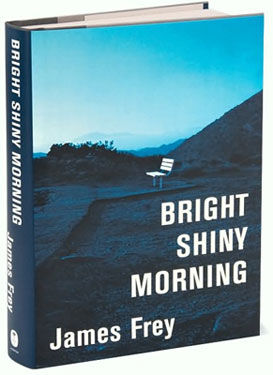 Soon after Oprah chose James Frey’s A Million Little Pieces for her book club, the memoir became a bestseller. But then it was revealed that Frey had exaggerated and even made up pivotal plot elements and characters in his “memoir.” Not only was Frey humiliated in the publishing world, but after Oprah dragged him onto her couch for a difficult-to-watch public tongue lashing, many figured the man would never work again.
Well, he did work again. Frey wrote a novel called Bright Shiny Morning (on bookshelves today) that was given a glowing review by the New York Times in which the reviewer wrote, “He got another chance. Look what he did with it. He stepped up to the plate and hit one out of the park. No more lying, no more melodrama, still run-on sentences still funny punctuation but so what. He became a furiously good storyteller this time.”
That is the kind of review that is hard to come by for any author, much less one whose career hit rock bottom in a swirl of controversy and who managed to enrage the queen of book clubs. I have to say I’m intrigued by this excellent review.
How do you feel about checking out a new book by James Frey?
Will You Read the New James Frey Book?
Thief In The Temple
Thief in the CNN mailroom!
It appears that the CNN mailroom has an entrepreneur who, rather than schlep stolen books down to the Strand bookstore for some cold hard cash, is selling them on eBay. This just came in through the Galleycat tipwire:

This was sent out by Brian Sack, author of In the Event of My Untimely Demise via the book’s Facebook page. It’s funny but definitely must be maddening from an author’s standpoint at the same time: “I received an email from someone who bought IN THE EVENT OF MY UNTIMELY DEMISE from a third party vendor on Amazon. He was curious why his new book was signed with a note to a guy named Evan. First I thought I was being pranked. How could someone buy my book on Amazon and receive a copy that I’d personally signed and mailed to Evan, a producer at CNN? Too weird. But I emailed Evan – and he said he’d never received the book. Hmm. We did a little Sherlock Holmesing and came to realize that someone in the TimeWarner/CNN mailroom is actually stealing books that arrive in the mail and re-selling them on Amazon. Isn’t that great? They didn’t bother to open the book and notice that I’d signed it to someone. Now Evan’s working hard to find the thief and teach him or her a valuable lesson in sudden occupational reassignment.”
This certainly makes a good argument to follow up on books that you send out.
Solid Action Love Partner
a silent short by Walter Williams
Transcript from WaPo Chat with James Frey
read full transcript at the WashingtonPost’s Book World
Book World: ‘Bright Shiny Morning’
Controversial Memoirist Turns to Fiction
James Frey
Author
Tuesday, May 20, 2008; 3:00 PM

 A transcript follows.
Join Book World Live each Tuesday at 3 p.m. ET for a discussion based on a story or review in each Sunday’s Book World section.
____________________
James Frey: Hi, this is James Frey. I’m happy to be here today with you and the Washington Post. Thanks to the Post for having me and you for checking this out. Hope you have fun, have a good day.
_______________________
Los Angeles, Calif.: Good morning and thanks for taking my question. I’m a native Angeleno, but also interested in New York City. I’m wondering how you would compare the two cities since you lived in LA and now live in New York. What would you say are the advantages and disadvantages of each? Do you prefer one over the other?
Thanks.
James Frey: I love both cities. They are totally different. Everything is centralized in NY, nothing in LA. The weather stinks in NY, great in LA. One is much faster than the other. I could live or be happy in either.
_______________________
W. Orange, N.J.: Bright Shiny Morning = Edgar Lee Masters + John Dos Passos + Nathanael West. Fair enough?
James Frey: I’ll certainly take it. Thank you very much.
_______________________
Washington, D.C.: I am so looking forward to reading your book. I truly enjoyed “A Million Little Pieces” and “My Friend Leonard.” I am sure a lot of thought and editing goes into the process, but it seems so “stream of consciousness.” How much of it actually is your stream of consciousness and how much is a “writing style?”
James Frey: Thank you.
The books are written very deliberately. Sometimes it comes easily, sometimes not. Either way, I try to be very careful about the words and the punctuation, or lack thereof. I also never really read my own writing, so I try to make it perfect the first time through.
_______________________
Memphis, Tenn.: James, how are you enjoying your reading tour so far?
James Frey: I’m having a ball on my tour. The events in NY, LA and SF were awesome. It’s great to be out there again, I feel very lucky to be doing it.
_______________________
New York, N.Y.: Why would anyone want to read anything this fraud has to write? I only wish he left our good city and crawled under the rock from where he came.
James Frey: I hope we meet someday so I can shake your hand and give you a big hug.