
Kevin Teare: Bumpology, the Clinton Years @ Glenn Horowitz Bookseller

Kevin Teare: Bumpology, the Clinton Years
June 28 through August 3, 2008
Glenn Horowitz Bookseller is pleased to announce an exhibition of paintings by Kevin Teare. Teare admits to a perhaps unhealthy level of preoccupation with covert U.S. history, English rock bands from the 60s, and other matters pop or political. You wouldn’t immediately know it to look at his paintings – gorgeous abstract compositions of shape and color floating on pale expanses of primed canvas—but titles like There Are Exactly 57 Reds (for John Frankenheimer), which alludes to both a notorious quotation from Senator Joe McCarthy and to Frankenheimer’s film The Manchurian Candidate, suggest that Teare’s paintings are operating on other levels besides those immediately apparent. Visit our website for more information.

87 Newtown Lane
East Hampton, NY 11937
P: 631.324.5511
www.ghbookseller.com
Art Gallery & Bookshop
Mon thru Sat: 10am to 5pm
Sun: 12pm to 4pm
Closed Wed & Thurs, Oct thru April
Carlin Gone
COMEDIAN GEORGE CARLIN DIES AT 71 IN LOS ANGELES
7 minutes ago
Comedian George Carlin, a counter-culture hero famed for his routines about drugs and dirty words, died of heart failure  at a Los Angeles-area hospital on Sunday, a spokesman said. He was 71.
Carlin, who had a history of heart problems, died at St. John’s Health Center in Santa Monica about 6 p.m. PDT (9 p.m. EDT) after being admitted earlier in the afternoon for chest pains, spokesman Jeff Abraham told Reuters.
Known for his edgy, provocative material, Carlin achieved status as an anti-Establishment icon in the 1970s with stand-up bits full of drug references and a routine about seven dirty words you could not say on television. A regulatory battle over a radio broadcast of his “Filthy Words” routine ultimately reached the U.S. Supreme Court.
(Reporting by Dean Goodman; Editing by Patricia Zengerle)
Ten-Hanging Fans of ‘Amistad’ Star Beat Paparazzo With His Own Stick
Violent Surfers Shred Paps Over McConaughey
A group of surfers just got gnarly on a group of paps — all over photos of beach king Matthew McConaughey!
Around 12 photographers were on the beach in Malibu this afternoon trying to get shots of Matty hitting the surf, when an all-out smackdown was laid on the pappers by turf-protecting surfers.
One pap was hit in the face and we’re told suffered a broken nose, while another was thrown into some rocks and had his camera smashed. McConaughey was not involved in the ruckus.
Police tell us a battery report was filed by one photographer and no arrests have been made.
A rep for Matthew has yet to get back to us.
My Little Dog Lucy & The Blonde
 I pulled into the crowded parking lot at the Super Wal-Mart Shopping Center and rolled down the car windows to make sure my little dog Lucy had fresh air.
She was stretched full-out on the back seat and I  wanted to impress upon her that she must remain there. I walked to the curb backward, pointing my finger at the car and saying emphatically, ‘Now you stay. Do you hear me?’ ‘Stay! Stay!’
The driver of a nearby car, a pretty young blonde lady, gave me a strange look and said,…
“Why don’t you just put it in park?”
Massive Vangelis
Massive Attack, Vangelis and other replicants
Massive Attack’s memorable rendering of Vangelis’ Blade Runner soundtrack with the Heritage Orchestra helps the movie legend live on
June 19, 2008 12:30 PM

A still from Ridley Scott’s Blade Runner. Photograph: The Kobal Collection
On Tuesday, as part of the Meltdown festival they’re curating, Massive Attack mixed Vangelis’ original score of Blade Runner with the 45 piece Heritage Orchestra. The triumphant event marked yet another appearance of the infamous score in the pop culture zeitgeist.
The mythology surrounding Blade Runner is well known: the movie being re-cut at least seven times; Scott being fired by the producers of the film but continuing to work on it  regardless; the notorious original release, which featured a Harrison Ford voiceover dubbed in pre-production and with unused scenes from Kubrick’s The Shining spliced into the closing scenes. Yet the soundtrack, too, is the subject of legend. Like the movie, it has been released and re-released with more and more extras added but, unlike the movie (a seven DVD box set was released last year), it remains far from complete.
Though trailed on the credits of the original theatrical release, the full soundtrack was never released. Instead, the producers got the New American Orchestra to arrange Vangelis’ original score. However, the last 25 years have seen the emergence of a cottage industry of bootleggers releasing the Vangelis version. Over 25 known versions exist in some form or other (some even more complete than the recently released three CD box set) and there is a blog where you can hear them.
The reason why Vangelis withheld the score has never been adequately explained, beyond his vague remarks upon the re-release in 1994 score about “finding myself unable to release these recordings at the time”. Some point to Scott’s use of other source music beyond Vangelis’ score. Others say that Vangelis never signed his contract to allow commercial use of the recordings. It’s rumoured that a rift between Scott and Vangelis was subsequently healed, upon which Vangelis ceded the commercial rights.
The constant stream of bootlegs was the official reason why Vangelis decided to release his 1994 version of the score. Even though his was the official version, many fanatics still regarded it as incomplete. It appeared to have been embellished by Vangelis after the fact. It was, however, to be the final word on the subject from Vangelis until last year when he released the three CD set of music to accompany the movie.
So why all the fuss?
The Integratron
Encountering the Integratron in the Mojave Desert

Robert Gauthier / Los Angeles Times
Carlos Coyan of Rancho Cucamonga meditates as more than a dozen people gather at the Integratron in Landers for a “sound bath.” “I would describe it as the fusion of art, science and magic,” said co-owner Joanne Karl. Video
Three sisters take over the dome in Landers, where therapeutic ‘sound baths,’ time travel and who knows what else are said to be possible.
If you set off one morning and drive into the desert, past swirling dust devils and Wile E. Coyote rock formations, and then you drive some more, all the way until the paved road ends, you might find yourself at the Karl sisters’ place, where time travel might, or might not, be possible.
Here’s Joanne Karl now, at 53, the oldest of the trio, striding across the compound. Today, she’s all desert flower — billowing dresses and sun-bleached tresses. Like the others, she’s strayed from her roots.
 The sisters grew up in the New York suburbs. Their father worked in plastics; Saturday meant the country club and Sundays meant church. They also had a whimsical mother who, at 79, has yet to acknowledge that questions have been raised about the existence of Santa Claus.
“Be bold,” Jackie Karl told them time and again, “and mighty forces will come to your aid.”
That, topped off with a collective case of wanderlust, helps explain how Joanne, Nancy and Patty Karl came to own 11 acres of unforgiving Mojave Desert moonscape — and one 38-foot-tall, blindingly white dome called the Integratron.
Out There Southern California chronicles
- Mojave Desert: Encountering the Integratron
- Historic Filipinotown: Back on a roll in L.A. with Derby Dolls
- Chino Hills: Tiny tributes to life in L.A.
- Poinsettia Park: United by death
- Montrose: A small town war
- San Diego: The artist behind the iconic ‘running immigrants’ image
- Skid row: Joy is permitted on Fridays
Air Face
from the San Francisco Chronicle
Guitar Hero’s front man: Adam Jennings
Joel Selvin, Chronicle Senior Pop Music Critic
(06-17) 04:00 PDT Sherman Oaks (Los Angeles County) —
About once a week, actor Adam Jennings drives a few miles down the San Fernando Valley from his apartment to a converted warehouse in nearby Woodland Hills. He lies on a couch for the better part of an hour while technicians attach about 70 little spherical sensors to his face with adhesive.
 When they are done, Jennings sits on a stool in a large, dark room for eight-hour sessions and lip-syncs rock songs while his face is filmed by as many as a dozen motion-capture cameras, collecting data that will be turned into computer-generated graphics for video games.
Adam Jennings is the face of the wildly popular Guitar Hero.
“There may not even be a handful of people doing facial motion capture,” says the 24-year-old Bay Area native and Burlingame High School graduate.
He cradles the toy guitar that comes with the game and sits on the edge of his living room table as Journey’s “Any Way You Want It” blasts out of his plasma TV. Jennings, eyes locked on the screen, flutters his fingers over the colored buttons on the fret board and picks away at the plastic tab where a real guitar’s strings would be. He’s done this before. Every few bars a sign pops up on the screen: “50 Note Streak.” At the end of the song, the screen informs him he hit 94 percent of the notes.
Jennings fell into the work. After graduating from high school in 2001, Jennings moved south to attend Cal State Northridge but dropped out four years ago to pursue acting full time. His agent sent him to audition for the Tony Hawk skateboard game. A lifelong skateboarder, Jennings felt right at home delivering the punchy dialogue (“Hey skater, meet me over by the half-pipe”) while holding a board under his arm. “I booked the part,” he says.
From saloon girls to swedish
He worked on three Tony Hawk games, playing all the parts, reading all the lines, after studying scripts the size of small telephone books.  When Neversoft went into production on a Wild West fantasy game called Gun, Jennings again did all the roles, including the saloon girls. When the company landed Guitar Hero, it put Jennings to work learning how to expertly lip sync.
Jennings cut hundreds of rock songs. He lip-synced in foreign languages as remote from his native tongue as Swedish. He learned the Axl scream for “Welcome to the Jungle” and taught himself to lip-sync in a British accent.
Neversoft likes to work with real rock musicians. The Sex Pistols and Living Colour are among the bands that have re-recorded their old repertoire for the game. Joe Perry of Aerosmith saw his kids playing the game and approached the company. The entire band wore the rubber suits for Guitar Hero: Aerosmith, and vocalist Steven Tyler did the facial motion capture, putting on a face full of tiny, round sensors, which are inevitably referred to as “balls.”
“There’s pretty much an endless stream of ball jokes,” says Jennings, without any particular enthusiasm.
Video: To see Adam Jennings as DMC in Guitar Hero: Aerosmith, go to links.sfgate.com/ZDUB
Archaic Forms Of Social Networking, Exhibit 334

Roller Derby Yeah
Back on a roll in L.A. with Derby Dolls

Francine Orr / Los Angeles Times
Roller derby is making a comeback with the L.A. Derby Dolls. Sandra “Tara Armov” Frame, clockwise from top left, Alex “Axles of Evil” Cohen, Mary Krueger and Vanessa “Fighty Almighty” Williams are a few of the roughly 60 women on four teams who race at a warehouse in Historic Filipinotown.
The Sweetness Of The Avisual Artist
John McEwan on the new book by Peter Mann and Sargy Mann

This is the tribute of a child to a parent, especially commendable when the very concept of fatherhood is threatened; rarer still, the co-authors are themselves artists in their separate fields. Peter Mann is responsible for the pleasing design and photographs, and Sargy Mann has answered his son’s questions to provide an autobiographical text which largely concerns visual perception, ‘not at all straightforward even when you can see’, as Peter Mann says.
Jean Renoir’s Renoir, My Father is the prototype. Sargy Mann selected and discussed 27 paintings or series of paintings covering his career and Peter Mann has photographed them as they hang today in private houses. This novel idea is also indebted to Renoir, who told his son:
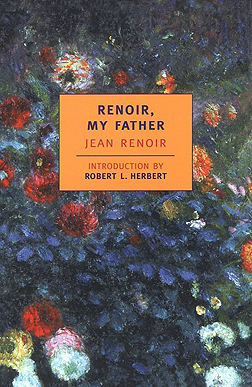 You don’t look at a painting. You live with it … It becomes part of your life. It acts on you like a talisman. The museums are only a makeshift. How can you get excited over a picture with a dozen or so people around you, whispering asinine comments?
So the book is in praise of art as a cherished and beautiful, as opposed to a purely marketable, thing; a reminder of the sweetness pictures can add to life.
Sargy Mann inherited very short sight and astigmatism, had cataracts removed in 1973 when he was 36, lost the sight of his right eye through a retinal detachment in 1979. From 1987 the sight in his remaining eye was so poor he used a small telescope or monocular. Soon he also required a white stick.
NATASHA by Vladimir Nabokov (Fiction from The New Yorker)
NATASHA by Vladimir Nabokov

In the stairs Natasha ran into her neighbor from across the hall, Baron Wolfe. He was somewhat laboriously ascending the bare wooden steps, caressing the bannister with his hand and whistling softly through his teeth.
“Where are you off to in such a hurry, Natasha?”
“To the drugstore to get a prescription filled. The doctor was just here. Father is better.”
“Ah, that’s good news.”
She flitted past in her rustling raincoat, hatless.
Leaning over the bannister, Wolfe glanced back at her. For an instant he caught sight from overhead of the sleek, girlish part in her hair. Still whistling, he climbed to the top floor, threw his rain-soaked briefcase on the bed, then thoroughly and satisfyingly washed and dried his hands.
 Then he knocked on old Khrenov’s door.
Khrenov lived in the room across the hall with his daughter, who slept on a couch, a couch with amazing springs that rolled and swelled like metal tussocks through the flabby plush. There was also a table, unpainted and covered with ink-spotted newspapers. Sick Khrenov, a shrivelled old man in a nightshirt that reached to his heels, creakily darted back into bed and pulled up the sheet just as Wolfe’s large shaved head poked through the door.
“Come in, glad to see you, come on in.”
The old man was breathing with difficulty, and the door of his night table remained half open.
“I hear you’ve almost totally recovered, Alexey Ivanych,” Baron Wolfe said, seating himself by the bed and slapping his knees.
Khrenov offered his yellow, sticky hand and shook his head.
“I don’t know what you’ve been hearing, but I do know perfectly well that I’ll die tomorrow.”
He made a popping sound with his lips.
“Nonsense,” Wolfe merrily interrupted, and extracted from his hip pocket an enormous silver cigar case. “Mind if I smoke?”
Nabokov At Last To Live
Wylie Agency Adds Nabokov Estate To Its Client List
 Getty Images |
Less than a month after Dmitri Nabokov announced, following years of indecision, that he would publish his late father Vladimir’s unfinished final novel, The Original of Laura, he has hired a new literary agent to represent the Nabokov Estate.
That agent is Andrew Wylie, who is as famous for his expert handling of posthumous work by heavyweights like Saul Bellow, Lionel Trilling and Richard Yates as he is infamous for his tendency to lure high-profile clients away from less powerful agents.
It is unclear whether Nikki Smith of New Jersey-based agency Smith-Skolnik Literary Management, who has repped the Nabokov Estate since 1986, is still involved, or how far she got in the process of finding a publisher for Laura before Mr. Wylie was brought on board.
Reached by phone this afternoon, Ms. Smith said, “We are not answering any questions,” and hung up.
The original manuscript of the book takes the form of 138 index cards—Nabokov wrote all of his first drafts on index cards—each of which contains about 150 words of prose. Before his death in 1977, Nabokov instructed his wife and son to destroy the cards because the book was unfinished, and his son publicly grappled with those instructions for about 15 years before finally deciding that his father wouldn’t be so sore if he went ahead and published it.
Nabokov scholar and biographer Brian Boyd told The Observer in April that a collection of unpublished letters, a few plays, and a compilation of interview transcripts and book reviews that Nabokov wrote early in his career for The New York Sun and The New Republic would eventually see the light of day. Presumably—though we can’t say for sure—Mr. Wylie will eventually handle these projects as well.
A book of poems, titled Verses and Versions, will be published by Harcourt-Houghton Mifflin in the fall.
Chinese Democracy Unleashed
Purported New Guns N’ Roses Tracks Hit The Web
“Rhiad,” which was played live by Guns N’ Roses in 2001 and 2002, is a pounding rocker with a trademark down-and-dirty main guitar riff and a flashy solo. “If the World” is a head-spinning blend of flamenco guitar, industrial synth tones, bluesy piano licks and Rose at the top of his vocal register, while the unnamed track is an even more unusual melange of piano-led crooning, orchestral bombast and a serene instrumental outtro. But even if its release is drawing near, “Chinese Democracy” will likely go down as the album with the most troubled birth in rock history. Work began on it way back in 1994, and since then, Rose has burned through a reported $13 million in production costs as well as every lone original member of the group. |
 Nine purported “mastered, finished” tracks from Guns N’ Roses’ 14-years-in-the-making album “Chinese Democracy” were leaked online yesterday (June 18) by the Web site Antiquiet.com, prompting a quick cease-and-desist from the band’s handlers and the removal of the links.
Virgin Capture of Human Ovulation On Film
Pork And Asparagus For Eight

Pageant Of The Masters

It’s The Sake
Land Of Kamikaze Shocked At Mass Suicide Sensation
Japan gripped by suicide epidemic

Japanese professionals in their thirties are killing themselves at unprecedented rates, as the nation struggles with a runaway suicide epidemic.
Newly published figures show that 30,093 people took their own lives in 2007 — a 2.9 per cent increase in a year — leaving the country as the most suicide-prone anywhere in the developed world and rendering government efforts to combat the problem a failure.
Suicide rates remained highest among men — at 71 per cent of the total — and very high among Japan’s rising population of over-60s. Geographically, most suicides took place in the prefecture of Yamanashi, where the forested foothills of Mount Fuji continue to attract the suicidal from around Japan.
Government analysis of the figures, for the tenth year consecutive in which suicides have remained above 30,000 mark, has exposed a series of new and troubling trends: people in their thirties are the most likely to kill themselves, and work-related depression is emerging as a prime motive.

Psychologists, sociologists and other close observers of Japanese society believe that the country is in the grip of a full-blown crisis among its young working population. Experts say that high suicide rates and the recent spate of random stabbings in public places are symptoms of a malaise that the country has ignored for too long.
Mika Tsutsumi, an economist and social analyst, said that the recent stabbings in Akihabara were worryingly predictable: the killing spree for which Tomohiro Kato was allegedly responsible was, she says, driven by a sense of hopelessness in the workplace. Underneath Japanese society is concealed “an invisible reserve army of Katos”, she said.
Even more disturbing than the raw suicide figures, said police, was the astounding recent surge in people who have taken their lives by generating highly poisonous hydrogen sulphide gas from a combination of standard household products.

Unlike more traditional methods such as hanging or drugs overdoses, the production of hydrogen sulphide endangers people in the same building and turns what used to be private despair into a public event.
Twenty-nine people used that method to end their lives last year, but after the formula for the gas was circulated widely on various “suicide websites”, it has taken on a sinister appeal to the desperate and lonely.
Since February this year, 517 people have killed themselves using the gas, about half of them in their twenties, and its macabre popularity as a method of self-destruction shows no sign of waning.

The crisis of despair gripping young working Japanese has triggered plenty of official and media hand-wringing, though little in the way of change in corporate Japan. Wages remain low, and hierarchies rigid.
“We live in an uncomfortable and restrictive society where trivial matters are important,” said Professor Kiyohiko Ikeda, a veteran social commentator at Waseda University. “The young feel a sense of deadlock; society does not accept minor mistakes.”
The City Of Pictures In Pictures
‘This Side of Paradise’ at the Huntington Library, Art Collections and Botanical Gardens

The Huntington
AN EDEN?: In November 1953, dancers with the Hollywood Negro Ballet pose for a publicity photograph for Ebony magazine.
The newly refurbished Huntington mounts ‘This Side of Paradise,’ billed as the most comprehensive exhibition of photographs of Los Angeles, the city that grew up in the camera’s eye.
A 1991 photograph by John Humble shows Selma Avenue at Vine Street as a jumbled, architecturally constructed Hollywood landscape of office buildings, stores, asphalt and advertising billboards. Dominating the center is Angelyne, the cosmetically manufactured “human Barbie doll,” who adorns one enormous sign.
Radio host Rick Dees, then an eternally adolescent 41-year-old, graces a KIIS sign just above her bleached-blond head. Neutered Ken to Angelyne’s pneumatic Barbie, he’s the benign Adam to her wicked Eve in Hollywood’s media-made Garden of Eden.
Humble’s deceptively simple image — documentary in the most profound sense of that slippery term — hangs at the entry wall to a large new exhibition at the Huntington Library, Art Collections and Botanical Gardens. Hot on  the heels of opening its beautifully refurbished, exquisitely reinstalled mansion, so rich in 18th century European and other art, the Huntington has mounted what is being billed as the most comprehensive show of L.A. photographs ever assembled. It spans the 1860s to the present.
Those dates correspond with two epochal narratives: the history of Los Angeles, incorporated in 1850, and the modern development of the camera, invented almost simultaneously in France and England a scant decade before.
The title is borrowed from F. Scott Fitzgerald’s first novel, whose despairing protagonist laments, “I know myself, but that is all.” The alchemy of the still camera in fabricating perceptions of people and places is an inspired subject for examination. Humble’s picture is emblematic.
The show, like Fitzgerald’s book, is novelistic — less an art exhibition than a pictorial essay about L.A. as a mediated environment. Its whopping 284 photographs stand in for words.
Classic Rodeo Photos
Jeff Collins, a bareback rider from Redfield, Kan., finishes his ride at the National Finals Rodeo
Are You Talkin’ To Me, Mr. Commissioner?
De Niro Defends Hotel Design
 Serge Thomann/WireImage.com
Robert De Niro has a message for New York officials: Analyze this!
The raging bull turned up Tuesday at a hearing for the city’s Landmarks Preservation Commission to plead for approval of a luxurious penthouse atop his newly opened $43 million Greenwich Hotel in TriBeCa. The new construction has come under fire because it didn’t match the original design.
Because of its prime location in the historic district, the seven-story, 88-room boutique hotel faced a rigorous vetting process when it was built in 2004 to ensure its handmade brick architecture meshed well with the neighborhood’s cobblestone character.
However, after opening April 1, commission members discovered that the two-bedroom posh rooftop suite was larger by about 1,300 more feet and also had a steeper roof than the 64-year-old actor and his partners proposed.
De Niro told the board the project was a “labor of love.”
“We’ve really worked quite hard on it, and so anything that would be offensive would be offensive to me,” the two-time Oscar winner said.
De Niro apologized for the inconsistencies, and urged the Fockers, um, the folks on the preservation  board to retroactively approve the penthouse changes without forcing developers to tear it down and start from scratch—an endeavor estimated to cost $1.5 million.
“If there are any minor little mistakes, my apologies for it,” De Niro said, “because in any creation there are those things, and we hope that they’re not in any way misconstrued as being wrong or that we can do it because we want to do it. We want to do what’s right for the neighborhood.”
De Niro’s got street cred. The goodfella helped revitalize Lower Manhattan after 9/11 by founding the Tribeca Film Festival.
He also has his share of defenders in the neighborhood, most notably fellow star Ed Burns, who has a residence across the street from the hotel with a view overlooking the rooftop and who testified on De Niro’s behalf.
The One Profession That’s Never Had A Glass Ceiling (tho it would be worth an extra $100/hr. if it did)
Ho-time: Cable Channel Hard-Sells Belle du Bore
Everybody’s simply fascinated with young, sexy prostitutes! But a new series imported from Britain makes the job seem … rather humdrum

When news broke that Eliot Spitzer had been patronizing a high-class prostitute, one thing everyone seemed to want to know was what, exactly, he’d asked his call girl to do. It was “unsafe,” in the words of “Kristen,” a.k.a. Ashley Alexandra Dupre—but could that have been an excuse she fabricated in hopes of unloading an undesirable client? Speculation was all over the map, from unprotected sex to anal to dangerous S&M to wearing socks in bed (not unsafe, sure, but certainly annoying). For a few days there, as we marveled over the amount of money earned by the girls at Emperors Club VIP and wondered over their wealthy clients and envied Ms. Dupre’s Flatiron apartment, hookers were on the brain. Are their lives better or worse than ours? At the top end, at least, their jobs actually sounded more like dating than whoring.
 And here’s the problem with Showtime’s auspiciously timed new series, Secret Diary of a Call Girl. As it follows Belle, a high-class London hooker who professes to “love sex” and therefore love her job, the show sanitizes hooking so much that a young woman might wonder why she even bothers trying to have another career. For Belle, whose real name is Hannah, being a prostitute means having tons of free time; a fabulous flat; a salary over 100,000 pounds (!!!); and entree to the luscious clubs and bars of London reserved only for the fabulously wealthy. Sure, she is required to have sex with her clients, or at least come close to it (more on that shortly), but please: This is 2008. Sleeping together on the first date? Not so scandalous. Belle is a professional fake-dater more than she is a whore.
The Man Who Put Man In His Place
Science books fetch astronomical prices
Copernicus first-edition book sells for $2.2 million, auctioneers report
MSNBC staff and news service reports
updated 8:28 a.m. MT, Wed., June. 18, 2008

NEW YORK – A copy of astronomer Nicolaus Copernicus’ masterwork, printed in 1543, went for the out-of-this-world price of $2.2 million on Tuesday at a sale of more than 300 books of scientific significance, according to the Christie’s auction house.
The rare first edition of “De revolutionibus orbium coelestium” (On the Revolutions of the Heavenly Spheres) went for well more than the expected price of $1.2 million, Christie’s reported after the sale. The book put forth Copernicus’ theory that the sun, not the earth, was at the center of the universe.
In all, the total take from Tuesday’s auction at Christie’s New York came to more than $11 million — compared with a pre-sale estimate of $6 million. That tally includes the auction house’s commission, known as the buyer’s premium, Christie’s said.
“The results far exceeded expectations,” Thomas Lecky, department head of books and manuscripts at Christie’s, told msnbc.com in an e-mail. “Overall, the sale doubled pre-sale estimates, and many things brought many multiples of their estimates.”
The book collection was sold by Richard Green, a retired physician and amateur astronomer from Long Island. Among the six centuries of scientific treatises represented in the collection are rare works by Albert Einstein, Charles Darwin, Karl Marx, Sir Isaac Newton and Johannes Kepler.

The sale also included a phone book for New Haven, Conn., that was issued in 1878, two years after Alexander Graham Bell invented the telephone. Auctioneers had expected the phone book to fetch between $30,000 and $40,000, but the price skyrocketed to $170,500 in a bidding war among six collectors.
The 20-page, pamphlet-size book, published by the Connecticut District Telephone Co., contains the names and numbers of 391 New Haven-area subscribers. It also provides some helpful hints to callers: “Should you wish to speak to another subscriber you should commence the conversation by saying ‘Hulloa!'”
Christie’s initially billed the directory as the first multipage phone book in the country. A historian contested that claim, saying that earlier ones were printed in San Francisco and Chicago. Lecky said the bidding war occurred after additional research showed that the Chicago directory was a reproduction and that the San Francisco one, though earlier, was less comprehensive than New Haven’s.

The sale offered Einstein’s own set of reference copies, including key papers on the theories of special and general relativity, quantum theory and unified theory. A treatise by Galileo was sold for $506,500, and a 1545 map book from Spain that is said to contain the first printed representation of the Atlantic Ocean and the coasts of the Americas went for $578,500.
On the other end of the spectrum, a report from the British Information Services about flying bombs sold for a mere $63.
Christie’s did not disclose the buyers’ identities.
This report includes information from msnbc.com and The Associated Press.
© 2008 MSNBC Interactive
Let Them Eat Cake
Students’ laxative-spiked cake sends Brooklyn teachers to hospital
Wednesday, June 18th 2008, 12:40 AM
Teachers were thrilled when students at a Brooklyn high school sweetly offered them slices of homemade cake last week.
 But the innocent-looking treat contained a nasty surprise – it was laced with laxatives that sent two educators to the hospital and sickened three other staffers.
Now, three seniors at the Brooklyn School for Global Studies in Cobble Hill have been suspended for the prank and barred from graduation – and were under arrest last night.
The students – Tiara Peoples, Kenny Ramirez and Quashon Burton, all 17 – were taken to the 76th Precinct stationhouse in Brooklyn. Assault charges were pending, sources said.
“What they did was wrong and they need to be punished,” said a school social worker who was sickened by the cake.
 “On the other hand, I was very close to these students and I’m very sad,” she told The News, speaking on the condition of anonymity. “It’s very hard when you give so much of your heart and soul to your kids and someone hurts you like that.”
The students behind Thursday’s stunt weren’t seen as troublemakers – one was a straight-A cheerleader. So no one was suspicious when they doled out the chocolate-iced Bundt cake.
People who were offered the cake assumed the red chunks inside the yellow filling were candy, but school officials say they were actually Dulcolax tablets.
“One of the kids said it was baked by his mom. ‘Go ahead, it’s free,'” said Danilo Dungca, 54, who left a job at the Federal Reserve three years ago to teach in the public schools.
“I’m very close with the kids, so I didn’t think anything of it.”
As soon as he and Mancuso took a bite, they knew something was wrong.
“It tasted like someone sprayed hairspray in my mouth. I spit it out,” Mancuso said. “That’s when my lips and my tongue went numb.”
 “It had red chunks that looked like cherries, but they were bitter,” Dungca added, “I spit it out….My mouth was numb. I got sick. I went to the bathroom.”
Dungca went right to the emergency room. Mancuso left early, then headed to the hospital when he had breathing problems.
Doctors told him his symptoms were consistent with insecticide poisoning, and there was buzz among students the cake had been sprayed with Raid, he said.
Some students at the school were blasé about the cake caper.
“Nobody’s died from a laxative,” said Shanell James, 17, a senior and friend of Ramirez. “He thought it was funny. I thought it was funny, too.”

For [Tom] Mancuso, the episode capped a difficult year in which he battled the Epstein-Barr virus.
“Ironically,” he said, “this is the icing on the cake.”
With Alison Gendar, Barry Paddock, Rich Schapiro and Carrie Melago
Carchitecture
Carchitecture

Images of cool-looking frames, finders, and fins of classic cars can be found in ‘Carchitecture,’ a new book by Fredric Winkowski and Frank D. Sullivan, and published by Glitterati Incorporated. The image above is a BMW 328, 1936.
Credits: Fredric Winkowski
“Beautiful Dynamite” Gone
Cyd Charisse, last great Hollywood dancer, dead at 87
LOS ANGELES (AFP) – Dancer and actress Cyd Charisse, whose legs were insured for a million dollars in the heyday of the Hollywood musical, died at her home in Los Angeles on Tuesday, her agent said. She was 87.

Scott Stander said Charisse, a regular partner of legends Gene Kelly and Fred Astaire, suffered a heart attack at her home and “never recovered.” She died at 12.15 am (0715 GMT).
“We’re all just heartbroken,” said Stander, describing Charisse as “one of the classiest ladies you would have ever met.”
Charisse rose to fame as the big studio musical was fading from view, playing the vamp who entices Kelly in “Singin’ in the Rain.”
A brief role without a word of dialogue, Charisse made an unforgettable entrance by dangling Kelly’s straw hat on the toe of her high heel as he — and the camera — admired her fully-extended leg.
She got to play Kelly’s leading lady in Vincente Minnelli’s “Brigadoon” and partnered with Fred Astaire in “The Band Wagon” and “Silk Stockings” before the studios pulled the plug on big budget musicals.
Charisse left her home in Amarillo, Texas as a young girl for the better dance studios in Los Angeles and was hired at 14 by the legendary Ballet Russe.
Charisse toured Europe, changing her name several times to better fit into the program, until the troupe disbanded when the war broke out in 1939.
Astaire, who called her “beautiful dynamite,” said somewhat enigmatically, “When you dance with Cyd Charisse, you’ve been danced with.”
Art For More Than Art’s Sake
from the San Jose Mercury News
Fisher: The art of therapy
 It seemed like a typical art show opening. Happy people mingling and snacking on cheese and strawberries, scrutinizing each painting and piece of sculpture. Proud artists interpreting their work and explaining their creative processes to admiring family and friends.
But the Spring Art Gallery show at the Children’s Health Council in Palo Alto is special. The young artists all struggle with emotional or social disabilities. The nearly 200 paintings, photographs and sculptures were created in art therapy sessions at the Health Council’s Esther B. Clark School, where children ages 8-16 who have trouble coping in public schools receive intensive help from teachers and therapists.
In the 1950s, when pediatrician Esther Clark founded CHC, disabled children were often taken from their families and treated behind the walls of institutions. The stigma of  mental illness and the lack of nearby treatment left distraught parents little choice. Clark wanted to create a setting where kids could live at home and parents could participate in the therapy.
Over the years, the school has worked wonders for children battling conditions from social anxiety to autism and bipolar disorder, teaching them to cope well enough to return to public school and be successful.
CHC has always protected the privacy of children and their families, which is why I was surprised when Anne Moses, the new executive director, invited me to the opening of the art show. We agreed to print only the students’ first names, but I still expected the kids and their folks to be shy with me.
Not a bit.
Twombly At The Tate
His scattered dreams
Scribbles and smears, hearts and hieroglyphs – what are Cy Twombly’s paintings trying to tell us? Adrian Searle traces the evolution of a great American artist at the Tate’s new show
In pictures: Twombly at Tate Modern
Tuesday June 17, 2008
The Guardian

Ferragosto III, 1960, by Cy Twombly.
A pencil skitters over the prepared white canvas, which in places has been sloppily covered with a matt, chalky house paint. The pencil runs into a wet patch and ploughs through. When it is all dry, the pencil has another go at it. Just as images arise, they are subsumed. The line draws the layers together, and slices them apart. Everything is anxious in Cy Twombly’s early paintings, always being made and unmade. Their resolution is always provisional.
 This is a painter who talks about Poussin, about the poetry of Rainer Maria Rilke and Mallarmé. But also about De Sade and Alain Robbe-Grillet, writers whose subtlety and delicacy underline their violences.
Your eyes get lost in all this, among the love hearts, the nipples and cocks and pea-pods that might be vaginas, the jagged seismic judders, the tremors that have gone off the dial. “APOLLO,” one painting announces, and “I have known the NAKEDNESS of my scattered dreams” another. Words and phrases in Twombly’s art grin through, indelibly: names and exhortations, snatches of poetry, numbers, diagrams, all of them written with a convincing urgency. It is as though their author were swatting away a swarm of bees gathered in his brain. The words are always with us, however much some may think art is a sort of wordless communication.
In the 1950s, Twombly’s paintings evolved as a language of contrary touches, stray thoughts and inimitable gestures. There was atavism there, as well as consummate knowingness, the result of a conscious de-skilling of his innate talents. Like Willem de Kooning, Twombly forced himself to draw and write with his left hand, or with his eyes closed. (De Kooning drew while averting his eyes from the paper, and while watching TV.) Making his own touch unfamiliar, Twombly presented himself as other to himself. I think he wanted to catch himself off guard.
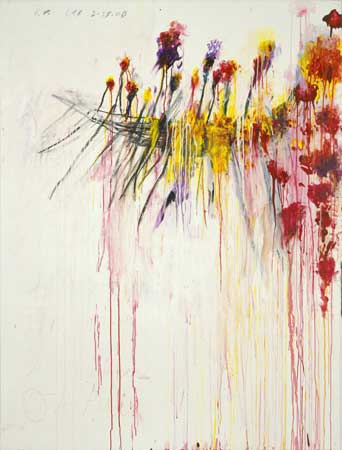 Twombly is now 80, and his nervous, supremely elegant and often very beautiful art is not as well known as it might be. Cycles and Seasons, Tate Modern’s retrospective, is likely to change that. It is not the first major Twombly show to be held in Britain, but it is the largest and most thorough. It begins brilliantly, with work completed when Twombly was the student of Robert Motherwell and the educator, draughtsman and painter Ben Shahn.
Of the same generation as Jasper Johns and Robert Rauschenberg, Twombly luckily escaped the fate of being a second-generation abstract expressionist. His art belongs mostly to itself, while retaining passing affinities to many different and contrary directions in art since 1945. An American who married well and moved to Rome at the beginning of his career, Twombly suffered the mistrust of his US contemporaries for many years, but this left him largely free to pursue his art as he wanted.
Why Guns Can Be Good
from the San Jose Mercury News
This is one of the most horrific stories in a long time. It’s frankly unfathomable. The world is fuct. This account is beautifully, and I suspect painfully, written – thank to you the authors. -Editor
Father who beat tot to death is identified
DETAILS EMERGE OF HORROR ON ROAD
Article Launched: 06/17/2008 01:30:21 AM PDT
TURLOCK – Six and a half minutes.
Six and a half minutes for two men to try to stop a father from beating “the demons” out of his 2-year-old son in the middle of a dark country road. Six and a half minutes for a young woman to crouch in her car and watch in helpless shock. Six and a half minutes for a police officer to land in a helicopter, run across a cow pasture, and shoot the man squarely in the forehead.
Six and a half minutes of horror.
“It seemed like forever,” said Lisa Mota, 23, who was driving to her parents’ house when she came upon the scene after 10 p.m. Saturday. “I need to get this out of my head, and I don’t think it will be for the rest of my life.”
On Monday, all that’s left of the violence is blood seeping into the cracks of West Bradbury Road, just outside the Central Valley town of Turlock. Parents and children came and went all day, placing ceramic angels and stuffed animals along the barbed wire fence. One white teddy bear held a heart that said, “Besos y Abrazos.” It means kisses and hugs.
“The terrible man got to die in an instant, but his baby had to suffer endlessly,” said Joel Arana, 36, a father of a toddler who stopped by to pay his respects. “It’s not right. But God will take care of it.”
The man has been identified by police as Sergio Casian Aguiar, 27, of Turlock. He and his wife had been separated. In an interview with detectives Monday, Frances Liliana Casian, a kindergarten teacher, said she didn’t know why Aguiar would do such a thing. He had no police record and she didn’t know of any mental illness, said Deputy Royjindar Singh, a spokesman for the Stanislaus County Sheriff’s Department. A toxicology test for drugs and alcohol is under way.
As news of the roadside beating spread across the country, letters of support and thanks poured in for the pilot who landed the helicopter in the dark cow pasture and the Modesto police officer who shot Aguiar.
“That baby needed help and I knew we had to do something,” the pilot, Sheriff’s Deputy Rob Latapie, said in a statement.
“I have never seen anything like that before and I hope I never have to again,” said Officer Jerry Ramar, who fired the fatal shot.

Three cars stopped on the darkened lane that night. Three 911 calls were placed. And two men who happened upon this scene defied their fears of what this man was capable of, what weapons he might have, and tried to save a child.
It wasn’t enough.
Dan Robinson, chief of the Crows Landing volunteer fire department, was driving home Saturday night with his wife and two grown children when their headlights shone on a man standing behind a parked pickup truck, which was in the next lane, facing oncoming traffic. At first, they thought maybe it was a hunter with a dead animal.
“As they slowed down, someone noticed it was an infant,” Singh said. “He stopped, backed up and the dad got out.”
It’s unclear when the beating began, but the first 911 call arrived at just after 10:13 p.m. It was from someone named Mike, who may be Robinson’s son, Singh said. He gave just a brief description before the cell phone went dead.
By then, Robinson had confronted Aguiar and “was trying to get him to stop, trying to pull him off, or away from the baby,” Singh said. “The suspect just pushed him away and continued doing what he was doing.”
A minute later, at 10:14 p.m., a pickup truck with three people in their 20s pulled up, facing Aguiar’s truck. One of them called 911. A young man, who Singh hasn’t identified, jumped out and ran to help Robinson.
“It was the shock of seeing what was going on, seeing this person with hands bloodied,” said Singh, who was on the scene as the witnesses were interviewed. “At first they weren’t sure how to react. You walk upon that scene and you see it and it’s like, ‘What are you doing?’ It’s like, “What the heck are you doing?’ “
The two men wrestled with Aguiar, trying to get him to stop, trying to pull him away from the baby. But Aguiar, with the child in his arm, kept attacking the toddler, “punching, slapping, shaking,” Singh said.
Robinson told reporters that “there was a total hollowness in his eyes,” and Aguiar said he was beating “the demons” out of the boy.
At 10:17, Mike called 911 again.
At 10:19, the sheriff’s helicopter that had been patrolling the area shone its spotlight on the scene, then landed in the cow pasture.
Officer Ramar jumped out, Singh said, and ran about 30 yards to the electrified fence that keeps the cows in and ordered the man to stop. By this time, Aguiar had the child on the ground and was stomping on him.
“Put your hands up. Step away from the baby,” Ramar called out, according to Singh.
Instead, Singh said, Aguiar raised his middle finger and began to kick the toddler lying on the roadway.
At 10:20, Ramar aimed his gun and fired. Aguiar died at the scene. Two deputies rushed to the child and performed CPR, but the boy remained limp. He was pronounced dead at the local hospital.
At 10:30, Singh arrived. The night was cool and clear. The only lights came from the headlights of the cars that had stopped to help and the flashing reds and blues of police vehicles. It was still so dark, Singh couldn’t even see the helicopter in the pasture.
But he saw the deputies who tried to revive the child, the police officer who shot the man, and the witnesses who tried to help. They all were consoling each other, he said.
“I know how they were feeling,” he said. “It’s like you wish you could have done more.”
