
Kiss With A Fist
by FLORENCE AND THE MACHINE
Dumb Question
What the Internet is doing to our brains
BY NICHOLAS CARR
Is Google Making Us Stupid?
“Dave, stop. Stop, will you? Stop, Dave. Will you stop, Dave?” So the supercomputer HAL pleads with the implacable astronaut Dave Bowman in a famous and weirdly poignant scene toward the end of Stanley Kubrick’s 2001: A Space Odyssey. Bowman, having nearly been sent to a deep-space death by the malfunctioning machine, is calmly, coldly disconnecting the memory circuits that control its artificial brain. “Dave, my mind is going,” HAL says, forlornly. “I can feel it. I can feel it.”
I can feel it, too. Over the past few years I’ve had an uncomfortable sense that someone, or something, has been tinkering with my brain, remapping the neural circuitry, reprogramming the memory. My mind isn’t going—so far as I can tell—but it’s changing. I’m not thinking the way I used to think. I can feel it most strongly when I’m reading. Immersing myself in a book or a lengthy article used to be easy. My mind would  get caught up in the narrative or the turns of the argument, and I’d spend hours strolling through long stretches of prose. That’s rarely the case anymore. Now my concentration often starts to drift after two or three pages. I get fidgety, lose the thread, begin looking for something else to do. I feel as if I’m always dragging my wayward brain back to the text. The deep reading that used to come naturally has become a struggle.
I think I know what’s going on. For more than a decade now, I’ve been spending a lot of time online, searching and surfing and sometimes adding to the great databases of the Internet.
I’m haunted by that scene in 2001. What makes it so poignant, and so weird, is the computer’s emotional response to the disassembly of its mind: its despair as one circuit after another goes dark, its childlike pleading with the astronaut—“I can feel it. I can feel it. I’m afraid”—and its final reversion to what can only be called a state of innocence. HAL’s outpouring of feeling contrasts with the emotionlessness that characterizes the human figures in the film, who go about their business with an almost robotic efficiency. Their thoughts and actions feel scripted, as if they’re following the steps of an algorithm. In the world of 2001, people have become so machinelike that the most human character turns out to be a machine. That’s the essence of Kubrick’s dark prophecy: as we come to rely on computers to mediate our understanding of the world, it is our own intelligence that flattens into artificial intelligence.
Secret Video of Italy Training For The Euro (old yes yes, yet still funny as The Pope)
A Lit Drunkard’s Night Dream
A Night Out That Became a Night In. In the Bar.

Richard Perry/The New York Times
Kyle Hausmann spent hours longer than he intended at Trophy Bar in Williamsburg, Brooklyn, after being locked in overnight.
The singer R. Kelly wrote a popular R & B opera about being trapped in a closet. Nicholas White became a minor celebrity after security cameras caught him stuck in a Manhattan elevator for 41 hours. Add to these annals of urban misfortune the tale of Kyle Hausmann, a mild-mannered paralegal who recently found himself locked in a Brooklyn bar.
The night in question started innocuously enough for Mr. Hausmann, 24, a Harvard graduate who lives with a roommate in Bedford-Stuyvesant, Brooklyn.  It was May 20, a Tuesday, and Mr. Hausmann’s roommate was the D.J. at Trophy Bar in Williamsburg.
Mr. Hausmann got to the bar at 8 p.m. It was a spirited night. There was dancing. There was drinking. Mr. Hausmann downed a few more drinks than he normally would.
“Really sweet guy,” Mandy Misagal, one of the bar’s three owners, who was bartending that night, said of Mr. Hausmann. “Really wasted but super nice.”
The hours melted away. Four a.m. approached, closing time, so Ms. Misagal tallied the night’s receipts as a worker cleaned up. Mr. Hausmann was milling about with the last stragglers. Then, around 4:30, he went into a bathroom. And for reasons that are unclear even to him, he stayed in there for quite a while.
The bar emptied. Ms. Misagal flipped off the light in one of the bar’s two bathrooms, reached for the doorknob of the second bathroom and found it locked. “Curious,” she thought. Seeing no light coming from the bathroom, and hearing not a peep, she figured that the other bar worker had accidentally locked it behind him. Then her car service showed up and honked. Ms. Misagal went outside. The other worker pulled down the security gate and padlocked it from the outside.
 They both left.
A few moments later, Mr. Hausmann opened the bathroom door. That is when he realized he was locked in the bar.
“The lights are off in the bar, and the chairs are up. And I wondered, ‘Where did everybody go?’ ” Mr. Hausmann said.
A faint light was coming through the windows — it was about 5:30 a.m. “I thought, ‘I guess I’m going to be late for work,’ ” he said.
“My working theory was that I had gone down a wormhole,” he continued. “Someone pointed out that perhaps I had gone to Narnia. But I would’ve remembered Narnia. So it must’ve been a wormhole.”
Mr. Hausmann tried the front and back doors, but they were locked and needed keys to be opened. The windows had bars. Mr. Hausmann deliberated whether to pour himself a drink. “And then I decided that I didn’t really want one,” he said.
Calling the police seemed extreme, so instead he dialed up friends on his cellphone. But no one picked up — it was 6 a.m. Finally, a friend who was staying at his apartment in Bedford-Stuyvesant answered and tried to shake Mr. Hausmann’s roommate awake. “Kyle’s stuck somewhere; he needs your help,” the friend mumbled. But the roommate slept on and the friend fell back asleep.
Next, Mr. Hausmann picked up the bar’s phone and hit redial, inadvertently calling the mother of one of the owners in Las Vegas.
 “How did you get this number?” the woman asked. “You can’t be calling because you’re locked in a bar.”
Mr. Hausmann hung up. He wandered around the bar, trying to figure out what to do. Then he happened on a laptop on the bottom shelf of the D.J. booth.
“I checked my e-mail,” he said, “which was completely not helpful. My friends were planning a get-together. And I wrote back, ‘Yes, this will work. If only I could figure out how to escape from the bar I’m trapped in.’”
Next he did a Google search for “what to do if you get locked in a bar.” “But Google did not have any good answers,” he said.
And then — hallelujah! — he found a spare set of keys for the bar. Believing escape was near, he penned a note to the bar owners on a paper towel, saying he had gotten trapped and was letting himself out and would return the keys later that day. He ended on an affectionate note. “The mystery only adds to my fondness of the bar,” he wrote.
 But there was that security gate beyond the front door, padlocked from the outside. And yet there was still another possibility of escape. Trophy Bar has a garden patio, and now that he had keys, Mr. Hausmann could get back there. He went out, climbed on top of a picnic table, surveyed his options and worried about what the neighbors might think.
“There were a lot of fences to go over,” he said. “But I wasn’t worried about going over. I was worried about being seen going over. Because it was first thing in the morning. And people might wonder ‘what’s going on here?’ and call the police.”
So he tried another round of phone calls. Finally, he reached a friend who agreed to come to the bar. The plan was for Mr. Hausmann to slip the keys under the security gate, and for the friend to open the padlock. The friend showed up, and began calling Mr. Hausmann’s cellphone and banging on the security gate. But by that time Mr. Hausmann had fallen asleep on a bench out back.
Mr. Hausmann eventually woke up and again called his friend, who agreed to come back. It was around 8:30 a.m., 12 ½ hours after his night at the bar began.
 Then Mr. Hausmann heard some clanking, and the security gate went up.
Jim Rowe, another of the bar’s owners, walked in.
“And there was Kyle standing there,” Mr. Rowe said. “He was pretty smiley. I couldn’t believe it. I asked, ‘Are you hung over? Are you O.K.?’ ”
Mr. Hausmann replied: “I’m fine, I just got to go to work.”
“I really love your bar,” Mr. Hausmann continued, as Mr. Rowe stared at him, dumbstruck. “I’ll be back.”
Mr. Hausmann’s mini-saga might lack the melodrama of R. Kelly’s fictional musical epic, and it was vastly less harrowing than the grim ordeal endured by Mr. White. But it has made Mr. Hausmann something of a cause célèbre at Trophy Bar, where the owners gave him nods on their MySpace page.
And just as he promised, Mr. Hausmann has gone back to Trophy Bar. He celebrated his 24th birthday there last Tuesday.
When the party was over, Mr. Hausmann walked out, unimpeded, into the night.
Method #507 For Evading The Wife – Buy camo & a bad couch

James Frey Hailed as the Barack Obama of Literature by The Zsa Zsa Post
In Defense of James Frey and Memoir by Lisa Dale Norton
As a writer and teacher of memoir I am bombarded by moderately-informed people spitting out the name James Frey whenever the topic of memoir comes up, eyebrows raised, fire on their tongues. It’s true Frey’s debacle made headlines, yet there are many misconceptions about what he did or did not do. I’m certainly not condoning his actions, but there are other memoirists since his tussle with Oprah who have committed far greater sins. (Margaret Selzer for one.) And, yesterday and today, many of the misunderstandings about what defines specific genres of books have sprung to life with the comments aimed at Scott McClellan and What Happened?
 So, let’s take a step back and figure out what memoir is.
A good place to start is to clarify what memoir is not: It is not journalism, history, biography, or even autobiography. Memoir is the close inspection of some slim aspect of one’s lived experience in which the writer uses every writerly technique available to craft a compelling story that explores the human dilemma and in the process unearths some truth central to his life.
Memoir is not accumulation of fact at the expense of this truth. The memoirist is committed to emotional truth, and because memoir is an art form that end is achieved through artful means. Consequently, what I find most disturbing when discussing memoir with people is that very few understand this.
If our society and the publishing world are going to attach the word “memoir” to everyone from Barbara Walters and Julie Andrews to Scott McClellan and Barack Obama, they had better be prepared for the truth. People think memoir all true, as if the memoirist projected a flashlight through his ear and out played a movie onto the page. Pure fact. That’s not a memoir.
There is further confusion in the marketplace. While I am not apologizing for James Frey, I feel driven to point out this imbalance: As recently as May 18 Janny Scott, writing in the New York Times, noted Barack Obama’s use of composite characters in his memoir:
“Reporters have questioned Mr. Obama’s use of fictional techniques like composite characters, but some editors and critics say that is common in memoirs.”
Why does Barack Obama’s use of fictional techniques merit such little outcry? Why do we continue to beat up on James Frey for utilizing fictional techniques? Why is no one in the streets working up a lather and berating Obama for his blurring of the genre lines? Instead, quite the opposite. Large portions of America herald Obama as a force of change. And a gifted writer.

The fact is Barack Obama and James Frey are both gifted writers.
Frey’s new book Bright Shiny Morning — a novel, not a memoir — is another example of great moments of craft. The guy knows how to write. Why can’t we just get off the Million Little Pieces bandwagon and praise Frey for being a gifted writer, someone who knows how to use the techniques of writing to his advantage, like Obama?
Part of the reason is that few people actually understand what memoir is. Let’s remember: Memoirists conflate time. They combine characters. They make truths that speak to their hearts, often at the expense of the details of fact. That is the art of memoir, where the point of the genre is to make a truth about a life lived that resonates in the bones of the writer and sends out shock waves of recognition to readers.
Both Frey and Obama have done this in their memoirs, as have a long list of other fine writers.
So let’s get off James Frey and get on with something else, like educating more people about what memoir really is.
More in Entertainment…
“There’s only three things I’ve ever been afraid of – electricity, heights and women…”
Johnny Is Still Rotten
Sex Pistols’ Johnny Rotten Sued for Assaulting Assistant
Stop press! This guy may be angry and violent!
 There may be problems ahead for Sex Pistols mouthpiece Johnny Rotten (or John Lydon, if you’re not nasty), as the perennially assholish punk icon has been sued by a (presumably former) assistant, Roxane Davis. Yesterday, TMZ.com reported that a lawsuit filed in Los Angeles County Superior Court claims that “the Sex Pistol singer allegedly beat the crap out of a female assistant after calling her every horrible name in the book after the taping of a television show in 2007.”
The suit suggests that Rotten “cocked back his fist … and punched her in the face” when Lydon found himself in a hotel room at the Ritz Carlton that, for whatever reason, didn’t share a door with another assistant named Rambo. It was then that Rotten and Rambo allegedly starting berating Davis verbally. Davis reportedly brought this incident to the attention to her supervisor on the show Rotten was working on at the time, but her complaints were ignored.
No word yet on whether this suit will affect the Pistols’ plans to tour the world this summer. And on June 30, Fremantle Entertainment will release a DVD of recent live Sex Pistols performances entitled There’ll Always Be an England.
(This video has nothing to do with Rotten allegedly beating the crap out of any assistants, however, it’s a swwww interview from The Greatest Talk Show That Ever Was, and this is only Parte Primo – be sure to check Partie Deux when you’re done diddling with One.)
Guevara Offspring At Last Grasp Irony
Guevara children denounce Che branding
· Daughter denounces exploitation of image
Rory Carroll, Latin America correspondent
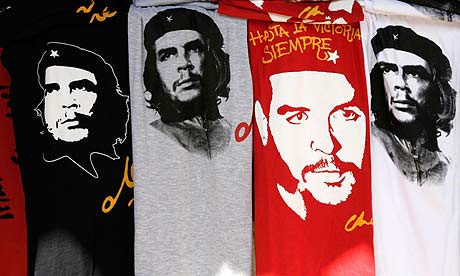
Che Guevara T-shirts for sale in Cuba. Photograph: Chris Hammond/Alamy
The scraggly beard, the beret adorned with a star, the intense gaze: it is an instantly recognisable image which has been used to sell everything from booze to T-shirts to mugs to bikinis.
Che Guevara is an icon of the 20th century whose brand has turned into a worldwide marketing phenomenon. If you want to shift more products or give your corporate image  bit of edge, the Argentine revolutionary’s face and name are there to be used, like commercial gold dust.
The fact that Guevara was a communist guerrilla and Marxist ideologue is an irony of little interest to his capitalist exploiters. It has, however, become a problem for his children.
Aleida Guevara this week denounced the commercialisation of her father’s image as an affront to his socialist ideals. “Something that bothers me now is the appropriation of the figure of Che that has been used to make enemies from different classes. It’s embarrassing.”
A man who fought and died trying to overthrow capitalism and material excess should not be used to sell British vodka, French fizzy drinks and Swiss mobile phones, among other travesties, she said. “We don’t want money, we demand respect.”
Aleida, 47, the eldest of Guevara’s four children by his second wife,  made the comments during an internet forum sponsored by Cuba’s government ahead of what would have been her father’s 80th birthday on June 14.
The complaint came amid a surge of renewed interest in Guevara. The actor Benicio del Toro won best actor at the Cannes Film Festival this month for his portrayal in Steven Soderbergh’s four and a half hour epic Che. Camilo Guevara, a son, who participated in the forum, said he welcomed the film as long as it was faithful to his father’s memory.
Last month Buenos Aires unveiled a towering bronze statute of the young doctor who left Argentina on a motorbike in 1953 and became radicalised by oppression and poverty in Latin America. He joined Fidel Castro’s guerrilla campaign against Cuba’s dictator, Fulgencio Batista, and became a key figure in the revolution before unsuccessfully attempting to export insurrection to Congo and Bolivia, where he was captured and executed by CIA-backed government troops in 1967.
Guevara was a more doctrinaire ideologue than Castro and a  fervent critic of “material incentives” but in death he became transformed into an icon of daring and rebellion.
The famous image portrait was based on an image taken by the Cuban photographer Alberto Korda in Havana in 1960. It was pinned to his studio wall for seven years until the Italian publisher Giangiacomo Feltrinelli mass produced it around the time of Guevara’s death.
Korda willingly forfeited royalties but he sued a British advertising agency for using the photo to promote vodka.
Cuba’s government has used the image to promote its revolution and to rake in tourist dollars through state-run stores which sell Che paraphernalia.
Cafe Largo Copulates With The Coronet, Aimee Mann Christens Offspring
L.A. Times Music Blog
Aimee Mann christens new Largo location
 Maybe the only performer more appropriate than Aimee Mann to open the Largo’s new era would be Jon Brion, the resident Friday-night ringmaster during the beloved music club’s 12 years on Fairfax Avenue.
Well, fans got a bit of both Monday at the unveiling of the venue’s new home, the venerable Coronet Theatre on La Cienega Boulevard. Largo stalwart Mann headlined the show, and Brion, playing celeste and other keyboards, joined her on two songs during the encore, putting an emotional flourish on a smooth transition.
Physically, the new Largo is a vastly different experience from the tiny room on Fairfax, where the bar and the dinner service sometimes interfered with owner Mark Flanagan’s vision of an ideal setting for musicians and serious listeners.
 The Largo at the Coronet is a cozy little bandbox of a theater, its tightly packed rows of 280 permanent seats facing a deep stage that must have seemed like a basketball court to musicians accustomed to the old Largo’s tiny platform. For the audience, there’s nothing to do but sit, watch and listen.
The Largo state of mind was intact, as listeners were admonished to turn off their electronics and not talk during the show. The sound during the 90-minute set by Mann, accompanied by bassist Paul Bryan and keyboardist Jamie Edwards, was clean and warm, and Mann eased into the focused but informal mode that has defined the Largo’s distinctive sensibility.
Mann, who was preceded by a short set from comedian Paul F. Tompkins, will return with a full band June 10. By then, the new Largo will have undergone what figures to be its baptism by fire — two sets by Brion on Friday.
— Richard Cromelin
Photos by Lawrence K. Ho / Los Angeles Times
Polar Bear Executed Before It Can Devour Icelandic Children – Al Gore Pissed

The polar bear lies dead after being shot by police in Iceland. Photograph: Icelandic television
A polar bear that swam more than 200 miles in near-freezing waters to reach Iceland was shot on arrival in case it posed a threat to humans.
The bear, thought to be the first to reach the country in at least 15 years, was killed after local police claimed it was a danger to humans, triggering an outcry from animal lovers. Police claimed it was not possible to sedate the bear.
The operation to kill the animal was captured on film.
“There was fog up in the hills and we took the decision to kill the bear before it could disappear into the fog,” said the police spokesman Petur Bjornsson.
The oldest record of polar bears being sighted in Iceland is from 890, 16 years after the first settlers arrived. The last visit was in 1993, when sailors saw a bear swimming off the coast of Strandir. It was also killed.
Polar bears were frequently tamed during the middle ages, but since then no bear has been captured alive in Iceland. Receding North Pole ice is diminishing their hunting and mating grounds and jeopardising their survival
A spokesman for PolarWorld, a German group dedicated to the preservation of the polar regions and the creatures which inhabit it, called the bear’s death “an avoidable tragedy … another great day for mankind”.
MTV Europe Fined For Homophobic Windowlicking
MTV fined $484,500 by U.K. regulator
Net taking steps to prevent future breaches
By STEVE CLARKE
MTV Networks Europe has been fined a total of £255,000 ($484,500) by U.K. media regulator Ofcom for “widespread and persistent” breaches of its broadcasting code by four of its channels.
The Viacom-owned operator will have to pay the following penalties: TMF £80,000 ($152,000), MTV France £35,000 ($66,500), MTV UK £80,000 ($152,000) and MTV Hits £60,000 ($114,000).
The “highly offensive language and material” was broadcast before the 9pm family-viewing watershed.
Auds complained about a number of shows. They included: repeated use of the words “motherfucker”, “fuck you” and “fuck” in a music video by Aphex Twin for the song “Windowlicker” on TMF, and racist and homophobic text messages aired by MTV France in “Belge Chat.”
Additionally TMF screened a trailer for the reality skein “Totally Jodie Marsh” on seven occasions between 9.48am and 3.15pm on July 24 last year containing the sentence: “I just don’t want you settling down with some fucking wanker from a modeling agency.”
多くの昼食のためのmanga
Seven dead in Tokyo stabbing frenzy
TOKYO (AFP) – A man went on a stabbing spree Sunday in a busy Tokyo neighbourhood famed for comic-book subculture, killing at least seven people and leaving around a dozen injured in Japan’s deadliest crime in years.

The assailant, who later told police he was “tired of living,” drove a truck into a crowd of pedestrians shortly after noon in Tokyo’s bustling Akihabara area before jumping out and stabbing strangers while screaming.
The assailant was identified as Tomohiro Kato, 25, from central Shizuoka prefecture. He first said he was a gangster before retracting his story.
“I came to Akihabara to kill people. It didn’t matter whom I’d kill,” he was quoted by Jiji Press as telling police.
Kato, bespectacled in a beige suit and black-and-white sneakers, was armed with a survival knife and duelled with a police officer who fought back with a baton.
By the time Kato finally dropped his knife with an officer’s gun pointed at him, 17 people lay bloodied on the street of the crowded district, according to fire department and police officials.
The attack fell on the anniversary of the last incident of similar magnitude in Japan — a stabbing frenzy that left eight children dead at an elementary school in 2001. 
“I’m afraid this will give a negative image of Akihabara, where people are coming from around the world,” he said.
Akihabara is best known for major electronics stores and in recent years has mushroomed into a haven for Japanese subculture, pulling in tourists from home and abroad interested in comic books and video games.
Akihabara’s attractions range from a museum of Japanese animation to cafes where waitresses dress as maids and video-game characters. It is also a major commuter hub.
Critical Mass, Indeed

Li’l Bobby and his ‘roids
Robert Mapplethorpe’s Instant Precious Relics
Made in his early, druggy years, Mapplethorpe’s Polaroids reveal an artist in curious transition
by Leslie Camhi
We Poets in our youth begin in gladness,” William Wordsworth wrote ruefully in 1807, “But thereof come in the end despondency and madness.” The poet’s words came back to me while  viewing this collection of some 100 mostly unknown Polaroids taken by Robert Mapplethorpe between 1970 and 1975. They are transitional works in more ways than one: made while the fledgling photographer (then in his twenties) was testing his eye, finding his subject matter, and not yet fully committed to either his sexual identity or his medium.
They represent a kind of “coming out,” artistically speaking. The mature themes of this intensely neoclassical photographer’s art are all there: still lives and self-portraiture, pictures of the demimonde and the mondaine—downtown personages, uptown celebrities, artists, socialites, and creatures of the night, who crawled before his camera from who knows where. And, of course, the great theater of eroticism, from the baroque accoutrements of gay sadomasochism—leather masks, nipple rings, penile harnesses, etc.—to tender embraces between men, to the naked mattress ticking that waits, in one photograph, like an empty page for the story of sex to be written upon it.
Still, taken as a whole, Mapplethorpe’s Polaroids are very different from the works that made him, if not the most famous, then posthumously (since his death in 1989) the most notorious photographer of his generation—works that most often combined “hot” subject matter with coolly elegant and precise presentation. Who can forget his masterpiece, Man in Polyester Suit (1980), for example, with its image of a semi-tumescent member sprouting, like desire itself, from sartorial banality?  (Carnality seems to have been, for him, a perpetual affront to quotidian reality.) This was a photographer who could mine the latent sexual content of an orchid or even an eggplant, who photographed AWOL sailors as if they were bits of classical statuary, whose portraits of small children are imbued with the same naturalness, mystery, and innate grace as the trussed-up sexual encounters that seem to have sprung from some dark night of the imagination.
The Polaroids, of which he took more than 1,500, are on the whole more casual and intimate—certainly not diaristic (since there’s nothing confessional about Mapplethorpe’s art), but closer to life, in that one senses the push and pull, the continuous dialogue, between the image and its subject. (That dialogue was fostered by the speed of a medium that provided an “instant replay” of reality.) Lacking the later work’s sometimes airless perfection, they make up for it in rawness and immediacy.
In those early, druggy years, Mapplethorpe—a former Catholic schoolboy from Floral Park, Queens, who had joined the ROTC while studying advertising design, and later graphic arts, at the Pratt Institute—was making the bohemian scene at Max’s Kansas City. He was shacking up (at first as lovers) with his muse and soulmate, Patti Smith, at the Chelsea Hotel and in a loft on 23rd Street, and delving into the underworld of gay s&m. Soon he’d fall in love with the patrician curator and pioneering collector Sam Wagstaff, who became his patron and romantic partner, and with whom he explored the still emerging field of fine-art photography.

He borrowed a friend’s Polaroid camera to take pictures for the collages he was then making and to document his growing sexual education. A tripartite self-portrait from 1971, included at the Whitney, shows the then 25-year-old artist naked, his body divided vertically between three Polaroids, which he’s coyly placed behind the mesh veil of a paper potato sack that’s been dyed a deep, almost ecclesiastical violet. Is it an altar for the worship of youth, or is he for sale like just so many tubers?
“If you mouth off to me one more time, lady, I will smash your melon with my monitor. And I want private cubicles NOW!!!! or I’m going to freak.”
Iconic Moments of the 20th Century (in geriatric re-enactment)

Graffiti Place
Photo Essay: Melrose Alley Street Art

Los Angeles is home to some of the best graffiti/street artists in the world, and the best place to see some of their best work is behind the alleys of Melrose Avenue. Whether you feel like graffiti/street art is legitimate art form, Melrose has been used as a canvas by street artists such as Banksy, Shepard Fairey, and the infamous street art collective, The CBS Crew. So next time your shopping at Melrose, don’t miss out on some amazing art by checking out the alleys behind the Melrose Avenue shops.


In Penance To The Verse
Frost house vandals learn about poetic justice
- Poet Robert Frost’s summer home trashed during teen’s beer party
- 28 young people charged, most with trespassing
- More than $10,000 in damage was done to the house
- Teens learn about poet’s work under court diversion program
MIDDLEBURY, Vermont (AP) — Call it poetic justice: More than two dozen young people who broke into Robert Frost’s former home for a beer party and trashed the place are being required to take classes in his poetry as part of their punishment.
Using “The Road Not Taken” and another poem as jumping-off points, Frost biographer Jay Parini hopes to show the vandals the error of their ways — and the redemptive power of poetry.
The vandalism occurred at the Homer Noble Farm in Ripton, where Frost spent more than 20 summers before his death in 1963. Now owned by Middlebury College, the unheated farmhouse on a dead-end road is used occasionally by the college and is open in the warmer months.
On December 28, a 17-year-old former Middlebury College employee decided to hold a party and gave a friend $100 to buy beer. Word spread. Up to 50 people descended on the farm, the revelry turning destructive after a chair broke and someone threw it into the fireplace.
When it was over, windows, antique furniture and china had been broken, fire extinguishers discharged, and carpeting soiled with vomit and urine. Empty beer cans and drug paraphernalia were left behind. The damage was put at $10,600.
Twenty-eight people — all but two of them teenagers — were charged, mostly with trespassing.
 About 25 ultimately entered pleas — or were accepted into a program that allows them to wipe their records clean — provided they underwent the Frost instruction. Some will also have to pay for some of the damage, and most were ordered to perform community service in addition to the classroom sessions. The man who bought the beer is the only one who went to jail; he got three days behind bars.
Parini, 60, a Middlebury College professor who has stayed at the house before, was eager to oblige when Quinn asked him to teach the classes. He donated his time for the two sessions.
On Wednesday, 11 turned out for the first, with Parini giving line-by-line interpretations of “The Road Not Taken” and “Out, Out-,” seizing on parts with particular relevance to draw parallels to their case.
“Two roads diverged in a yellow wood,” he thundered, reciting the opening line of the first poem, which he called symbolic of the need to make choices in life.
“This is where Frost is relevant. This is the irony of this whole thing. You come to a path in the woods where you can say, `Shall I go to this party and get drunk out of my mind?”‘ he said. “Everything in life is choices.”
Even the setting had parallels, he said: “Believe me, if you’re a teenager, you’re always in the damned woods. Literally, you’re in the woods — probably too much you’re in the woods. And metaphorically you’re in the woods, in your life. Look at you here, in court diversion! If that isn’t `in the woods,’ what the hell is `in the woods’? You’re in the woods!”
Clubbers Now Using Preparation H Before Raves, And Not Only For the Morning After
Preparation H Finds Place in Club Circuit
Men May Be Clueless About the Real Effects of the Ointment
By LAUREN COX, ABC Medical Unit Of all the drugs young people can use at clubs, the latest trend in New York may be the least hip among all circles: Preparation H.New York bouncer, blogger and author Rob Fitzgerald has noticed a trend among many of the macho young men waiting outside his clubs. He says the guys are slathering up their torsos with the hemorrhoid cream Preparation H to make themselves look “ripped” for the ladies.Fitzgerald asked one of these guys to describe the practice for his blog, Clublife, “The way you use it is to take your shirt off and rub it all over yourself before you go to the club,” a man who gave the alias, Peter Minichiello, says. “If you want to get [lucky], you have to know how to dance, and if you want girls to dance with you, you have to look ripped.””The bodybuilders I know use it on their obliques — their love handles — to take away any lingering water weight before shows,” Fitzgerald told ABC News.
  “The guys in the clubs heard about this, and the use of it spread virally like some kind of Internet meme.”Preparation H contains a medication called phenylephrine HCL that — when used for the drug’s intended purpose — will shrink the swollen tissues of hemorrhoids. It works by constricting the nearby blood vessels that feed blood and fluid to the area.But the ingredient doesn’t discriminate what kind of tissue it will shrink, hence the underground beauty tips of applying Preparation H under the eyes, on love handles or other places. None of which Wyeth, the makers of Preparation H, support.”Applying it to one’s chest is an off-label use of Preparation H,” said Milicent Brooks, a representative of Wyeth Consumer Healthcare.
 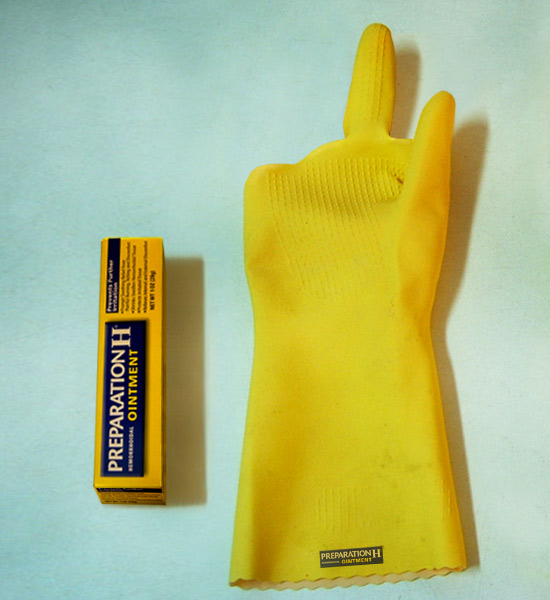 “We don’t approve or endorse any off-label uses.”Even if Preparation H actually thins skin over the muscles of bodybuilders, it won’t turn the clubber with an average build into Popeye.Dr. Darrell S. Rigel, clinical professor of dermatology at New York University Medical Center in New York City, said Preparation H can have more serious side effects inside the body. Since the active ingredient works by constricting blood vessels, Preparation H has the potential to raise blood pressure.”Probably if you put enough of it on, it would raise your blood pressure,” Rigel said. “It’s not designed to cover the whole area of your chest. It’s designed to cover a small part of your rear end.”[ click to read full article at ABCNews.com ]
Alton Kelley Gone
Press Release from The Earth Times
Alton Kelley
Posted on : 2008-06-02 | Author : Evolutionary Media Group
1940 – 2008 PETALUMA, Calif., June 2

Alton Kelley created a graphic style that rocked the world beginning in the psychedelic Sixties. His concert posters, logo designs, LP album covers, and fine art have forevermore defined that time. Kelley, born
(Photo: http://www.newscom.com/cgi-bin/prnh/20080602/LAM040)
 He is survived by the true love of his life, Marguerite Trousdale Kelley. He also leaves his mother Annie, sister Kathy, and beloved children Patty, Yossarian, and
Kelley and his life-long collaborator Stanley Mouse are best known for their posters for “ They also created world-renowned posters and album covers for the Grateful Dead, Journey, Steve Miller, Jimi Hendrix, The Beatles, and others.
The two artists historically worked as a team, in their words “riffing off each other’s giggle.” They joyfully appropriated from historic sources, in one instance re-working an obscure nineteenth-century etching to create their iconic Grateful Dead “skeleton and roses” design. They combined vibrant Sixties color with French poster-making joi de vivre enthusiasm, and their own adapted technique, to generate compelling pieces often issued on a weekly basis, ultimately dazzling millions worldwide. Thus, they changed advertising art forever, as their posters were key examples of what became one of the most important art movements of the latter part of the twentieth century.
When Kelley (a native of  San Francisco’s Haight-Ashbury district in late 1965 (the “Haight” was the epicenter of the hippie movement, culminating in the “Summer of Love” in 1967), they instantly recognized they were kindred spirits in what Mouse describes as “one of the juiciest scenes of all time.” Their concert posters, commissioned by Fillmore promoter Bill Graham and Graham’s rival, the Avalon’s Family Dog collective, were eagerly snapped up by bands and fans alike.
In the decades since, Mouse and Kelley’s classics have established even greater popularity, rivaling the interest long shown by collectors of French turn-of-the-century Belle Epoque art made famous by Toulouse-Lautrec and others.
“There is one word for Alton Kelley’s lifelong contribution, and that is ‘iconic.'” said Dell Furano, 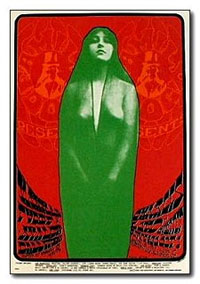 CEO of Signatures Network. “Kelley’s artwork, designs, posters, album covers, tour logos set a standard of inspired creativity that has remained as influential as the great San Francisco Rock Scene of the 60’s, 70’s and 80’s.”
In his later years, Kelley joyfully turned to illustrating hot rods and custom cars, as fine art paintings, and for t-shirts and other merchandise.
In lieu of flowers, donations can be made at the Washington Mutual Western Street branch in Petaluma, CA for a memorial bench in a Sonoma County Park. A memorial event will be announced shortly.
For members of the press: photographs, selected artwork, and video bites are available by contacting: Jennifer Gross Evolutionary Media Group 323-658-8700 Jennifer@emgpr.com
These Weapons Always Jam
 Good engineering, reliable performance, robust construction. They are icons of design that have not only shaped global conflicts but also our collective aesthetic sensibilities through countless films, TV shows and news images.
The Death Machines paper kits bring the contradictory experience of weapons into the home; admirably designed and aesthetically fascinating and simultaneously terrifying in their lethality. Each handmade part becomes a medium for the maker’s reaction to the subject.
The first in the Death Machines series, the paper AK-47, was published by Die Gestalten Verlag in 2007.
|
|
|
|
|
|
|
|


Giant Alabama Blacksnake Threatens Public
The Old Man And The Poem
When Hemingway turned his hand to verse
Poems – unpublishable at the time – were scribbled at end of story collection
Mark Brown, arts correspondent
Wednesday June 4, 2008
The Guardian

Ernest Hemingway, pictured in 1944. Photograph: Corbis
There is probably a good reason Ernest Hemingway is known for his novels, short stories and journalism rather than his poetry, and it can be found in a remarkable first edition of his first American book. Clearly, he was not a great poet.Hemingway scribbled two poems – unpublishable at the time because of their rudeness – in the 1925 first edition of In Our Time for his lifelong friend and drinking buddy Jack Cowles. The volume’s current owner, Mark Hime, said: “We’re not talking TS Eliot here.”
The inscribed book shines a light on how Hemingway, who suffered depression throughout his life, was feeling at the time and also makes clear his disdain at being edited: he has handwritten all the original words in the short story collection changed by his US publishers.
 The book is heading to London as one of the most eye-catching attractions of this weekend’s antiquarian book fair at Olympia, where more than 160 booksellers offer the chance to pick up rare editions of everything from the Aeneid to Harry Potter.
Hemingway was obviously delighted at having In Our Time published in America, and Cowles was one of his closest friends. He wrote: “To Jack Cowles on Valentine’s Day (this has no sexual significance) Ernest Hemingway.”
Above the inscription Hemingway has drawn a pierced bleeding heart with an arrow pointing to drops of blood and annotated it: “blood ($2.00 worth)”.
In the back of the book, on two of the blank endpapers, are the poems. One is a humorous defence of the “lost generation”, the name given by Gertrude Stein to the expatriate American writers living in Paris in the 1920s who met up in the bars and cafes to drink and set the world to rights.
By some accounts it sounds like one long party as the likes of Hemingway, F Scott Fitzgerald and Ezra Pound lived it up in Montparnasse. The poem is called The Age Demanded. The second poem is called The Earnest Liberal’s Lament and disparages St Valentine’s Day.
 Elsewhere, Hemingway has changed the text where his publishers have decided his original words – mostly about trying to make a baby – go too far.
Hime, who owns California-based bookseller Biblioctopus, is selling the edition for £75,000. He agreed the poetry was not great but said the first edition was remarkable. “There is nothing like this, even in the Kennedy Library: Hemingway didn’t do this sort of thing. I’ve seen lots of inscribed books but nothing with this much in it.
“I think at the time Hemingway was feeling really good, he was back with his friends, he was having a good time, he’s having a book published in America, he thinks he’s going to be famous and he’s just excited.”
This year’s fair will also feature the only surviving copy of Shelley’s Poetical Essay on the Existing State of Things, printed in Oxford in 1811, which was written to raise money for the Irish journalist Peter Finnerty. There will also be rare photographs on sale, including ones which capture an encounter with Australian Aborigines in 1891.
When a Persian woman challenges the young Comedian Aristophanes to become a Tragedian…
Playwright/actor is a fine dramaturge with the ear of a poet
When 26-year-old actor Matthew Amendt decided to write a play, he could have done what plenty of others his age have done: scribbled down some ironic, self-referential, comic tripe that would provide stage time for himself and his buddies. Instead, he looked to antiquity and penned a 2 1/2-hour story imagining what would happen if Aristophanes — the best known ancient writer of comedy — had attempted to write a noble tragedy.
Only a young man would attempt such an unbridled, uncommercial act of chutzpah. And while “The Comedian’s Tragedy” isn’t perfect, it’s a work of such lyric beauty, such prescient wisdom, such clarity of vision and such contemporary resonance that I’m going to rave about it anyway: This isn’t just a good first play. It’s a good play, period.
As it tells the story of an artist struggling with his conscience and his muse (Tracey Maloney, feisty and fine), “The Comedian’s Tragedy” deftly mixes the high-blown language of the ancient plays with a contemporary sensibility — a blend made manifest in Ron Menzel’s elegant, excuse-me-please turn as the Chorus Leader.
Amendt plays Aristophanes, blending Method Actor heat with classical actor cool to ask the Big Questions of that age and ours. Can art change the world? Do we dare to hope? Would you die for your ideals or live to fight for them? The story is told with measures of naivete and hard-won experience, sensuality and violence, finished off with a dollop of existentialism.
Amendt is a fine actor, but his dramaturgical gyroscope is impeccable, and he has a poet’s ear for the well-turned phrase. What lovelier compliment can you pay someone than to say, “You run, and the light chases you”? What more damning indictment of an adversary than to call him “folly made flesh”? And what more potent image of the power of drama than to claim that “the trees themselves bent their branches” to hear a tale?
[ click to read full article including showtimes if you’re in MPLS ]
James Frey Speaks Out In London
James Frey speaks about his new book ‘Bright Shiny Morning’, what happened with Oprah and how he feels he has been treated by the world’s media.
Harpo Building Designated As Mistreatment-Free Zone
Memo Pad: Oprah Talks…
Published: Tuesday, June 03, 2008
OPRAH TALKS: Oprah Winfrey rarely sits down for interviews, but now is as good a time as any. According to several reports (including a lengthy one on May 26 in The New York Times), her empire might be facing some tough times. Her ABC show “Oprah’s Big Give” was canceled; the circulation of O, The Oprah Magazine has fallen 8 percent in three years, to 2.4 million, according to Audit Bureau of
 Circulations (a decline mirrored by many of the title’s peers), and Nielsen Media Research ratings for “The Oprah Winfrey Show” reportedly show viewership has declined 7 percent this year. As she preps for the 2009 launch of her own television network, OWN (Oprah Winfrey Network), Winfrey opened up to Black Enterprise in the June issue to talk about lessons learned during her years in business. She claims none of her business ventures have come out of forethought: “I haven’t planned one thing — ever. I have just been led by a strong instinct, and I have made choices based on what was right for me at the time.” She also doesn’t judge a business venture by its profitability. “I don’t care about money,” said the woman who’s worth $2.5 billion. “It throws people off all the time in business meetings. They start shuffling papers.”
Speaking of meetings, writes Black Enterprise editorial director Sonia Alleyne, Winfrey takes them all: “In her 22 years of business, she remembers canceling only three meetings due to dire situations,” the article states. “‘The greatest fear for me of ever canceling is that you’re going to disappoint somebody,’ [Winfrey] explains.”
She also believes in treating her staff well. At Harpo Inc. in Chicago, employees are treated to Google-esque office amenities. “There is a cafe on premises as well as Club Harpo, a workout facility, and the Spa at Harpo.” And according to Winfrey, “I don’t yell at people, I don’t mistreat people. I don’t talk down to people, so no one else in this building, in this vicinity, has the right to do it.” — Stephanie D. Smith
Yves St. Laurent Is Gone
He Put a Swagger In Women’s Steps
Yves Saint Laurent Threaded His Designs With an Empowering Aesthetic
By Robin Givhan
Washington Post Staff Writer
Monday, June 2, 2008; C01
 Often, when a fashion designer dies and his life’s work is assessed, some insistent hyperbole is necessary before the death matters to anyone beyond his loyal band of ladies who spend their time dashing between luncheons and charity balls. Most modern women are not going to weep at the passing of a fashion designer whose heyday was some 30 years ago.
But this time, it’s Yves Saint Laurent who has died. He passed away yesterday evening, at age 71, at his Paris home. And no exaggeration is required to explain the impact he has had on modern fashion. In the 1960s and ’70s, when he was at the height of his influence, he brought popular culture, a mannish swagger, sexual power and ethnic awareness to fashion. He gave women a wardrobe that spoke of confidence and authority. He didn’t give them armor for the boardroom as much as he gave them the sartorial equivalent of chutzpah, tough talk and bawdiness. He gave dames and broads their costumes.
 Saint Laurent elevated youth culture and street style by equating it with the confections whipped up in a fancy atelier. And most important, he began fashion’s steady march toward democracy and the dissolution of the industry’s stultifying hierarchy.
Because of Saint Laurent, women’s closets are filled with now-classic garments that have become the backbone of a wardrobe. Items such as the safari jacket and “le smoking” — a tuxedo — have become such standard parts of a woman’s everyday life that it is difficult to remember a time when they did not exist. Avant-garde designers such as Rei Kawakubo and Yohji Yamamoto have been influenced by Saint Laurent and the way in which he feminized menswear. Halston drew upon the sexual ease in a Saint Laurent garment.
 While designer Gabrielle “Coco” Chanel championed the notion of women in trousers, it was Saint Laurent who sold the public on the idea. Saint Laurent put women in pants. It’s as simple and as influential as that. Without him, how would our mind’s eye see the authoritative ease expressed by Nancy Pelosi and Hillary Clinton? That accomplishment alone would have been enough to secure him a place in history.
But Saint Laurent was not merely a part of fashion history, he was instrumental in writing the vast majority of it. He popularized the bohemian-chic sensibility that later went on to define the hippie aesthetic and its many artsy, grungy, hipster derivations. He welcomed so-called exotic and unorthodox influences into his work, such as the traditional prints of Africa and the folkloric costumes  of Russia. He forged a relationship between fashion and the art world, most dynamically with his Mondrian dress of 1965. Without Saint Laurent, there would arguably be no Marc Jacobs, so greatly influenced by the work of Takashi Murakami, Stephen Sprouse and Richard Prince.
“Most people are lucky if they can do one thing, if they can make one major contribution,” fashion historian Valerie Steele said last night. Saint Laurent’s contributions could fill volumes.
Seattle WORDS & WINE Interview with James Frey
More Dust Than Digital documents this conversation between Warren Etheredge and James Frey. The conversation took place as part of Seattle’s Words and Wine series.
Video production by Harry Calbom, Austin Wilson, Adam Bale, and Jeremy Thornburg.
Music by Ellis Hawes.
Friggin’ Rodents
Venice officials take on city’s pigeons

Luigi Costantini / Associated Press
RULING THE ROOST: Pigeons swarm around a bird-feed vendor in St. Mark’s Square in 2007. Venetian officials, who have banned bird-feed vendors and anyone else from feeding the birds, say the policy is showing results.
They say the birds, with their poop and pecking, are ruining Italy’s art and architecture and harassing tourists and customers. But some animal activists are flouting a ban on feeding them.
Venice, Italy
The pigeons are hungry. Venetian pirates to the rescue!
A band of animal lovers armed with skull-and-crossbones flags zips over the choppy Venice lagoon in speedboats. They dock at the palace-lined piazza, lug out 20-pound sacks of birdseed and scatter the food for all to eat. Or peck. The pirate pigeon- saviors have made three lightning raids into St. Mark’s, the first two at the crack of dawn and now, at midday, to deliberately confront the police and their ban on feeding the birds.
So goes Venice’s battle over its ever-multiplying pigeons. “Flying rats,” in the view of the mayor — airborne menaces that poop all over precious, centuries-old marble statues. “Cool,” in the view of many tourists — can you imagine a picture of St. Mark’s without them?
“Overfeeding is a problem because those that are ill and not strong live longer than they should,” Belcaro says from his office overlooking the Grand Canal. “It is no longer a natural thing.”
Once the mighty center of a seafaring empire, Venice has fought off predators for centuries, from invading armies coveting its strategic location and ample wealth, to the rising ocean tides that are slowly engulfing its islands. Modern times brought a new set of threats, including smog, water pollution, hordes of tourists and the pigeons. Officials argue that the pigeons’ highly acidic guano seeps into fissures in thousands of marble monuments and building facades, weakening the structures. In addition, they scratch and peck at the marble, seeking its calcium content as a nutrient, doing further costly damage.
Renata Codello, an official with the Italian Cultural Works Ministry, says the pigeons are destroying Venice’s architectural heritage. The poop, she says, is a biohazard, igniting a chain reaction producing algae, spores and fungus, while the birds are potential carriers of diseases and nasty bugs.
“They treat the pigeons like they were demons,” says Paolo Mocavero, head of the 100% Animalisti organization that conducts the pirate feeding operations. The city’s decade-old practice of using wide nets to capture pigeons is especially objectionable, activists say. “The pigeons suffer a lot,” says Gianpaolo Pamio of the Bird Protection League. “I want to know what the city is doing with the pigeons. Are they going to end up on our plates?”
“It’s sad, but what can we do?” Belcaro says. He dismisses alternatives that activists propose, such as trying to ply the birds with contraceptives. Birth control, which has to be consumed regularly, is difficult to administer efficiently in such a huge, nomadic population, he says.
Even in the first weeks of the birdseed ban policy (pirate feedings aside), Belcaro says, he already sees success in a notable decline in the number of birds congregating in St. Mark’s Square. True, there may be slightly fewer of them, but they seem to be getting a bit more aggressive. After all, food shortages often lead to riots.
 Under the porticoes of the creamy Doges’ Palace on a sun-filled late morning in May, one pigeon went after a woman with an apple. She danced and bobbed to get away, screaming, “Let me go! GO AWAY!” Still, most of the waddling bevies of tourists seemed to delight in the pigeons. Americans, Russians and Japanese played the stunt of stretching out arms, then squealing when birds alighted, as friends and family snapped photos. One Spanish-speaking woman had no fewer than 10 pigeons on her arms, shoulders, head and purse. Real Hitchcock material.
“I like the pigeons,” says tourist Hunter Latour, 18, from West Palm Beach, Fla. “It’s part of the experience of coming to Venice and to St. Mark’s, the attraction. Take that away and you lose something.”
“The pigeons are a part of the history of Venice,” vendor Daniela D’Este says. Take away the pigeons, she says, and “it’s like Venice without the gondolas.”