
I.M. Sony
Sony BMG moves to old CAA digs
Music unit takes over Beverly Hills space
By PHIL GALLO
An iconic Beverly Hills office building that became a white elephant in the weak commercial real estate market finally has a tenant.
 Sony BMG Music Entertainment will relocate its West Coast headquarters to the former CAA building in January. The diskery, whose U.S. headquarters are on Madison Avenue in New York, is now housed in Santa Monica.
Personnel from Sony’s and BMG’s labels, publishing and licensing will move into the 65,000-square-foot space, which has been empty since CAA left for its new HQ in Century City in 2007. Sony BMG has signed a 10-year lease on the property.
 The edifice had few interested parties since the asking price — reportedly $5 per square foot — was mighty steep for a building whose entire first floor consists of lobby space featuring a Roy Lichtenstein painting so huge that it cannot be removed. In addition, it was clearly designed for one company to occupy the entire building, so it was not feasible to convert it into a traditional office building with multiple tenants.
Designed by I.M. Pei — his first project on the West Coast — and built for $25 million in 1989, the CAA building became so closely associated with Michael Ovitz and his regime that the current CAA chiefs made no secret that their move to new digs in Century City was about making a fresh start. Ovitz remains a landlord of the marble structure at the intersection of Wilshire and Santa Monica boulevards.
Emily’s Beautifully Strange Illustrator
Nix Turner’s In Vein Art Show

Nicomi “Nix” Turner, senior illustrator for Emily the Strange, proudly debuts her solo work at the “In Vein” show at Gallery Extraña, 2912 Telegraph Avenue in Berkeley, CA. The show runs from July 11 to August 30, 2008. Pictured: The Little Birds Lied
Credits: Courtesy of Nicomi Turner
Experience Vocal Dance
The Godfather’s Soul For Sale

Christie’s prepares for the James Brown Collection auction at their auction house at 20 Rockefeller Plaza. Different colored ‘Sex’ jumpsuits are for sale.
Credits: Rosier/News
Folio Cornholio at The Folger
Missing Shakespeare Knocks on Folger’s Door
English Book Dealer Arrested in Theft
By David Montgomery and Mary Jordan
Washington Post Staff Writers
Saturday, July 12, 2008; A01
The man dressed a little flashy for a rare-book guy. British accent. He picked Monday, June 16, to go to the library — the Folger Shakespeare Library on Capitol Hill. No warning, no appointment. Out of his bag, he pulled an old book. Flimsy, no binding, big pages. Said he wanted the Folger book detectives to check it out.
 Could it be genuine 400-year-old Shakespeare? he wondered.
Funny he should ask.
So begins the final chapter of the antiquarian police procedural that ended yesterday across the ocean in Durham, England, with the arrest of a 51-year-old book dealer in the theft 10 years ago of a volume of Shakespeare’s collected plays, published in 1623 and worth about $2.5 million, as appraised by the Folger.
The copy of the famous First Folio — cited by scholars as perhaps the most important printed edition in the English language — had been lifted from Durham University in northeast England.
The Folger’s sleuthing determined that the old book was genuine all right — and as hot as a pawned diamond tiara.
Shakespeare fans and rare-book lovers on both sides of the pond hailed the break in the case. Students of human behavior could only scratch their heads.
Why would someone bring a stolen Shakespeare to the place where the theft was most likely to be detected? Folger has the largest collection of printed Shakespeare, including 79 of the 230 First Folios known to exist.
Did he not know it was stolen? Was he trying to get the Folger people to authenticate it so he could sell it here, not knowing that everyone in Shakespeare world was on the lookout for the notorious “missing Durham First Folio”?
Wee-Wee Keepy-Uppy

Hellboy’s Back
Devil May Care About Hellboy II
Big Red returns in a mindless, revved-up sequel
By Chuck Wilson

Hollywood’s Endless Superhero Summer rolls on with the arrival of Hellboy II: The Golden Army from Pan’s Labyrinth director Guillermo del Toro, but before this review goes any further, I must confess—head hanging low in shame—that I haven’t read a comic book since I was 12 years old. That means I’ve never read a Hellboycomic, the first of which appeared in 1993 (when I was well past 12). In fact, I’m not so sure I’d even heard of the big red lug until 2004, when del Toro made the firstHellboy movie, although I bet at the time I pretended that I knew all about him. These days, not reading comics and graphic novels marks one as a pop-culture loser, which goes to show you how topsy-turvy the world is—in my day, comic-book kids got beat up.
A primer then, for the secretly uninitiated: Hellboy, or “Red,” as his friends call him (played by Ron Perlman in the films), is a demon from Hell (literally) who entered this earthly realm when Hitler’s minions opened a portal to you-know-where while attempting to form an alliance with the Big Guy down below. Rescued by the Allies and raised by a gentle British professor (John Hurt), Hellboy has burnt-red skin, a long tail, thick horns on his forehead (filed down to stubs), and a massive right arm made of stone—the “Right Hand of Doom” in creator Mike Mignola’s comic. Red packs a mean right punch, but luckily, raised on Howdy Doody and Santa Claus, he’s fighting on the side of man, not with the evildoers who keep coming up from Hell to slay us all. Score one for nurture versus nature.
Nancy’s Burgers

Dancing With The Puppets
Veering From the Standard, Returning to the Spirit

Ruby Washington/The New York Times
“Darkness and Light” is having its New York premiere as part of the troupe’s current season. More Photos>
Pilobolus, like any dance company, has several styles. Some of its works are visions of imaginary biology, some are human dramas, some are about clowning. But since its early years the purest Pilobolus experiences have involved metamorphosis. We see both physicality and illusion. Bodies become imagery, and one image merges into another, organically, poetically, inexplicably.
 This year Pilobolus has collaborated with someone outside its family: the puppeteer Basil Twist. Working with Robby Barnett and Jonathan Wolken, Mr. Twist has given the company “Darkness and Light,” an engrossing work that seems at once a return to pure Pilobolus essence and a complete departure from basic Pilobolism.
The New York premiere performances of “Darkness and Light” occur as part of Program 3 of the troupe’s current season at the Joyce Theater. At first you see its seven performers, largely naked, and bright lights shining out from the stage. But this is a mere prelude: the dancers and their props are just the raw material. A white curtain descends, whereupon the real stuff of “Darkness and Light” commences.
 It’s a shadow play, a drama of silhouettes on the screen, and in part it’s as innocent as the games in which you hold up two hands so configured that they become a rabbit and next a church and steeple. What’s this dark shape? A vase? A funnel? No, it’s a torso. Now it acquires arms and, next, a head. When that head turns in profile, it has a haircut and bristling eyebrows — prosthetic? — unlike those of any Pilobolus performer. Soon this face is distorted into something else.
World’s Most Annoying Alarm Clock – TYRANT by Alice Wang

Crack Makes You Dumb
Man robbed buying crack calls cop who arrests him
Wednesday, July 9th 2008, 9:50 AM
 HARTFORD, Conn. – An East Hartford man called police to report he had been robbed while trying to buy crack cocaine.
Max Minnefield called police Monday to tell them he had paid a man and a woman $8 for drugs he never received.
Police charged him with criminal attempt to commit possession of narcotics.
During his arraignment Tuesday, Judge Bradford Ward asked Minnefield, “Did you really think the police were going to go after the people?” He added that his question was rhetorical.
Prosecutors later dropped the charges.
Laura Weslund, Minnefield’s public defender, said no drugs were ever found.
More Stories From Styron Coming At Random
Posthumous Fiction Collection From William Styron To Be Published by Random House

A new collection of short fiction—including the first chapter of an unfinished novel—is coming from the late William Styron, according to InkWell Management agent Michael Carlisle.
Mr. Carlisle said the stories in the new collection-three of which have been previously published, but only in literary magazines-are all in some way about soldiers returning home from war. The never-before-seen novel fragment, he said, entitled “My Father’s House,” concerns an unnamed narrator who has just come back from World War II to live with his stepmother. The story-which was found in Styron’s papers, currently housed at Duke-runs about 30,000 words, and was prepared for publication by Styron’s biographer, James West of the University of Pittsburgh.
The other stories in the as-yet-unnamed collection are “The Suicide Run,” “Marriot, The Marine,” and “Blankenship,” Mr. Carlisle said.
China’s Warhol
Cultural revolutionary
He’s China’s equivalent of Andy Warhol, but the artist who inspired Beijing’s Olympic Stadium won’t be attending the opening ceremony. An outspoken critic of the government, he has never forgiven them for sending his father into exile. By Rachel Cooke
Rachel Cooke, Observer
 Ai Weiwei, China’s most famous living artist, lives and works in Caochangdi, which used to be a village to the east of Beijing but is now, thanks to the city’s endless creep – locals call Beijing Tan Da Bing, or spreading pancake – just another crowded suburb. It takes a long time to get anywhere in Beijing, and in our taxi, April, my translator, is getting more and more excited. ‘He’s like the king,’ she says (she has met him before). ‘And we will be like… the servants. The people who work for him, they’re like his servants, too. If he doesn’t want a drink, no one gets one.’ She smiles. Being received by Ai Weiwei, you understand, is an honour, no matter how gnomic his pronouncements, nor how desperate you might be for a cup of tea.
 In the West, Ai’s name was once known only in art circles. After his collaboration with the architects Herzog & de Meuron on Beijing’s Olympic stadium – it was his idea to make it look like a bird’s nest – his fame spread, especially when he gave an interview in which he announced that he had ‘no interest’ in the Olympics or in the Chinese state’s propaganda – and that, no, he would not be attending the opening ceremony. Even so, it remains hard to convey the extent of his fame in China. The New York Times has described Ai Weiwei as a ‘figure of Warholian celebrity’ in Beijing, but I’m not sure even this does him justice. Warhol did a few screen prints and hung out in a night club with other famous people, in a country where he was free to do pretty much as he liked. Ai Weiwei is not only an artist but also an influential architect, a publisher, a restaurateur, a patron and mentor, and an obsessive blogger (he is read by 10,000 people every day).
And then, on top of everything else, there are his politics. Ai Weiwei’s father was Ai Qing, the great poet who, during the Cultural Revolution, was exiled to a desert labour camp for being the wrong kind of intellectual. For many years his son lived in another kind of exile, in America. Then, in 1993, Ai returned to Beijing to the bedside of his dying father.

But if the authorities imagined he would now retire quietly to his studio, they were wrong. In the years since, he has been outspoken about issues like democracy, hoping that his international reputation as an artist would keep him safe but, even if his status doesn’t protect him, caring for silence and complicity far too little to shut up.
Blue Collar Brawlin’ Ban Soon To Be Enacted in Arkansas?
Fake Ark. bouts showing men kissing draw suspicion
By JON GAMBRELL, Associated Press WriterTue Jul 8, 6:13 AM ET
Crowds in Arkansas came for the lure of cage fighting and $1 beer, but police say what they got instead was men ripping each others’ clothes off and kissing — a stunt suspected of being orchestrated by Sacha Baron Cohen of “Borat” fame.
“We had a contract for cage fighting. We were deceived,” said Dwight Duncan, president and CEO of Four States Fair Grounds in Texarkana, where the first of two Arkansas fights raised suspicions last month.

Matt Labov, a Los Angeles-based publicist for Baron Cohen, said he had no comment Monday about the faked fights. One of Baron Cohen’s movies is due out next year.
The day after the June 5 Texarkana bout, Fort Smith’s convention center hosted “Blue Collar Brawlin.'” Fort Smith police Sgt. Adam Holland said organizers told him a character named “Straight Dave” would goad a planted audience member into the ring for a fight.
The two men would then wrestle, rip away some of their clothes and share a brief kiss reminiscent of one between Baron Cohen and Will Ferrell in the film “Talladega Nights: The Ballad of Ricky Bobby.”
Producers said “there would be a romantic embrace,” Holland said. “They said it was kind of to essentially make fun, poke fun at wrestling — two guys rolling around on the floor, all sweaty.”
An elaborate array of mounted and handheld video cameras caught the crowd of 1,600’s reaction as the two men “went right up to the line” of the city’s morality laws, Holland said. The two men stripped down to their underwear, kissed and rubbed on each other, the sergeant said.
The audience, as well as local fighters drawn to take part in the show, became enraged. “It set the crowd off lobbing beers,” Holland said. “They had beers in plastic cups. Those things can get some distance on them actually.”
Okay, fine – DANCING. There.
Why Everyone Needs A Dog That Can Snarl
The cops said public service. But he said wait a minute.
Lakeville man challenges police policy in wake of late-night home intrusion
Article Last Updated: 07/07/2008 11:11:12 PM CDT
Troy Molde marched into Lakeville City Hall on Monday to defend his rights.
He said Lakeville police violated them last month when officers barged into his unlocked home at 3 a.m., waking him to warn him to keep his doors closed and locked.

Now, he is petitioning the city for a public hearing to consider amending Lakeville Police Department policies on when officers should enter a home without a search warrant.
“The police don’t have a clue what our rights are,” said Molde, 34. “I’m working hard to try to protect people’s rights. That is my core issue with all of this.”
The surprise visit by police was part of a public service campaign.
Officers fanned out across Lakeville early on the morning of June 19, leaving notices on doors reminding residents to prevent crime by keeping garage doors closed and doors and windows locked.
But Molde received more than a notice.
He awoke to police flashlights shining in his face and two uniformed Lakeville officers in his bedroom, knocking on the wall. The officers also woke his two sons, ages 5 and 7, and 5-year-old twin nephews who were having a sleepover in the living room.
At the time, the officers told Molde his garage door was open, the TV was on, keys to his truck were in the ignition and the door to his house was ajar.
The intrusion was justified because the officers’ initial door knocks went unanswered, Sgt. Jim Puncochar said last month. Police went inside to check if anything was wrong.
Some Folks Never Learn
Pamplona bull run injures 13

Onlookers hurt in Pamplona’s first bull run of year after animals plough into crowd of spectators
Thirteen people were injured in Pamplona’s first bull run of the year today after the animals ploughed into a crowd of spectators.
Today marked the start of the annual week-long Fiesta de San Fermin, as the Pamplona bull run is known.
The Spanish Red Cross said the wounded were treated for head and rib injuries after falling or being trampled. None of the patients – five Spaniards and tourists from Britain, the US, Australia, New Zealand, Romania and South Korea – had been gored.
One of the animals became disoriented and tried to return to the starting point before herders waving sticks guided it to the bull ring where the course ends. Upon reaching the finish, one bull collapsed and lay inert on the ground for several minutes before coming round.
“There were a few tense moments, but I think everything went quite well,” said Aritz Lopez, a 29-year-old runner from Bilbao.
30-year-old Grease Still Considered Environmental Hazard By Many

Danny and his gang the T-Birds in one of the most iconic moments – the dance number “Greased Lightning – from the film GREASE, which is 30 years old today.”
Credits: Scanned print
Controversial Photo Finish At Olympic Submarine Race Trials – Bush May Threaten U.S. Boycott

You can anchor her anywhere / Sleep a week or so / And get to know the local jokes
Parked RVs are straining patience in laid-back Venice

Residents of the famously tolerant coastal enclave are fed up with campers and other vehicles lining narrow thoroughfares. They say some occupants party into the wee hours and dump waste into gutters
The pleasant climate and quirky vibe of Venice have long attracted the wealthy and destitute alike. Poets, painters and movie stars mingle with itinerant surfers and scruffy street dwellers in one big colorful tableau.
But in recent years the coastal enclave’s laissez-faire attitude has faded, in large part because many Venetians who once prided themselves on their unflappability have gotten fed up with the dozens of dilapidated cars, recreational vehicles and campers that line their narrow residential streets, providing shelter for people who have lost their jobs, want to break into show business or simply enjoy living near the beach.

In addition to tying up much of the neighborhood parking, residents say, some RVs are hotbeds of drug use and prostitution. Residents report that occupants defecate in alleys, party into the wee hours and dump waste into gutters and storm drains. For a time, a man named Butch was leasing four parked RVs, none of which he owned, to a succession of occupants.
In a further sign of a shift in attitudes, the Venice Neighborhood Council recently declared that sleeping on the streets in vehicles of any kind was inappropriate. The council established a committee whose stated task is “to end vehicular living on city streets.” Such thinking represents a marked departure for the council, which four years ago was dominated by a “progressive slate” whose agenda included stopping gentrification, building more low-income housing and helping the homeless.
The change is long overdue, said one Venice activist. “This particular community has not stood up the way others have and said, ‘Sorry, you can’t poach here. It’s unacceptable to live on our streets and defecate in our gardens,’ ” said Mark Ryavec, co-chairman of the new committee. “What’s going on is that a new majority in Venice is saying we really do not accept this.”

Frank August, 57, who works occasionally as a salesman, was standing outside his motor home on 4th Avenue one recent evening. Years ago, he paid $1,500 a month for a Venice apartment, but he has lived in the vehicle since he adopted an ailing pit bull and could not find a landlord who would rent to him.“It’s got everything, from wood floors to solar panels,” he said of the motor home, which August said he parks on commercial blocks to avoid offending neighbors.
A developmental timeline of Buddhist art in China, Eroding
Buddha’s Caves

Dunhuang Academy, courtesy of the Getty Conservation Institute
A hunting scene, painted in a cave at Dunhuang. More Photos>
DUNHUANG, China
SAND is implacable here in far western China. It blows and shifts and eats away at everything, erasing boundaries, scouring graves, leaving farmers in despair.
It’s one of many threats to the major tourist draw of this oasis city on the lip of the Gobi desert: the hundreds of rock-cut Buddhist grottoes that pepper a cliff face outside town. Known as  Mogaoku — “peerless caves” — and filled with paradisiacal frescos and hand-molded clay sculptures of savior-gods and saints, they are, in size and historical breadth, like nothing else in the Chinese Buddhist world.
And Mogaoku is in trouble. Thrown open to visitors in recent decades, the site has been swamped by tourists in the past few years. The caves now suffer from high levels of carbon dioxide and humidity, which are severely undermining conservation efforts.
The question of access versus preservation is a poignant one and is by no means confined to Mogaoku. It applies to many fragile monuments. What are we willing to give up to keep what we have? If you’re a Buddhist — I am not — you know that the material world is a phantom or a dream, “a flash of lightning in a summer cloud, a flickering lamp,” as the Buddha puts it in the Diamond Sutra.
 Of the 800 or so caves created here from the 5th to 14th centuries, nearly half had some form of decoration. What survives adds up to a developmental timeline of Buddhist art in China, an encyclopedic archive of styles and ideas, of dashes forward and retreats to the past.
But of course much of it has not survived…. Nature went to work. Sand from the dunes swept into the grottoes. Rock facades gave way, leaving interiors exposed. When people finally reappeared, the damage only increased. In the late 19th century a wandering Taoist priest named Wang Yuanlu settled down and started a ruinous program of “conservation,” discovering the bricked-up library cave with its precious scrolls in the process. He didn’t know it, but he had made of one of the most important archaeological finds of modern times.
Video of Me And My Big Ten Inch
or, Ever Notice How Astronomers Never Blink
Le Ballon Homme

Kent Couch leaves his gas station in Bend, Ore., on Saturday, July 5, 2008, riding a lawn chair rigged with more than 150 giant party balloons in an attempt to fly to Idaho. He is equipped with a BB gun and a blowgun for popping balloons if he gets too high and three 15-gallon barrels of cherry Kool-Aid for ballast to release if he gets too low. (AP Photo/Jeff Barnard)
The Star Spangled YouTube
(If you play them all at once, it sounds like the N’Sync version.)
Jimi’s
Whitney’s
Cuties’
The Neighbor Chick’s
Rottie’s
Axl’s Former Guitarist’s
Win a copy BONEYARD by Michele Gagnon

Contest
Check out the new contests below!
Contest A: The first twenty people who email me a receipt with proof of purchase of BONEYARD will receive a free copy of my first book, THE TUNNELS. No strings attached. And I promise I won’t steal your identity (unless you’re Bill Gates, in which case consider it payback for Windows ME).
Contest B: Take a photo of BONEYARD on display in a store (or, preferably, a whole stack of them. A girl can dream, can’t she?), and email it to me with the store’s location. I’ll draw from these submissions for…(drum roll)…a brand new car! Not really. But you will have a shot at a brand spanking new digital picture frame (appropriate, right?).
Contest C: Sign up for Michelle’s newsletter to be entered in a monthly drawing to win an Amazon Kindle, an ipod shuffle, Amazon.com and Starbucks gift cards, or a signed first edition of BONEYARD or THE TUNNELS.


[ click to visit Michele Gagnon’s beautiful website ]
The Latest Gonzo Doc
from The Village Voice
Gonzo Salutes Hunter S. Thompson’s Substance
A new doc goes beyond the sensational
by Jim Ridley
 “In a nation of frightened dullards, there is always a sorry shortage of outlaws, and those few who make the grade are always welcome.” So wrote Hunter S. Thompson of the Hells Angels after riding with California’s motor-psycho Mongol hordes in the mid-1960s, a feat of embedded journalism that left him mauled, marked, and famous. But the sentence’s true subject—as with so much of what Thompson wrote in the years after his nervy, electric Angels book—is its author.
Alex Gibney’s Gonzo: The Life and Work of Dr. Hunter S. Thompsonmakes the familiar case that Thompson’s notoriety eventually capsized his career, well before his long-foretold suicide in 2005. Over a quick scan of Thompson’s  bottles; a note that cautions: “Never call 911!”)personal effects (whiskey , unseen jurors hand down the verdict: “He’d lost that gonzo edge…” But while the evidence of his spotty post-1970s work is hard to refute, Gonzo proves what a vapid, overvalued commodity edginess is, championing Thompson’s best work for brass-tacks insight more than brass-balled outrage.
“The edge . . . there is no honest way to explain it, because the only people who really know where it is are the ones who have gone over.” Like the rest of the movie’s narration, the words are Thompson’s, read by Johnny Depp in the voice he mastered for Terry Gilliam’s movie version of Fear and Loathing in Las Vegas: a clenched murmur through grinding teeth. Thompson’s authorial voice had a hardboiled Beat-poet sprawl—Howlby way of Hemingway—which became more pronounced over the years, especially once (like the drugs outside of Barstow) the concept of “gonzo” began to take hold.
G*ddamn It’s Devil Hot
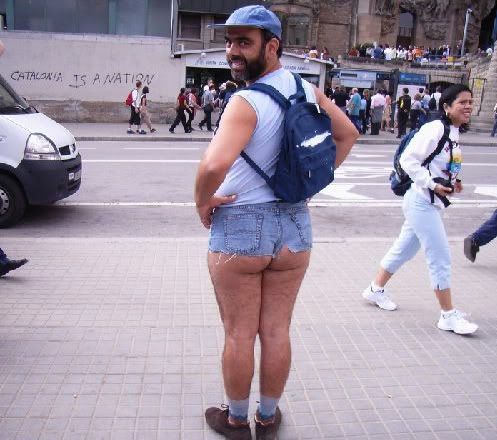
Yikes! Manhattan Men Bare Hairy Knees, Plump Calves
By Joe Pompeo
On a sweltering afternoon early last month, Adam Newman, a 25-year-old Park Slope comedian who works for CollegeHumor.com, made a life-changing decision: He took scissors to a pair of brown corduroy pants and fashioned them into shorts.
 “It’s getting hot and I’ve made up my mind. This summer, I’m wearing shorts!” Mr. Newman blogged recently. “I’ve always been an exclusively-pants guy, but I’m ready for change. No more sweating under the jeans at the park, I’m letting it breathe this year!”
Mr. Newman is not alone. A growing number of style-conscious men are becoming more comfortable with the idea of showing some leg during the hot summer months. No longer does it seem remarkable to see men—straight men—dressed in slim-fitting shorts that hang well above the knee, from conservatively dressed 9-to-5 Manhattan types, to Williamsburg hipsters who wear their cutoffs so high, it evokes the lyrics to the 1993 R&B hit “Dazzey Duks” (or The Dukes of Hazzard, depending on one’s age).
 Famous fellas are flashing their thighs. Gossip Girl star Ed Westwick was photographed recently in a dark blue nautical pair of short-shorts; indie rock sensation Devendra Banhart has been spotted in bright, retro-’70s athletic shorts; and professional hockey player turned Vogue intern Sean Avery has donned a plaid gray shorts-suit by Astor & Black for the office.
Mr. Avery’s building mate, Vanity Fair editor Graydon Carter (who famously hates the word “donned”), was on the forefront of the shorts revolution. “I used to wear them on hot days atSpy, where our air conditioning was primitive,” he wrote in an e-mail, though he noted that he rarely wears shorts to his current job. “Condé Nast is quite generous with its air conditioning,” he said.
Cannoli
 Strawberry & Almond Cannoli
Anna’s very own recipe. Makes 16.
Ingredients:
450g ricotta
100g mascarpone
250g strawberries, halved
½ cup icing sugar
½ teaspoon orange rind
1 tablespoon orange juice
¼ cup flaked almonds, toasted and chopped
50g white chocolate, grated
16 cannoli shells
Method:
1. Separate one fourth of the strawberries and cut them into small pieces. Reserve.
2. Heat the remaining strawberries, sugar and orange rind with orange juice until the sugar melts and strawberries soften. Cook until syrup thickens a little.
3. Put the cooked strawberries into a blender and puree.
4. Strain strawberries with a fine sieve to remove excess liquid.
4. In a bowl, beat together the ricotta and mascarpone.
5. Fold in strawberry purée. Taste mixture. If needed add some sifted icing sugar or strawberry juice to sweeten. Be careful not to make the mixture too runny.
6. When you have reached the desired flavour, carefully fold through the strawberry pieces, grated chocolate and flaked almonds.
7. Put mixture in a bowl, cover with plastic wrap and refrigerate for one hour.
8. Spoon ricotta filling into a fluted piping bag and pipe into cannoli shells. Dust with icing sugar and serve immediately.
Note: You can turn the leftover strawberry juice into syrup by cooking it a little longer. Pour over ice cream or use as a cordial.
Now Everyone Can Own A Talking Trans Am
A Voice From the ’80s to Deliver Driving Directions

It was bound to happen sooner or later: Generation X nostalgia and modern technology have come together in the “Knight Rider” Global Positioning System from Mio Technology.
The Knight Rider GPS (www.knightridergps.com) takes both its sound and style from the 1980s television show about a computerized talking 1982 Pontiac Firebird named KITT. William Daniels, the actor who was the voice of the sleek black car, narrates the unit’s driving directions. The device, which sports a black exterior and flashing red lights, can be personalized to use one of 300 common names in the greetings and random phrases it utters.
Although it does not offer real-time traffic updates, the Knight Rider GPS comes loaded with maps of the United States and is ready to go out of the box. It weighs about six ounces, and has a 4.3-inch color screen. It will cost an estimated $270 and is expected to arrive in stores in August — the month before a retooled version of the “Knight Rider” TV show crashes back onto the airwaves with Val Kilmer cast as the new voice of KITT. J. D. BIERSDORFER
Iced by T
The Big Chill
The hip hop music of the mid-1990’s, reconfigured as a golden era for white adolescence

Sony Pictures Classi
A couple weeks back, Ice-T, whom you may know from Law & Order: Special Victims Unit, and who is also, it turns out, a famous rapper, fired a shot across the bow of the unlikeliest of enemies: gimmicky teen dance-rapper Soulja Boy.
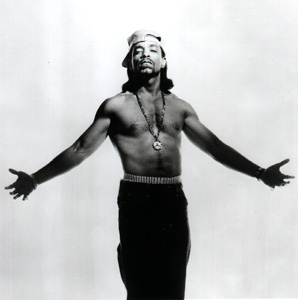 Averring that Soulja Boy had “single-handedly killed hip-hop.” Ice T continued, “We came all the way from Rakim…we came all the way from motherfuckers flowing like Big Daddy Kane and Ice Cube, and you come with that Superman shit? That shit is garbage.”
T later refined his message, a sort of backpedal, praising some new-schoolers who “really write something,” like Ludacris, T.I., and Lil Wayne, while continuing to call Soulja Boy wack.
It was weird.
More embarrassing than Soulja Boy’s subsequent YouTube responses was the fact that Ice T had bothered to say any of this in the first place. Yet his sentiments are indicative of a special breed of generational paranoia with regard to hip hop, an adoration of hip hop’s glory days.
 The Wackness, a new movie that hits theaters this weekend, exemplifies this trend. It’s all about those glory days.
“NYC. Summer 1994. The girls were fly. The music was dope. And Luke was just trying to deal.” It’s a Bildungsroman set to the hip hop of the mid-1990’s, and the music and the movie are there to glorify each other.
The music is an essential element for Luke in his journey of self-discovery: white, nerdy, privileged, and desperate for love. His headphones are there when his parents fight, when he’s friendless at a graduation party, when he gets laid, when he muses on the meaning of life.
If you ask a fan about the golden age of hip hop, he or she will likely point to some time between 1986 and 1996. To many, the rap of the early 1980’s is admirable but infantile; since 1996 it’s all downhill. But one can remember!