
Pop 2012
The A-Z of pop in 2012
From the Guardian Guide: Don’t know your Afrobeats from your Cloud rap? Find your way through the changing pop landscape with our handy A-Z guide
by Clare Considine, Harriet Gibsone, Louis Pattison, Sam Richards, Sian Rowe

Pop. Indie. Electronica. Soul. Do these words mean anything any more? Switch on the radio and you could be mistaken for thinking that genres have blurred into one. But dig deeper and you’ll find that there are more than ever. Here, we present a glossary of 2012’s essential musical movements (and only a few are made up by us). Plus, a chance to sample tracks from 25 of the 26 genres mentioned in Spotify (Tumblrwave is just too damn new).
Listen to our Spotify playlist or watch on YouTube
Deconstructing Dad
An Artist and Inventor Whose Medium Was Sound
‘Deconstructing Dad’ Recalls Raymond Scott, Musical Inventor

“Deconstructing Dad: The Music, Machines and Mystery of Raymond Scott” is Stan Warnow’s heartfelt documentary about the life and legacy of his emotionally remote father, an eccentric techno-music pioneer. In Scott’s single-minded pursuit of an offbeat musical vision, he has been compared to Frank Zappa; one talking head describes him as “an audio version of Andy Warhol.” Like “My Architect,” Nathaniel Kahn’s film about his father, Louis I. Kahn, this documentary is a son’s attempt to forge a posthumous bond with an elusive parent.
Scott, who died in 1994, belonged to that breed of obsessed genius-inventors who focus so intensely on their work that fame and riches are almost incidental. Shy and secretive, he preferred to remain in the background even after achieving some renown. When shown in front of the camera, he is visibly uncomfortable.
Born in Brooklyn in 1908 (he legally changed his name from Harry Warnow), Scott enjoyed hits in the late 1930s as the leader, composer and arranger of the Raymond Scott Quintette, a progressive swing ensemble whose peppy, hyper-agitated instrumentals included “Twilight in Turkey” and “The Toy Trumpet.” The music sounded like jazz but wasn’t, because no element was left to chance.
Before Number Four
Moby Moby Michael Stipe Micheal Stipe Bruce Willis Moby Moby Michael Chiklis Bruce Willis Moby Moby Michael Stipe Johnny Malkovich
Unmentionable Soup
from AP via The San Jose Mercury News
Cannibal cult ate brains and made unmentionable soup, Papua New Guinea police say
By Rod McGuirk
Associated Press

CANBERRA, Australia — Authorities have arrested 29 people accused of being part of a cannibal cult in Papua New Guinea’s jungle interior and charged them with the murders of seven suspected witch doctors, police said Friday.
Madang Police Commander Anthony Wagambie confirmed a report in The National newspaper that said the cult members allegedly ate their victims’ brains raw and made soup from their penises.
“They don’t think they’ve done anything wrong; they admit what they’ve done openly,” Wagambie told The Associated Press by telephone.
He said the killers believed that their victims practiced “sanguma,” or sorcery, and that they had been extorting money as well as demanding sex from poor villagers for their supernatural services.
By eating witch doctors’ organs, the cult members believed they would attain supernatural powers and literally become bullet-proof, he said.
Encyclopedia Brown Author Donald Sobol Gone
Encyclopedia Brown Author Donald J. Sobol Has Died
By Jason Boog on July 16, 2012 7:00 PM
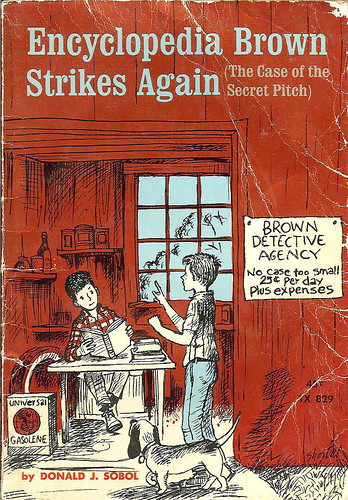
This GalleyCat editor will never forget the hours and hours he spent devouring this Edgar Award-winning mystery series. In addition to these books, Sobol also wrote the Two Minute Mystery series from 1959 until 1968.
He launched Encyclopedia Brown in 1963, and the books are still available today from Penguin.
Nuff Respect?
Reggae respect

Bob Marley, who brought reggae music from its native Jamaica to the world in the 1970s, is being recognized with an unusual distinction: A newly discovered species of fish is named for him.
Gnathia marleyi, according to the National Science Foundation, was named after Mr. Marley by a scientist who discovered the fish in Caribbean coral reefs. He explained the name by calling the fish “as uniquely Caribbean as was Marley.”
Latest Release from Full Fathom Five: SO CLOSE TO YOU by Rachel Carter

Punk Economics
Richard Zanuck Gone
Producer Richard Zanuck dies at 77
Oscar winner behind ‘Driving Miss Daisy’ also shaped ‘Jaws’ and six Tim Burton films

Richard Zanuck, the son of legendary 20th Century Fox mogul Darryl F. Zanuck who carved out his own career as the Oscar-winning producer of “Driving Miss Daisy,” the blockbuster “Jaws” and several Tim Burton films, including “Alice in Wonderland,” died Friday in Los Angeles from a heart attack. He was 77.
Wife-Carrying
Wife carrying championships in Finland won for fourth time by couple
Finnish lawyer, Taisto Miettinen, completed the 250m track, tackling a pool and several hurdles with his wife Kristiina Haapanen on his back, in just over a minute.
The winner of Finland’s Wife Carrying World Championship Competition in Sonkajarvi won the weight of their wife in beer.
Winners Taisto Miettinen and Kristiina Haapanen have now won the competition four times.
The contest is rooted in the legend of Ronkainen the Robber, said in the 19th century to have tested aspiring members of his gang by forcing them to lug sacks of grain or live swine over a similar course.
It also purportedly stems from an even earlier tribal practice of wife-stealing, in honour of which many contestants now take up the challenge with someone else’s wife.
One of the goals is to have people dancing in the museum.
Hot Stuff! Jeffrey Deitch on James Murphy’s ‘Fire in the Disco’ Show at L.A. MOCA
 The Museum of Contemporary Art in Los Angeles has scheduled an exhibition called “Fire in the Disco,” which will look at the history of disco and its impact on art, fashion and music. It will be co-curated by former LCD Soundsystem frontman James Murphy and the museum hopes for it to open in time for the next programming season. Word of the show was first hinted at in a New York Times profile of Mr. Murphy last week that said he had been talking with MOCA’s director Jeffrey Deitch. Mr. Deitch confirmed the news on the phone with us Monday evening.
“There aren’t that many of these cultural movements that within a few years spread all around the world,” Mr. Deitch said of the exhibition’s subject. “Like Cubism, within a few years of its invention in Paris, it’s everywhere. And disco is sort of this unlikely candidate for this. It emerges in subcultures in lofts in downtown New York and basements in Paris, but it sweeps the world very quickly and encompasses fashion, film, art, and has great social impact in addition to its musical impact. It has a tremendous impact on gay liberation, on the connection between black, white, Hispanic. It became a universal language.”
Woman Who Begat Centipede Recounts Birth Experience
from AP via The San Jose Mercury News
Woman behind ‘Centipede’ recalls iconic video game’s birth
By Barbara Ortutay – Associated Press

NEW YORK — Dona Bailey was working as a computer programmer at General Motors when she heard the Pretenders song “Space Invader” and fell in love with it. The year was 1980. She had no clue about video games.
A friend heard her say that she liked the song, and he got really excited. He told her there was a “Space Invaders” game at a bar nearby. They went to lunch so she could see what that song was about.
 “He gave me a quarter and I lost all my lives before I could even figure out what I was supposed to do on the screen,” she says. “But I got really intrigued.”
That’s how she came to join Atari, the company that cemented the video game industry in the 1970s and early 1980s with “Pong,” and thanks in part to Bailey, “Centipede.”
Special K
Special K For Depression Renews Hope In Hallucinogens
By Jason Gale, Makiko Kitamura and Allison Connolly – Jul 9, 2012 6:43 AM MT

Donald says he thought he’d died minutes after ketamine, a popular club drug known as Special K, was infused into his vein at a Sydney hospital in March.
“I couldn’t see anything except pure white,” recalled the 63-year-old depression sufferer, who declined to be identified by his last name. “I thought, ‘oh well, I must have died.’”
His vision normalized within a couple of hours, he said. So did his mood, giving Donald respite from the debilitating depression that had defied a dozen antidepressants he’d taken over decades.
The former academic’s experience is part of broader tests to determine whether ketamine, a hallucinogen commonly used to anesthetize horses, can offer a new avenue for relieving the low mood and self-esteem and feelings of hopelessness that plague as many as 121 million people worldwide.
“And on the Eighth Day, Man Created Lunch.”
Lunch: An Urban Invention
By NICOLA
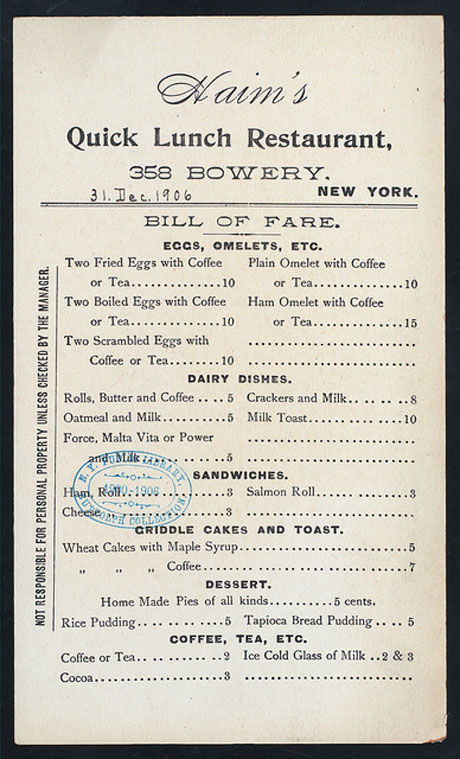
Lunch may be the second meal of the day today, but it was the last of the three daily meals to rise above its snack origins to achieve that status.
As late as 1755, according to Samuel Johnson’s definition, lunch was simply “as much food as one’s hand can hold” — which, as Laura Shapiro, culinary historian and co-curator of the New York Public Library’s new Lunch Hour NYC exhibition, recently explained to me, “means that it’s still sort of a snack that you can have at any time of the day.”
And it wasn’t until later still — around 1850 — that lunch became a regular fixture between breakfast and dinner, added Rebecca Federman, the exhibition’s co-curator, Culinary Collections Librarian at the NYPL, author of Cooked Books, and a star panelist at Foodprint NYC.
Finally, by the turn of the century, “lunch was taking place between 12 and 2, more or less,” concludes Shapiro. It was a real meal at last, with a time associated with it, and particular foods and places assigned to it.
Harley was doing so good but then he f—– up….
Webster Hall pulls plug on hardcore show after punk rockers battle
Sources: Former Cro-Mags member slashes two current band members
BY KERRY BURKEAND SHAYNA JACOBS/ NEW YORK DAILY NEWS

A former member of the Cro-Mags hardcore band slashed two current members of the band as they were set to take the stage in Manhattan shortly after 8 p.m. Friday, police sources said.
The show at Webster Hall, part of the CBGB Festival, was canceled and two members of the band were taken to Bellevue Hospital. One was treated for a bite mark and a cut to the face and the other for cuts to his arm and stomach, the sources said.
The attacker was also taken to Bellevue Hospital to be treated for a broken leg, according to police sources.
Harley Flanagan, a founding member of the New York band who has a history of strained relations with newer members, is believed to be the attacker. He was seen in photographs posted on BoweryBoogie.com being wheeled from the venue by EMTs.
Several tattooed punks in black waited for the injured band members at Bellevue Hospital late Friday.
“Harley was doing so good but then he f—– up,” said one man in the group of the former Cro-Mag.
Lore On The Story Behind I Am Number Four
All authors are mysterious, but some are more so than others. So who – or what – is Pittacus Lore?
 I am one of ten Elders who lived on our planet. Everyone on our planet was gifted. Compared to humans, we are incredibly strong, incredibly fast; able to do things the superheroes in your Hollywood films are capable of doing. We are also born with powers we called legacies: invisibility, the ability to control the elements, imperviousness to heat and cold, telekinesis, the gift of communication with animals, and many others. Most Loric are born with one major legacy, and develop other lesser ones. The Elders are born with all of them. Many of your human myths of people with extraordinary powers are not actually myths. They were Loric.
I will not go into the details of my life on Earth. Nor will I go into the details of how I got here, where I was when Lorien was destroyed, or what I am doing now. I am telling the story of Lorien, and the Nine, and the war with the Mogadorians so that you are aware of what is happening here, and so that you do not allow the same thing that happened to us, happen to you. I am trying to find the children and unite them. As of now, they are either hiding, or fighting alone, and I do not know where all of them are, or under what pretence they are living.
They may be walking past you right now, or sitting near you, or watching you as you read this. They may be in your city, your town. They may be in school with your children. If they are doing what they are supposed to be doing, they are living anonymously, training, and waiting for the day when they will find each other, and me, and we will make our last stand together. If we win, we are saved, and you are saved as well.
If we lose, all is lost.
That’s just a short extract from Pittacus’ amazing tale – read the rest of the story for a history of the earth as it really happened and tips on how to spot – and avoid – a Mogadorian
A History Of The Summer Read
10 Things You Should Know About Summer Reading

Summer reading is as beloved a seasonal tradition as splashing in broken fire hydrants, playing on sidewalk slip-and-slides, barbecuing on fire escapes, and watching Fourth of July fireworks from a tenement rooftop. Teachers and librarians say the practice is integral in preventing what’s called “summer slide” — when kids experience educational setbacks because of the three-month break from school.
In New York, summer reading programs have been in place for many years, historically organized by individual library branches. The first centralized book list, however, was released by the city in 1995, H. Jack Martin, New York Public Library’s assistant director for public programs, tells the Voice.
That has since evolved into a website, summerreading.org. There, children can find age level-appropriate book info, as well as sharing reading lists and creating avatars. Today, more than 300,000 city kids have registered.
But what’s the backstory of summer reading, you might ask? Well, here are 10 fast facts.
10. Ohio Is for Book Lovers
The first summer reading program, which dates back to 1895, started in Cleveland. At the time, a woman by the name of Linda Eastman made a “best books in the library suitable for children” list and sent it to schools in June.
9.What a Prize!
The first rewards system in summer reading programs is said to have begun in 1900, when kids’ library clubs in Wisconsin gave kids certificates read all the books on a list.
8. All Paths Lead to Long Island
Looks like New York’s first key summer reading developments took place in Long Island. In 1914, the program featured weekly talks pertaining to the summer reading club’s programming. Then, Binghamton was one of the first library systems to advocate neighborhood outreach. Librarians upstate would visit area playgrounds, telling stories and sharing books.
Happy Independence Day

Andy Griffith, Villain – Gone
Why People Still Watch ‘The Andy Griffith Show’
Now as when it first aired, the series is a refuge from modern life, not a reflection of it.

AP Images
Andy Griffith was a great villain. Anyone who has seen Griffith’s film début can attest to that. In 1957’s A Face in the Crowd, directed by Elia Kazan and written by Budd Schulberg, Griffith—who died today at age 86—plays a backwoods drifter who becomes a TV host and uses the show to gain political power. It’s a dark, brooding, quietly scary performance. It’s also stunning to watch.
That’s because Griffith’s public persona was anything but dark. The actor began on stage as a comic storyteller—jovial, self-effacing, and filled with folksy wisdom. That image would define him, despite the occasional foray into playing against type.
He first found fame with What it Was, Was Football. In it he portrayed a country bumpkin who stumbles upon a college football game and tries to figure out what he’s seeing. The routine, released as a single in 1953, became a novelty hit. Griffith jumped to TV, debuting in No Time for Sergeants. (A few years later, reprising the role on film, he would meet a short, gangly, bugged-eyed budding comic genius named Don Knotts.) More TV followed. In 1960, Griffith guest-starred on an episode of Make Room for Daddy, playing a country sheriff who catches city slicker Danny Thomas speeding in his fancy car.
Lullaby’s Revenge
Austria investigating whether dead famed composers’ teeth were stolen
 VIENNA — Have the teeth of two famed 19th-century composers been stolen from their graves? Austrian prosecutors are trying to find out.
Thomas Vecsey of the Vienna state prosecutor’s office says authorities are considering filing charges against a man suspected of breaking into the graves of Austrian waltz king Johann Strauss Jr. and German Romantic composer Johannes Brahms and taking their teeth. Both are buried in Vienna.
Special Sauce
Marijuana deals, the pain of Happy Meals and how to get a free Big Mac: McDonald’s worker reveals secrets of fast-food giant (and warns against ordering grilled chicken)
By DANIEL BATES

A McDonald’s worker has lifted the lid on what it is really like to work at one of the restaurants in the chain in a candid and hilarious Internet conversation.
The unnamed man claims that some staff at his branch deal marijuana from the parking lot and that if somebody comes in high they will ‘practically give you free food’.
Burgers and chicken are left to stew for ‘hours on end’ whilst staff moan about having to make Happy Meals as they are time-consuming.
The worker said that the worst thing he ever saw was his colleague selling marijuana to another employee just outside the restaurant.
But he added: ‘If you came to our Mcdonald’s high, we would practically give you free food.
‘Everyone makes mistakes, so yeah it might of been embarrassing to screw up your change, but there is no way in hell anyone would turn you in.
‘Our Mcdonalds parking lot is a notorious spot for Ents (people who smoke marijuana) to hang out, because if you just sit in your car and blaze, it simply (at night, at least) looks like kids just eating food they just got in the drive thru. The perfect alibi.’
The worker claims that ‘nobody’ at his restaurant messes with the food as it would be ‘the biggest d*** move ever’.
“No longer a lost, joss-stick-scented tradition.”
Ultimate pop art – Why gig posters are a sound investment
Posters have always been sentimental souvenirs of a concert. But now they are being seen as art, and an investment.
by NICK HASTED

The beautiful psychedelic gig posters that helped define the 1960s San Francisco rock scene are no longer a lost, joss-stick-scented tradition. Musicians from Arcade Fire and PJ Harvey to Bob Dylan and Liza Minnelli are using limited-edition posters to accompany shows, as an often strikingly original counterpoint to their music. Just as in the old days, the artists silk-screen print by hand in batches of a few hundred.
The revival began with the artists who rose alongside the late 1980s US indie boom, culminating with Nirvana. Each subsequent generation has become bigger, with refugees from the skateboard, graffiti, hot-rod, tattoo and comics art scenes referencing pop culture.
Depraved Penguins

Shooter Sandwich w/Bacon and Swiss
Heres what you are going to need

I used a loaf of hard crusted Italian bread, 3 ribeye steaks 1 lb mushrooms, an onion and some bacon.
Hollow out bread

Cook that shit

Try to leave the steaks a little rare as they will carry over cook a little more in the sandwich.
Shove one of the steaks in the bread

Sauce the steak
[ click to learn why you’re going to need 140lbs. of pressure for the finish ]
The History Of Art By Movement

Write Like The Wind G.R.R. Martin!
Rainbow Oreo

Royal, Remington, Underwood, Smith-Corona, Olivetti, Corona, Adler, Oliver
Time for a typewriter renaissance?
Hipsters and newbies alike rediscover those beautiful machines that go clickety-clack
 (Credit: toadberry via Shutterstock)
It was 4 p.m. on a Thursday, two hours until the end of Jesse Banuelos’ workday. He was standing behind the front counter of Berkeley Typewriter, his trademark green apron tied around his waist. A dozen broken typewriters — some electric, but most of them manual – were stacked in a corner on the brown linoleum floor.
Forty years ago, the shop was at the top of its game. But during the ’90s, as computers became more affordable, fewer customers bought typewriters or needed them repaired. Many typewriter stores went out of business. Berkeley Typewriter laid off some staff and managed to remain open by offering services like printer, photocopier and fax repair. Banuelos is the store’s only remaining technician who knows how to fix typewriters. He never learned how to type on a computer and for a time he worried that the typewriter industry would soon disappear.
He was wrong. In the last few years, both typewriter sales and repairs have increased at the store. Berkeley Typewriter experienced an increase in overall sales in 2011, moving about two or three a week. It’s not like the olden days, Banuelos said, but it’s enough.
Most of the typewriters that he sells or takes in are manual machines made between the early 1900s and the 1960s. The dozen or so brands displayed in Banuelos’ front window read like a row of multicolored tombstones: Royal, Remington, Underwood, Smith-Corona, Olivetti, Corona, Adler, Oliver.
