
Your Lightbulbs Are Watching You
How Pink Is Your Floyd?
The Rise of the Smartbulb

Get ready to dust off the old jokes about how many (fill in the blank) people it takes to change a light bulb. I just spent a week changing some of the bulbs in my house, and the complexity was enough to give me a migraine.
Programmable light bulbs — you never knew you needed such things, but maybe you do — are among the latest offerings of a technology industry that wants to fill homes with new Internet-connected appliances. So now the humble bulb of old is no longer a throwaway commodity.
It’s a smartbulb, complete with a computer-chip and wireless technology that connects it to the great hive brain in the sky.
The punch line, I suppose, is that these bulbs are worth considering if you ever fantasized about living in a Jetsons-type household, and if you have enough disposable income to pay the early-adopter tax currently being levied on them. For that price, you’ll enjoy features that may impress your friends, lower your electric bills and possibly even save the life of a loved one. But more on that later.
100 Robi
100 humanoid robots perform synchronized dance routine in Tokyo
One hundred humanoid robots performed a synchronized dance routine in Tokyo on Monday. Each of the one hundred ‘Robi’ robots weighs just 2.2 pounds and stands just a little over a foot tall.
The ‘100 Robi’ project is the brainchild of Tomotaka Takahashi of Tokyo University. The synchronized dance lasted three minutes and went off without a hitch.
Konnichi wa, CommU – Konnichi wa, Sota
Japanese androids hold news conference, chat with baby droids
The female robots introduced a pair of tabletop conversation robots, CommU and Sota
by Tim Hornyak (IDG News Service)

If you find lifelike robots unnerving, try attending a news conference held by a pair of androids.
That was the scene on Tuesday in Tokyo when the androids Kodomoroid and Otonaroid introduced a new pair of communication robots developed by an Osaka-based company, Vstone, and its partners.
Sota and CommU, each about 30cm tall, engaged in dialog with their full-sized counterparts at the Miraikan technology museum as journalists looked on, entranced. The smaller, tabletop droids can only move their arms and upper bodies, but spoke in cute Japanese resembling the speech of a toddler.
“We’re good at natural dialog and that’s tough to do,” CommU, which looks like a baby, told Otonaroid, a hyper-realistic robot “woman.” The exchange was like a cybernetic mother and child, evoking both the lifelike “replicant” androids and the sentient toys in the 1982 science fiction film “Blade Runner.”
James Frey Visits Philippines
JAMES FREY VISITS PHL FOR A BOOK SIGNING TOUR

WHAT: James Frey book signing tour
WHEN: January 31 and February 1
WHERE: National Bookstore Cebu and Manila
ABOUT: facebook.com/pages/National-Book-Store
Bullshit 451
Bulldoze first, apologize later: a true L.A. landmark
Architect Thom Mayne, new owner of the late Ray Bradbury’s home, says he plans to build a wall on the property that will pay tribute to the writer. (Byron Espinoza)
It was beginning to feel like a demolition derby.
On Tuesday, word started to spread that the canary-yellow 1937 house in Cheviot Hills where the writer Ray Bradbury lived for more than 50 years was being knocked down.
The person razing it to make room for a new house on the site was the Pritzker Prize-winning architect Thom Mayne, whose firm Morphosis designed the Caltrans headquarters in downtown L.A. and a new campus for Emerson College in Hollywood, among other prominent buildings.
The next day, the preservation group Los Angeles Conservancy added an alert to its website that the new owner of the 1957 Norms restaurant on La Cienega Boulevard, a time capsule of the space-age L.A. coffee-shop style known as Googie, had been granted a demolition permit on Jan. 5.
By week’s end, Googie fans at least could breathe a sigh of relief. At a Thursday hearing on Norms at the Los Angeles Cultural Heritage Commission, an attorney for the owner said that there were “no current plans to demolish the property.” The commission voted to consider the building for cultural-monument status, protecting it for at least 75 days.
Drone-hunting Drones
Being pestered by drones? Buy a drone-hunting drone
Are paparazzi flying drones over your garden to snap you sunbathing? You may need the Rapere, the drone-hunting drone which uses ‘tangle-lines’ to quickly down its prey

by Matthew Sparkes – Deputy Head of Technology
With drone sales soaring it’s inevitable that new and nefarious applications for them will emerge. Never has a technology emerged which someone, somewhere has failed to find an annoying or illegal use for.
There have already been several cases of celebrities including Miley Cyrus, Selena Gomez and Rihanna having their privacy invaded by paparazzi drone pilots hovering overhear and snapping away on a remote-controlled camera.
One was even said to have disrupted Tina Turner’s wedding.
But even non-celebrities may not appreciate having the whirring aircraft flying near their homes or places of business.
Enter the Rapere, a prototype drone-hunting drone which can down other tiny unmanned aircraft by entangling special string in their rotors.
A group claiming to be “commercial drone developers” have created the machine which can automatically identify drones, hover above them and release a “tangle-line” that falls into their rotors and causes it to crash. It will then return to its base station for recharging and re-arming.
The Super Bull
A Breeder Apart: Farmers Say Goodbye to the Bull Who Sired 500,000 Offspring
Fans Commemorate ‘Toystory,’ a Dairy Legend With a Ravenous Libido
 Toystory, a Wisconsin bull who set a record for semen production, was 2,700 pounds and sired an estimated 500,000 offspring. The famed bull died on Thanksgiving. GENEX
by MARK PETERS and ILAN BRAT
SHAWANO, Wis.—Atop a wooded hill here in the heart of America’s Dairyland, an industry legend was recently laid to rest.
It wasn’t some milk magnate or a famed innovator, but an ornery, 2,700-pound bull named Toystory—a titan of artificial insemination who sired an estimated 500,000 offspring in more than 50 countries.
“He was a dream bull,” said Jan Hessel Bierma, editor in chief of dairy-breeding magazine Holstein International.
In the increasingly high-tech world of cow reproduction, a top bull’s career tends to last just a few years as farmers chase better genetics to boost milk output and animal durability, playing a numbers game not unlike a Major League Baseball manager.
Rare is the bull with the genes and testicular fortitude to sell a million units of semen, known among breeders as the millionaires club.
Over nearly a decade, Toystory shattered the record for sales of the slender straws that hold about 1/20th of a teaspoon and are shipped using liquid nitrogen to farmers around the world. A unit fetches anywhere from a few dollars to several hundred.
Free El Capitan
2 men reach top of Yosemite’s El Capitan in historic climb
By Associated Press

YOSEMITE NATIONAL PARK, Calif. — A pair of Americans on Wednesday completed what had long been considered the world’s most difficult rock climb, using only their hands and feet to conquer a 3,000-foot vertical wall on El Capitan, the forbidding granite pedestal in Yosemite National Park that has beckoned adventurers for more than half a century.
Tommy Caldwell and Kevin Jorgeson became the first to “free-climb” the rock formation’s Dawn Wall, a feat that many had considered impossible. They used ropes and safety harnesses to catch them in case of a fall, but relied entirely on their own strength and dexterity to ascend by grasping cracks as thin as razor blades and as small as dimes.
The effort took weeks, as the two dealt with constant falls and injuries. But their success completes a years-long dream that bordered on obsession for the men.
The trek up the world’s largest granite monolith began Dec. 27. Caldwell and Jorgeson lived on the wall itself. They ate and slept in tents fastened to the rock thousands of feet above the ground and battled painful cuts to their fingertips much of the way.
Glenn Horowitz Goes To Manhattan
Glenn Horowitz Bookseller to Open New Midtown Gallery With Photos of Giacometti
 Glenn Horowitz photographed by Jill Krementz on January 11, 2015 in his Manhattan apartment on Central Park South.
This week, Glenn Horowitz Bookseller will open its new Manhattan gallery space Rare, along with the inaugural exhibition. Located on West 54th Street, across the street from MoMA’s sculpture garden, the 1,000-square-foot gallery will showcase first editions, manuscripts, letters, archival materials, fine art, and decorative arts spanning the 19th century to contemporary. Its first exhibition, titled “Matter/Giacometti,” opens this Thursday, January 15 (with a reception from 6 to 8 p.m.) and will examine Swiss designer and photographer Herbert Matter’s book of the same title.
The book is an intimate portrait of the (also) Swiss artist whose signature tall, thin, figurative sculptures (the results of years of experimentations with movements like abstraction and surrealism) have become famous worldwide. But Matter’s book is a highly personal project that took 25 years to create, published after his death in 1986 by his wife.
Learning About Cuba and Having Some Food – Taylor Negron Gone
Taylor Negron, of ‘Fast Times at Ridgemont High,’ Dies at 57
Taylor Negron, a comedian and actor who described his style as “California Gothic” and who brought a funereal, straight-faced sensibility to a career’s worth of character roles in cult comedies like “Fast Times at Ridgemont High” and “One Crazy Summer,” died on Saturday. He was 57.
His death was announced in an online video posted by a cousin, Chuck Negron of the rock group Three Dog Night. Chuck Negron did not specify the location or the cause, but Variety and other Hollywood trade publications reported that Taylor Negron had cancer.
A Los Angeles native, Mr. Negron used his sharp facial features, piercing eyes and deadpan delivery to commandeer screen roles that were intended to last only a few moments. In “Fast Times at Ridgemont High,” Amy Heckerling’s celebrated 1982 teenage comedy, he made a lasting impression as a world-weary pizza deliveryman who brings a double cheese and sausage pie to the history class of the surfer dude Jeff Spicoli (played by Sean Penn).
In “Better Off Dead …” (1985), another teenage comedy, he memorably played a careless, judgmental mailman. To other viewers, he was Rodney Dangerfield’s eccentric son-in-law in “Easy Money” (1983), a self-assured stand-up comic in “Punchline” (1988) and an expressive hairdresser in a 1993 episode of “Seinfeld,” among the many roles he played in a 35-year career.
Born Brad Negron on Aug. 1, 1957, Mr. Negron grew up deeply attuned to the morbid undercurrent of Hollywood’s allure.
God Bless The Internet Arcade
The Internet Arcade Releases More Than 2,000 MS-DOS Games
By Jeff Pearson

Back in November of last year, the Internet Archive launched a digital archive of more than 900 famous arcade games to be played for free online, titled the Internet Arcade. Back-of-the-bar classics such as Astro Blaster and Street Fighter 2 are only a fraction of the many hours to be killed browsing through their collection, and the Internet Arcade evidently wasn’t done.
Now, in addition to the massive collection of arcade games, the Internet Arcade has added an even more massive collection of MS-DOS computer games, with 2,400 titles to be downloaded or streamed for free.
“It’s definitely not a normal book.”
Novel experience: Hit the jackpot by tracking down clues in James Frey’s new book
Meg Barone
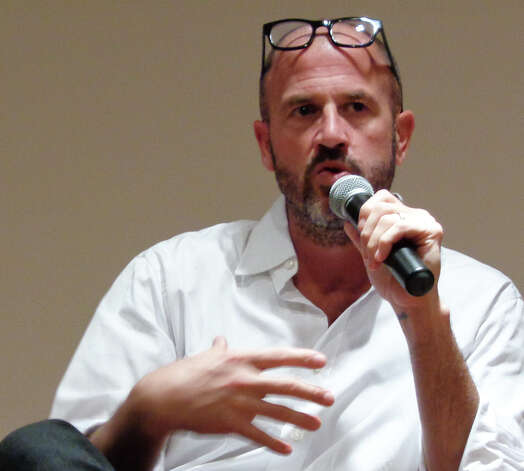 Bestselling author James Frey speaks about his new book, ìEndgame: The Calling,î to a hometown crowd at the New Canaan Library. Photo: Meg Barone
Authors of the latest entry into the literary dystopian adventure take readers beyond the pages of their book and into a ground-breaking multi-platform reading experience and worldwide search for the key to a cash jackpot.
James Frey, a New Canaan resident and bestselling author of “A Million Little Pieces” and other works, partnered with Nils Johnson-Shelton to write “Endgame: The Calling,” the first of a trilogy, which was published in October.
During an informal presentation and casual conversation Wednesday with about 100 people at the New Canaan Library, Frey talked about his creative process, the inspiration for his latest books, and revealed that even he does not know the answer to its puzzles. The authors’ invite readers to follow the adventures of 12 teens as catastrophic events lead them on a global quest in search of three ancient keys that will save not only their bloodlines but the world. Readers must find the clues hidden within the stories to solve the puzzles.
The first person to find the key for the first book will win $500,000 in American eagle gold coins, currently held at Caesars Palace in Las Vegas. The monetary worth of the prize increases with each book in the series to $1 million with the second novel and finally to $1.5 million with the third.
“It’s definitely not a normal book,” Frey said.
“It’s breaking from the rest of the pack and incorporating the reader,” said Shafer Jones, 15, of New Canaan, who sat in the front row with his family. Frey apologized to Jones and his family for his use of the “F” word in his remarks — and then continued to use it.
Improbably Evolution
The Strange Inevitability of Evolution
Good solutions to biology’s problems are astonishingly plentiful.

BY PHILIP BALL / ILLUSTRATION BY JON HAN
Is the natural world creative? Just take a look around it. Look at the brilliant plumage of tropical birds, the diverse pattern and shape of leaves, the cunning stratagems of microbes, the dazzling profusion of climbing, crawling, flying, swimming things. Look at the “grandeur” of life, the “endless forms most beautiful and most wonderful,” as Darwin put it. Isn’t that enough to persuade you?
Ah, but isn’t all this wonder simply the product of the blind fumbling of Darwinian evolution, that mindless machine which takes random variation and sieves it by natural selection? Well, not quite. You don’t have to be a benighted creationist, nor even a believer in divine providence, to argue that Darwin’s astonishing theory doesn’t fully explain why nature is so marvelously, endlessly inventive. “Darwin’s theory surely is the most important intellectual achievement of his time, perhaps of all time,” says evolutionary biologist Andreas Wagner of the University of Zurich. “But the biggest mystery about evolution eluded his theory. And he couldn’t even get close to solving it.”
What Wagner is talking about is how evolution innovates: as he puts it, “how the living world creates.” Natural selection supplies an incredibly powerful way of pruning variation into effective solutions to the challenges of the environment. But it can’t explain where all that variation came from. As the biologist Hugo de Vries wrote in 1905, “natural selection may explain the survival of the fittest, but it cannot explain the arrival of the fittest.” Over the past several years, Wagner and a handful of others have been starting to understand the origins of evolutionary innovation. Thanks to their findings so far, we can now see not only how Darwinian evolution works but why it works: what makes it possible.
A popular misconception is that all it takes for evolution to do something new is a random mutation of a gene—a mistake made as the gene is copied from one generation to the next, say. Most such mutations make things worse—the trait encoded by the gene is less effective for survival—and some are simply fatal. But once in a blue moon (the argument goes) a mutation will enhance the trait, and the greater survival prospects of the lucky recipient will spread that beneficial mutation through the population.
The trouble is that traits don’t in general map so neatly onto genes: They arise from interactions between many genes that regulate one another’s activity in complex networks, or “gene circuits.” No matter, you might think: Evolution has plenty of time, and it will find the “good” gene circuits eventually. But the math says otherwise.
Take, for example, the discovery within the field of evolutionary developmental biology that the different body plans of many complex organisms, including us, arise not from different genes but from different networks of gene interaction and expression in the same basic circuit, called the Hox gene circuit. To get from a snake to a human, you don’t need a bunch of completely different genes, but just a different pattern of wiring in essentially the same kind of Hox gene circuit. For these two vertebrates there are around 40 genes in the circuit. If you take account of the different ways that these genes might regulate one another (for example, by activation or suppression), you find that the number of possible circuits is more than 10700. That’s a lot, lot more than the number of fundamental particles in the observable universe. What, then, are the chances of evolution finding its way blindly to the viable “snake” or “human” traits (or phenotypes) for the Hox gene circuit? How on earth did evolution manage to rewire the Hox network of a Cambrian fish to create us?
Mystery Balls
Mystery of the glowing orb: Bizarre fireball that splits in two could be a meteorite burning up in Earth’s atmosphere
By RICHARD GRAY FOR MAILONLINE
UFO hunters have claimed the bright orb may have been some sort of escape pod from a crashing ship.
However, others have said it is more likely to have been a meteorite breaking apart in the atmosphere.
There have been several sightings of meteorite fireballs in the US over the past week, with many reports coming from California.
The past couple of days have also seen astronomers enjoying the peak of the annual Quadrantids meteor shower.
The fireball was spotted by Ken Roberts while he was driving home from work in southern California.
He said: ‘I was driving home after work when this UFO or whatever you call it caught my eye.
‘I pulled over in front of somebody’s house to film it. I would have got a better shot but I didn’t want to jump these people’s fence.
‘Anyway I don’t know what the hell to make of it. Couldn’t have been a plane cause there was no noise. And I never heard a crash after either.
‘The Orb thing flew straight up into the sky and disappeared.’
[ click to continue reading about these peculiar orbs at The Daily Mail ]
“[T]he human race has been living on borrowed time.”
The Age of Asteroids
 A view of the asteroid Lutetia from the European Space Agency’s Rosetta spacecraft. CREDITIMAGE FROM THE EUROPEAN SPACE AGENCY
Brian May, the longtime guitarist of the rock band Queen, is also an astrophysicist. He started his career, in 1970, as a Ph.D. student at Imperial College, London, but four years later, after Queen released its second album, he put his studies on hold. In 2008, he finally finished his doctorate, with a thesis on zodiacal light, the faint patch of interstellar radiance that’s sometimes visible on the horizon at night. Last Wednesday, May joined Lord Martin Rees, the U.K.’s Astronomer Royal, at London’s Science Museum to discuss asteroids and the threats they pose to life on Earth.
“The more we learn about asteroid impacts, the clearer it becomes that the human race has been living on borrowed time,” May said. About a million near-Earth asteroids are thought to be on a possible collision course with our planet, but only ten thousand or so have actually been charted. May and Rees were among a hundred scientists, astronauts, artists, and technologists calling for a worldwide campaign to identify, and eventually deflect, these asteroids. “In astronomical terms, this is very down home, very much on our back doorstep,” Rees said. The advocacy campaign is united around what is known as the 100x Declaration, which aims to persuade governments and the private sector to discover and track a hundred thousand asteroids each year over the next decade. The declaration calls for the adoption of a global Asteroid Day on June 30, 2015, the hundred and seventh anniversary of the Tunguska event, in which a small asteroid exploded over Siberia, destroying eight hundred square miles of remote forest and releasing a hundred and eighty-five times as much energy as the atomic bomb that was dropped on Hiroshima.
Netflix Does Nina
Netflix is Producing an Original Nina Simone Documentary

Netflix has taken on a Liz Garbus documentary detailing the life of iconic songstress and civil rights activist, Nina Simone. The project, to be called What Happened, Miss Simone?, marks the streaming service’s first venture into a documentary at such an early stage of production. Previous Netflix documentaries (such as Oscar-nominated The Square) have all been acquired as finished products.
Garbus’ film, co-produced with Netflix and RadicalMedia, was made in cooperation with Simone’s estate and includes rare concert footage alongside material from diaries, archival interviews and over a hundred hours of never-before-heard audio recordings.
Cardiac Pulmonary Remonkeytation
MONKEY GIVES FIRST AID TO ELECTROCUTED FRIEND
NEW DELHI (AP) — Onlookers at a train station in northern India watched in awe as a monkey came to the rescue of an injured friend – resuscitating another monkey that had been electrocuted and knocked unconscious.
The injured monkey had fallen between the tracks, apparently after touching high-tension wires at the train station in the north Indian city of Kanpur.
His companion came to the rescue and was captured on camera lifting the friend’s motionless body, shaking it, dipping it into a mud puddle and biting its head and skin – working until the hurt monkey regained consciousness.
God Is Data
Science Increasingly Makes the Case for God
The odds of life existing on another planet grow ever longer. Intelligent design, anyone?
By ERIC METAXAS

In 1966 Time magazine ran a cover story asking: Is God Dead? Many have accepted the cultural narrative that he’s obsolete—that as science progresses, there is less need for a “God” to explain the universe. Yet it turns out that the rumors of God’s death were premature. More amazing is that the relatively recent case for his existence comes from a surprising place—science itself.
Here’s the story: The same year Time featured the now-famous headline, the astronomer Carl Sagan announced that there were two important criteria for a planet to support life: The right kind of star, and a planet the right distance from that star. Given the roughly octillion—1 followed by 24 zeros—planets in the universe, there should have been about septillion—1 followed by 21 zeros—planets capable of supporting life.
With such spectacular odds, the Search for Extraterrestrial Intelligence, a large, expensive collection of private and publicly funded projects launched in the 1960s, was sure to turn up something soon. Scientists listened with a vast radio telescopic network for signals that resembled coded intelligence and were not merely random. But as years passed, the silence from the rest of the universe was deafening. Congress defunded SETI in 1993, but the search continues with private funds. As of 2014, researches have discovered precisely bubkis—0 followed by nothing.
What happened? As our knowledge of the universe increased, it became clear that there were far more factors necessary for life than Sagan supposed. His two parameters grew to 10 and then 20 and then 50, and so the number of potentially life-supporting planets decreased accordingly. The number dropped to a few thousand planets and kept on plummeting.
Even SETI proponents acknowledged the problem. Peter Schenkel wrote in a 2006 piece for Skeptical Inquirer magazine: “In light of new findings and insights, it seems appropriate to put excessive euphoria to rest . . . . We should quietly admit that the early estimates . . . may no longer be tenable.”
As factors continued to be discovered, the number of possible planets hit zero, and kept going. In other words, the odds turned against any planet in the universe supporting life, including this one. Probability said that even we shouldn’t be here.
Memoir-Novels
What Accounts for Our Current — or Recurrent — Fascination With Memoir-Novels?
Each week in Bookends, two writers take on questions about the world of books. This week, Leslie Jamison and Daniel Mendelsohn discuss our interest in narratives that blur the line between the real and the fabricated.
 By Leslie Jamison
Why do we like that space of uncertainty in which we don’t know what’s been invented and what hasn’t?
In May of 1856, a traveling panorama called “Arctic Regions!” arrived in Philadelphia, offering “a complete voyage from New York to the North Pole.” Posters bragged that it was “fresh from the hands” of a “great Master of American Artists” and could “transport us to the icy North,” promising a kind of paradox: that you could become aware of its artistic mastery by forgetting it was art at all.
This brings to mind a certain tension in how we read, as well, a dynamic David Shields has described in his relationship to autobiographical writing: “at once desperate for authenticity and in love with artifice.” There’s an electric charge in toggling back and forth between the shimmer of what’s been artfully constructed and the glint of what actually was. The reader is impressed by the panoramic architecture even as she forgets its presence.
This ambiguous territory has a more established place in poetry, a genre never filed into separate “fiction” and “nonfiction” areas on the shelves. But for narrative we’ve long been obsessed with partitioning the actual from the imagined, and the memoir-novel offers, finally, some relief from that Sisyphean taxonomy project. Shields describes the pleasure of “blurring (to the point of invisibility) . . . any distinction between fiction and nonfiction: the lure and blur of the real.”
So what’s the lure of the blur? Why do we like that space of uncertainty in which we don’t know what’s been invented and what hasn’t?
Joe Cocker Gone
Joe Cocker dead at 70
Joe Cocker, the singer and songwriter whose hits included “You Are So Beautiful” and “Up Where We Belong,” has died of lung cancer, his agent, Barrie Marshall, confirmed to FOX411.
Cocker was 70 years old.
“Joe Cocker is a legendary artist of rock and blues history and yet he was one of the most humble men I’ve ever met,” said Edgar Berger, who signed Joe Cocker to Sony Music Entertainment. “His iconic voice will forever be etched in our memories and our thoughts go out to Joe’s wife Pam and his family at this difficult time. Joe will live on in the hearts of millions of fans around the world.”
One of the most prolific artists of his era, Cocker released 40 albums over his 50 year career. The British-born superstar had his first No. 1 U.K. hit in 1968 with The Beatles’ tune “With a Little Help from My Friends.” He then took his tune to Woodstock in 1969, and it later became the theme song for the beloved family sitcom “The Wonder Years.”
ENDGAME at New Canaan Library – January 7
James Frey Presents Endgame: The Calling at New Canaan Library
 ENDGAME: THE CALLING by James Frey & Nils Johnson-Shelton is an engrossing novel at the core of a groundbreaking immersive, multi-platform reading experience. The ENDGAME trilogy follows twelve teens as catastrophic events lead them on a global quest in search of three ancient keys that will save not only their bloodlines but the world.
More than an apocalyptic adventure tale, each book in the series will feature an interactive puzzle comprised of clues that will lead to the location of a hidden key. The first eligible reader to solve the puzzle for the first book and find the key will win $500,000 worth of gold. Similar to the characters in the novels, readers will embark on their own hunt for a hidden key.
The subsequent two books in the Endgame series will have progressively larger payouts. For the lucky reader who is the first to solve the puzzle in the second installment, the prize is $1 dollars and a whopping $1.5 for the third book.
Join James Frey as part of the Authors on Stage on Wednesday January 7th, 2015 from 7:00 – 8:00pm in the Lamb Room.
Gift An e-Book This Holiday – People Love Books – FullFathomFive.com
And check out FullFathomFive.com for some great book ideas. Thanks.
Dead’s Rock Scully Gone
Rock Scully, Grateful Dead’s Manager Who Put the Band on Records, Dies at 73
 Rock Scully, front left, in a Grateful Dead “family portrait” in San Francisco in 1966, soon after he became manager, in front of 710a Ashbury Street, the band’s communal home. CreditHerb Greene
Rock Scully learned his mission in life at an Acid Test, one of the drug-drenched, strobe-lit parties the author Ken Kesey staged in the San Francisco area in the mid-1960s.
Owsley Stanley, the notoriously prodigious maker of LSD, introduced Mr. Scully in 1965 to the scraggly, zonked-out members of a band that had just changed its name from the Warlocks to the Grateful Dead. “Rock’s going to be your manager,” he said.
“Hey, good luck, dude,” said the band’s guitarist and vocalist Bob Weir, according to “Living With the Dead” (1996), the memoir Mr. Scully wrote with David Dalton.
So began a long, strange trip that saw the Dead go from a makeshift sort-of-bluegrass band that played for nothing in San Francisco parks to one of the biggest, most remarkable acts in rock ’n’ roll history. They sold 35 million albums, many
No mas rimjob, no mas.
Radio Station Apologizes for Letting a DJ Get a Rimjob on the Air
by Jay Hathaway

Chilean radio station Top 40 held a contest earlier this week, offering tickets to the giant EDM festival Mysteryland, and one lucky winner got hers by giving a DJ a rimjob live on air (here I’m employing an extremely loose definition of “lucky”).
The station asked what listeners would do for tickets to an EDM festival, and the answer turned out be “actual anything, up to and including licking whipped cream out of a human anus.” The human anus in question, DJ Paul Hip, then invited other listeners to make out with the girl who’d just tongued his butt and win tickets of their own.
Top 40 hyped up the contest at first, tweeting out a photo of the on-air rimjob, but soon thought better of it and deleted the tweet.
It was too late, of course. Once a rim has been jobbed, you can’t unjob it.
Endgame : l’Appel de James Frey, interview Fnac
ENDGAME: A fascinating project in collective storytelling
Google’s Niantic Labs embarks on a giant interactive transmedia project with controversial author James Frey

Endgame is going to be a fascinating project in collective storytelling. The project started as Endgame: The Calling, a novel published in October from best-selling (and controversial) author James Frey and Nils Johnson-Shelton. It is the first of three books.
Before the second novel comes out, Google’s Niantic Labs division will launch its Endgame mobile game. Much like its predecessor, the geo-location game Ingress, Endgame is an alternate-reality game, set in real-world locations as the battlegrounds that 12 factions will fight over. Fans form their own factions based on the Ancient Societies in the Endgame novel. In the book, societies compete with each other to be the one faction that survives the apocalypse. One of a cast of teen characters leads each, and that individual has received training for the moment when they will face their tests.
But here’s the interesting twist. The real-world players and factions affect the outcome of the story. In fact, Frey and Johnson-Shelton will weave the stories of the most active players into the second and third novels, said Jim Stewartson, a member of the Niantic Labs team, in an interview with GamesBeat. Fox, meanwhile, is working on three movies based on the franchise. It’s one of the ultimate “transmedia” projects, or a single entertainment property that crosses multiple media.
Queen’s Scientist Says Kill The Killer Asteroids Before They Kill Us
Scientists call for killer asteroid hunt
by Richard Waters in San Francisco<

An international group of astronauts, scientists and others have called for a rapid expansion of efforts to detect asteroids capable of causing widespread destruction on earth, warning that this is one of the biggest threats to humanity in the coming centuries.
Led by Lord Rees, Britain’s royal astronomer, and Brian May, a PhD in astrophysics as well as guitarist with the rock band Queen, the group said a hundredfold increase in the number of objects detected each year was necessary over the next decade.
Academic projects to detect and track asteroids that might one day collide with earth have been under way for more than 50 years. The work was boosted in 1998 when Nasa was given a decade to identify near-earth objects with a diameter of more than 1km — a size that would turn a collision into a potentially extinction-level event.
However, astrophysicists warn that asteroids and meteors as small as 50m across could still cause devastation on earth, with a direct hit capable of wiping out a city and killing millions. An undetected meteor estimated to be 20m in diameter entered the atmosphere over Russia last year and exploded at a height of several miles, causing a shockwave that injured 1,500 people (pictured). Even the devastating 1908 impact at Tunguska in Siberia, the largest in human recorded history, was caused by an object of only around 50m, said Lord Rees.
Only around 1 per cent of the 1m asteroids, meteors and comets that could cause massive damage on earth have been detected so far, according to a declaration by the group issued on Wednesday.
Rudolph The Red-Nosed Purloined
Residents hope Rudolph thieves caught red-handed
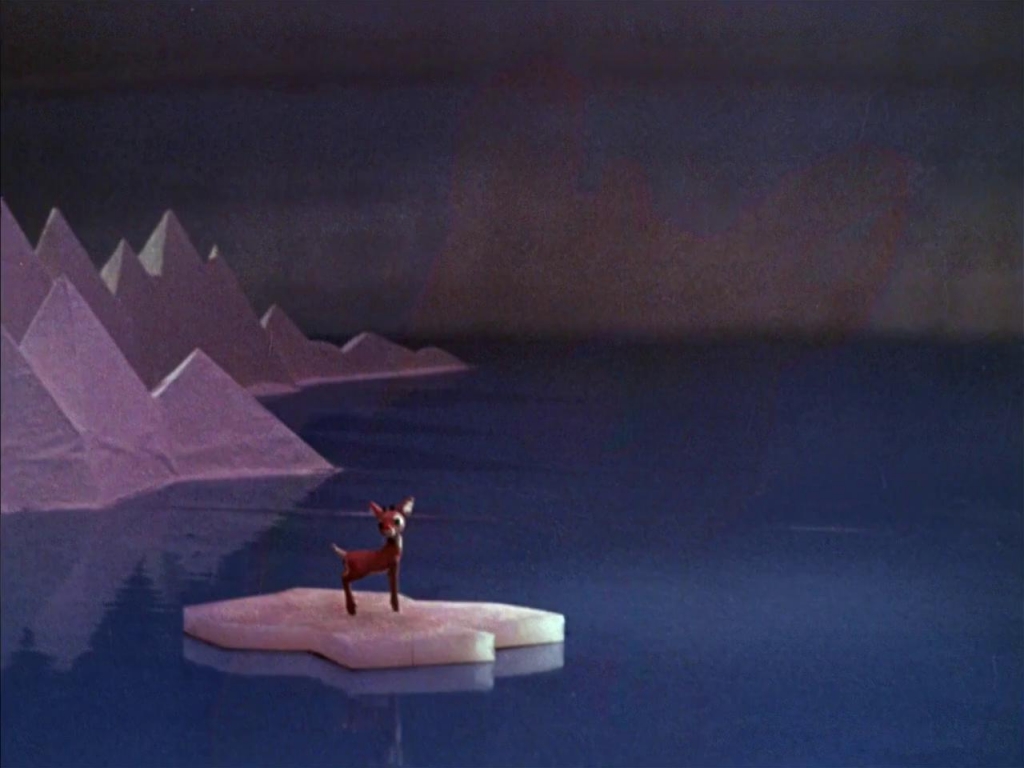
ROLLING HILLS ESTATES, Calif. (AP) — Thieves have made off with a statue of Rudolph the Red-Nosed Reindeer that’s been a holiday fixture in a Los Angeles-area neighborhood for half a century.
Residents of Rolling Hills Estates say the 200-pound wooden statue was taken sometime Friday night.
The culprits left Rudolph’s broken antler behind.
DOROTHY MUST DIE – Best Books of 2014
from KCUR Kansas City Public Media
Best Books Of 2014 For Children And Teens
By STEVE KRASKE & ELIZA SPERTUS
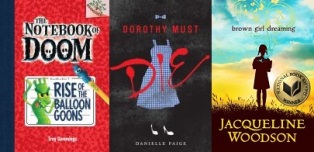 Books have the remarkable ability to enthrall, captivate and inspire. When kids are trapped indoors during the cold winter months books can transport them into new and fascinating worlds.
On this edition of Up to Date, Steve Kraske and three Johnson County librarians review their top picks in children’s literature.
The Best Children’s Books of 2014:
From Kate McNair, young adult librarian at the Johnson County Library:
- Dorothy Must Die by D.M. Paige (Grades 8-12): Amy Gumm, the other girl from Kansas, has been recruited by the Revolutionary Order of the Wicked to stop Dorothy who has found a way to come back to Oz, seizing a power that has gone to her head — so now no one is safe!
Up to Date Intern Eliza Spertus reads from “Dorothy Must Die” – CLICK TO LISTEN
They’re Out There
Are Habitable Binary Planets Possible?
BY IAN O’NEILL

As we seek out planets orbiting stars inside their habitable zones, astronomical techniques are becoming so sophisticated that, one day, we may be able to probe the atmosphere of a distant exo-Earth — i.e. a rocky exoplanet possessing liquid water on its surface with potential biosignatures in its atmosphere.
But let’s take this idea one step further.
If there’s one thing we are beginning to realize with exoplanetary studies, it’s that there is a huge variety of alien worlds out there and, of the billions of stars in our galaxy, just about every conceivable configuration of exoplanet size and orbit should be possible.
PHOTOS: How Aliens Can Find Us (and Vice Versa)
In a new study presented at the American Astronomical Society’s Division for Planetary Sciences meeting in Tucson, Ariz., earlier this month, researchers from the California Institute of Technology (Caltech) discussed the possibility of habitable binary planets; a configuration that, if the conditions are right, life could take root on both bodies orbiting inside the habitable zone of their star.
Probably the most familiar example of what could be considered to be a binary planet is that of the Pluto-Charon system. Although Charon is officially recognized as the biggest moon of Pluto and not a binary partner, in a recent Discovery News article I argued the case for making dwarf planet Pluto and satellite Charon a binary planet.